The Sabarmati river is a monsoon-fed river which has a total catchment area of 10,370 sqkm, out of the total basin area of 27,820 sqkm at Ahmedabad. Before the project, the width of the river varied from 300 m to 425 m. The Dharoi Dam constructed in 1976 upstream of Ahmedabad controls water and protects from flooding while Vasna Barrage constructed in 1976 downstream retains water in the river along the city banks and diverts it through Fatehwadi canal for irrigation. The Narmada Canal, which crosses Sabarmati a few kilometres upstream from the city, is part of a larger canal network of Sardar Sarovar Dam. The canal can feed excess water to the river and maintains the level of water in the river.
The Ahmedabad Municipal Corporation (AMC) set up the Sabarmati Riverfront Development Corporation Ltd (SRFDCL) in May 1997 funded by Government of India with a seed capital of ₹10 million (US$150,000) for riverfront development. Environmental Planning Collaborative (EPC) led by Bimal Patel prepared the feasibility report in 1998. Initially the proposal was to construct the riverfront to cover a stretch of 10.4 km stretch from Subhash bridge to Vasna barrage and to reclaim 162 hectares (400 acres) of the riverbed. In 2003, the project extended to cover a 11.25 km stretch and reclamation of 202.79 hectares (501.1 acres) and was put on fast track. The project estimated to cost ₹12 billion (US$180 million) which will be recovered by selling of part of reclaimed land for commercial and residential purpose. Ahmedabad based HCP Design, Planning and Management Pvt. Ltd is roped in as the main architect of the project. The project has encountered several delays due to concerns regarding water level, flooding, rehabilitation of displaced slum dwellers and the opposition from activists involved with slum rehabilitation.
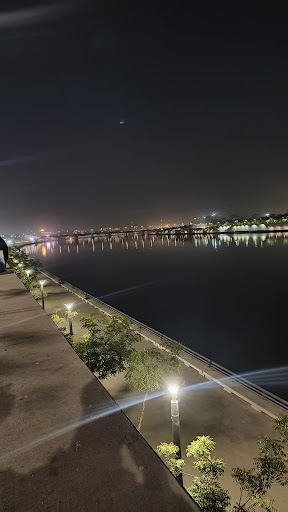
The two-level promenade is planned and the lower promenade is already constructed. These promenades provide continuous 11.2 km long walkway along the river on the east side and 11.3 km on west side. The width of the promenade varies from 6 to 18m. The 31 Ghats are constructed at regular interval along the lower promenade for access to the water. The boating stations are constructed for recreational purpose and for water-based public transport in the future. Three such stations are already open.
The 5.07 ha Events Ground is an event ground with infrastructure facilities. It serves as open venue for variety of purpose and revenue source for the project. The lawn is 40,000 square metres in size and can host over 50,000 people. The 0.9 ha laundry campus with seven blocks opened in February 2014. It has washing areas on the ground level and drying facilities on the terraces. Fourteen public washrooms are under...
Read moreThe Sabarmati Riverfront has been gaining some momentum as a tourist spot for the last few years and is one of the major locations to visit if you find yourself in Ahmedabad. Now, it's not like a riverfront can just appear out of thin air, right? Sabarmati has always had a riverfront. But it was only recently that it started getting converted into something more accessible to the public. Rather, it was only recently that it was converted to a place that the public would want to access.
The development of the riverfront is only a recently undertaken project, with only some parts being open to the people. But its limited nature could not stop it from being the go-to place for residents and tourists alike.
Overview of Sabarmati Riverfront The centrepiece of the Riverfront would have to be its two-level promenade. It provides an uninterrupted walkway for pedestrians that is a whopping 11.4 km long. The lower level of the promenade, which is accessible to the public at present, is close to the water level and is constructed in a way that serves cyclists and pedestrians alike, at the same time providing adequate access to water.
It also has a large number of amenities that include but are not limited to elevator access, regular seating arrangements for the public, public washrooms, boating facilities and a total of 31 Ghats constructed at regular intervals to ensure the smooth continuation of all traditional cultural activities involving the Sabarmati.
How to reach Sabarmati Riverfront The Sabarmati is only about 3 km from the Sardar Vallabhbhai International Airport, while the riverfront is officially about 10 km from it. Airport road leading out of the airport connects to Riverfront road directly, about 4 km from the airport, on the eastern side of the Sabarmati; Riverfront road runs along the Sabarmati and is the primary road on the banks of the river. The western bank of the Riverfront is accessed through Ashram Road.
For your Ahmedabad tour, you can also opt for a private cab from top car rental companies in Ahmedabad and explore all the popular sightseeing places of Ahmedabad in a relaxed manner.
Ahmedabad offers plenty of tourist attractions that one can visit on their Ahmedabad tour. We at Ahmedabad Tourism, a division of Holidays DNA offer Ahmedabad Tour packages that one can opt for at budget friendly prices. Please fill the Contact Us form and we will get...
Read moreQuiet place to sit and enjoy. Located near usmanpura. Boating services were available at night also.
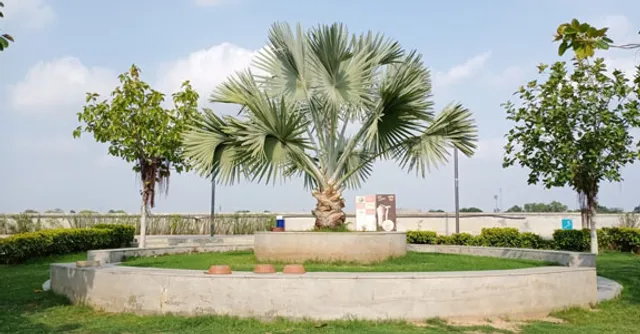
Sabarmati Riverfront is an architectural marvel and a testament to urban rejuvenation it is a stunning waterfront development that has transformed the banks of the Sabarmati River into a vibrant and dynamic public space. There is a magnificent stretch of parks, gardens, promenades, and recreational spaces that have become a focal point for residents and tourists alike.
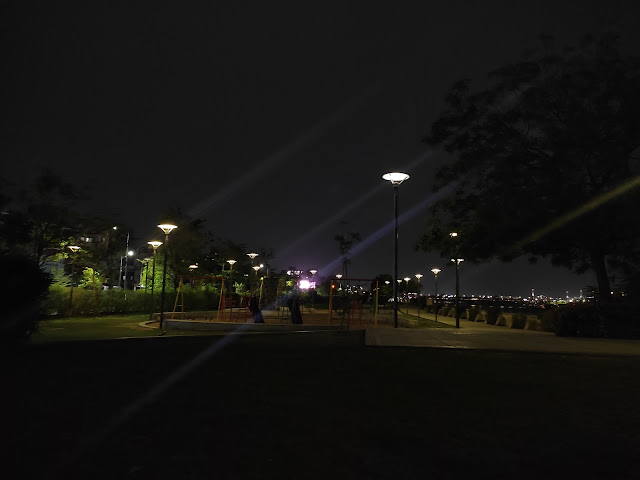
The design of the Sabarmati Riverfront is a perfect blend of aesthetic appeal and functionality. The well-planned pathways, lush greenery, and well-manicured gardens create a serene environment that offers respite from the bustling city. The riverfront promenade provides ample space for people to stroll, jog, and cycle, while enjoying the panoramic views of the river. The addition of amphitheaters and event spaces allows for cultural and entertainment activities, further enhancing the vibrancy of the area.
The Sabarmati Riverfront has also played a crucial role in flood management. The construction of retaining walls and embankments has helped mitigate the risk of flooding, protecting nearby areas from potential damage during the monsoon season.
Overall, the Sabarmati Riverfront is a shining example of successful urban planning and development. It has not only transformed the cityscape of Ahmedabad but also created a thriving social hub where people can come together to enjoy the beauty of nature and engage in various recreational activities. Whether you're a nature lover, a fitness enthusiast, or simply looking for a peaceful retreat, the Sabarmati Riverfront is a must-visit destination that will leave...
Read more