One of the two notable temples in Kannur District dedicated by Sree Narayana Guru Devan is Sree Sundareswara Temple. The other is Sree Jagannatha Temple in Thalassery. The temple is situated in Talap, a suburb of the Kannur district in Kerala, India, about 2 kilometres from the railway station and 3 km from the new bus stop (Thavakkara), of the same name. The primary deity of the temple is Shiva as Sundareswara. With the exception of a select few, the Thiyya community in Malabar had drifted away from its previous spiritual practises, which were founded on ancient Buddhist traditions, by the 19th century and had instead embraced prakritik deities and tamasic rituals like animal sacrifice. However, community members began receiving contemporary education in the latter stages of the British Raj, particularly with the aid of missionary-run educational institutions, which led to a partial renunciation of tamasic spiritual practises. Varathoor Kaniyil Kunhi Kannan, a member of the community, made the decision to meet with Guru Devan after hearing numerous tales about his spiritual pursuits. He finally made it to Guru Devan's home in "Anju Thengu" after several days of trying. He was able to speak with Guru Devan at Shivagiri the following day. For the spiritual upliftment of the Thiyya people in Kannur, he requested that Guru Devan dedicate a temple in Malabar similar to others he had done in South Kerala. Guru Devan questioned him as to the need for such a temple, pointing out that many people in the neighbourhood were well educated, in the public eye, and involved in the Arya Samaj and Vedanta Societies. Guru Devan was persuaded by Kannan that despite these, a sizable portion of the populace continued to practise tamasic practises. Finally, Guru Devan consented to travel to Kannur soon. With the help of other well-known community members including Madhavan Master, Choyi Butler, Manikkoth Govindan Bhagavathar, Karyan Govindan Gurukkal, Chamakkali Kannan, Poovadan Krishnan, Chandroth Ananthan Mesthri, and Oyatti Krishnan Vakil, Kannan returned to Kannur with the intention of building a new temple. They established an executive committee, with Chamakkali Kannan serving as secretary and Choyi Butler serving as president. In keeping with his word, Guru Devan paid a visit to Kannur in 1907 and stayed at Kottiyath Choyi's house. Before Guru Devan left, the subject of constructing a temple was brought up once more. A committee was established, with Cheruvari Karunakaran Tahasildar serving as president and Chamakkali Kannan serving as secretary. Sree Bhagaval Bhakti Pradeepa Yogam was formally founded at a conference on February 16, 1908. In 1913, this group adopted the name Sree Bhakti Samvardhinini Yogam. As a result of Chamakkali Kannan and Kombra Kannan Master's invitation, Guru Devan returned to Kannur in 1908. Guru Devan approved of a proposed site in Talap during his visit to view the potential locations for the temple. The remains of an old temple were later discovered here during building. The temple was built and dedicated by Sree Narayana Guru Devan on April 11, 1916, at a muhoortham between 3 AM and 3:20 AM, under the ascendancy of Pooyam (Pushya) star, despite financial difficultiesThe statue of Guru Devan, the Dwajastambam (flag pole), and the Deepastambam (light post) were subsequently dedicated in 1938. The elephant hall, the Gajamandapam, and the temple pond were dedicated in 1939, 1943, and 1946,...
ย ย ย Read moreThe ancient inhabitants of North Malabar belonging to the Thiyya Community were denigrated to backward status on advent of Brahmanism in the 8thย Century AD. The Status of the Ezhava Community in South Kerala was not different, if not worse. This is the milieu which gave rise to the incarnation of Sree Narayana Guru Devan, whose revolutionary ideas took the length and breadth of Kerala like a storm.[3]ย Realizing that the members of backward communities were denied the right to enter temples run by higher castes, Sree Narayana Guru Devan embarked on a mission to consecrate temples withย Satvikย style of worship, by members of the backward castes themselves, who were denied those rights till then. The wave of spiritual revolution started creating positive ripples in the society.
Barring a few, the members of Thiyya Community in Malabar have been far removed from their spiritual maturity originally based on ancientย Buddhistย traditions, and were indulging in worship ofย prakritikย deities andtamasicย practices like animal sacrifice etc. However, during the last part of British Raj, community members started gaining modern education, especially with the help of Missionary run Educational Institutions and slowly but surely started their ascendancy towards social and cultural prominence. Some noble and learned souls among them realized that theย tamasicย spiritual practices are taking a toll on the collective social psyche of the community and are actually hampering their social and cultural ascendancy.
One such noble soul, Varathoor Kaniyil Kunhi Kannan heard many stories regarding the extraordinary spiritual activities of Guru Devan, and started looking forward to meeting him. After efforts of many days, finally he managed to reach a house in "Anju Thengu" where Guru Devan was staying. Next day he was able to have a discussion with Guru Devan atย Shivagiri. He requested Guru Devan to consecrate a temple inย Malabar, like those he had done in South Kerala, for the spiritual uplifting of Thiyya Community in Kannur. However Guru Devan asked him why such a temple is required in the land which is ruled by the Queen of England directly, with a lot of community members were highly educated, socially prominent and active inย Arya Samajand Vedanta Societies. Mr Kannan was able to convince Guru Devan that despite these, a large number of population are still following tamasic rites, and no one is guiding them to the right path. Finally, Guru Devan agreed to visit Kannur, in near future. Mr. Kannan came to Kannur and started working towards the aim with other prominent community members like Madhavan Master, Choyi Butler, Manikkoth Govindan Bhagavathar, Karyan Govindan Gurukkal, Chamakkali Kannan, Poovadan Krishnan, Chandroth Ananthan Mesthri, Oyatti Krishnan Vakil etc. They created an executive committee with Choyi Butler as president and Chamakkali Kannan as Secretary.
True to his promise, Guru Devan visited Kannur in 1907 and stayed at the home of Kottiyath Choyi. The matter of temple building was discussed again, and before return of Guru Devan, a committee was formed with Cheruvari Karunakaran Tahasildar as president and Chamakkali Kannan as secretary. In a meeting held on 16 February 1908, Sree Bhagaval Bhakti Pradeepa Yogam was formally established. This organisation was renamed asย Sree Bhakti Samvardhinini Yogamย in 1913. In 1908, Guru Devan agin visited Kannur on invitation of Chamakkali Kannan and Kombra...
ย ย ย Read moreSree Sundareswara Temple in Talap, Kannur, is a divine abode that radiates spiritual bliss and cultural heritage. This ancient temple holds a significant place in the hearts of devotees and stands as a testimony to the rich religious traditions of Kerala.
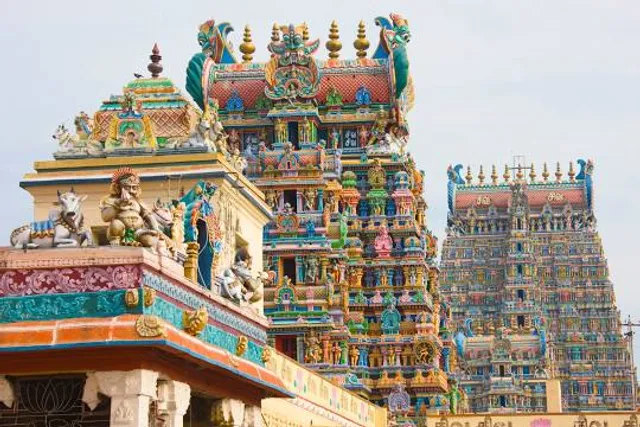
The temple's architecture is a captivating blend of traditional Kerala style and intricate craftsmanship. The magnificent gopuram (tower) adorned with colorful sculptures and intricate carvings leaves visitors in awe as they approach the sanctum. The serene ambiance and well-maintained premises create an atmosphere conducive to prayer and meditation.
Devotees throng to Sree Sundareswara Temple to seek blessings from Lord Shiva, the presiding deity. The deity's divine presence is believed to fulfill wishes and grant solace to troubled hearts. The temple's priests, well-versed in Vedic rituals, perform pujas and ceremonies with utmost devotion and sincerity, adding to the spiritual sanctity of the place.
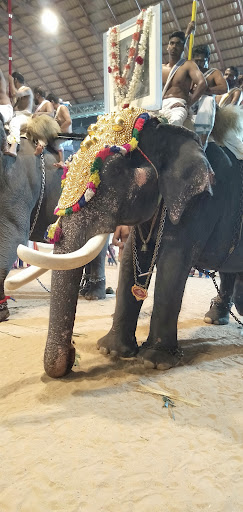
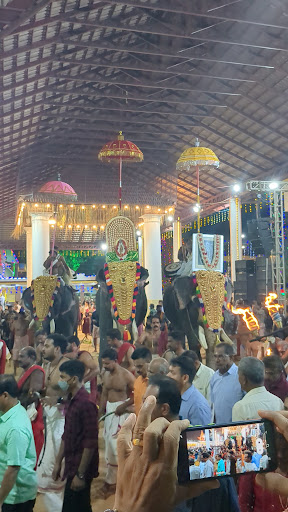
The temple comes alive during festivals, especially during the annual 'Mahashivaratri' celebration. The grand festivities, vibrant processions, and cultural programs attract thousands of devotees and tourists, making it a memorable experience for all who participate.
Sree Sundareswara Temple is not just a place of worship; it also serves as a center for promoting art, culture, and education. The temple administration actively engages in social welfare activities, organizing various programs that benefit the local community. From providing scholarships to supporting healthcare initiatives, the temple plays a crucial role in improving the lives of the people around it.
The temple's surrounding area is well-maintained and peaceful, making it an ideal spot for contemplation and relaxation. The beautiful garden and lush greenery add to the overall charm of the place, making it a tranquil retreat from the bustle of daily life.
Moreover, the temple holds historical significance, with its roots tracing back centuries. Exploring its history and cultural heritage can be an enlightening experience, especially for history enthusiasts and those interested in the evolution of religious practices in the region.
Visitors to Sree Sundareswara Temple are warmly welcomed by the temple authorities and the local community. The friendly and hospitable nature of the locals enhances the overall experience, leaving visitors with cherished memories to carry back home.
In conclusion, Sree Sundareswara Temple in Talap, Kannur, is a sacred sanctuary that showcases the spiritual essence and cultural richness of Kerala. Its architectural splendor, religious significance, and community-oriented initiatives make it a must-visit destination for those seeking a deeper connection with the divine and a profound understanding of Kerala's...
ย ย ย Read more