Mattancherry Palace: Kerala’s Heritage Gem in Need of Better Care
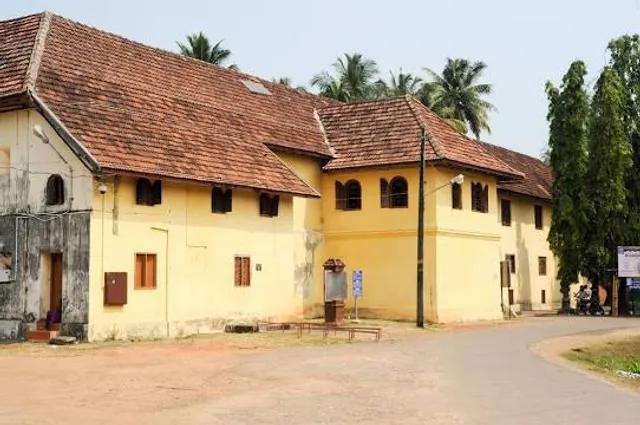
Mattancherry Palace, or the Dutch Palace as it is often called, stands as a remarkable ode to Kerala’s regal history and its fascinating interactions with European powers. Constructed by the Portuguese in 1555 and gifted to the Raja of Kochi as a gesture of goodwill, the palace was later refurbished by the Dutch in 1663. Its architecture seamlessly blends Kerala’s traditional style with colonial influences, creating an ambiance that speaks to centuries of history and cultural exchange.
The palace is perhaps most famous for its murals, which are nothing short of breathtaking. These ancient frescoes, painted using natural pigments, are treasures in themselves. They depict vivid scenes from the Ramayana, Mahabharata, and other mythological texts, such as Lord Krishna frolicking with the gopis and the majestic coronation of Rama. The colors, though weathered by time, still retain a charm that captivates the beholder. As you walk through the palace, it feels as if the walls are whispering stories of valor, devotion, and divine intervention.
The museum housed within the palace adds another layer to its allure. On display are an array of royal artifacts—elaborate swords, ceremonial daggers, and armor that evoke the valor of the Kochi kings. The ancient palanquins, intricately carved and designed, offer a glimpse into the grandeur of royal processions. Costumes, coins, and utensils used by the royal family provide an intimate look into their day-to-day lives. Portraits of the Kochi rulers hang solemnly, their eyes seeming to follow you as if observing this modern world from their time-bound frames.
Yet, despite the richness of its offerings, my experience was marred by several operational oversights that demand attention. I was disheartened to see two-wheelers of officials and workers parked inside the palace compound. This is a heritage site, a repository of history, and such modern intrusions into its sacred space felt deeply inappropriate. Equally jarring was the behavior of some visitors who were allowed to use mobile phones inside the palace. The serene atmosphere, essential for contemplating the art and history on display, was repeatedly disturbed by the sound of camera clicks and casual chatter.
The structure itself, though captivating, presented safety challenges. The low-height doorways, while true to the architectural style of the era, lacked basic safety warnings like “Mind Your Head.” I witnessed several visitors narrowly avoiding injury, which could easily be mitigated with simple signage. Another glaring issue was the inadequate lighting inside the palace. The dim illumination left much to be desired, obscuring the intricate details of the murals and museum exhibits. These treasures deserve to be seen in their full glory, and better lighting could significantly enhance the experience.
Feeling compelled to act, I shared these grievances with the officers on duty and recorded my thoughts in the Grievance Register. As someone who holds a deep respect for history and culture, it pains me to see a site of such importance fall short of its potential due to avoidable shortcomings.
Despite these frustrations, Mattancherry Palace remains a destination of immense historical and artistic significance. Walking through its halls is akin to stepping back in time, immersing oneself in the stories of Kerala’s royal past. The artifacts, murals, and architectural marvels together create an experience that is both enlightening and awe-inspiring.
However, I cannot help but lament that such a treasure trove of history and culture deserves better stewardship. With thoughtful management and attention to visitor experience, Mattancherry Palace could not only preserve its legacy but also elevate itself to a global standard, inspiring visitors from across the world to cherish its beauty and significance. For now, it remains a gem, albeit one that shines less brightly than it should.
For more on F&B, please...
Read moreVisited July 12, 2025 – Day 9 in India
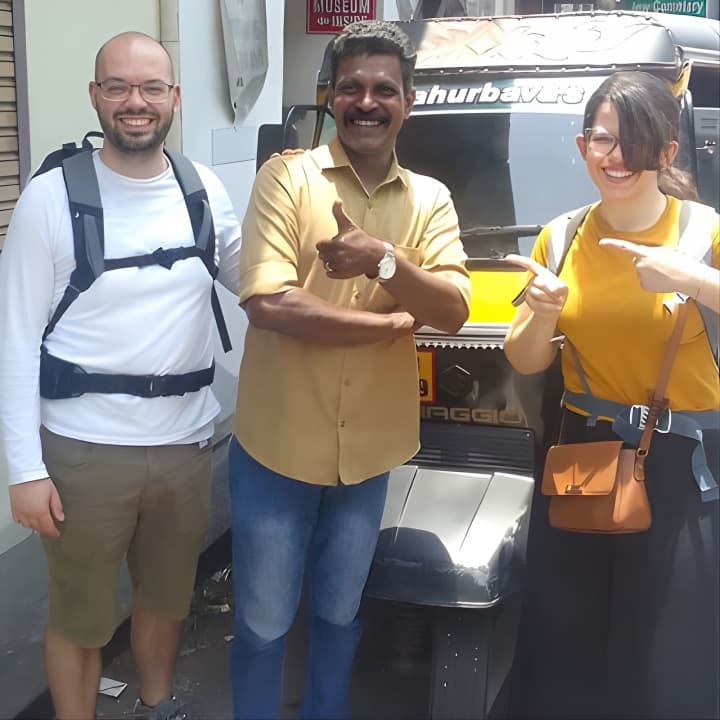
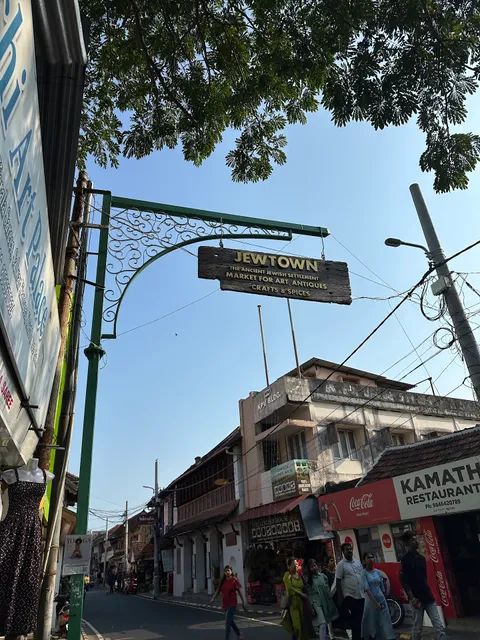
After our time in Jew Town, Peter brought us to the Dutch Palace, also known as Mattancherry Palace. From the outside, it looked modest, but once we stepped through the doors, it felt like walking into another time. Built by the Portuguese and later renovated by the Dutch, the palace was a gift to the local king of Cochin and now holds centuries of royal history.
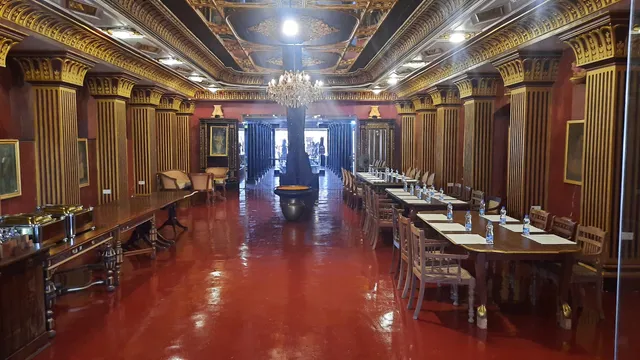
Inside, the rooms were cool and quiet, with wooden ceilings, glossy black floors, and walls lined with paintings, murals, and artifacts. Our daughters, ages 5 and 7, were immediately curious and alert, taking it all in with wide eyes. Peter guided us through the palace room by room, bringing everything to life with stories, context, and thoughtful explanations.
One room had a striking portrait of a king. As we moved across the space, our girls noticed something uncanny—his eyes seemed to follow us wherever we went. They were both fascinated and slightly spooked. Peter explained that this was intentional, meant to reflect the king’s power and presence, even in painted form. The girls kept checking back, whispering, “He’s still watching,” with a mix of awe and amusement.
The murals in the palace were extraordinary—huge scenes from the Ramayana and Mahabharata, painted in natural dyes that have somehow lasted hundreds of years. They were full of color, emotion, and movement. Our daughters had endless questions: “Who are those people?” “Is that a god or a king?” Peter answered everything with such kindness and clarity. His ability to engage with them made all the difference.
Then we came to a display of royal palanquins, used to carry members of the royal family. One of them was especially grand—beautifully carved and covered in ivory. Peter told us it was used in royal ceremonies and considered a symbol of status and power. The craftsmanship was remarkable, and it was easy to imagine the kings and queens riding inside, held aloft by their attendants.
But standing in front of that palanquin became an unexpectedly emotional moment. Earlier in the trip, we had told our daughters that ivory comes from elephant tusks. Now, seeing it up close, they made the connection. One of them asked, “Did an elephant die for this?” and the next question followed: “How many elephants were killed to make all this?”
They weren’t angry, just thoughtful—and visibly sad. We tried our best to explain that this was made long ago, in a time when people didn’t fully understand the consequences. Peter gently added that things are different now, and there are strong protections in place for elephants today. It was a quiet, powerful moment. A reminder that travel doesn’t just show you the world—it also teaches compassion.
We finished our visit feeling reflective. The Dutch Palace wasn’t just a place of history and beauty—it was layered, complicated, and deeply human. The painted kings, the stories on the walls, the opulence of royal life, and the real cost of some of that splendor—all of it stayed with us.
Our daughters left still talking about the murals, the royal traditions, the palanquins, and yes, the king whose painted eyes never seemed to stop watching. It was one of the most meaningful parts of our day in Fort Kochi, and a visit we’ll remember not just for what we saw, but for how it...
Read moreDutch Palace (Mattancherry Palace), Mattancherry, Kochi
🕰️ Historical & Cultural Significance • Originally built by the Portuguese around 1555 as a gift to King Veera Kerala Varma—intended to atone for temple plunder and solidify trade relations . • Later renovated and expanded by the Dutch in 1663, earning the moniker “Dutch Palace” though its foundations and identity remain rooted in Kerala tradition . • Declared a national monument in 1951, with restoration by the Archaeological Survey of India between 2007–2009 to preserve its heritage .
⸻
🏛️ Architecture and Murals • Designed in the traditional Nālukettu style—a quadrangular layout centered around a courtyard, flanked by temples including Pazhayannur Bhagavathi, Lord Krishna, and Lord Siva . • Interior melds colonial elements—in arches and proportions—with local craftsmanship: wooden carved ceilings, Kerala-style floors made of burnt coconut shells, charcoal, lime, plant juices, and egg whites, mimicking black marble . • Walls are adorned with some of India’s finest mythological murals—colorful tempera paintings narrating the Ramayana, Mahabharata, Kumarasambhavam, Shiva Leela, and Krishna Leela, covering over 100 sq meters .
⸻
🧳 Exhibits & Highlights • Portrait gallery of Cochin Rajas (from 1864 onwards), rendered in Western style in the Coronation Hall. • Royal artifacts on display: ivory palanquins, howdahs, ceremonial umbrellas, coins, stamps, swords & spears—all sheathed for safety . • The serene courtyard temple still houses the hereditary deity Pazhayannur Bhagavathi, reflecting the palace’s spiritual heritage .
Final Verdict
The Dutch Palace (Mattancherry Palace) is a compact marvel—where Kerala’s architectural finesse intertwines with colonial influences. The vibrant, expansive murals, rich artifacts, and serene courtyard offer a curated window into Kochi’s royal and spiritual legacy. Though small and occasionally humid inside, its value lies in the cultural depth and artistry it preserves. With minimal entry fee and prime location near Jew Town and the synagogue, it’s a must-visit for history and art lovers...
Read more