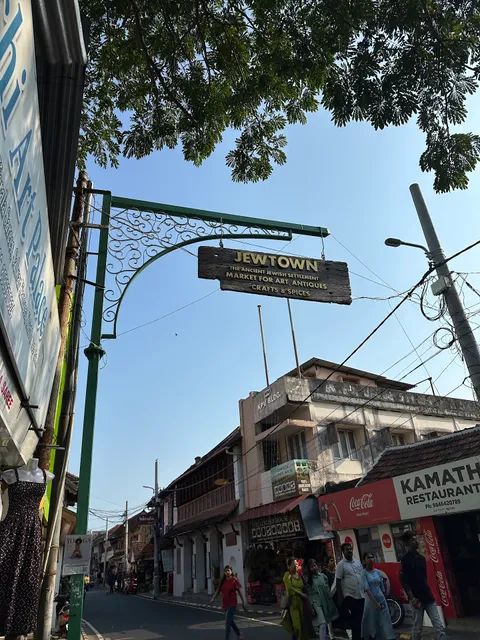
The Paradesi Synagogue is the oldest active synagogue in the Commonwealth of Nations. It is located in Jew Town, Mattancherry, Kochi (Cochin), Kerala, India. Built in 1568 AD, it serves the Paradesi Jews—a subgroup of Cochin Jews who trace their ancestry to Spanish, Portuguese, and Middle Eastern Jews who fled persecution during the Inquisition and diaspora.
📜 Early Jewish Presence in India
🕎 Ancient Period:
Jewish arrival in India is believed to have occurred as early as 1,000 BCE, during the time of King Solomon’s trade with India.
Cochin Jews (Malabari Jews) claim descent from Jews who came after the destruction of the First Temple (586 BCE) and Second Temple (70 CE).
They settled in Kerala, especially Cranganore (Kodungallur), and later migrated to Kochi due to wars and natural disasters.
🌍 Who are the Paradesi Jews?
“Paradesi” means “foreigner” in Malayalam.
They are Sephardic Jews, originally from Spain, Portugal, and Iraq, who arrived in the 15th–16th centuries fleeing persecution.
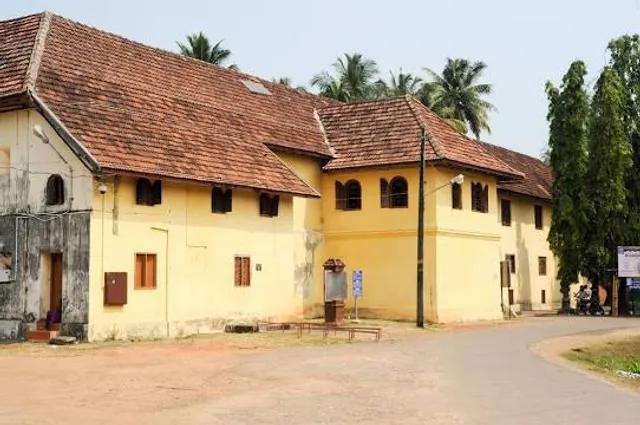
They built the Paradesi Synagogue in 1568 AD, next to the Mattancherry Palace (Dutch Palace), under the patronage of the Raja of Kochi.
🏛️ Architectural Features of the Paradesi Synagogue
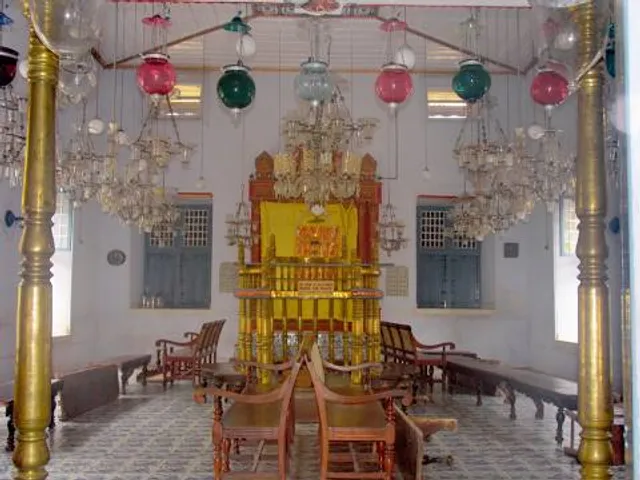
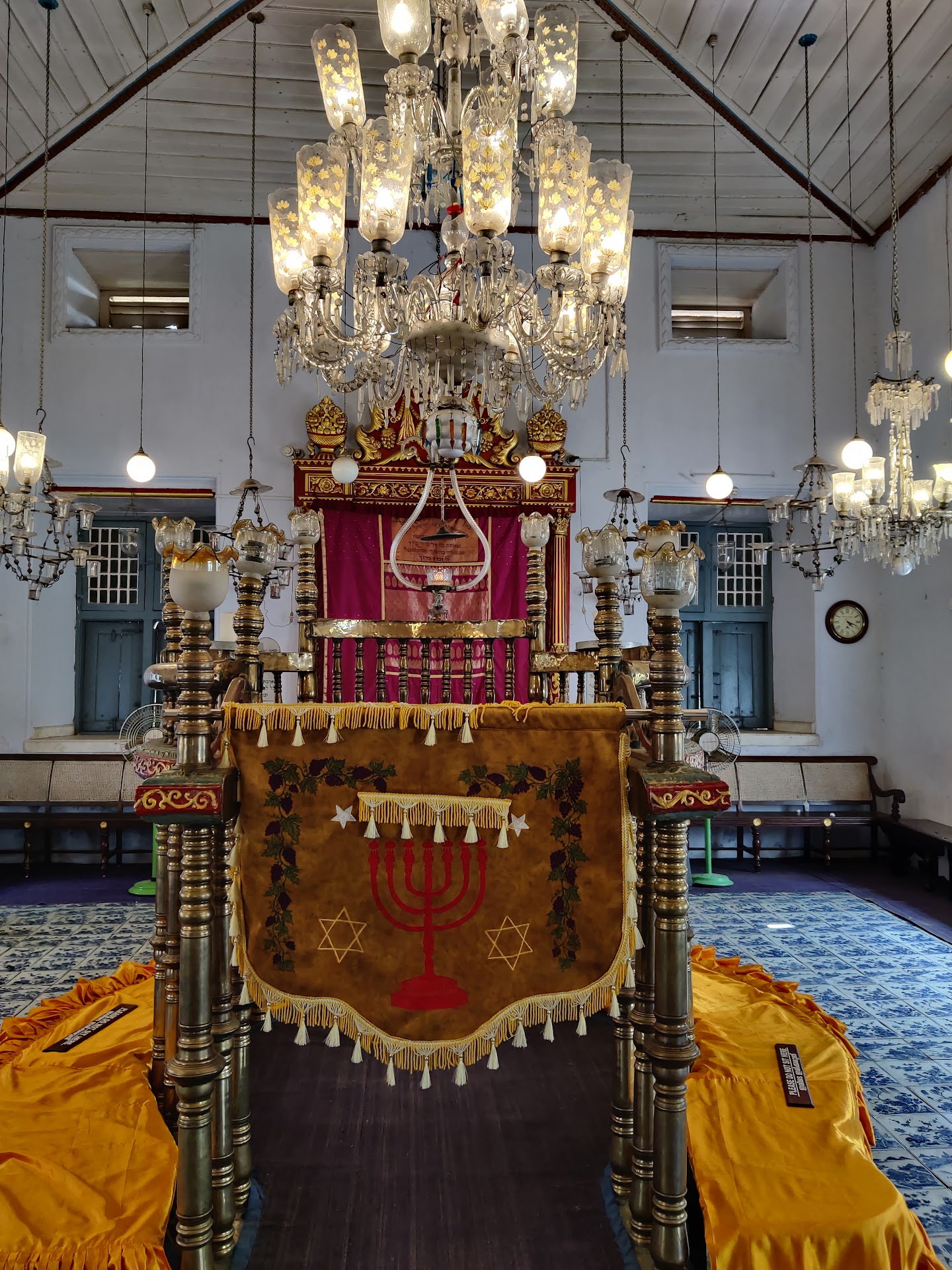
Belgian glass chandeliers and hand-painted Chinese tiles (each tile unique).
Scrolls of the Torah housed in gold and silver cases.
A brass pulpit and a bimah (raised platform) in the center.
The clock tower, added in 1761, is iconic.
The synagogue is connected to the royal palace through a walkway (now closed).
⚔️ Historical Events
The synagogue was partially destroyed in 1662 by the Portuguese, but rebuilt by the Dutch in 1664.
It has historically had tensions with Malabari Jews over cultural differences and social hierarchy.
The synagogue was a key spiritual and social hub for the Paradesi Jewish community for centuries.
🧳 Decline of the Jewish Population
After the establishment of the State of Israel in 1948, most Cochin Jews (including Paradesis) emigrated to Israel, USA, and other countries.
Today, only a few elderly Jews remain in Kochi—making the synagogue more of a historic monument than a community center.
🕰️ Current Status (as of 2025)
The Paradesi Synagogue remains open to visitors, operated by the Kerala Department of Archaeology.
It is a protected heritage site and tourist attraction, especially for Jewish heritage tourism.
Sabbath services are rare and conducted only on special occasions or when visiting Jews request.
It continues to symbolize the multicultural and religious harmony of Kerala.
🧬 Cochin Jewish Communities: A Complex Identity
Kerala once had three major Jewish groups:
Malabari Jews – claimed to have settled in Kerala over 2,000 years ago, after the destruction of the Second Temple.
Paradesi Jews – arrived in the 15th–16th century from Europe and the Middle East.
Meshuchrarim – freed slaves of African descent who came with the Paradesis and faced social discrimination, even among Jews. These groups practiced Judaism differently and had complex internal hierarchies, leading to separate synagogues, schools, and burial grounds.
📄 Royal Grants and Copper Plates
One of the most significant historical proofs of Jewish settlement is the Chera Dynasty copper plate grant, believed to be given by the Chera King Bhaskara Ravi Varman (circa 10th century) to Joseph Rabban, a Jewish leader in Kodungallur. This granted the Jews:
The right to trade freely
Own land and slaves
Collect taxes
Use of their own customs
This made the Cochin Jewish community semi-autonomous, a rare privilege in medieval times.
🕍 Synagogues Across Kerala
Before modern decline, Kerala had over seven functioning synagogues, including:
Paradesi Synagogue, Mattancherry (still active)
Kadavumbhagam Synagogue, Ernakulam
Thekkumbhagam Synagogue, Ernakulam
Chendamangalam Synagogue
Paravur Synagogue
Mala Synagogue
Kadavumbhagam Synagogue, Mattancherry
Many of these have been restored as heritage...
Read moreThe Paradesi Synagogue, located in Kochi, India, stands as a testament to the rich cultural and historical tapestry of the region. Constructed in 1568, it is one of the oldest active synagogues in the Commonwealth of Nations. The architecture seamlessly blends diverse influences, featuring a combination of Dutch, Portuguese, and local styles that create a unique and captivating aesthetic.
Stepping into the synagogue, visitors are greeted by a sense of antiquity, as the structure has retained much of its original charm. The intricately hand-painted, blue-and-white Chinese tiles that adorn the floor narrate stories of a bygone era. These tiles, along with the antique chandeliers and the teakwood ark that houses the Torah scrolls, add a sense of sacredness to the space.
One cannot overlook the historical significance of the Paradesi Synagogue. The Jewish community in Kochi has a storied past, and this synagogue serves as a living testament to their endurance and cultural contributions. The synagogue also houses an array of artifacts, manuscripts, and copper plates that provide insights into the community's history and the synagogue's role as a spiritual and communal center.
The architecture of the synagogue reflects the multicultural ethos of Kochi, with its arched windows and spacious interiors creating an atmosphere of tranquility. The juxtaposition of religious symbols and artistic elements fosters an environment where visitors can appreciate the harmonious coexistence of different cultural influences.
Beyond its architectural and historical significance, the Paradesi Synagogue plays a vital role in promoting cultural tourism in Kochi. It stands as a beacon, attracting visitors from around the world who seek to immerse themselves in the rich history and architectural brilliance that define this sacred space.
In conclusion, the Paradesi Synagogue is not merely a place of worship; it is a living testament to the cultural diversity and historical resilience of the Jewish community in Kochi. Its architectural splendor, coupled with the wealth of historical artifacts within its walls, makes it a must-visit destination for those eager to explore the cultural heritage of this enchanting...
Read moreThe Paradesi Synagogue, also known as the Cochin Jewish Synagogue or the Mattancherry Synagogue (Malayalam: പരദേശി ജൂതപള്ളി), stands as a historic landmark in Jew Town, a suburb of Kochi, Kerala, India. Erected in 1568 A.D. by Samuel Castiel, David Belila, and Joseph Levi, this synagogue was a testament to the vibrant Paradesi Jewish community in Kochi, comprising both Malabari Jews and Sephardic refugees fleeing religious persecution in Spain and Portugal.
As the oldest active synagogue within the Commonwealth of Nations, Paradesi Synagogue reflects a fascinating blend of Indian and Portuguese influences. The term "Paradesi" translates to "foreigners" in several Indian languages, aptly characterizing the synagogue's builders, who were Sephardic or Portuguese-speaking Jews, some hailing from exile in Aleppo, Safed, and other West Asian locales.
Nestled in Jew Town, the synagogue is a rare operational relic among the seven synagogues in the vicinity. Although the Kadavumbhagam Synagogue (1544 A.D) and Thekkumbhagam Synagogue (1647 A.D) are older, they are no longer in use. The Paradesi Synagogue complex, comprising four buildings, shares a common wall with the Mattancherry Palace temple, emphasizing its historical and cultural significance.
The synagogue's history is intertwined with the Malabari Jews, a prosperous trading community controlling a significant portion of the global spice trade. The Paradesi Synagogue, constructed adjacent to the Mattancherry Palace in 1568, replaced the original Cochin synagogue destroyed during the Portuguese persecution in the 16th century. The present synagogue, protected by the Raja of Kochi, became a place of worship for the Sephardim and later European exiled Jews.
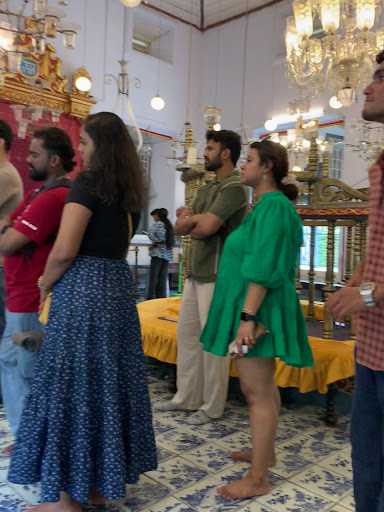
Visitors to this architectural marvel are greeted with a serene and beautifully maintained place. A nominal entry fee of 10 rupees is required to explore the rich history, intricate architecture, and cultural significance encapsulated within the Paradesi Synagogue. This historic gem stands as a testament to the enduring legacy of the Jewish...
Read more