Om vigneshwaraya namaha 🙏🏼
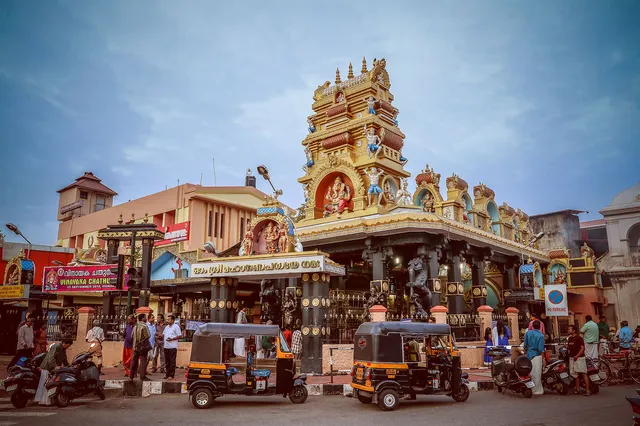
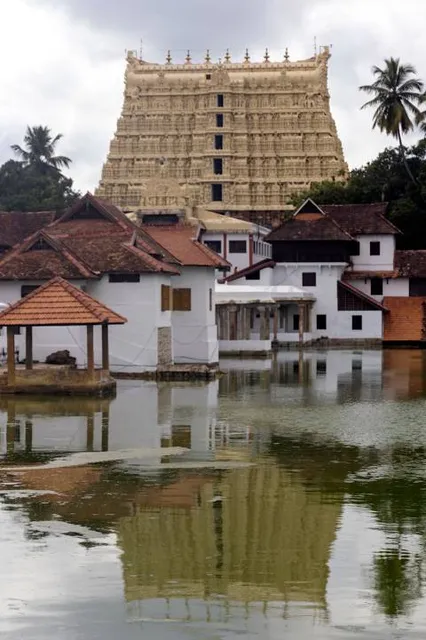
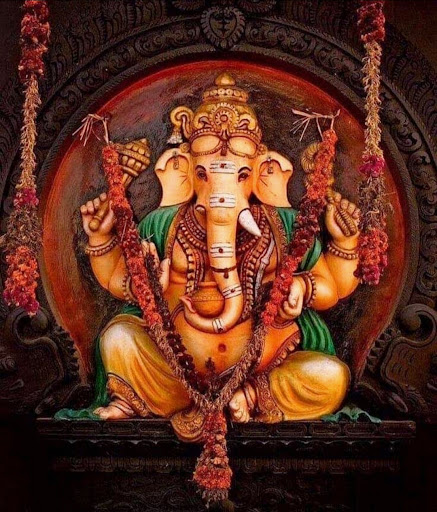
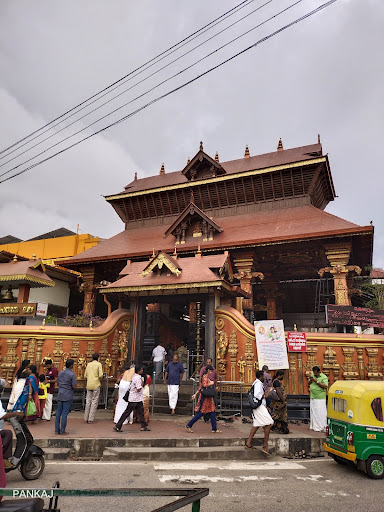
Pazhavangadi Ganapathy Temple is one of the renowned Lord Ganesha temples in Kerala. It is situated at the heart of East Fort, Thiruvananthapuram. The original idol of the Pazhavangadi Ganapathy Temple is a small idol of Lord Ganesh, with the right leg in the folded posture. Other deities worshipped at Pazhavangadi Maha Ganapati Kovil are Lord Ayyappa, Goddess Durga, Nagaraja, and Brahmarakshas. Devotees can see beautiful paintings of the 32 forms of Lord Ganesh inside the temple complex. Devotees break coconuts in front of this temple and one can hear the continuous cracking sound of coconuts as if firecrackers are being burst; this is known as ‘Soorathengai udaippathu’. There is a small tank in front for breaking coconuts and sack full of coconuts get broken here. The main offering at Pazhavangadi Maha Ganapathi Temple is breaking of Coconuts to remove obstacles, which runs an average of 2,500 a day. Modak is the favourite dish of Lord Ganesh, hence one can offer Modak as well. Another important offering to the Lord is Ganapathy Homam. There are two images of Ganesha inside the sanctum. One made of Granite and the other made of gold. Though the temple is very small, there are also shrines for Sasthavu, Bhagavathy and Nagas. This is one of the most famous Lord Ganesh temples in Kerala, situated within walking distance from Sree Padmanabhaswamy Temple.
Ganesha is the God of Knowledge and is invoked at the commencement of any function. He is the god that protects his devotees from any obstacles(vighnam). Hence the name Vighneswara. He is also described as the Supreme Leader(Vinayaka).Ganapathy is said to have had two spouses. Buddhi(intellect) and Siddhi(achievement). Thus he is the master of knowledge and achievement. As Ekadanta, the Lord has limitless powers. As Heramba, he removes obstacles. As Lambodara, He protects all worlds. As Surpa Karna, He shows compassion by giving the highest knowledge. All these names for Lord Vinayaka, who is the Lord of all.
The Lord has four hands. In one hand he has a rope(ankusha) while in another he has an axe. With the axe he cuts off the attachment of his devotees to the world of plurality and thus end all the sorrows that go with it. The rope is used to pull the devotee close and closer to the Truth. The holding of the ankusha represents His rulership of the world. It is the emblem of divine Royalty. In a third hand he holds a rice ball that represents the joys of Sadhana. With the other hand he blesses his devotees and protects them from obstacles that they may encounter on their Spiritual path of seeking the Supreme.
The form of Ganapathi cannot, by any human standards, be termed as handsome. He has a small head, big stomach and uncouth form. But still we are captivated by His form and like to see Him more and more and worship Him. Beauty does not lie in the Aakaara, the external form but can be experienced even in Vikaara (apparent uncouthness). He has as his vehicle a small mouse.The significance of riding on a mouse is the complete conquest over egoism. Riding on a mouse, one of nature's smallest creatures and having the head of an elephant, the biggest of all animals, denotes that Ganesha is the creator of all creatures. Elephants are very wise animals; this indicates that Lord Ganesha is an embodiment of wisdom. It also denotes the process of evolution--the mouse gradually evolves into an elephant and finally becomes a man. This is why Ganesha has a human body, an elephant's head and a mouse as His vehicle. This is the symbolic philosophy...
Read morePazhavangaadi Sree Maha Ganapathy Temple, situated in the heart of Thiruvananthapuram (Trivandrum) at East Fort, is one of Kerala’s most revered and iconic temples dedicated to Lord Ganesha. Its rich history, unique rituals, and tranquil spiritual atmosphere continue to attract thousands of devotees and visitors from all over India each year.
The origins of the temple date back to the 18th century during the era of the Travancore Kingdom. According to legend, the idol of Lord Ganapathy (Ganesha) was first discovered by a soldier of the Travancore army at Padmanabhapuram, the former capital of Travancore. The soldier, who was said to be a fervent devotee of Lord Ganesha, stumbled upon the idol while bathing in a river and began carrying it with him. The idol became a symbol of divine protection for the soldiers who believed they were being harassed by a Yakshi (a kind of demon spirit) during their night duties. The idol’s presence miraculously put an end to the disturbances, prompting the army to establish a small shrine in Padmanabhapuram. When the capital was later shifted to Thiruvananthapuram in 1795, the idol was also moved and installed at what is now Pazhavangaadi, with the present temple structure being built in 1860 under the patronage of Maharaja Ayilyam Thirunal.
One of the most distinctive features of the temple is its serene and intimate atmosphere. Despite its location at a bustling junction, the moment you step through the gopuram (entrance tower), you are enveloped by a sense of peace, devotion, and tradition. The main deity, Lord Ganesha, is depicted in a unique seated posture with his right leg folded, an image both powerful and inviting. Within the temple, sculptures portray 32 different forms of Lord Ganesha, reflecting the diversity of his worship throughout Hindu culture.
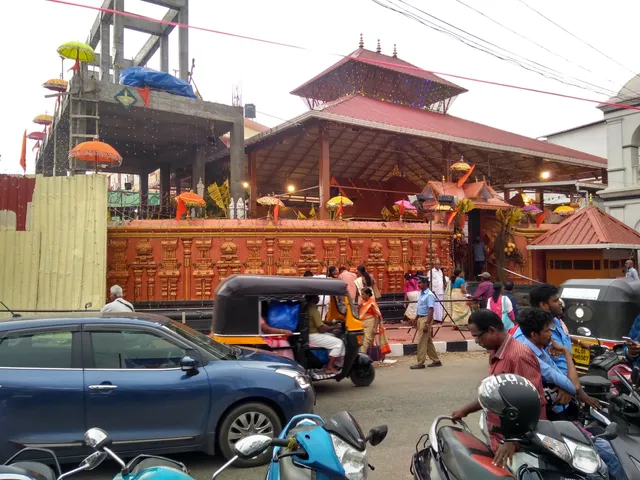
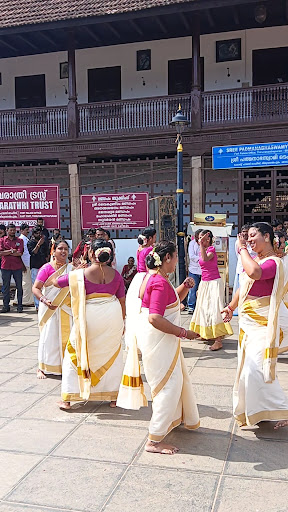
Rituals at Pazhavangaadi Ganapathy Temple have their own charm and uniqueness. The most popular offering, coconut breaking (vazhipadu), is performed by devotees seeking to remove obstacles from their lives—sometimes, more than 2,500 coconuts are cracked in a single day. Additional offerings include the Ganapathy Homam, Modakam, and Appam, all of which are considered pleasing to Lord Ganesha. The temple also observes important festivals such as Vinayaka Chathurthi, Virad Chathurthi, Sankashti Chathurthi, and other significant days in the Hindu calendar with grandeur and communal participation.
Apart from Lord Ganesha, the temple houses shrines for other deities, including Lord Ayyappa, Goddess Durga, and Nagaraja, making it an inclusive and significant spiritual destination. Architecturally, the temple exhibits classical Dravidian and South Indian influences, with intricately carved pillars and vibrant murals. Its jet-black exterior and gold-adorned central shrine are visually striking, especially after dusk when oil lamps are lit, adding to the temple's mystical aura.
Visitors speak highly of the temple’s spiritual energy, efficient management, and the sheer sense of tradition and history deeply woven into its rituals and structure. Whether you are a tourist, a spiritual seeker, or a devotee, Pazhavangaadi Sree Maha Ganapathy Temple provides a meaningful and authentic glimpse into Kerala’s religious life, cultural legacy, and communal harmony, all anchored around devotion to the beloved...
Read moreOverview Trivandrum Packages Hotels in Trivandrum Trivandrum Tourism Places To Visit in Trivandrum Pazhavangadi Ganapathy Temple Trivandrum Kerala #23 Among Things To Do in Trivandrum Get Trivandrum PDF Guide ₹ 9,822 onwards
Weather : 29° C
Label :
Tags : Temple
Timings : Morning Darshan: 4:30 AM - 10:45 AM Evening Darshan: 5:00 PM - 8:30 PM
Time Required : 1-2 hours
Entry Fee : No entry fee
Planning a Trip? Ask Your Question
Pazhavangadi Ganapathy Temple, Trivandrum Overview Being one of the most popular Ganesh temples of the south, the Pazhavangadi Ganapathy Temple holds a special place in the hearts of the locals and the ardent devotees of Lord Ganesh. The devotees who visit this temple are overcome with the tranquil calm and relentless peace of the magically pious atmosphere. They say that Lord Ganesh fulfils the deepest wishes and fixes the stubbornest problems of his devotees who visit him at the Pazhavangadi Ganapathy Temple.
This opulent Ganpati Temple in Trivandrum is famous mainly for two reasons- its exceptional jet-black colour, a rare colour for temples in India, and its unique Ganesh idol. The position of the idol that sits in this temple is different from most others. Here, Lord Ganesh relaxes languorously with only his right knee folded under him as against his typically seen standing position or his seated position with crossed legs. The most common 'vazhipadu' or offering made to Lord Ganesh at the Pazhavangadi Ganapathy Temple is an open husked coconut which is cracked right at the temple. Breaking open this coconut symbolises overcoming any hurdles or obstacles that lie in the way of the fulfilment of one's innermost desires.
Read More on Pazhavangadi Ganapathy Temple History & Legend of Pazhavangadi Ganapathy Temple The history of the erection of this temple dates back to the time when the Travancore Kingdom army as at war on the Padmanabhapuram front. The regiment was on guard at the fort but was continually harassed by a Yaskhi, a relentless demon. Every soldier was petrified of encountering this demon. One of these soldiers was an ardent devotee of Lord Ganesh and believed that the lord is always with him. When he was stationed at the fort, he was fearless because he knew that Lord Ganesh would protect him.
When he went to the nearby river for his bath, he was surprised to stumble upon the idol of Lord Ganesh. The soldier considered this to be a good sign and decided to keep the idol with him at all times. The entire Travancore army was left undisturbed and unaffected by the Yakshi forever. Acknowledging the limitless power of this idol, a temple was constructed where the soldier had found the idol. However, when the headquarters of the Travancore Kingdom was moved to Trivandrum in 1795, they decided to move this holy idol with them. The present temple was erected in 1860 by the then reigning king Maharaja Ayilyam Thirunal, and unlike other temples, the Pazhavangadi Ganapathy Temple was maintained and looked after...
Read more