Important things first :
Stay Don't book hotels/rooms nearby temple if you are coming by car/taxi. There is no entry for 4 wheelers in 500 meter radius of temple. And parking will be big issue for hotels nearby temple. Try to book a hotel which is providing parking. For those not coming by car/taxi there are many hotels, lodges and dharamshalas nearby temple but availability in Dharamshalas not sure they were all full, Also I found same hotel at very cheap price onsite than on the online websites in which I stayed. Dharamshalas can also be book online on Yatradham websites. AC rooms will be better as it was very hot here.
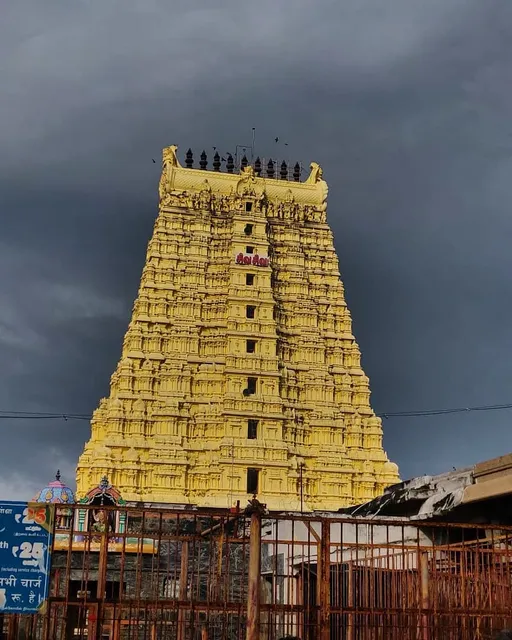
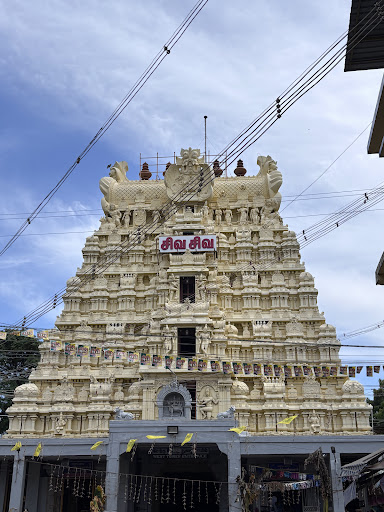
Temple and Darshan There are 4 gates of main temple. Main entry for darshan is East gate. There is free entry and paid entry (100 and 200 rupees per person) for main darshan.There were less rush and we took free entry and in 25 minutes we completed main darshan and it was a neat darshan , no hussle. Depending on crowd one can choose paid or free entry. For 100 and 200 ones they were respectively little more near the shivaling but if there is less rush one can easily have good darshan in free entry as well. Regular Darshan timing is (5:30 AM to 12:30 pm ) and ( 3 pm to 8:30 pm ) , refer Sphatik mani darshan below as well.
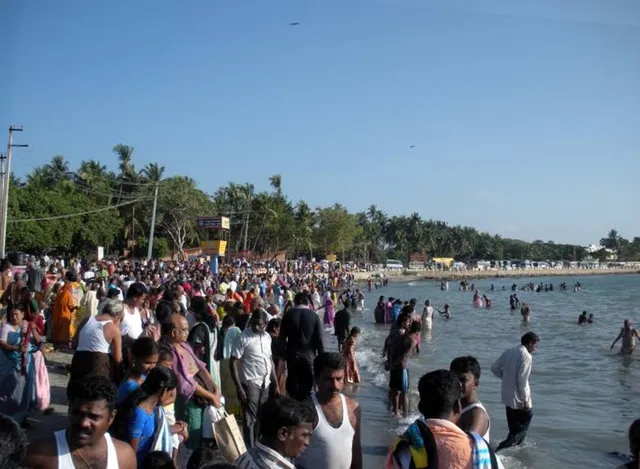
Darshan process : There is sea nearby and 22 kund snan is also there which is said to have holy water and it's been told to us that only after the snan in sea and 22 kund first then only main darshan allowed but there is nothing like this. One can have main darshan without snan as well , it depends on personal preference whether one wans to snan in holy kunds first or not. There is no compulsion on kund and sea snan before or after darshan. Sea snan is free , for kund snan there is 25 rs per person entry fee (it's entry is on North Gate of temple ) There was a very big queue on ticket counter and it would take easily 2 hours in that for ticket. There were some local guides who would charge some amount (200 to 300 per person) and can make quick entry in kunds and one can skip big queue. But after entry for all its same , guide generally helps only in skipping queue. Some guides were taking their group as well to all kunds but there was no difference after entry to kunds section. It was almost same for all. There were some changing rooms for men and women separately inside temple after exit from kunds. If you don't want change there can go back hotel/room as well. Exit from kunds is from South gate of temple. If your room is far from South gate it will be little hussle. Again this kund snan not anything mandatory for main darshan.
Sphatik Mani Darshan: There is one special mani darshan also only for 1 hour (5 AM to 6 AM ), its in same Ramanath swamy main temple, for that time period there will be no main shivling darshan but this Spathik darshan will be there. There is mandatory 50 rs fee for this for all no free entry. This will also take similar time as of main darshan because it's in same main darshan temple.
One can first do mani darshan , as its only open for one hour. Then if wish can go for snan in sea and kunds and then main darshan. You can carry bags and mobile inside temple as well , photo not allowed.
Dhanushkodi Take umbrella there.It's around 20km from main temple. Very beautiful site. But in afternoon it be very very hot and humid there if no clouds. Try going in evening or morning. If no personal car or taxi , there are many local transport for this. In the way to Dhanushkodi there was one other small temple as well with some good scenery. No entry or parking fee for Dhanushkodi and one can spend quality time here.
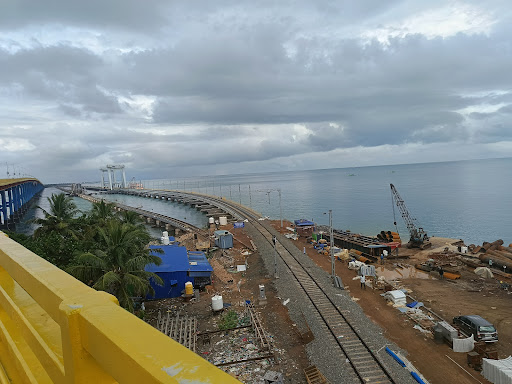
Other good sites : Panchmukhi Hanuman mandir (there are put some floating stones as well here ) , Kalam house and Pamban bridge.
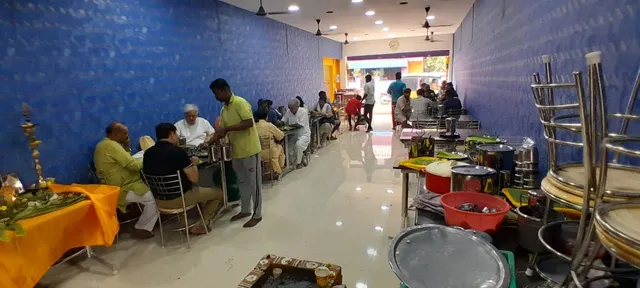
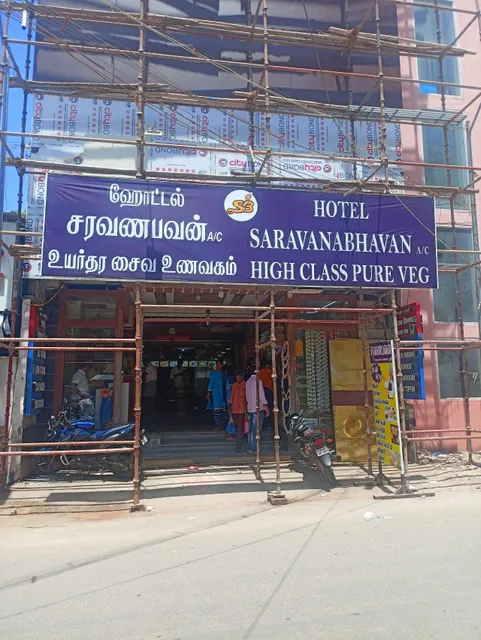
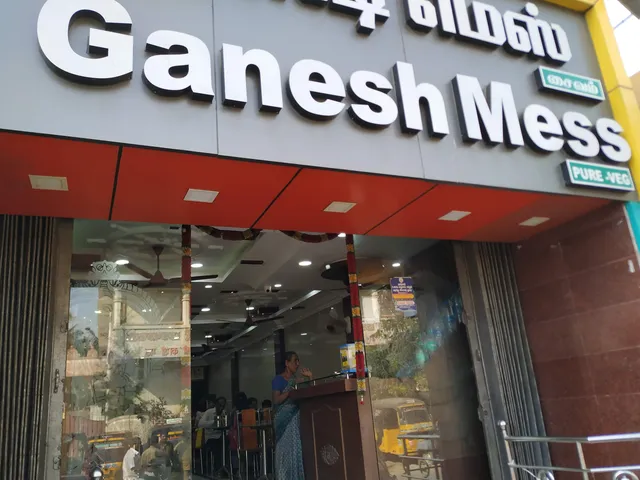
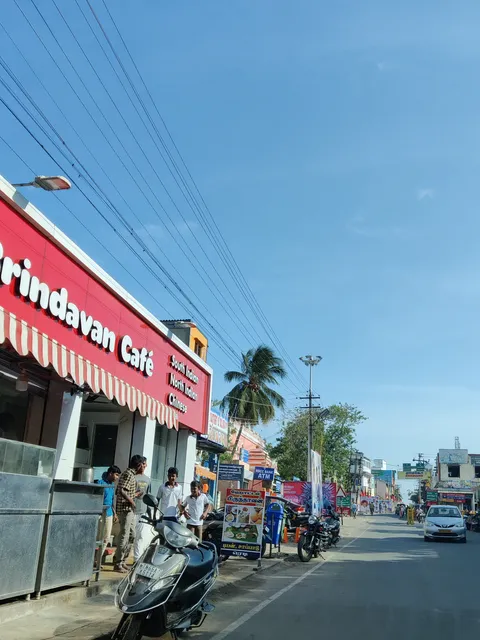
Food There are many restaurants on West car street of temple and some restaurants are on South Carolina street as well . Shree Shiv Punjabi Dhaba on West car street was good out of those 3 restaurants that we tried. It's around 100 meters from both West and south...
Read moreThe temple was first built by the Chola ruler, Dharmavarma. The Kaveri river flood destroyed the temple vimanam, and later, the early Cholas King Killivalavan rebuilt the temple complex that is present today. There are many mandapas which were built near the main sanctum sanctorum which dates around 100 CE to 300 CE built by Uraiyur Cholas. There were later additions of structures and inscriptions in the temple which belong to the Chola, Pandya, Hoysala, Marathas and Vijayanagara dynasties who ruled over the region. These inscriptions range in date between the 7th and 17th centuries.
During the period of invasion and plunder by the Alauddin Khilji's Muslim general Malik Kafur and his Delhi Sultanate forces in 1311, the Arabic texts of the period state that he raided a "golden temple" on river "Kanobari" (Kaveri), destroyed the temple and took the plunder with the golden icon of the deity to Delhi. According to Steven P. Hopkins, this is believed to be the Ranganathaswamy Temple.
The Tamil texts that followed offer various inconsistent legends on how the temple regained the Vishnu icon. According to one found in Koil Oluku, a young girl had vowed to fast till she had seen the icon. She followed the Muslim army as it returned with the loot back to Delhi. There she sneaked into the palace and saw that the Sultan's daughter had fallen in love with the image. The young girl returned to Srirangam and told the priests about what she had seen in Delhi. The priests went with musicians to Delhi, found the icon in capriciously playful possession of the Sultan's daughter, day and night. They sang and danced before the Sultan to return the icon, and he gave it back which upset his daughter. To console the daughter, the Sultan sent in his army again to bring it back, but this time they were not successful. According to other versions, the Muslim daughter followed the icon from Delhi to Srirangam on a horse and still not seeing the idol, gave up her life before the door of the sanctum, symbolizing that love brought back the icon after the war had taken it away.
Beyond these legends, there was a more severe second invasion of South India including Srirangam between 1323 CE and 1327 CE by the armies of the Sultanate under Muhammad bin Tughluq. The sanctum's Vishnu image with its jewelry was pre-emptively removed by the Hindus before the Delhi Sultanate troops reached Srirangam by a group led by the Vaishnavite Acharaya Pillai Lokacharyar to Tirunelveli in Tamil Nadu. The goddess Ranganayaki (Lakshmi) was also taken away to another location by a separate group. The temple was defended and according to the Tamil tradition some 13,000 Sri Vaishnavas devotees of Srirangam, died in the fierce battle.
After nearly six decades when Madurai Sultanate ruled after the Pandyan rulers were ousted after the repeated Delhi Sultanate's invasions, the Vijayanagara Empire ousted the Madurai Sultanate in 1378. Thereafter, the image of Namberumal was brought back to Srirangam. Before then, for decades the deity and the priestly wardens wandered and secretly carried the temple's icon through villages of Tamil Nadu, Kerala and Karnataka. They finally went to the hills of Tirumala Tirupati, where they remained until the temple was rebuilt in 1371. The icon was consecrated again according to the legends. This time, in memory of the first Sultan's daughter which tradition calls Thulukha Nachiyar, a niche in the temple was built for her. The niche shows her as a girl sitting on a horse that carried her to Delhi. Her legend is still remembered. During contemporary processions when the icon is taken out of sanctum and then returned to it after its journey, Thulukha Nachiyar is dressed in Muslim garments and food offerings are made to her in the form of butter and chappathis (wheat bread).
Thereafter, under the Vijayanagara Empire, the temple site saw over 200 years of stability, repairs, first round of fortifications, and addition of mandapas. The Vishnu and Lakshmi images were...
Read moreStep by step visit of Rameshwaram Temple- Before temple visit, you need to first snaan/bath at the bank of Agnee teerth (Bathing in the sea). It's just 200 meters far from the Rameshwaram temple.
Once the bath completed, without changing dress, you can go to 22 kodi snaan (22 water well bath) just beside of them temple . Here panda/pujari pull out the water from each well and pour on you. There are 22 wells of water. One of the well contains hot water (always hot naturally 12 months)
There are Paid locker facility available to keep your stuffs safe while you bath.
From here, you can either change the dress in the 22 kodi snaan premises or can go to your hotel/lodge to change the dress.
Now you are ready to visit the Rameshwaram temple -
Dress code - MALE - Shirt, T-shirt, Full pant/jeans, lungi etc. FEMALE- Saree, Salwar suit with dupatta (no cut sleeve suit, only full suit, no shorts), full gown etc.
Timings- 5:00 AM to 01:00 PM and 4:00 PM to 8:00 PM (NOTE- Every morning 5:00 AM to 6:00 AM special Mani (gem) darshan takes place.
Not allowed inside temple premises- Footwear, Camera Allowed - Mobile phones (if no security guard check you. It's totally your risk), small belongings, Belt, Pooja thali, cash etc. You are not allowed to click photos of Lingam.
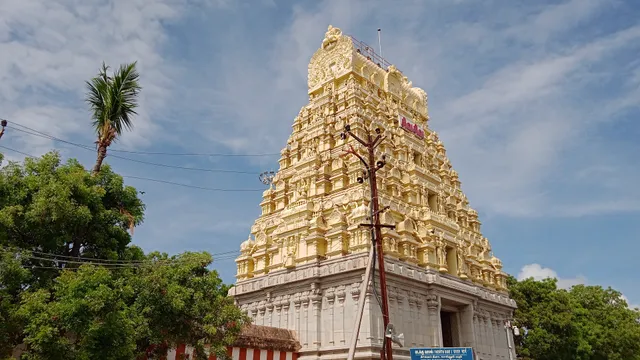
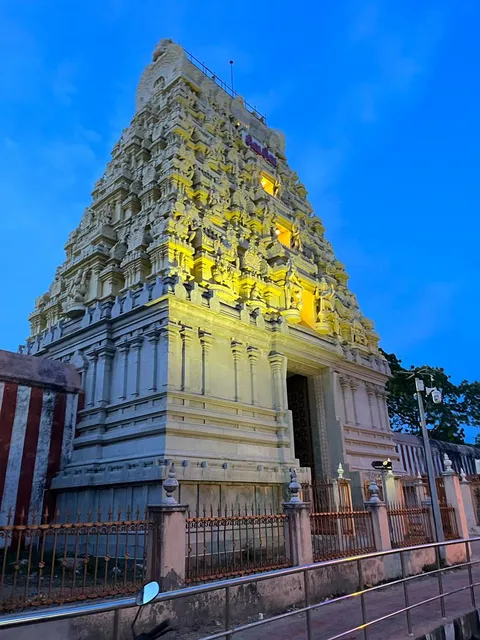
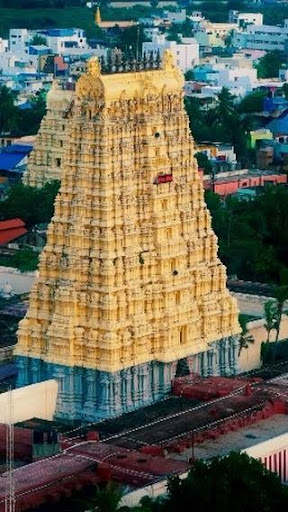
There are four entrance of the temple premises called North Gopuram, East Gopuram, South Gopuram and West Gopuram. You can enter into temple premises from any Gopuram but remove the footwear before entering. There are paid/free facility to keep your footwear, mobile, camera & other small belongings.
There are 3 types of queue in the temple, Free queue ₹100/person queue ₹200/person queue Free queue is generally very long and can take up to several hours for darshan. ₹100 queue gives fast access to darshan with respect to free queue. ₹200 queue gives more fast access than ₹100 queue and closer darshan of lingam than any other queue. NOTE- Sometimes (when the crowd is huge or any festival) the ₹200 queue may get longer than ₹100 queue. So choose wisely and with respect to situation and your priorities.
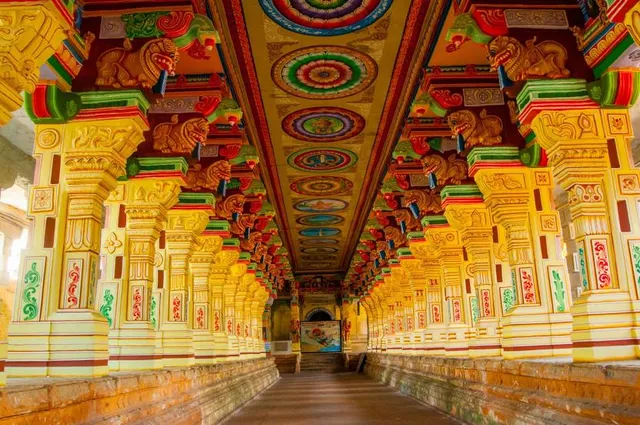
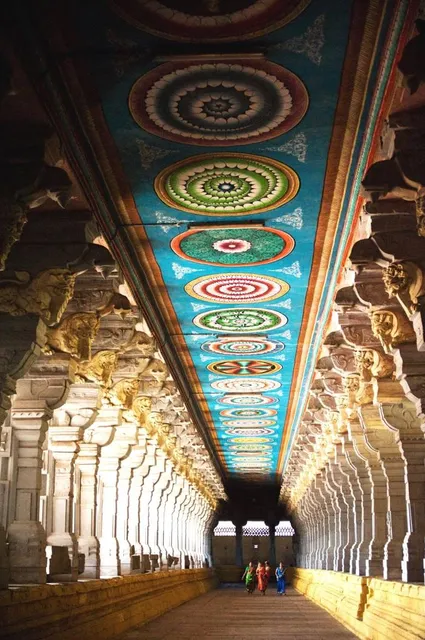
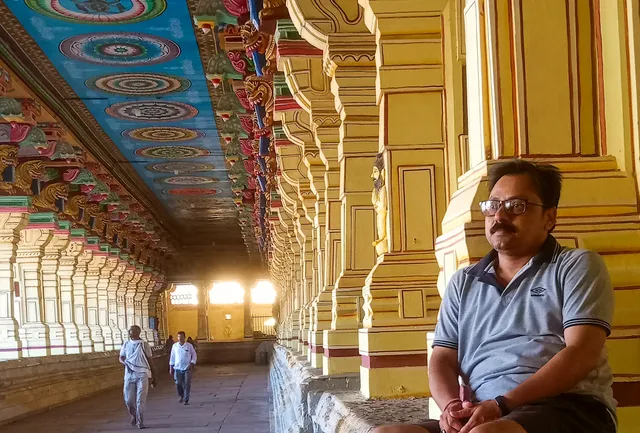
Temple has world's longest outer corridor & it's very beautifully engraved and coloured.
There are 2 lingams inside the temple - Ramalingam (create by Mata Sita/ Lord Rama (beliefs may differ)) which is the main lingam Vishwanath lingam (carried out by Hanuman ji from Kailash parvat on the command of lord Rama)
There is also Mata Parvati temple beside the Ramalingam that you must visit.
There are a lots of statue and lingam inside the premises, you can take darshan of all of these if you have sometime left. Each and every carving is beautiful.
That's the entire walkthrough the Rameshwaram temple.
IMPORTANT- The VIP darshan culture is also prevalent in the temple. Pandas may ask you some money (up to ₹1100/person or more) for the fast visit in the temple without any queue. Here are my two views-
If you pay, then they may assist you as local guide of temple as well and explain the most of things of temple and can able to give answers of your queries related to temple (Choose panda which can speaks your regional language & English both for better understanding) I would recommend you to bargain with pandas till the balanced budget.
If you want to go without pandas then you can take ₹200/person queue or ₹100/person queue to visit the main lingam. Then you can visit the other parts of temple by your own.
Overall the temple is stunning and very beautiful. There are pure veg bhojnayala, restaurants, Shankh shops and idol shops available outside the temple premises. A must visit temple in India once in your life time. Also don't forget to donate some money/food/cloths or other stuffs to the needed persons in the Rameshwaram. Be kind to wandering animals as well and give them something to eat.
Jai...
Read more