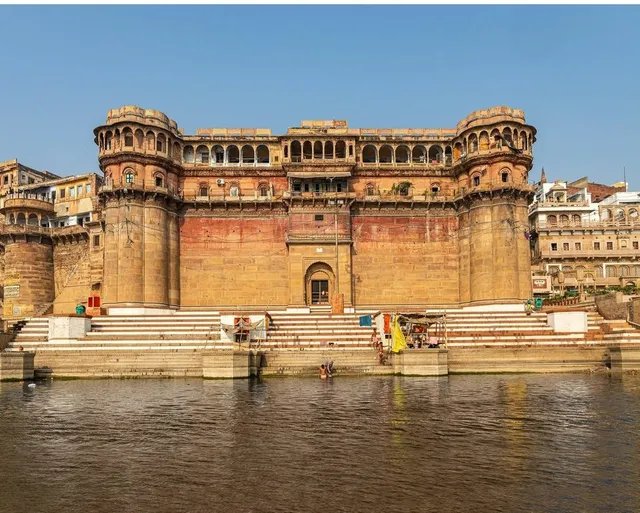
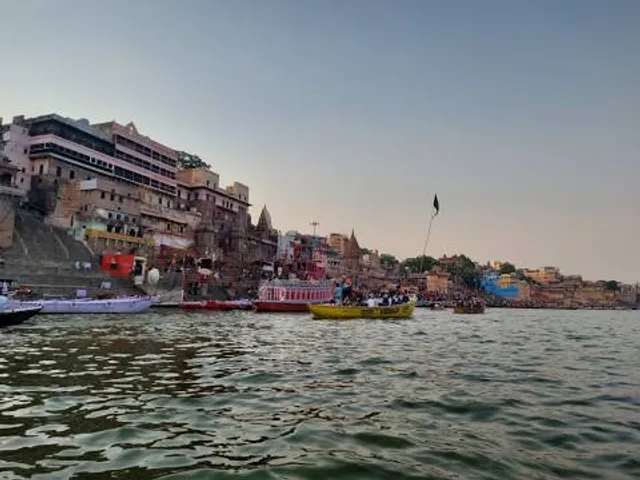
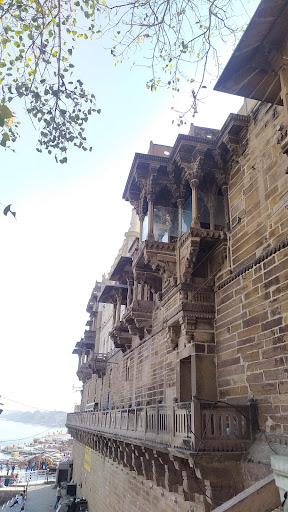
Nestled on the banks of the holy Ganges in Varanasi, the Jantar Mantar stands as a testament to India's rich history of astronomy and scientific advancement. This observatory, though often overshadowed by the more famous ghats and temples of Varanasi, holds a story as intricate and fascinating as the celestial movements it was designed to measure.
Built by Maharaja Jai Singh II of Jaipur during the early 18th century, the Jantar Mantar in Varanasi is one of five astronomical observatories he constructed across India. A visionary ruler and an avid astronomer, Jai Singh II was determined to refine and expand India's astronomical knowledge, and these observatories in Delhi, Jaipur, Ujjain, Mathura, and Varanasi were central to his mission.
Completed in 1737, the Jantar Mantar of Varanasi is an architectural marvel. It comprises a series of large-scale astronomical instruments, each meticulously designed to perform specific functions. The massive sundials, meridian instruments, and various other devices are constructed from stone and marble, their sheer size and precision reflecting the advanced scientific understanding of the time.
Among the various instruments, the Samrat Yantra, a giant sundial, stands out with its imposing triangular structure. It accurately measures time down to the minute. The Digamsa Yantra, a cylindrical structure, determines the azimuth of celestial objects. The Chakra Yantra, shaped like a circle, is used to ascertain the declination of celestial bodies.
The primary purpose of these instruments was to make precise astronomical observations. They allowed for accurate predictions of eclipses, the determination of solstices and equinoxes, and the calculation of celestial coordinates. This data was crucial not only for astronomy but also for astrology, navigation, and the preparation of almanacs, which were integral to daily life and religious practices in India.
During its heyday, Jantar Mantar in Varanasi was more than just an observatory; it was a center of learning and discovery. Scholars and astronomers from across the region gathered here to study and share their knowledge. The observatory symbolized a bridge between scientific inquiry and the spiritual wisdom of Varanasi, reflecting the holistic approach to knowledge in ancient India.
With the advent of modern technology and the decline of traditional astronomical practices, Jantar Mantar's instruments gradually fell into disuse. Over time, the observatory faced neglect and weathered the ravages of nature. However, recognizing its historical and cultural significance, efforts have been made in recent years to preserve and restore the site.
Today, the Jantar Mantar in Varanasi stands as a monument to the scientific ingenuity and artistic prowess of the past. Though it may not buzz with the same scholarly activity as it once did, it continues to inspire awe and admiration among visitors. As the sun casts shadows on the ancient instruments, one can't help but marvel at the brilliance of those who, centuries ago, sought to unravel the mysteries of the cosmos from this very spot.
For those who venture beyond the bustling streets and sacred waters of Varanasi to discover Jantar Mantar, the experience is akin to stepping back in time. Here, in the heart of one of the world's oldest cities, the observatory remains a silent witness to the eternal dance of the stars and the enduring quest...
Read moreJantar Mantar, also known as the Man Singh Observatory, is a fascinating historical site located in Varanasi, India. Situated on the terrace of the Virtual Experiential Museum, this astronomical observatory offers a unique and enriching experience for visitors interested in both science and history.
The location of Jantar Mantar is quite friendly for tourists as it is conveniently placed on the terrace of the Virtual Experiential Museum, offering stunning panoramic views of the surrounding area. The observatory's elevated position allows visitors to witness the beauty of Varanasi's skyline while exploring the rich scientific heritage of the region.
One of the standout features of Jantar Mantar is its association with the illustrious Maharaja Sawai Jai Singh II of Jaipur, who built five similar observatories across India during the 18th century. This connection adds historical significance to the site, making it an essential destination for history enthusiasts and scholars seeking to delve into India's astronomical achievements.
The observatory provides a clean and well-maintained environment for visitors, allowing them to fully immerse themselves in the awe-inspiring world of ancient astronomy without any distractions. The pristine surroundings contribute to a serene and contemplative atmosphere, enhancing the overall experience of exploring the complex instruments and their historical context.
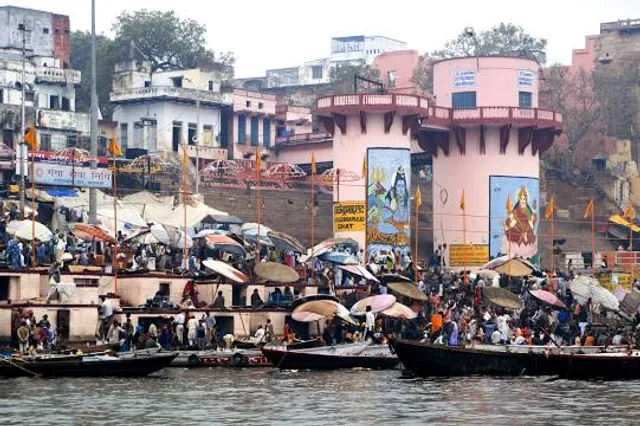
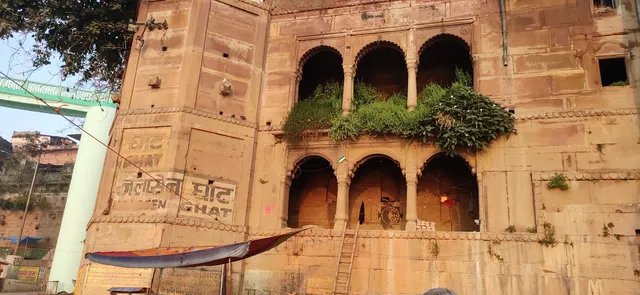
The proximity of Jantar Mantar to the Rajendra Prasad Ghat further adds to its allure. After a fulfilling visit to the observatory, visitors can take a leisurely stroll along the Ghat, which is a series of steps leading to the holy Ganges River. This proximity offers an opportunity to blend cultural and spiritual experiences, making the trip to Jantar Mantar even more fulfilling.
The observatory itself is a marvel of ancient engineering and precision. The intricate instruments, including the Samrat Yantra (the world's largest sundial) and the Jayaprakash Yantra, showcase the scientific genius of the astronomers of that era. Exploring these instruments provides a profound understanding of the methods used by ancient scholars to study celestial phenomena.
Moreover, Jantar Mantar has embraced modernity by integrating technology into the visitor experience. The Virtual Experiential Museum offers interactive displays and audio-visual presentations, enhancing the understanding of the complex astronomical concepts and their relevance in today's world. This amalgamation of the past and the present creates an engaging and enlightening experience for all generations of visitors.
In conclusion, Jantar Mantar in Varanasi, situated on the terrace of the Virtual Experiential Museum, is a must-visit destination for those fascinated by history, astronomy, and technology. With its historical significance, clean environment, and convenient location near the Rajendra Prasad Ghat, the observatory provides a memorable and enriching experience for visitors. Exploring the ancient instruments and learning about India's remarkable astronomical achievements leaves a lasting impression and fosters a deeper appreciation for the scientific heritage of this...
Read moreJantar Mantar is an observatory built in Varanasi in the year 1737 by Maharaja Jai Singh II of kingdom of Amber (later called Jaipur). The observatory is one of the five observatories built by Maharaja Jai Singh . Maharaja Jai Singh II was also an astronomer and had a deep interest in science and astronomy. In the early 18th century, he sent his scholars to several countries to study design, construction and technology of the observatories and also the prevalent technology. The scholars returned with their observations and many manuals on astronomy. Subsequently between 1724 and 1737, Maharaja Jai Singh II had five observatoriesconstructed in Jaipur, Mathura, New Delhi, Ujjain and in Varanasi.4[6] There is another evidence of the observatory being built at least two centuries before 1772. According to Collected writing of Dharampal, Volume I, Chapter I, page number 39, Sir Robert Barker, in 1772, wrote that the observatory was built about 200 years ago by Raja Mawnsing, son of Jaysing. He states "The principal curiosity here is the observatory, built by Mawnsing,the son of Jysing, about 200 years ago; there is an exceedingly good mural arch cut upon a fine plaister of chunam, so fine and smooth, that it has the appearance of marble; and though it is certainly very old, it still is perfect, but the index is wanting; that is a loss which could very easily be supplied by a person who has a taste for these studies; for the centres are left in the wall." It clearly indicates that the observatory was built centuries before the British came to India. A rather curious point arises here out of this chronology about the dating of the Benares observatory: Barkeralong with Pearse, and A. Campbell visited the observatory in 1772. If the observatory was actually built in 1737, it was only 35 years old at this date. Both Barker and Pearse specifically state that it had been there for some two centuries. They must have arrived at this statement after meeting and conversing with persons who, if the observatory had been constructed only 35 years previously, must have been eye witnesses to its construction. As there was no controversy in 1772 about the date of the construction of the observatory, it is inconceivable that Barker’s informants misled him on this point. The conversion of two centuries into 35 years is the most fabulous aspect of this...
Read more