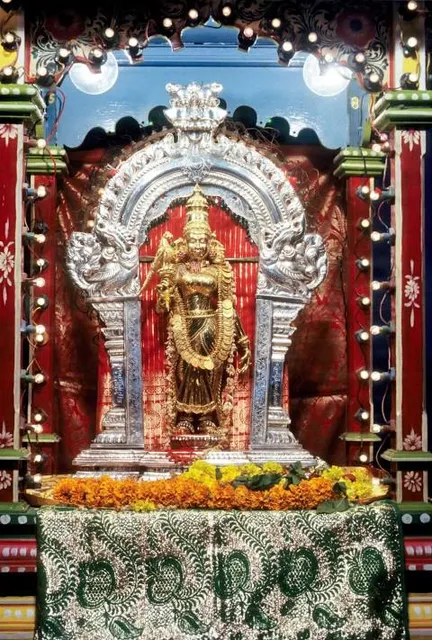
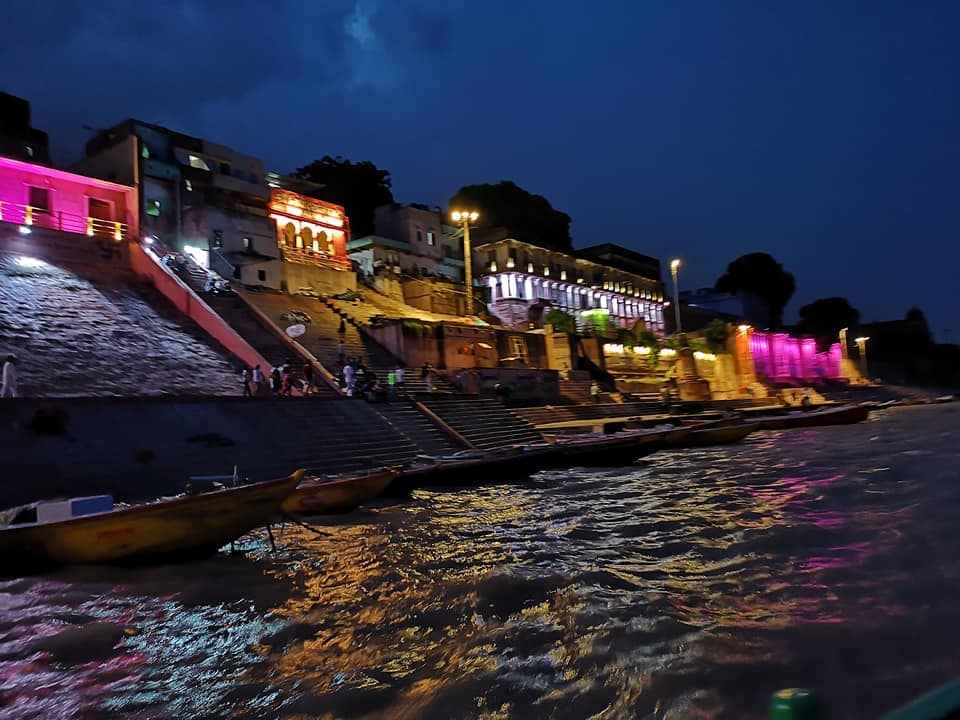
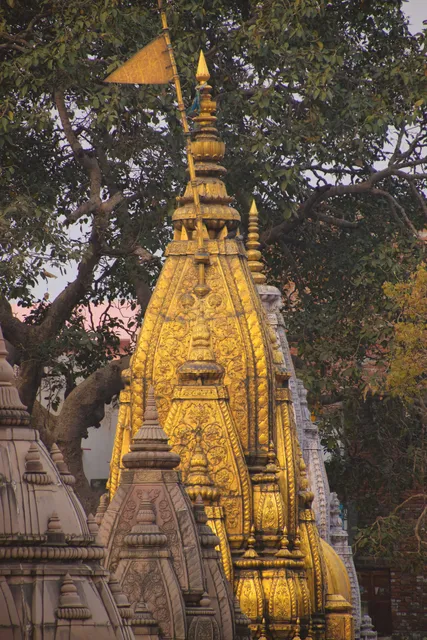
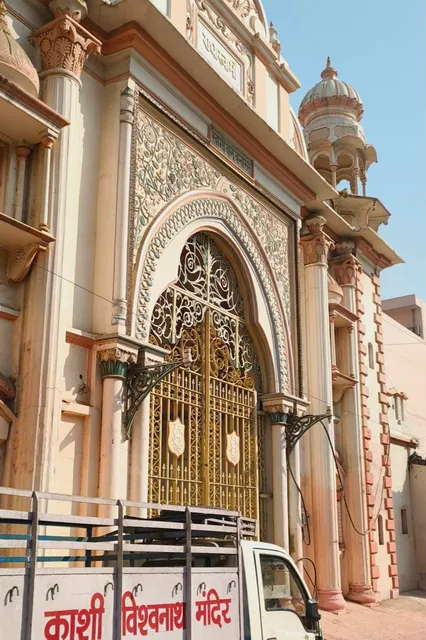
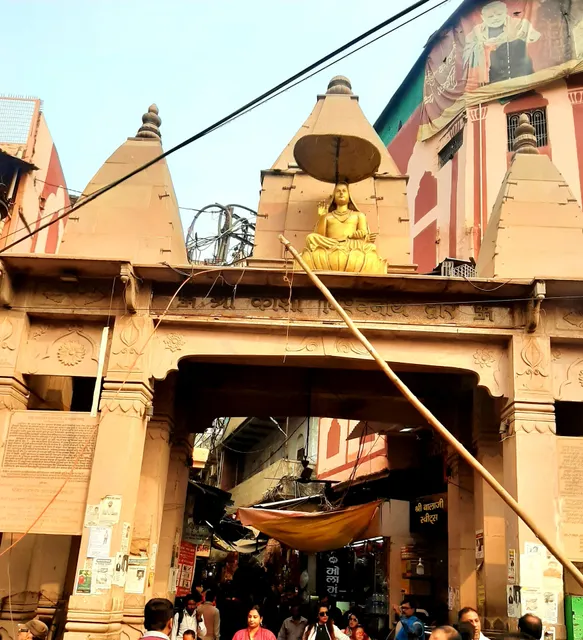
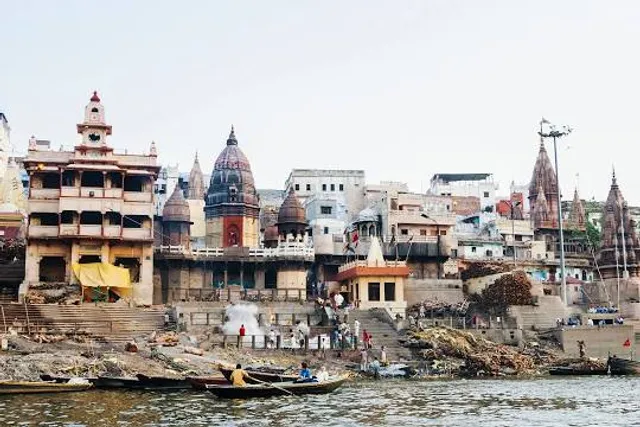
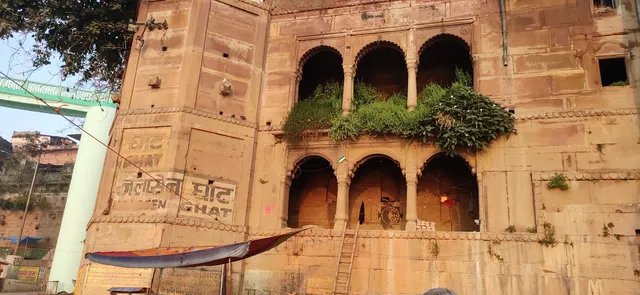
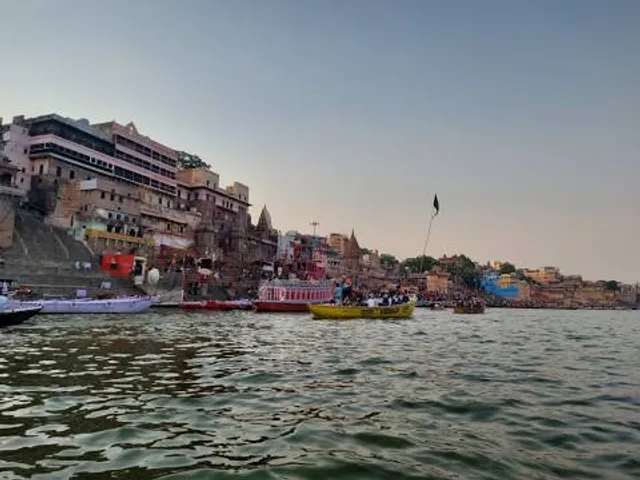
The Vishalakshi Temple or Vishalakshi Gauri Temple is a Hindu temple dedicated to the goddess Vishalakshi aspect of the goddess Parvati/Gauri) at Mir Ghat on the bank of the Ganges at Varanasi in Uttar Pradesh, India.It is generally regarded as a Shakti Pitha, the most sacred temples dedicated to the Hindu Divine Mother. The earrings of the goddess Sati are said to have fallen on this holy spot of Varanasi. The temple is situated by the famous cremation grounds ofManikarnika. Vishalakshi Temple is known for its temple festival on Kajali Tij, held on the third day during waning fortnight in the Hindu month of Bhadrapada (August).
The daughter of Prajapati Daksha, Sati was married to the god Shiva against his wishes. Daksha organized a great yajna, but did not invite Sati and Shiva. Uninvited, Sati reached the yajna-site, where Daksha ignored Sati and vilified Shiva. Unable to withstand this insult, Sati jumped into the sacrificial fire and committed suicide. Sati died, but her corpse did not burn. Shiva (as Virabhadra) slew Daksha for being responsible for Sati's death and forgave him, resurrecting him. The wild, grief-stricken Shiva wandered the universe with Sati's corpse. Finally, the god Vishnudismembered the body of Sati into 51 parts, each of which became a Shakti Pitha, temple to a form of the Goddess. Shiva is also worshipped at each Shakti Pitha in the form of Bhairava, the male counterpart or guardian of the presiding goddess of the Pitha.Sati's eye or earring is believed to have fallen at Varanasi, establishing Vishalakshi as a Shakti Pitha.
In the sacred geography of Varanasi, six points are said to symbolize Shastanga (six-fold) yoga, which is performing by visiting the six sites. They are the Vishwanath Temple (the most important temple of Varanasi - dedicated to Shiva), the Vishalakshi Temple, the Ganges, the Kala Bhairava temple(dedicated to Varanasi's guardian deity and Vishalakshi's Bhiarava), the Dhundiraj Temple (dedicated to the god Ganesha - son of Shiva and Parvati) and the Dandapani temple (dedicated to an aspect of Shiva).
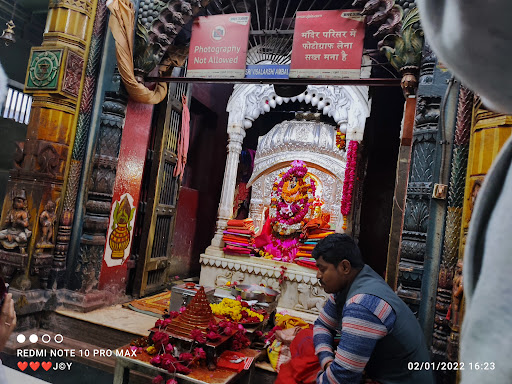
Devotees often bathe in the holy Ganges nearby before offering worship at the temple. The puja(worship), offerings, recitation of hymns to the goddess and charity at the temple is considered highly fruitful because of the power of the presiding goddess. The goddess is especially worshipped by unmarried girls for a groom, childless couples for progeny and unfortunate women for the turn of their fortune. Two goddess images are housed side-by-side in the garbhagirha(sanctum): a smaller black stone image called Adi Vishalakshi on left back side and another taller black stone image installed at a later date. Devotees often visit the Vishwanath and Annapurna shrines with this temple.
Two most important festivals in the temple, as well as all other goddess temples in Varanasi, is two Navaratris ("nine nights"). The Ashwin Navatri or simply called Navaratri, culminating in Vijayadashami, falls in the waxing fortnight of the Hindu month of Ashwin (October) and celebrates the victory of the goddess Durga on the buffalo-demon Mahishasura. The other Navaratri is in the waxing fortnight of Chaitra (March). On each of nine days, one of Varanasi's goddess temples – corresponding to one of the Navadurga (nine Durgas) or nine Gauris (Parvatis) – is recommended to be visited. The nine-temple circuit is described in various Kashi mahatmyas (texts narrating the greatness of the holy city of Varanasi/Kashi). Devotees flock to the temple in the evening of the fifth day of Navatri.
The yearly temple festival of Vishalakshi Temple is celebrated on Kajali Tij (Black Third), the third lunar day (tij) of the waning fortnight in Bhadrapada, the last month of the Indian rainy season. Women sing "amorous" rainy season songs called kajali (black) around this time. The holy day is observed especially for the welfare of...
Read moreThe Shri Vishalakshi Mata Shaktipeeth Temple, also known as the Vishalakshi Temple, is a sacred Hindu temple located in the holy city of Varanasi (Kashi), Uttar Pradesh, India. It is dedicated to Goddess Vishalakshi, a form of the goddess Parvati, and is considered a significant spiritual site in Varanasi.
Key information about the Shri Vishalakshi Mata Shaktipeeth Temple includes:
Goddess Vishalakshi: The temple is dedicated to Goddess Vishalakshi, who is venerated as a form of the goddess Parvati, the divine consort of Lord Shiva. Vishalakshi means "wide-eyed," and the goddess is often depicted with large, compassionate eyes.
Spiritual Significance: The Vishalakshi Temple is revered by devotees for its spiritual significance. It is believed that offering prayers and seeking the blessings of Goddess Vishalakshi here can lead to the fulfilment of one's wishes and spiritual upliftment.
Location: The temple is situated in the vicinity of the Kashi Vishwanath Temple, one of the holiest shrines dedicated to Lord Shiva in Varanasi. Devotees often visit both temples as part of their pilgrimage to Varanasi.
Architecture: The temple's architecture reflects the traditional style of North Indian temples. It features a sanctum sanctorum where the main deity of Goddess Vishalakshi is enshrined. The temple is known for its peaceful and spiritual ambience.
Rituals and Offerings: Devotees offer various rituals, prayers, and offerings to Goddess Vishalakshi, seeking her blessings for their well-being, prosperity, and spiritual progress. The temple's priests conduct daily worship ceremonies.
Festivals: Like many other temples in Varanasi, the Vishalakshi Temple celebrates various Hindu festivals with great fervour. Navaratri, Shivaratri, and other significant occasions are marked by special ceremonies and decorations.
Accessibility: Varanasi is well-connected by road, rail, and air, making it easily accessible for pilgrims and tourists. The Vishalakshi Temple is a place where visitors can experience the rich spiritual and cultural heritage of Varanasi.
The Shri Vishalakshi Mata Shaktipeeth Temple is an essential part of the religious and cultural landscape of Varanasi, one of the oldest and holiest cities in India. Devotees and tourists alike visit this temple to seek the divine blessings of Goddess Vishalakshi and to immerse themselves in the spiritual atmosphere...
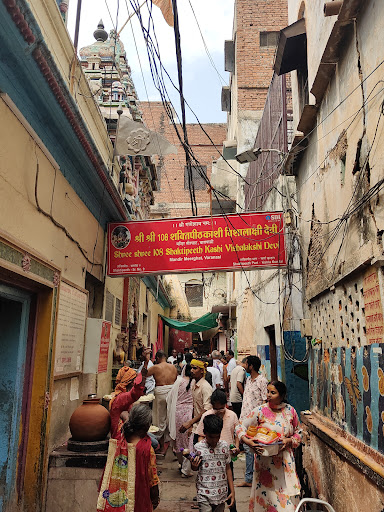
Read moreVishalakshi temple is located just walkable distance from Kashi Vishwanath temple. it depends on from which gate you are coming out. Gate Number to is most approachable gate to reach Vishalakshi temple. Also located at a short distance from Maa Annapurna temple. Vishalakshi word is derived from Sanskrit word. Vishal meaning wide and akshi meaning eyes and given to describe one who has wide eyes. This temple is one of the Ashtadasha Shaktipeetham. It is believed that the earrings of Mata Sati fell at this holy place.
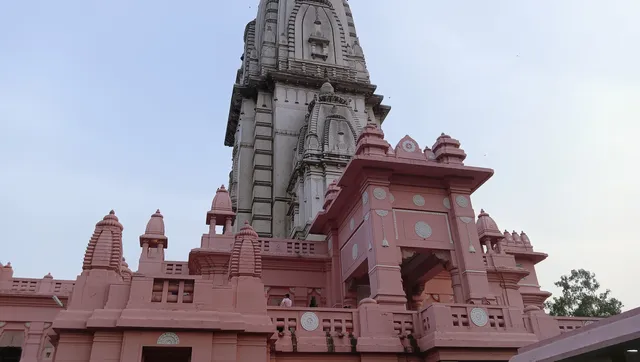
Architecture of the temple: The Vishalakshi temple has a unique architecture of South Indian style. The narrow lanes near Meer Ghat leads to the Vishalakshi temple built in South Indian architecture style. This temple is built by Nattukottai Nagarathar, a trading community of Tamil Nadu. The gopuram at the entrance has elaborate carvings. At the entrance, an exquisitely decorated gopuram welcomes devotees standing in front of the main entrance of the temple. The inscriptions of lions are present on both sides of the gateway symbolize strength and divine protection. Above the entrance, a beautifully crafted marble relief of goddess Lakshmi exudes serenity and blessings. A Tamil inscription etched onto the temple walls adds to its historical charm.
Interesting facts about this temple: The temple is considered as one of the major pilgrimage destination of Kashi after Vishwanath temple. This temple is one of the three temples connected with the eyes of the Goddess. The first temple is the Meenakshi temple located in Madurai, Meenakshi means Fish Eyes. The second temple is the Kamakshi temple located in Kanchipuram, Kamakshi means love eyed and the third one is the Vishalakshi temple which is located in Varanasi, Vishalakshi means wide eyed goddess. The Garbhagriha has two idols of Goddess Vishalakshi a smaller black stone idol called Adi Vishalakshi, which is believed to be the original idol on left back side and another black stone image adorned with flowers and jewels, installed at a later date. The Vishalakshi temple is known for its Kajali Tij Festival held bi-annually during the Hindu month of Bhadrapada. This event takes place over a span of two weeks.
Temple visiting timings: Morning time: 04:30 to 11:00 Break time: 11:00 to 17:00 Evening time: ...
Read more