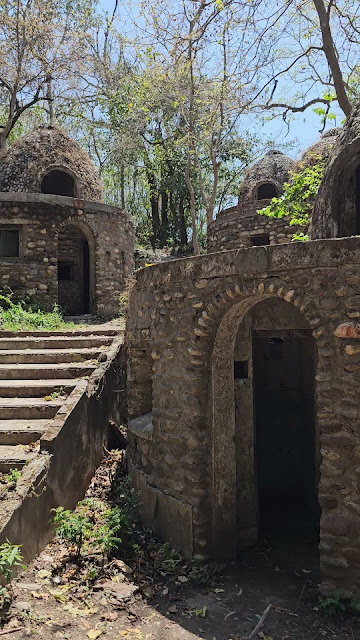
I was awestruck after entering the Beatles Ashram by the shear peacefulness of the place. This ashram was developed by Maharishi Mahesh Yogi for transcendental meditation (TM).
The Beatles - Jane Asher, Cynthia Lennon, Pattie Boyd Harrison, Maureen, Starkey, Mia Farrow, Donovan, Mal Evans and Mike Love visited this ashram in 1968 for meditation. Though Government calls this ashram as Chaurasi Kutia (84 meditation chambers) yet this ashram is popularly known as "Beatles Ashram". This place is an attraction for both Indian and foreign visitors.
The entry is not free. It is ₹ 200 for Indian and ₹ 1200 for foreigner. For student (above 18), the cost of entry is ₹ 100 by producing an identity card or its digital copy and for student below 18, it is ₹ 50. Ticket price for senior citizen is ₹ 100. Keep identity car or its digital copy ready with you.
The timings in summer is 10 AM to 4:30 PM with 5 PM as exit time. The timings in winter is 10 AM to 3:30 PM with exit time as 4:00 PM. When exit time approaches, they announce it on the speakers.
There is also a vegetarian canteen in the area serving tea, sandwiches and delicious Maggi.
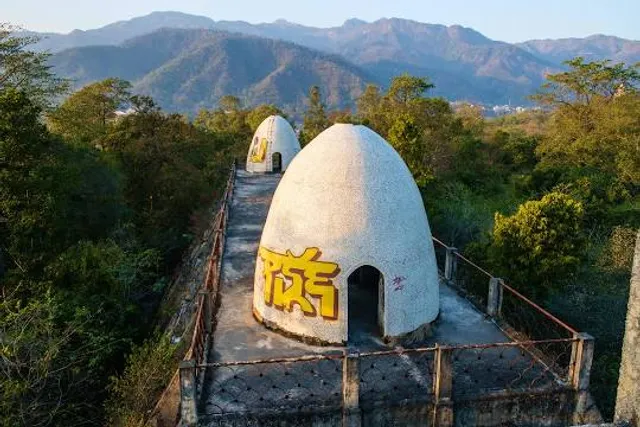
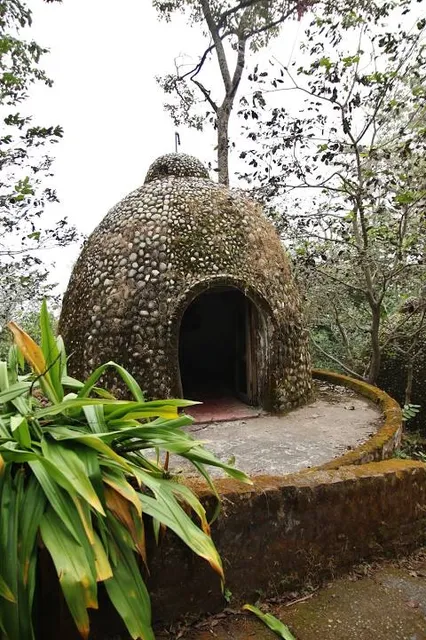
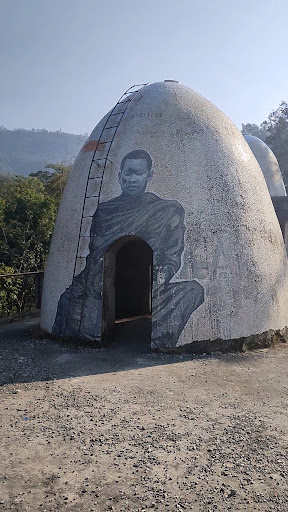
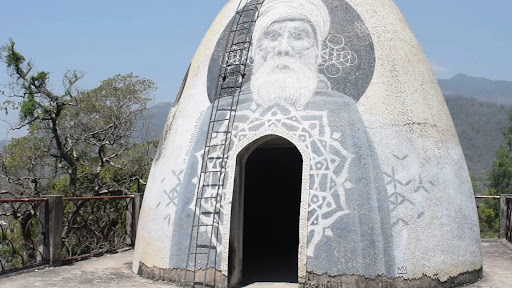
On the entry we encountered with meditation caves with egg shaped top with a fascinating look. These structures were constructed from 1976-78 to
accommodate Sanyasis and Brahmacharis for practising their Sadhana. The round stones used in them were taken from the shore of the Ganga.
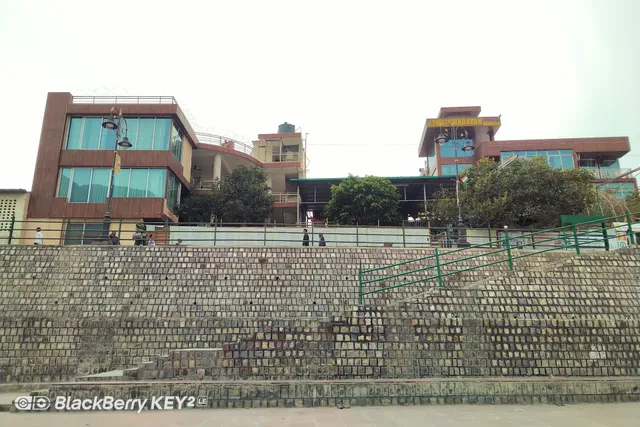
The area is covered with a lot of greeneries all around. One can see the awesome view of river Ganga and the city Rishikesh from this ashram.
There are a lot of abandoned structures of 1960s like a post office, a printing press, kitchen, auditorium and many other building used for various purposes in this ashram.
The post office was constructed in the early 1960s. This building was used for official mails by Maharishi Mahesh Yogi and by guests staying for residential courses.
The kitchen was constructed in the early 1960s. This kitchen prepared vegetarian food for all guests, whose numbers often reached more than 500.
The printing press was constructed in the early 1960s. This press was used for printing literature on TM. The First edition of world-famous books, "The
Science of Being and the Art of Living" and 'Maharishi Mahesh Yogi's commentary on the first 6 chapters of "Shrimad Bhagavad Gita" were printed in this building.
There is an auditorium called Ved Bhawan constructed in 1976. This building was used as a lecture hall/classroom for conducting courses. There are beautiful wall painting of Beatles on two walls which give a lasting impact on your heart.
Chaurasi kutia (84 meditation chambers) Built from local river rock, each chamber represents a different classic Yoga Asana (Posture). Together they represent the whole range of human life.
On February 13, 2018 a hard cover book 'The Beatles in India' is being released worldwide by Insight Editions. And November 2018 marks the release of his latest feature film documentary, 'The Beatles in India' exploring and celebrating the events that happened here at this ashram with Maharishi Mahesh Yogi and the Beatles in the...
Read more★★★★★ / 🌿 “A Timeless Melody of Peace, Art & Nature in Rishikesh!” 🌿
The Beatles Ashram (Chaurasi Kutiya) in Rishikesh is not just a historic spot — it’s a soulful retreat that beautifully blends nature, art, and the lingering legacy of music. Once home to Maharishi Mahesh Yogi’s ashram, where The Beatles stayed in 1968 and composed many of their iconic songs, this place still echoes with creativity and serenity.
Nestled on the banks of the Ganga and embraced by the Rajaji Tiger Reserve, the ashram has an otherworldly calm. Walking through its abandoned meditation huts, crumbling stone pathways, and moss-covered walls feels like stepping into a peaceful time capsule. The silence here is profound — you hear the wind in the trees, birdsong, and your own footsteps — offering a rare space for reflection and stillness.
⸻
🌟 Highlights of the Experience • Historic Legacy: Knowing that The Beatles, along with other artists and seekers, meditated and created music here adds a magical energy to the visit. Fans of the band will feel the nostalgia instantly. • Street-Art & Graffiti: The ashram walls are covered with vibrant murals and Beatles-inspired artwork by international artists. Every corner feels like a living gallery that celebrates music and peace. • Meditation Huts (Chaurasi Kutiya): These dome-shaped stone huts are scattered throughout the ashram. Exploring them is fascinating — they feel raw yet inviting, and many still have an aura of tranquility. • Nature & Scenery: The ashram is surrounded by lush forests and offers glimpses of the Ganges. The air feels fresh, and the natural silence makes it a rejuvenating experience. • Peaceful Vibe: Despite being a popular tourist site, the ashram retains its calm energy. It’s a wonderful place for meditation, photography, or simply sitting under a tree and soaking in the moment.
⸻
📝 Practical Details • Entry: There’s a nominal entry fee (for both Indian and international visitors) which is worth it for the well-maintained paths and restored sections. • Best Time to Visit: Early morning or late afternoon — the light is softer, the air is cooler, and it’s less crowded. • Duration: Ideally set aside 1.5 to 2 hours to walk, explore, and sit quietly. • Photography: The combination of ruins, murals, forest, and domes makes this a paradise for photographers. • Walkability: Expect a lot of walking inside; wear comfortable shoes as paths can be uneven. • Safety: The site feels safe and secure; there’s a forest vibe but nothing to worry about during visiting hours.
⸻
💭 Final Thoughts
The Beatles Ashram is more than a tourist destination — it’s a soulful pause in the rush of travel. Whether you come for its history, its art, or its quiet connection to nature, you leave feeling a little lighter and more inspired.
⭐ Overall: A must-visit in Rishikesh — perfect for music lovers, history buffs, meditators, artists, or anyone seeking peace amidst nature’s charm.
✨ Review by @the_solo_wanderer_ For more soulful journeys and untold stories, search me on...
Read more84 Kutiya or The Betals Ashram comes under Rajaji National park protection so here is a entry fee which is different for students , normal citizens, and if you somehow contact with the staff of Rajaji staff any know person of your working in Rajaji you can just let the gate keeper to have a talk with him then only you can get a free entry
Chaurasia Kutir Ashram, also known as Beatles Ashram or Maharishi Mahesh Yogi Ashram, is located in Rishikesh, Uttarakhand, India. This ashram gained worldwide fame in 1968 when the Beatles, a famous British rock band, visited to learn Transcendental Meditation from Maharishi Mahesh Yogi.
Key Historical Points:
Establishment: The ashram was established by Maharishi Mahesh Yogi in the 1960s as a center for learning and practicing Transcendental Meditation. It is situated on the eastern bank of the Ganges River, surrounded by lush forests in the foothills of the Himalayas.
The Beatles Visit (1968): The ashram gained international recognition when the Beatles came to stay in February 1968. During their stay, they composed numerous songs that appeared in later albums, such as "The White Album." The visit by the Beatles brought global attention to the ashram and contributed to the popularity of meditation in the West.
Abandonment and Decay: After the 1970s, the ashram was abandoned, and the buildings fell into disrepair. Over the years, the area became overgrown with vegetation, and the buildings began to crumble. It remained in a state of neglect for several decades.
Reopening and Tourism: In recent years, the ashram has been reopened to the public and is maintained by the Rajaji Tiger Reserve authorities. It has become a popular tourist destination, particularly for fans of the Beatles and those interested in spirituality and meditation. The walls of the ashram are adorned with murals and graffiti, giving it a unique artistic appeal.
Current State: Today, Chaurasia Kutir Ashram serves as a historic site and a symbol of the global spread of yoga and meditation practices. It attracts visitors worldwide who come to explore its ruins, enjoy the tranquil environment, and connect with the spiritual atmosphere of Rishikesh.
The ashram remains a significant cultural and spiritual landmark in Rishikesh, reflecting its unique role in the history of the 1960s cultural exchange between the East...
Read more