HTML SitemapExplore
logo
Find Things to DoFind The Best Restaurants

Serampore Raj Bari — Attraction in West Bengal

Name
Serampore Raj Bari
Description
Nearby attractions
Nearby restaurants
Om Casual Dining Restaurant
63, N.S.Avenue, Serampore, West Bengal 712201, India
The Denmark Tavern
Serampore Police Line N.N Roy Street , LP 39, 2/1, Serampore, West Bengal 712201, India
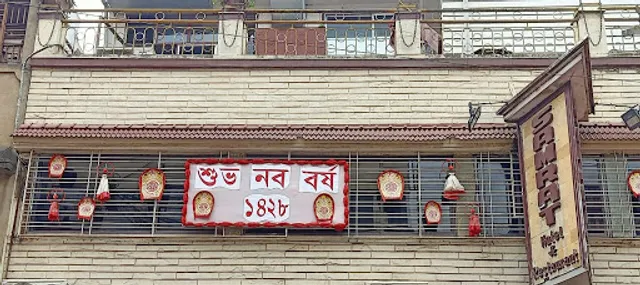
Samrat Restaurant & Hotel
175, N.S.Avenue, Serampore, West Bengal 712201, India
Vheto
Serampore court compound,Serampore, Hooghly, India, Serampore, West Bengal 712201, India
Subha Fast Food Centre (Kali Cabin)
9, NN Roy St, Serampore, Hooghly, West Bengal 712201, India
Kitchen 27
27/A, N.S.Avenue, Serampore, West Bengal 712201, India
Hangla
27, N.S.Avenue, opposite RMS Maidan, Serampore, Kolkata, West Bengal 712201, India
momomia
Bangla School, 4, Serampore, Kolkata, West Bengal 712201, India
The Park Restaurant
S G S S Market, Serampore 1St Floor, opposite Station, West Bengal 712201, India
Palki Restaurant & Caterer
High School, 52, N.S.Avenue, opposite Serampore, Serampore, Dakshin Rajyadharpur, West Bengal 712201, India
Nearby hotels
Related posts
Keywords
Serampore Raj Bari tourism.Serampore Raj Bari hotels.Serampore Raj Bari bed and breakfast. flights to Serampore Raj Bari.Serampore Raj Bari attractions.Serampore Raj Bari restaurants.Serampore Raj Bari travel.Serampore Raj Bari travel guide.Serampore Raj Bari travel blog.Serampore Raj Bari pictures.Serampore Raj Bari photos.Serampore Raj Bari travel tips.Serampore Raj Bari maps.Serampore Raj Bari things to do.
Serampore Raj Bari things to do, attractions, restaurants, events info and trip planning
Serampore Raj Bari
IndiaWest BengalSerampore Raj Bari

Basic Info

Serampore Raj Bari

Chatra, Serampore, West Bengal 712201, India
4.3(1.3K)
Open 24 hours
Save
spot

Ratings & Description

Info

Cultural
Family friendly
attractions: , restaurants: Om Casual Dining Restaurant, The Denmark Tavern, Samrat Restaurant & Hotel, Vheto, Subha Fast Food Centre (Kali Cabin), Kitchen 27, Hangla, momomia, The Park Restaurant, Palki Restaurant & Caterer
logoLearn more insights from Wanderboat AI.

Plan your stay

hotel
Pet-friendly Hotels in West Bengal
Find a cozy hotel nearby and make it a full experience.
hotel
Affordable Hotels in West Bengal
Find a cozy hotel nearby and make it a full experience.
hotel
The Coolest Hotels You Haven't Heard Of (Yet)
Find a cozy hotel nearby and make it a full experience.
hotel
Trending Stays Worth the Hype in West Bengal
Find a cozy hotel nearby and make it a full experience.

Reviews

Things to do nearby

Watch Calcutta wake up- Magic Hour Tour
Sat, Dec 13 • 5:30 AM
Kolkata, West Bengal, 700072, India
View details
Magic Hour Tour
Magic Hour Tour
Sat, Dec 13 • 5:30 AM
H972+MM4, Jawaharlal Nehru Road, Esplanade, Dharmatala, Taltala, Kolkata, 700072
View details
Alleyway Food Tour
Alleyway Food Tour
Sat, Dec 13 • 4:30 PM
185/B, Raja Dinendra Street, Fariapukur, Shyam Bazar, Kolkata, 700004
View details

Nearby restaurants of Serampore Raj Bari

Om Casual Dining Restaurant

The Denmark Tavern

Samrat Restaurant & Hotel

Vheto

Subha Fast Food Centre (Kali Cabin)

Kitchen 27

Hangla

momomia

The Park Restaurant

Palki Restaurant & Caterer

Om Casual Dining Restaurant

Om Casual Dining Restaurant

3.9

(902)

Click for details
The Denmark Tavern

The Denmark Tavern

4.0

(2.7K)

$$$

Click for details
Samrat Restaurant & Hotel

Samrat Restaurant & Hotel

4.2

(2.5K)

$

Click for details
Vheto

Vheto

4.2

(461)

Click for details
Get the Appoverlay
Get the AppOne tap to find yournext favorite spots!
Wanderboat LogoWanderboat

Your everyday Al companion for getaway ideas

CompanyAbout Us
InformationAI Trip PlannerSitemap
SocialXInstagramTiktokLinkedin
LegalTerms of ServicePrivacy Policy

Get the app

© 2025 Wanderboat. All rights reserved.
logo

Reviews of Serampore Raj Bari

4.3
(1,290)
avatar
5.0
5y

Please read the story first,

Exactly how rich were the Goswamis of Serampore? Sample this. When the Danes, finding their factory in Serampore to be a losing concern, were looking for someone to sell their title of Serampore to, Raghuram Goswami offered to purchase it for the sum of Rs. 11,00,000! However the Danes found this sum to be inadequate and ultimately sold their possessions to the East India Company in 1845, for 12,00,000. The Goswamis of Serampore, are the descendants of one of the five Brahmin families whom Adisur, King of Gaur had invited to settle in Bengal, with gifts of land and monies, for the propagation of knowledge. One of his descendants was Lakshman Chakravarty. Lakshman was married to the daughter of Achyut Goswami, son of Advaitacharya Goswami, an ardent disciple of Sri Chaitanya. Lakshman settled in Shantipur, with Achyut’s family, and out of their marriage was born a son, Ramgobinda, who took on his mother’s maiden name, Goswami. It was Ramgobinda’s son, Radhakanta, who settled in Serampore. His grandson was Raghuram Goswami.

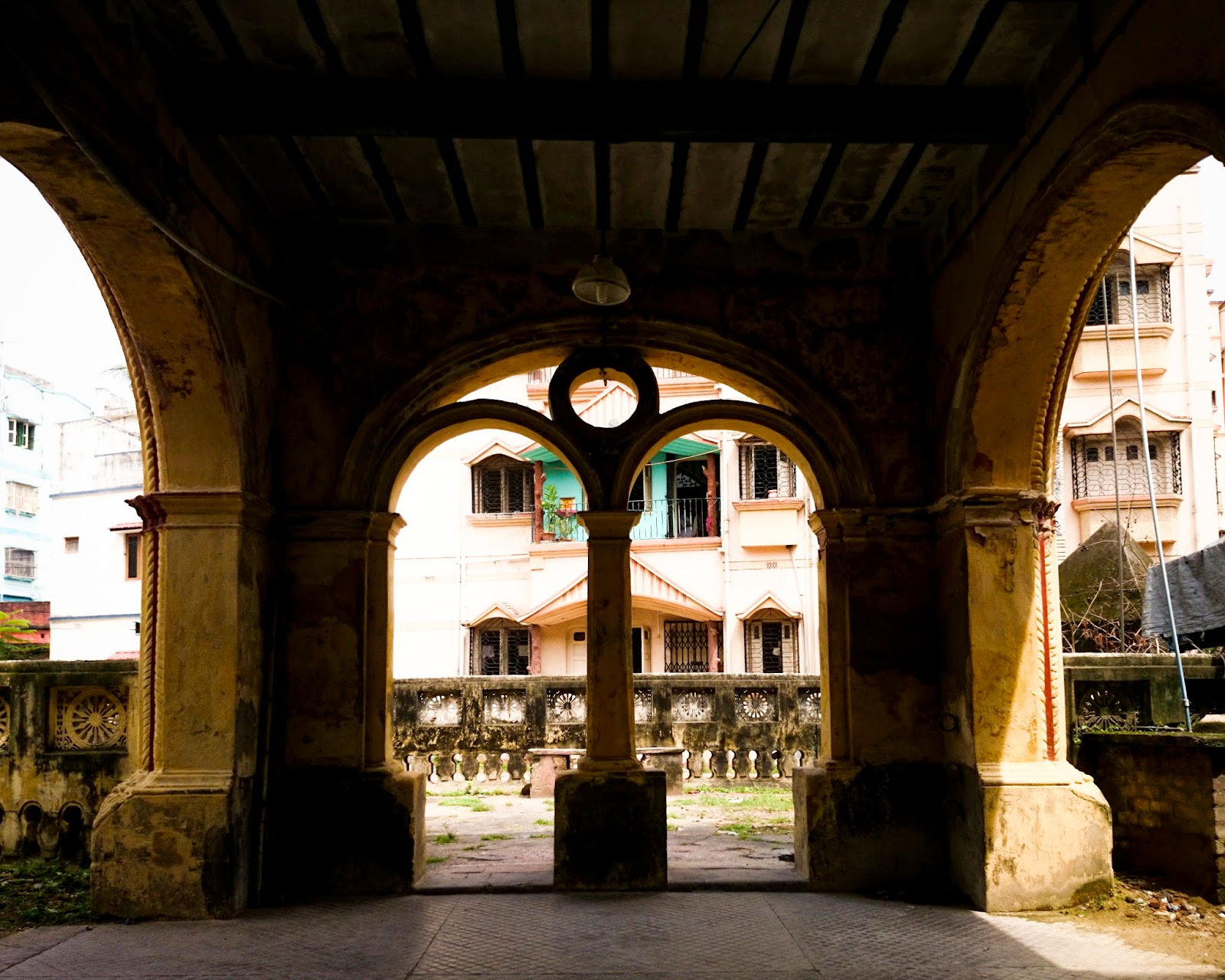
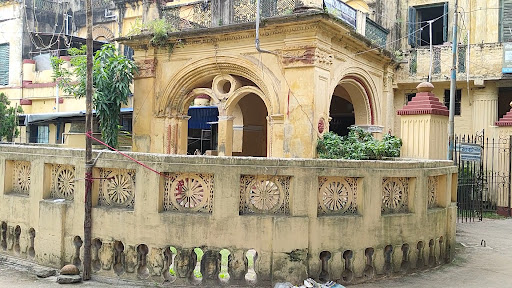
Finding far too much fragmentation of his original property in Goswamipara, Raghuram left, to build a house for himself and his children and it was thus that the giant mansion known today to locals as “Serampore Rajbari” came up, sometime between 1815 and 1820, during or shortly after the construction of Serampore College. Although it is called Rajbari, author Kanailal Goswami, himself of the family in question, says that it would be more accurate to call it the “Thakurbari”, since a portion of it was made debottar property. Once the house had been completed, the family deities, Radhamadhav Jiu (antiquated form of “Ji”, the suffix of respect) and Gopalji were transferred there. To this was added an “ashtadhatu” (eight metal) idol of Radharani by Raghuram’s son, Gopikrishna. These three idols adorn the family altar to this day. The house remains standing, though it has clearly seen better days. While it appears on the outside to be two separate blocks, these blocks were infact connected by an intricate network of passages before walls were erected to separate the sections for brothers. On the South is the portion that was probably originally allotted to Hemchandra Goswami. This two storied structure is now used both as a residence, as well as being hired out for marriage receptions, as well as other social functions. The more magnificent section is the one on the North, with its driveway, ionic columns and cast iron gates. This is the portion of the house that was turned into debottar property. It is still used as a residential property today. A board announces that a portion of the house is used by the Government as a “Child Guidance Centre”.

The Chandni. Note collapsed roof section

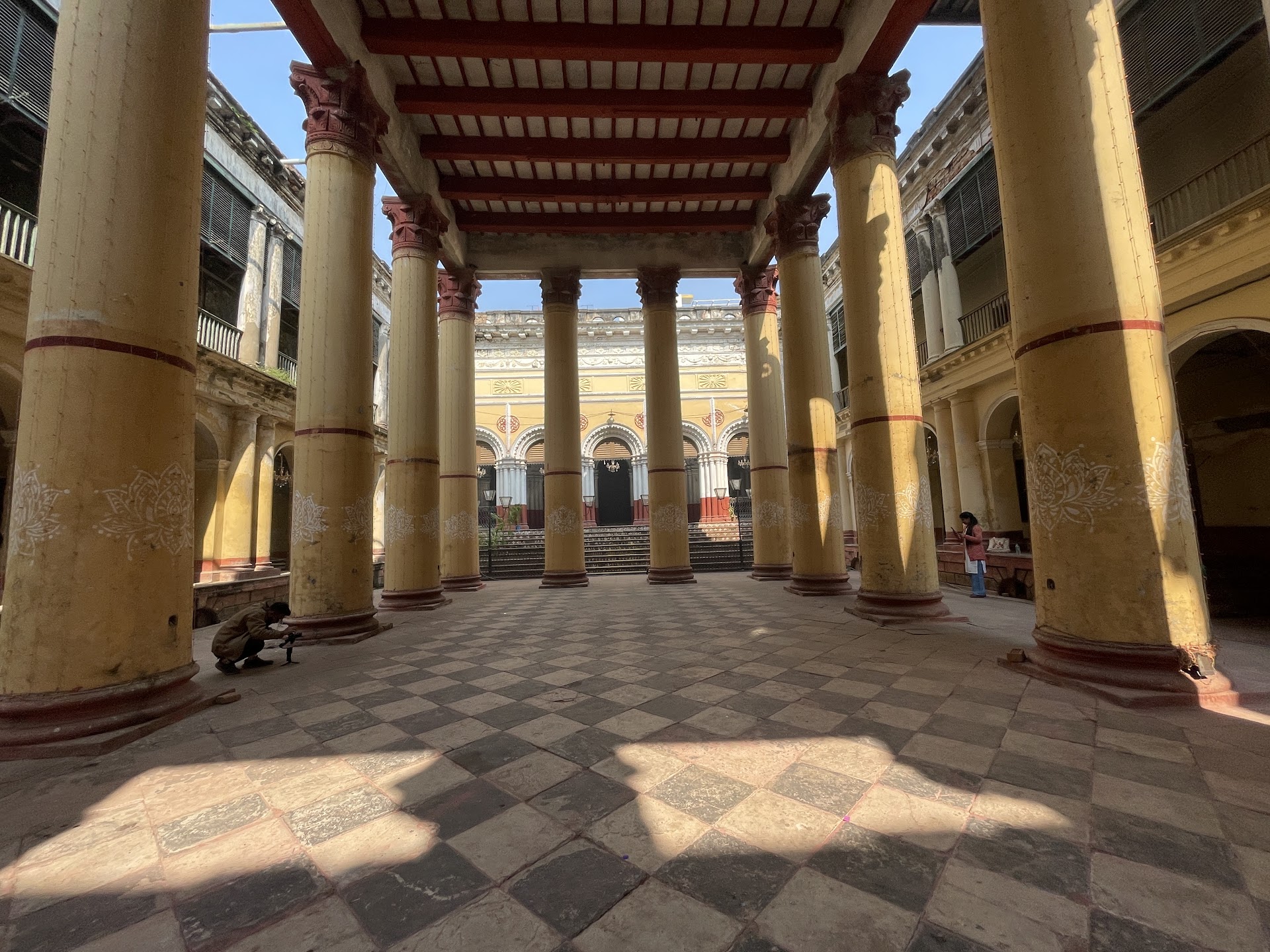
Inside, the most striking feature is the “Chandni”, or “Naatmandir”, a covered courtyard, measuring 120 feet by 30 feet. This spot was originally a tank from which water was drawn for domestic consumption. Unfortunately, Raghuram’s oldest son, Atmaram, drowned while swimming in that tank, at the age of 5. This accident caused Raghuram to have the tank filled up, and the Chandni was constructed. 24 Corinthian columns, 32 feet in height and 5 feet in diameter were raised to support the roof. The floor was covered in Chunar stone. For the rafters and beams on the roof, Sal wood was brought from Nepal. The Chandni was used for festive occasions, such as Holi, for marriages, receptions and social gatherings and even for staging plays. On the occasion of Durga Puja, the Chandni was the venue for feeding 500 people at a time, seated in long rows. Unfortunately, the Chandni is now decaying due to lack of maintenance. The gutters on the roof must have been clogged with mud for quite a while, leading to rainwater collecting on the roof, seeping through and slowly weakening it. When I visited, I found a section of the roof had collapsed, and the interior of the Chandni had been fenced off. One of the pillars was completely...

   Read more
avatar
4.0
7y

Goswamis of Serampore, are the descendants of one of the five Brahmin families whom Adisur, King of Gaur had invited to settle in Bengal, with gifts of land and monies, for the propagation of knowledge. One of his descendants was Lakshman Chakravarty. Lakshman was married to the daughter of Achyut Goswami, son of Advaitacharya Goswami, an ardent disciple of Sri Chaitanya. Lakshman settled in Shantipur, with Achyut’s family, and out of their marriage was born a son, Ramgobinda, who took on his mother’s maiden name, Goswami. It was Ramgobinda’s son, Radhakanta, who settled in Serampore.His grandson was Raghuram Goswami.Finding far too much fragmentation of his original property in Goswamipara, Raghuram left, to build a house for himself and his children and it was thus that the giant mansion known today to locals as “Serampore Rajbari” came up, sometime between 1815 and 1820, during or shortly after the construction of Serampore College. Although it is called Rajbari, author Kanailal Goswami, himself of the family in question, says that it would be more accurate to call it the “Thakurbari” or "Thakur Bati", since a portion of it was made debottar property.

The house has two separate blocks. North and South. On the South is the portion that was probably originally allotted to Hemchandra Goswami. This two storied structure is now used both as a residence, as well as being hired out for marriage receptions, as well as other social functions.

The more magnificent section is the one on the North, with its driveway, ionic columns and cast iron gates. This is the portion of the house that was turned into debottar property. It is still used as a residential property today. A board announces that a portion of the house is used by the Government as a “Child Guidance Centre”.

Inside, the most striking feature is the “Chandni”, or “Naatmandir”, a covered courtyard, measuring 120 feet by 30 feet. This spot was originally a tank from which water was drawn for domestic consumption. Unfortunately, Raghuram’s oldest son, Atmaram, drowned while swimming in that tank, at the age of 5. This accident caused Raghuram to have the tank filled up, and the Chandni was constructed.

The Chandni was used for festive occasions, such as Holi, for marriages, receptions and social gatherings and even for staging plays. On the occasion of Durga Puja, the Chandni was the venue for feeding 500 people at a time, seated in long rows.

Raghuram’s son, Gopikrishna had five sons. The eldest among them, Krishnalal had a falling out with his father, and was disinherited as a result. The remaining four brothers, Nandalal, Kishorilal, Rajendralal and Radhikalal continued to live in this house as a joint family, until the death of Nandalal in 1908, caused family unity to disintegrate. Kishorilal had probably anticipated this, and had begun construction of a palatial residence on the river bank at the cost of Rs. 1,50,000. The property was protected by a formidable wall right from the river bed that afforded it an attractive river frontage, and made it possible to lay out a large garden. To this house, he moved his branch of the family in 1910. This building too is still standing, and in use, and is in far better shape than Raghuram’s original Rajbari.

Kishorilal's house is now occupied by the...

   Read more
avatar
5.0
35w

The Serampore Goswami Rajbari, located in the Hooghly district of West Bengal, stands as a significant testament to the region’s rich cultural and architectural heritage. Constructed in the early 19th century by Raghuram Goswami, this sprawling mansion reflects a harmonious blend of European and Indian architectural styles. 

Architecture & Design: The Rajbari boasts over 100 rooms, making it one of Serampore’s largest palatial structures. Visitors are greeted by massive double arches leading into a courtyard adorned with fluted columns and towering pillars that soar approximately 30 feet high. The upper floors feature running balconies with stained-glass windows, adding to the mansion’s grandeur.  

Cultural Significance: For over three centuries, the Goswami family has celebrated the traditional ‘ek chaala’ Durga Puja within the Rajbari’s premises. The ‘Chandni’ or ‘Naatmandir’, a covered courtyard measuring 120 feet by 30 feet, serves as the central venue for these festivities, accommodating up to 500 people during events. 

Cultural & Visual Appeal: From its weathered textures to timeless architecture, the Rajbari offers the perfect blend of elegance and old-world charm. This makes it not just a heritage site but also a prime location for creative shoots.

Shooting Destination: Serampore Rajbari is open for: • Pre-wedding shoots • Film and short film shoots • Music video productions

The atmospheric setting — complete with colonial architecture, expansive courtyards, vintage staircases, and ambient natural light — provides a cinematic backdrop that adds character to any visual project.

Current State: While the Rajbari’s architectural splendor remains evident, certain sections have shown signs of wear over time. Restoration efforts have been initiated to preserve its historical essence. Portions of the mansion are currently utilized for various purposes, including serving as a school, a wedding venue, and housing the District Employment Exchange office. 

Visiting Information: Serampore is conveniently located approximately 30 km north of Kolkata. Travelers can reach the town via a short train journey from Howrah Station, followed by a brief e-rickshaw ride to the Rajbari. While the mansion’s exterior can be admired freely, access to the interiors may be restricted, especially during ongoing restoration or private events. 

Conclusion: The Serampore Goswami Rajbari offers a captivating glimpse into Bengal’s aristocratic past, showcasing architectural brilliance and cultural traditions. It’s a must-visit for history enthusiasts and those keen to explore the rich tapestry of West...

   Read more
Page 1 of 7
Previous
Next

Posts

Mriganka BanerjeeMriganka Banerjee
Please read the story first, Exactly how rich were the Goswamis of Serampore? Sample this. When the Danes, finding their factory in Serampore to be a losing concern, were looking for someone to sell their title of Serampore to, Raghuram Goswami offered to purchase it for the sum of Rs. 11,00,000! However the Danes found this sum to be inadequate and ultimately sold their possessions to the East India Company in 1845, for 12,00,000. The Goswamis of Serampore, are the descendants of one of the five Brahmin families whom Adisur, King of Gaur had invited to settle in Bengal, with gifts of land and monies, for the propagation of knowledge. One of his descendants was Lakshman Chakravarty. Lakshman was married to the daughter of Achyut Goswami, son of Advaitacharya Goswami, an ardent disciple of Sri Chaitanya. Lakshman settled in Shantipur, with Achyut’s family, and out of their marriage was born a son, Ramgobinda, who took on his mother’s maiden name, Goswami. It was Ramgobinda’s son, Radhakanta, who settled in Serampore. His grandson was Raghuram Goswami. Finding far too much fragmentation of his original property in Goswamipara, Raghuram left, to build a house for himself and his children and it was thus that the giant mansion known today to locals as “Serampore Rajbari” came up, sometime between 1815 and 1820, during or shortly after the construction of Serampore College. Although it is called Rajbari, author Kanailal Goswami, himself of the family in question, says that it would be more accurate to call it the “Thakurbari”, since a portion of it was made debottar property. Once the house had been completed, the family deities, Radhamadhav Jiu (antiquated form of “Ji”, the suffix of respect) and Gopalji were transferred there. To this was added an “ashtadhatu” (eight metal) idol of Radharani by Raghuram’s son, Gopikrishna. These three idols adorn the family altar to this day. The house remains standing, though it has clearly seen better days. While it appears on the outside to be two separate blocks, these blocks were infact connected by an intricate network of passages before walls were erected to separate the sections for brothers. On the South is the portion that was probably originally allotted to Hemchandra Goswami. This two storied structure is now used both as a residence, as well as being hired out for marriage receptions, as well as other social functions. The more magnificent section is the one on the North, with its driveway, ionic columns and cast iron gates. This is the portion of the house that was turned into debottar property. It is still used as a residential property today. A board announces that a portion of the house is used by the Government as a “Child Guidance Centre”. The Chandni. Note collapsed roof section Inside, the most striking feature is the “Chandni”, or “Naatmandir”, a covered courtyard, measuring 120 feet by 30 feet. This spot was originally a tank from which water was drawn for domestic consumption. Unfortunately, Raghuram’s oldest son, Atmaram, drowned while swimming in that tank, at the age of 5. This accident caused Raghuram to have the tank filled up, and the Chandni was constructed. 24 Corinthian columns, 32 feet in height and 5 feet in diameter were raised to support the roof. The floor was covered in Chunar stone. For the rafters and beams on the roof, Sal wood was brought from Nepal. The Chandni was used for festive occasions, such as Holi, for marriages, receptions and social gatherings and even for staging plays. On the occasion of Durga Puja, the Chandni was the venue for feeding 500 people at a time, seated in long rows. Unfortunately, the Chandni is now decaying due to lack of maintenance. The gutters on the roof must have been clogged with mud for quite a while, leading to rainwater collecting on the roof, seeping through and slowly weakening it. When I visited, I found a section of the roof had collapsed, and the interior of the Chandni had been fenced off. One of the pillars was completely covered in moss.
ARINDAM PAULARINDAM PAUL
The Serampore Goswami Rajbari, located in the Hooghly district of West Bengal, stands as a significant testament to the region’s rich cultural and architectural heritage. Constructed in the early 19th century by Raghuram Goswami, this sprawling mansion reflects a harmonious blend of European and Indian architectural styles.  Architecture & Design: The Rajbari boasts over 100 rooms, making it one of Serampore’s largest palatial structures. Visitors are greeted by massive double arches leading into a courtyard adorned with fluted columns and towering pillars that soar approximately 30 feet high. The upper floors feature running balconies with stained-glass windows, adding to the mansion’s grandeur.   Cultural Significance: For over three centuries, the Goswami family has celebrated the traditional ‘ek chaala’ Durga Puja within the Rajbari’s premises. The ‘Chandni’ or ‘Naatmandir’, a covered courtyard measuring 120 feet by 30 feet, serves as the central venue for these festivities, accommodating up to 500 people during events.  Cultural & Visual Appeal: From its weathered textures to timeless architecture, the Rajbari offers the perfect blend of elegance and old-world charm. This makes it not just a heritage site but also a prime location for creative shoots. Shooting Destination: Serampore Rajbari is open for: • Pre-wedding shoots • Film and short film shoots • Music video productions The atmospheric setting — complete with colonial architecture, expansive courtyards, vintage staircases, and ambient natural light — provides a cinematic backdrop that adds character to any visual project. Current State: While the Rajbari’s architectural splendor remains evident, certain sections have shown signs of wear over time. Restoration efforts have been initiated to preserve its historical essence. Portions of the mansion are currently utilized for various purposes, including serving as a school, a wedding venue, and housing the District Employment Exchange office.  Visiting Information: Serampore is conveniently located approximately 30 km north of Kolkata. Travelers can reach the town via a short train journey from Howrah Station, followed by a brief e-rickshaw ride to the Rajbari. While the mansion’s exterior can be admired freely, access to the interiors may be restricted, especially during ongoing restoration or private events.  Conclusion: The Serampore Goswami Rajbari offers a captivating glimpse into Bengal’s aristocratic past, showcasing architectural brilliance and cultural traditions. It’s a must-visit for history enthusiasts and those keen to explore the rich tapestry of West Bengal’s heritage.
Rajdeep DuttaRajdeep Dutta
Tucked away in the colonial lanes of Serampore, West Bengal — where Danish dreams once danced with Bengali grandeur — stands the Serampore Rajbari, a palatial ghost of aristocratic yesteryears that refuses to fade into oblivion. If history had a Pinterest board, this would be a top pin. Once home to the Goswamis of Serampore, influential zamindars and patrons of art, the Rajbari today is a photogenic paradox — equal parts crumbling and captivating, where the paint peels like poetic verses and the walls whisper tales of vintage opulence and Danish diplomacy (yes, Serampore was under Danish rule till 1845!). What Makes It Legendary: - Architectural Swag: The façade, with its towering Corinthian columns, sprawling courtyards, and labyrinthine corridors, gives you serious mid-1800s-meets-Greek-revival vibes. It's as if a Greek god took a sabbatical in Bengal and commissioned a palace! - Cultural Powerhouse: The Goswami family were no idle zamindars — they were literary patrons, music connoisseurs, and theological influencers. Their durbars once echoed with kirtans, classical concerts, and possibly even some high-stakes political chai pe charcha. - Not Just a Pretty Face: The Rajbari was recently brought into the spotlight by INTACH (Indian National Trust for Art and Cultural Heritage) and various restoration enthusiasts. Events and cultural festivals now occasionally breathe life into the still-proud bones of this heritage marvel. A Quirky Side Note: You might run into a photography club mid-photoshoot, attempting to capture "moody decay" while tripping over mossy steps. And yes, it’s Instagram heaven — especially during monsoons when nature adds its own filter. Fun Fact: Rumors swirl that Satyajit Ray once considered it as a filming location. Whether myth or reality, it’s the kind of place that feels cinematic, even without the cameras rolling. Pro tip: Wear comfy shoes, carry a curious mind, and maybe, just maybe, bring a poet along. Because Serampore Rajbari is where history doesn’t just live — it lingers, like the smell of old books and incense.
See more posts
See more posts
hotel
Find your stay

Pet-friendly Hotels in West Bengal

Find a cozy hotel nearby and make it a full experience.

Please read the story first, Exactly how rich were the Goswamis of Serampore? Sample this. When the Danes, finding their factory in Serampore to be a losing concern, were looking for someone to sell their title of Serampore to, Raghuram Goswami offered to purchase it for the sum of Rs. 11,00,000! However the Danes found this sum to be inadequate and ultimately sold their possessions to the East India Company in 1845, for 12,00,000. The Goswamis of Serampore, are the descendants of one of the five Brahmin families whom Adisur, King of Gaur had invited to settle in Bengal, with gifts of land and monies, for the propagation of knowledge. One of his descendants was Lakshman Chakravarty. Lakshman was married to the daughter of Achyut Goswami, son of Advaitacharya Goswami, an ardent disciple of Sri Chaitanya. Lakshman settled in Shantipur, with Achyut’s family, and out of their marriage was born a son, Ramgobinda, who took on his mother’s maiden name, Goswami. It was Ramgobinda’s son, Radhakanta, who settled in Serampore. His grandson was Raghuram Goswami. Finding far too much fragmentation of his original property in Goswamipara, Raghuram left, to build a house for himself and his children and it was thus that the giant mansion known today to locals as “Serampore Rajbari” came up, sometime between 1815 and 1820, during or shortly after the construction of Serampore College. Although it is called Rajbari, author Kanailal Goswami, himself of the family in question, says that it would be more accurate to call it the “Thakurbari”, since a portion of it was made debottar property. Once the house had been completed, the family deities, Radhamadhav Jiu (antiquated form of “Ji”, the suffix of respect) and Gopalji were transferred there. To this was added an “ashtadhatu” (eight metal) idol of Radharani by Raghuram’s son, Gopikrishna. These three idols adorn the family altar to this day. The house remains standing, though it has clearly seen better days. While it appears on the outside to be two separate blocks, these blocks were infact connected by an intricate network of passages before walls were erected to separate the sections for brothers. On the South is the portion that was probably originally allotted to Hemchandra Goswami. This two storied structure is now used both as a residence, as well as being hired out for marriage receptions, as well as other social functions. The more magnificent section is the one on the North, with its driveway, ionic columns and cast iron gates. This is the portion of the house that was turned into debottar property. It is still used as a residential property today. A board announces that a portion of the house is used by the Government as a “Child Guidance Centre”. The Chandni. Note collapsed roof section Inside, the most striking feature is the “Chandni”, or “Naatmandir”, a covered courtyard, measuring 120 feet by 30 feet. This spot was originally a tank from which water was drawn for domestic consumption. Unfortunately, Raghuram’s oldest son, Atmaram, drowned while swimming in that tank, at the age of 5. This accident caused Raghuram to have the tank filled up, and the Chandni was constructed. 24 Corinthian columns, 32 feet in height and 5 feet in diameter were raised to support the roof. The floor was covered in Chunar stone. For the rafters and beams on the roof, Sal wood was brought from Nepal. The Chandni was used for festive occasions, such as Holi, for marriages, receptions and social gatherings and even for staging plays. On the occasion of Durga Puja, the Chandni was the venue for feeding 500 people at a time, seated in long rows. Unfortunately, the Chandni is now decaying due to lack of maintenance. The gutters on the roof must have been clogged with mud for quite a while, leading to rainwater collecting on the roof, seeping through and slowly weakening it. When I visited, I found a section of the roof had collapsed, and the interior of the Chandni had been fenced off. One of the pillars was completely covered in moss.
Mriganka Banerjee

Mriganka Banerjee

hotel
Find your stay

Affordable Hotels in West Bengal

Find a cozy hotel nearby and make it a full experience.

Get the Appoverlay
Get the AppOne tap to find yournext favorite spots!
The Serampore Goswami Rajbari, located in the Hooghly district of West Bengal, stands as a significant testament to the region’s rich cultural and architectural heritage. Constructed in the early 19th century by Raghuram Goswami, this sprawling mansion reflects a harmonious blend of European and Indian architectural styles.  Architecture & Design: The Rajbari boasts over 100 rooms, making it one of Serampore’s largest palatial structures. Visitors are greeted by massive double arches leading into a courtyard adorned with fluted columns and towering pillars that soar approximately 30 feet high. The upper floors feature running balconies with stained-glass windows, adding to the mansion’s grandeur.   Cultural Significance: For over three centuries, the Goswami family has celebrated the traditional ‘ek chaala’ Durga Puja within the Rajbari’s premises. The ‘Chandni’ or ‘Naatmandir’, a covered courtyard measuring 120 feet by 30 feet, serves as the central venue for these festivities, accommodating up to 500 people during events.  Cultural & Visual Appeal: From its weathered textures to timeless architecture, the Rajbari offers the perfect blend of elegance and old-world charm. This makes it not just a heritage site but also a prime location for creative shoots. Shooting Destination: Serampore Rajbari is open for: • Pre-wedding shoots • Film and short film shoots • Music video productions The atmospheric setting — complete with colonial architecture, expansive courtyards, vintage staircases, and ambient natural light — provides a cinematic backdrop that adds character to any visual project. Current State: While the Rajbari’s architectural splendor remains evident, certain sections have shown signs of wear over time. Restoration efforts have been initiated to preserve its historical essence. Portions of the mansion are currently utilized for various purposes, including serving as a school, a wedding venue, and housing the District Employment Exchange office.  Visiting Information: Serampore is conveniently located approximately 30 km north of Kolkata. Travelers can reach the town via a short train journey from Howrah Station, followed by a brief e-rickshaw ride to the Rajbari. While the mansion’s exterior can be admired freely, access to the interiors may be restricted, especially during ongoing restoration or private events.  Conclusion: The Serampore Goswami Rajbari offers a captivating glimpse into Bengal’s aristocratic past, showcasing architectural brilliance and cultural traditions. It’s a must-visit for history enthusiasts and those keen to explore the rich tapestry of West Bengal’s heritage.
ARINDAM PAUL

ARINDAM PAUL

hotel
Find your stay

The Coolest Hotels You Haven't Heard Of (Yet)

Find a cozy hotel nearby and make it a full experience.

hotel
Find your stay

Trending Stays Worth the Hype in West Bengal

Find a cozy hotel nearby and make it a full experience.

Tucked away in the colonial lanes of Serampore, West Bengal — where Danish dreams once danced with Bengali grandeur — stands the Serampore Rajbari, a palatial ghost of aristocratic yesteryears that refuses to fade into oblivion. If history had a Pinterest board, this would be a top pin. Once home to the Goswamis of Serampore, influential zamindars and patrons of art, the Rajbari today is a photogenic paradox — equal parts crumbling and captivating, where the paint peels like poetic verses and the walls whisper tales of vintage opulence and Danish diplomacy (yes, Serampore was under Danish rule till 1845!). What Makes It Legendary: - Architectural Swag: The façade, with its towering Corinthian columns, sprawling courtyards, and labyrinthine corridors, gives you serious mid-1800s-meets-Greek-revival vibes. It's as if a Greek god took a sabbatical in Bengal and commissioned a palace! - Cultural Powerhouse: The Goswami family were no idle zamindars — they were literary patrons, music connoisseurs, and theological influencers. Their durbars once echoed with kirtans, classical concerts, and possibly even some high-stakes political chai pe charcha. - Not Just a Pretty Face: The Rajbari was recently brought into the spotlight by INTACH (Indian National Trust for Art and Cultural Heritage) and various restoration enthusiasts. Events and cultural festivals now occasionally breathe life into the still-proud bones of this heritage marvel. A Quirky Side Note: You might run into a photography club mid-photoshoot, attempting to capture "moody decay" while tripping over mossy steps. And yes, it’s Instagram heaven — especially during monsoons when nature adds its own filter. Fun Fact: Rumors swirl that Satyajit Ray once considered it as a filming location. Whether myth or reality, it’s the kind of place that feels cinematic, even without the cameras rolling. Pro tip: Wear comfy shoes, carry a curious mind, and maybe, just maybe, bring a poet along. Because Serampore Rajbari is where history doesn’t just live — it lingers, like the smell of old books and incense.
Rajdeep Dutta

Rajdeep Dutta

See more posts
See more posts