HTML SitemapExplore
logo
Find Things to DoFind The Best Restaurants

Golestan Palace — Attraction in Tehran

Name
Golestan Palace
Description
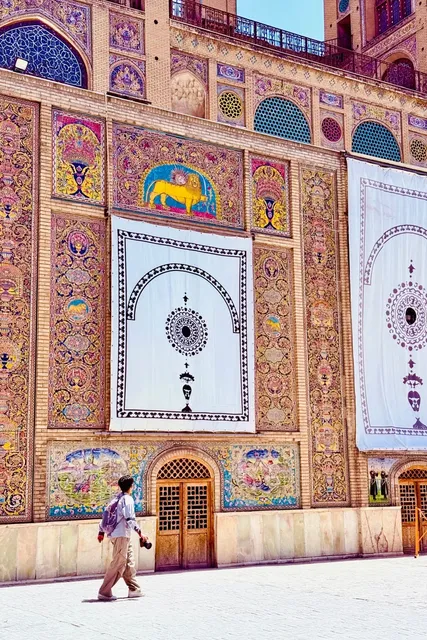
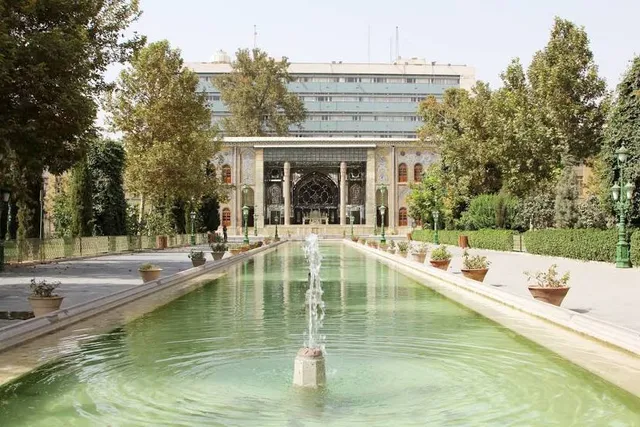
The Golestan Palace, also transliterated as the Gulistan Palace and sometimes translated as the Rose Garden Palace from Persian language, was built in the 16th century, renovated in the 18th century and finally rebuilt in 1865. It is the former official royal Qajar complex in Tehran.
Nearby attractions
Shams Ol Emareh
Tehran Province Tehran St ark sq, Panzdah-e-Khordad St, Iran
Abyaz Palace (Ethnological Museum)
Tehran Province, Tehran, Panzdah-e Khordad Square, MCHC+P2J, Iran
Khalvat-e Karimkhani
MCJ9+4X2 District 12, Tehran, Tehran Province, Iran
Arg Mosque
Tehran Province, Tehran, Panzdah-e Khordad Square, MCH9+VC2, Iran
Emarat-e Badgir
Tehran Province, Tehran, Naser Khosro St, MCHC+JMF, Iran
City Park Aquarium
MCJ8+JQ8, Tehran, Tehran Province, Iran
Imam Khomeini Square
Tehran Province, Tehran, District 12، توپخانه سابق، میدان امام خمینی, Iran
Park Shahr
استان تهران Fayyazbakhsh St، Vahdateslami Ave, Iran
Sardar-e Bagh Melli
Tehran, District 12, Imam Khomeini St, MCP8+CQF, Iran
Bazar Museum House
Tehran Province, Tehran, Kamali, MCMG+C8W, Iran
Nearby restaurants
Moslem Restaurant
تهران منطقه ۱۲ No. 15, Khordad St, Iran
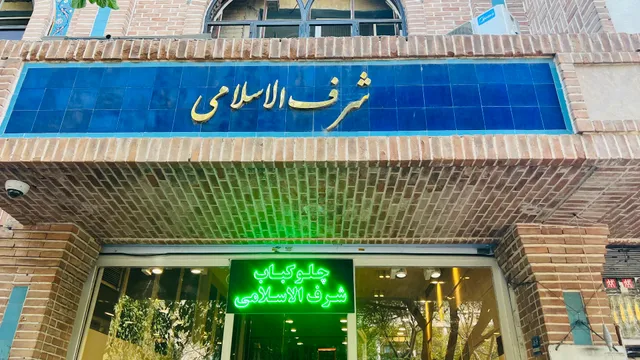
Sharaf Al-Eslami Restaurant
Tehran Province, Tehran, جلوخان غربی, Bozorg Bazaar (Bazzazha Bazaar), MCGC+HJP, Iran
Nayeb Restaurant
Tehran Province, Tehran, District 12, Panzdah-e-Khordad St, MCGC+V7Q, Iran
Zabihi Restaurant
Tehran Province, Tehran, Panzdah-e-Khordad St, MCGC+XP9, Iran
رستوران ارگ بازار
Tehran Province, Tehran, Manuchehkhani, MCG9+J6C, Iran
Zolfaghari Restaurant
MCGG+Q28 District 12, Tehran, Tehran Province, Iran
رستوران مسلمی
Tehran Province, Tehran، پله نوروزخان، MCGF+HQ4, Iran
Qadah Restaurant
MCC9+Q25, Tehran, Tehran Province, Iran
Termeh Restaurant
MCQ9+5QV, Tehran, Tehran Province, Iran
Navid Restaurant
MCFG+M2W District 12, Tehran, Tehran Province, Iran
Nearby hotels
Ferdowsi Grand Hotel
Tehran, استان تهران.20, Kooshk e Mesri street, Beginning of Ferdowsi Ave, Imam Khomeini square, No. rth of, Iran
Related posts
Tehran Travel Guide: Persia's Vibrant Capital 🇮🇷✨#Iran | The Must-See Gems of TehranGolestan Palace – A Glimpse of Tehran's Royal Heritage 🏰✨Discover Tehran, Iran: Where Warmth Outshines PrejudiceGolestan Palace: A Jewel of Persian Grandeur 👑Golestan Palace: A Glimpse into Tehran's World Heritage Gem
Keywords
Golestan Palace tourism.Golestan Palace hotels.Golestan Palace bed and breakfast. flights to Golestan Palace.Golestan Palace attractions.Golestan Palace restaurants.Golestan Palace travel.Golestan Palace travel guide.Golestan Palace travel blog.Golestan Palace pictures.Golestan Palace photos.Golestan Palace travel tips.Golestan Palace maps.Golestan Palace things to do.
Golestan Palace things to do, attractions, restaurants, events info and trip planning
Golestan Palace
IranTehran ProvinceTehranGolestan Palace

Basic Info

Golestan Palace

Tehran District 12 Fifth Khordad Avenue Arg Sqr, Panzdah-e-Khordad St, Iran
4.6(2.9K)
Open until 7:30 PM
Save
spot

Ratings & Description

Info

The Golestan Palace, also transliterated as the Gulistan Palace and sometimes translated as the Rose Garden Palace from Persian language, was built in the 16th century, renovated in the 18th century and finally rebuilt in 1865. It is the former official royal Qajar complex in Tehran.

Cultural
Accessibility
attractions: Shams Ol Emareh, Abyaz Palace (Ethnological Museum), Khalvat-e Karimkhani, Arg Mosque, Emarat-e Badgir, City Park Aquarium, Imam Khomeini Square, Park Shahr, Sardar-e Bagh Melli, Bazar Museum House, restaurants: Moslem Restaurant, Sharaf Al-Eslami Restaurant, Nayeb Restaurant, Zabihi Restaurant, رستوران ارگ بازار, Zolfaghari Restaurant, رستوران مسلمی, Qadah Restaurant, Termeh Restaurant, Navid Restaurant
logoLearn more insights from Wanderboat AI.
Phone
+98 21 3311 3335
Website
golestanpalace.ir
Open hoursSee all hours
Mon9 AM - 7:30 PMOpen

Plan your stay

hotel
Pet-friendly Hotels in Tehran
Find a cozy hotel nearby and make it a full experience.

hotel
Affordable Hotels in Tehran
Find a cozy hotel nearby and make it a full experience.

hotel
The Coolest Hotels You Haven't Heard Of (Yet)
Find a cozy hotel nearby and make it a full experience.

hotel
Trending Stays Worth the Hype in Tehran
Find a cozy hotel nearby and make it a full experience.

Reviews

Nearby attractions of Golestan Palace

Shams Ol Emareh

Abyaz Palace (Ethnological Museum)

Khalvat-e Karimkhani

Arg Mosque

Emarat-e Badgir

City Park Aquarium

Imam Khomeini Square

Park Shahr

Sardar-e Bagh Melli

Bazar Museum House
Shams Ol Emareh

Shams Ol Emareh

4.6

(218)

Open 24 hours
Click for details
Abyaz Palace (Ethnological Museum)

Abyaz Palace (Ethnological Museum)

4.5

(54)

Open 24 hours
Click for details
Khalvat-e Karimkhani

Khalvat-e Karimkhani

4.6

(52)

Open until 6:00 PM
Click for details
Arg Mosque

Arg Mosque

4.4

(110)

Open 24 hours
Click for details

Nearby restaurants of Golestan Palace

Moslem Restaurant

Sharaf Al-Eslami Restaurant

Nayeb Restaurant

Zabihi Restaurant

رستوران ارگ بازار

Zolfaghari Restaurant

رستوران مسلمی

Qadah Restaurant

Termeh Restaurant
Navid Restaurant

Moslem Restaurant

Moslem Restaurant

4.2

(1.4K)

Click for details
Sharaf Al-Eslami Restaurant

Sharaf Al-Eslami Restaurant

4.2

(388)

Click for details
Nayeb Restaurant

Nayeb Restaurant

4.0

(68)

Closed
Click for details
Zabihi Restaurant

Zabihi Restaurant

4.1

(28)

Click for details
Get the Appoverlay
Get the AppOne tap to find yournext favorite spots!
Wanderboat LogoWanderboat

Your everyday Al companion for getaway ideas

CompanyAbout Us
InformationAI Trip PlannerSitemap
SocialXInstagramTiktokLinkedin
LegalTerms of ServicePrivacy Policy

Get the app

© 2025 Wanderboat. All rights reserved.
logo

Reviews of Golestan Palace

4.6
(2,901)
avatar
5.0
4y

Golestan Palace or Golestan Museum Palace, with a history of over 440 years, is one of the most unique historical collections in Iran. The name of Golestan to this complex is rooted in the foundation of a hall called "Golestan", which was one of the buildings of the era of Agha Mohammad Khan Qajar and was completed in 1216 AH during the reign of Fath Ali Shah Qajar.

Golestan Palace has undergone changes from the Safavid era to the contemporary era. However, the foundation of Golestan Palace dates back to the time of Shah Abbas Safavid and in 998 AH and with the construction of four gardens inside the fence of Shah Tahmasb and later in the time of Shah Suleiman Safavid (1109 - 1078 AH) with the construction of a court house in the same The area of ​​Shah Abbasi Chenarestan is formed, but today there are no traces of those foundations and the existing assets of Golestan Palace are limited to a part of the monuments and buildings from Zandieh era and do not go beyond it.

Golestan Palace was registered as a UNESCO World Heritage Site on July 2, 2013, at the 37th Annual Meeting of the UNESCO World Heritage Committee in Phnom Penh, Cambodia. However, the history of Golestan Palace dates back to the time of Shah Abbas Safavid (988 AH) and is part of the travelogue of Pietro Delavale (in 1028 AH / the beginning of the royal citadel) which describes the city of Tehran with the plane tree that surrounded the royal palace , Confirms this point; However, the beginning of the area that we now know as Golestan Palace can be traced back to the time of Karim Khan Zand and between the years 1173 to 1180 AH and with the construction of a madhouse in it.

The real importance of the citadel took on a more serious color during the reign of Agha Mohammad Khan Qajar. Towards the end of the Zandi period and after the death of Karim Khan (1193 AH), he used the internal crisis of Iran to move the Qajar tribes from the Gorgan plain, which was their center of residence, to the southern slopes of Alborz, ie Tehran and Damghan provinces, and tried to gradually Open its way to Persia, the center of Zandieh's government and power. (Although Lord Curzon in his book Iran and the Case of Iran, about the choice of Tehran as a capital by Agha Mohammad Khan and the establishment of a royal headquarters in this city, proximity to his tribe's estate and headquarters in Gorgan and proximity to the Russians and taking care of them are among the factors This choice counts) Agha Mohammad Khan, after defeating Lotfali Khan Zand, returned to Tehran in Sha'ban 1209 AH and was crowned King of Iran on Nowruz 1210 AH. This move of Agha Mohammad Khan increased the importance of the royal citadel more than before and during the reign of Fath Ali Shah Qajar both because of his coronation in this city (24 Rabi 'al-Awal 1212 AH / 1797 AD on the eve of the 19th century and at the same time with Napoleon) and because The glorious dreams of this king of Golestan Palace experienced more development and better decoration.

During the reign of Nasser al-Din Shah Qajar (coronation on Friday, 21 Dhul-Qa'dah 1264 AH / Golestan Palace) Golestan Palace due to the period of his rule (nearly 49 years) and his visit as the first king of Iran from Europe in his three trips to 1290, 1295 and 1306 AH underwent fundamental changes and were influenced by Europe.

However, during the last three kings of the Qajar dynasty (Muzaffar al-Din Shah, Mohammad Ali Shah and Ahmad Shah Qajar) until the extinction of this dynasty (Rabi 'al-Thani 1344 AH / 9 Aban 1304 AH) the royal citadel did not undergo any special changes in terms of architecture. , But its history was intertwined with a number of major political events such as the Constitutional Revolution and its aftermath.

In the years after the extinction of the Qajar dynasty and the coming to power of the Pahlavi dynasty, the royal citadel witnessed the coronation of the first Pahlavi (May 25, 1305 AH) and the second Pahlavi (November 25, 1967), as well as some changes and occupations in its texture. That we consider them...

   Read more
avatar
5.0
6y

Golestan Palace pronounced "Kakheh Golestan" is the former royal Qajar complex in Iran's capital city.

The Palace is all that remains of Tehran's Historical Citadel (Arg) which once glittered like a jewel. This historical Arg was built at the time of Shah Tahmasb I in Safavid period. It was reconstructed at the time of Karim Khan Zand and was chosen as the venue of the royal court and residence at the time of Qajar Kings. Nassereddin Shah introduced many modifications in Golestan Palace buildings during his reign.

The Royal Court and Residence occupied more than one third of Arg, like traditional Iranian houses, had two interior and exterior quarters. The exterior quarters consisted of the administrative section of the royal court and a square shaped garden known as Golestan (rose garden). These two parts were separated by several buildings, that were destroyed in Pahlavi period.

The interior quarters were located east of the administrative section to the north of Golestan. It was a large courtyard including the residences of the Shah's women, with a huge dormitory in the middle that in fact contained "Harem sari ". These buildings were destroyed in the Pahlavi period and the Ministry of Economic Affairs and Finance was built in their place.

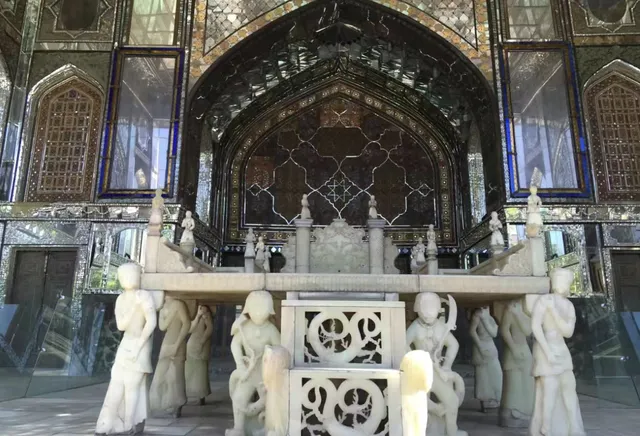
During the Pahlavi era (1925-1979) Golestan Palace was used for formal royal receptions and the Pahlavi dynasty built their own palace at Niavaran. The most important ceremonies held in the Palace during the Pahlavi era were the coronation of Reza Khan (r. 1925-1941) in Takht-i Marmar and the coronation of Mohammad Reza Pahlavi (r. 1941-deposed 1979) in the Museum Hall.

In between 1925 and 1945 a large portion of the buildings of the palace were destroyed on the orders of Reza Shah who believed that the centuries old Qajar palace should not hinder the growth of a modern city. In the place of the old buildings modern 1950s and 1960s style commercial buildings were erected.

In its present state, Golestan Palace is the result of roughly 400 years construction and renovations. The buildings at the contemporary location each have a unique history.

On October 11, 2005 the Cultural Heritage Organization of Iran submitted the palace to the UNESCO for inclusion into the World Heritage List in 2007.

Golestan Palace is currently operated by the Cultural Heritage Organization of Iran.

History

The Golestan Palace complex is bordered on the north by the Ministries of Finance and Justice, on the east by Naser Khosrow St, on the west by Davar Street, and along its southern edge, it is one block from Panzdah-e Khordad Ave. The complex is located at the heart of old Tehran, which itself is framed by Shahr Park on its northwest, Pamenar Street on its east side, and the Tehran bazaar to the southwest.

The complex, in its current condition, consists of two connected gardens, a smaller one on the west and a larger one on the east, and the buildings that surround them. The smaller garden on the west, referred to here as the Takht-i Marmar garden, is oriented along a north-south axis, with a small degree of rotation along the northeast-southwest axis. A water channel runs down the garden's central axis. The larger garden, here called the Golestan garden, is roughly square in plan (it is slightly longer along its east-west axis) and with a small degree of rotation to northwest-southeast. It features a water channel that runs north-south along its western side, near its border with the Takht-i...

   Read more
avatar
5.0
2y

A Glimpse into Iran's Royal Past: Golestan Palace in Tehran

Rating: ★★★★☆

Golestan Palace, located in the heart of Tehran, is a captivating blend of history, art, and architecture that offers a unique insight into Iran's rich royal heritage. This UNESCO World Heritage Site is a must-visit destination for history enthusiasts, culture aficionados, and anyone interested in exploring the opulent legacy of Persia.

Historical Significance (★★★★☆): Golestan Palace, dating back to the Qajar era, has witnessed centuries of political intrigue and cultural transformation in Iran. The palace served as the residence of Qajar kings and rulers, making it a historical focal point for those interested in Persian dynasties. Visitors can admire the elegant structures, courtyards, and halls, each with its own story and purpose. The edifice is a testament to the dynastic struggles and adaptations that have defined Iran's history.

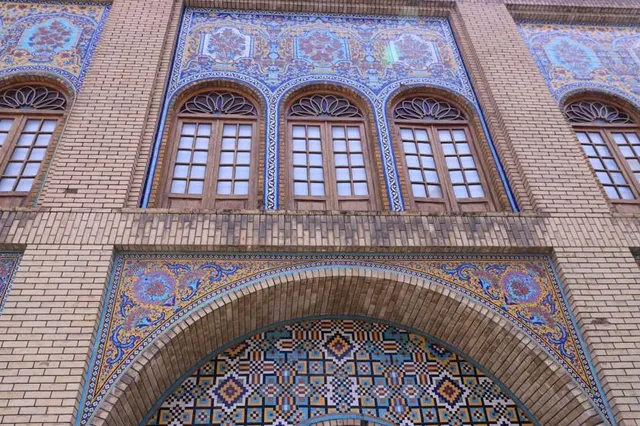
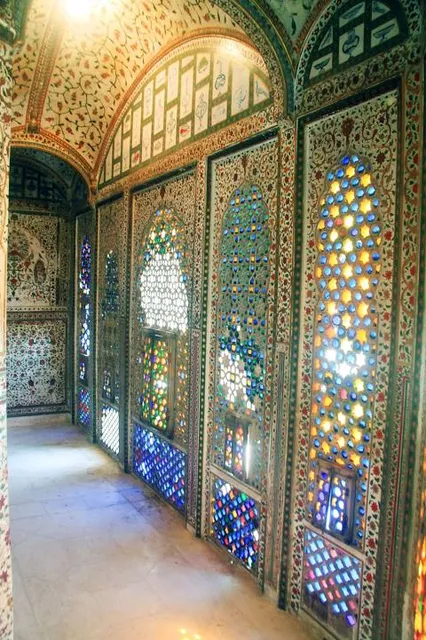
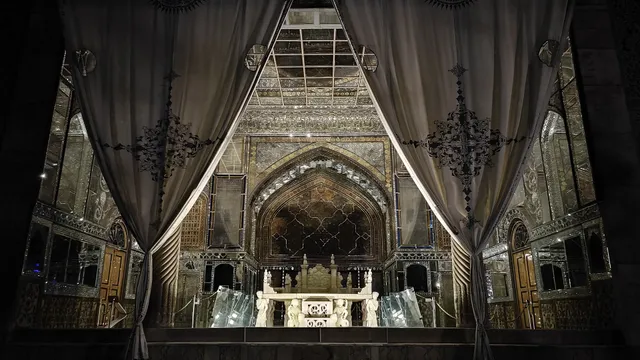
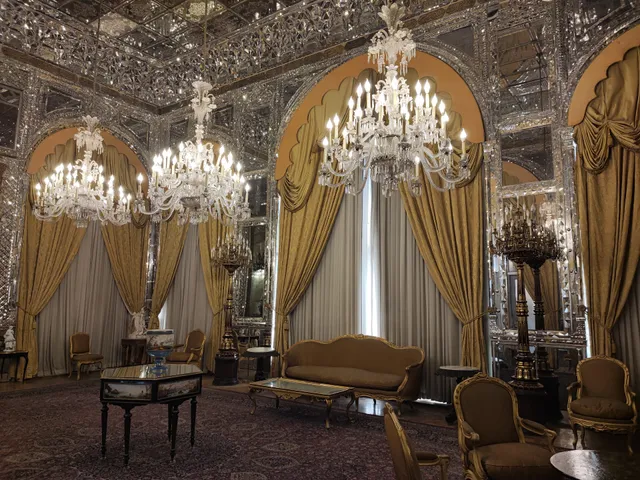
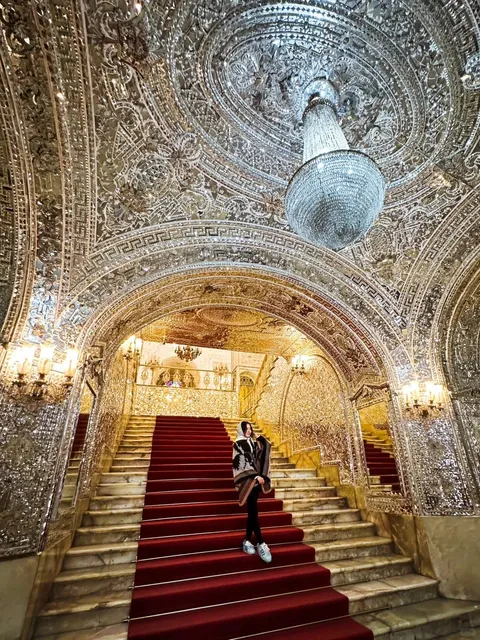
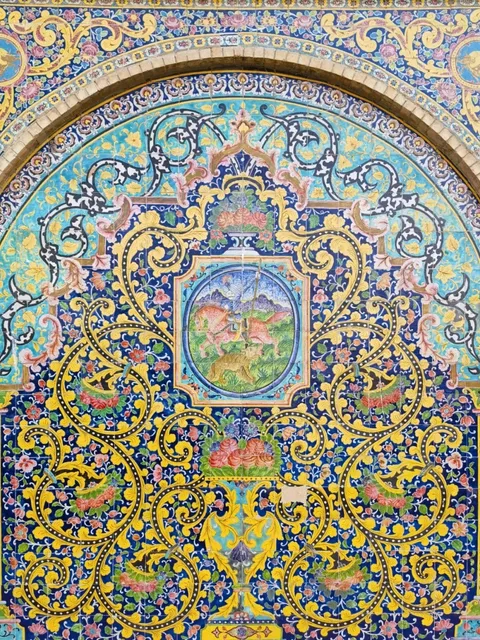
Architectural Marvel (★★★★★): The architectural beauty of Golestan Palace is simply mesmerizing. The complex boasts a variety of buildings, each with its own unique style and design. From the stunning Mirror Hall (Talar-e Ayeneh) with its breathtaking mirrored walls and ceilings to the impressive Marble Throne (Takht-e Marmar), the palace showcases the superb craftsmanship and artistic talent of the time. The intricate tile work, exquisite frescoes, and beautifully landscaped gardens all contribute to the visual feast that is Golestan Palace.

Cultural Richness (★★★★☆): Golestan Palace offers a window into Iran's vibrant culture. The museum inside the complex features an array of historical artifacts, including regal costumes, royal portraits, and ornate jewelry. These displays provide valuable insights into the customs, lifestyles, and preferences of the Qajar rulers. Furthermore, the presence of traditional Iranian music and performances within the palace compound adds an extra layer of cultural immersion for visitors.

Visitor Experience (★★★☆☆): While Golestan Palace is a treasure trove of Persian history, the visitor experience can be somewhat challenging due to limited signage and descriptions in English. However, guided tours are available and highly recommended to enhance your understanding of the palace's history. Additionally, the presence of a well-maintained garden provides a peaceful retreat in the heart of bustling Tehran, making it a pleasant spot for a leisurely stroll.

Accessibility (★★☆☆☆): Access to Golestan Palace can be a bit tricky due to Tehran's notorious traffic. Finding parking can be a challenge, and the city's chaotic atmosphere can be overwhelming for some tourists. Nevertheless, the palace's central location in Tehran makes it relatively convenient to reach.

In conclusion, Golestan Palace is a cultural gem that offers a glimpse into Iran's opulent history and artistic legacy. While it might not be as famous as some of the world's other historical sites, it holds a special place in Persian heritage. If you have an interest in history, architecture, and Persian culture, Golestan Palace is well worth a visit, though you may benefit from taking a guided tour to fully appreciate its historical significance and...

   Read more
Page 1 of 7
Previous
Next

Posts

Tehran Travel Guide: Persia's Vibrant Capital 🇮🇷✨
Winni MadgeWinni Madge
Tehran Travel Guide: Persia's Vibrant Capital 🇮🇷✨
#Iran | The Must-See Gems of Tehran
Sophia AndersonSophia Anderson
#Iran | The Must-See Gems of Tehran
Golestan Palace – A Glimpse of Tehran's Royal Heritage 🏰✨
Emily JohnsonEmily Johnson
Golestan Palace – A Glimpse of Tehran's Royal Heritage 🏰✨
See more posts
See more posts
hotel
Find your stay

Pet-friendly Hotels in Tehran

Find a cozy hotel nearby and make it a full experience.

Tehran Travel Guide: Persia's Vibrant Capital 🇮🇷✨
Winni Madge

Winni Madge

hotel
Find your stay

Affordable Hotels in Tehran

Find a cozy hotel nearby and make it a full experience.

Get the Appoverlay
Get the AppOne tap to find yournext favorite spots!
#Iran | The Must-See Gems of Tehran
Sophia Anderson

Sophia Anderson

hotel
Find your stay

The Coolest Hotels You Haven't Heard Of (Yet)

Find a cozy hotel nearby and make it a full experience.

hotel
Find your stay

Trending Stays Worth the Hype in Tehran

Find a cozy hotel nearby and make it a full experience.

Golestan Palace – A Glimpse of Tehran's Royal Heritage 🏰✨
Emily Johnson

Emily Johnson

See more posts
See more posts