8 Facts We Didn’t Know About Masjid Al-Aqsa
It isn’t just one mosque
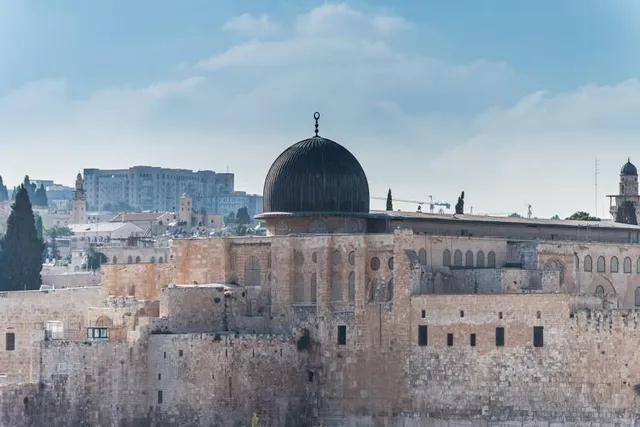
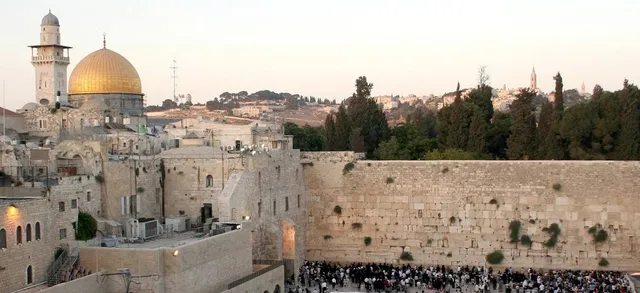
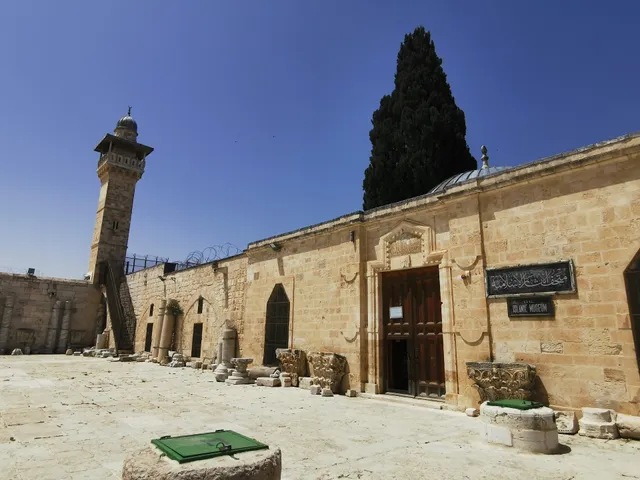
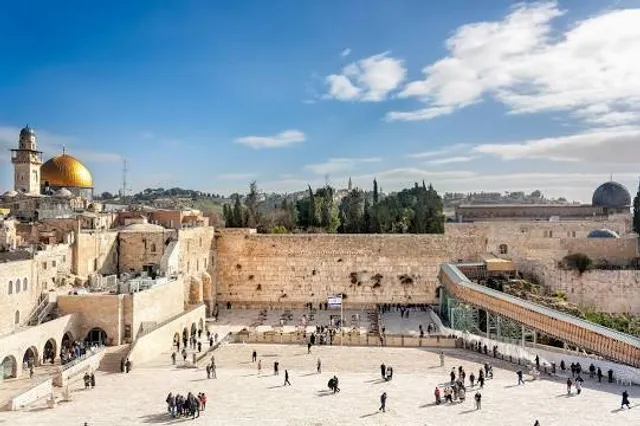
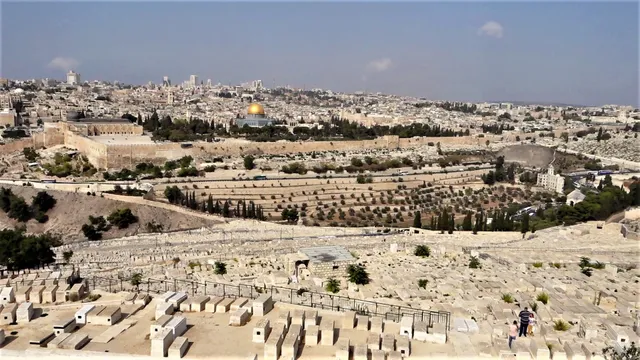
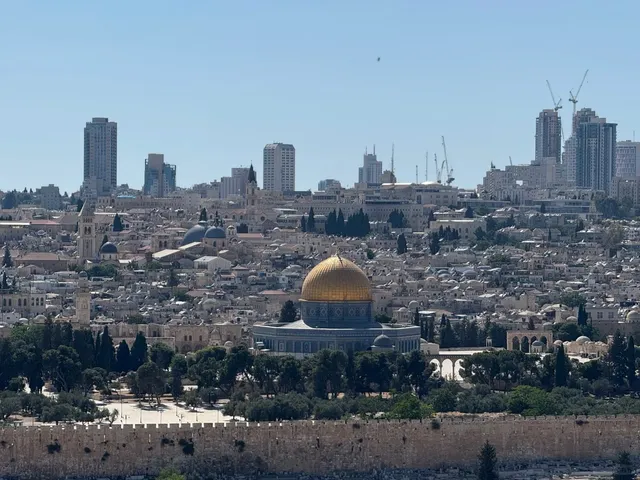
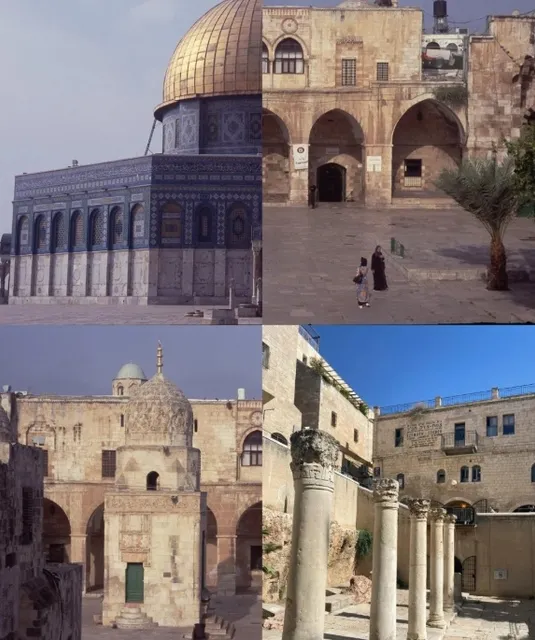
There are in fact multiple mosques on the site that we know as Masjid Al-Aqsa. We tend to think of Masjid Al-Aqsa as the building at the southernmost corner of the mosque. In actual fact, that is the Qibali Mosque – so called because it is the closest to the Qiblah. The whole complex is known as the Blessed Masjid Al-Aqsa. It is also referred to as Al-Haram ash-Sharif (the Noble Sanctuary).
It is mentioned in the Qur’an
In fact, the Ka’bah and Masjid Al-Aqsa are the only two masjids mentioned in the Qur’an - and they are even referenced side by side when Allah (swt) speaks of the Night Journey and Ascension:
‘Exalted is He who took His Servant by night from al-Masjid al-Haram to al-Masjid al-Aqsa, whose surroundings We have blessed, to show him of Our signs. Indeed, He is the All-Hearing, the All-Seeing’. [The Noble Qur’an, 17:1]
The original Dome of the Rock looked very different
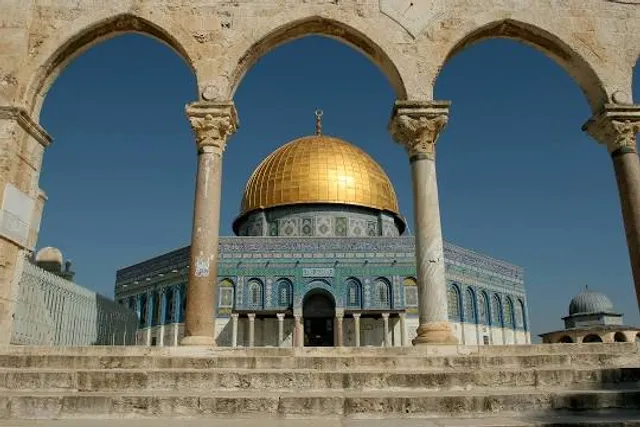
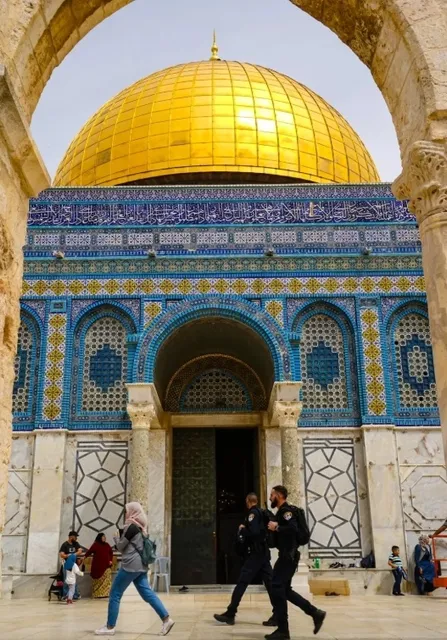
The Dome of the Rock was built by the Ummayad ruler Abdul Malik ibn Marwan. It was originally wooden with either a brass, lead or ceramic cover. The iconic dome we all know was built almost a thousand years later during the reign of the Ottoman ruler, Sulaiman the Magnificent. The distinctive gold layer was added to the dome along with the Ottoman tiles to the facade of the building.
Alhamdulillah, we are currently fundraising to illuminate this Islamic landmark.
The complex is also a burial ground
Though there is no accurate record of who and how many have been buried here, the burial ground in Al-Haram as-Sharif is the resting place for many prophets (as) and Sahabah of the Holy Prophet (saw).
For example, Ubadah ibn Samir (ra), who was the first Islamic judge in Masjid Al-Aqsa, is buried in the Bab ar-Rahmah Cemetery. This is the third most prominent graveyard in the Islamic world, after two famous graveyards in Makkah and Madinah - and alhamdulillah, it has been recently renovated by your donations through Muslim Hands.
It once held a legendary minbar
Imad ad-Din Zengi, a member of the Turkish Zengid dynasty, had a special minbar built to be installed in Masjid Al-Aqsa. This minbar was not only beautiful, but it was made without using a single nail or bit of glue. Sadly, Imad ad-Din did not live to see the victory, but his protégé Salahuddin fulfilled the wish of his teacher, and after liberating Jerusalem for the second time in the history of Islam, installed the minbar.
The site was once used as a dumping ground
When the Romans exiled Jewish people from the city, the mainly Roman inhabitants used the area of Masjid Al-Aqsa as a garbage dump. When Umar (ra) opened city to Islam, he cleared the rubbish with his bare hands. He also ended the centuries-old exile of Jewish people, giving refugee families the right to reside in Jerusalem once again.
Al Ghazali lived and wrote his greatest work there
One of the most famous scholars in Islamic history, Imam Abu Hamid Al-Ghazali, spent a period of his life in Masjid Al-Aqsa where he wrote what is widely regarded as his greatest work, the Ihyaa Ulum Al-Din (The Revival of Religious Sciences). A building in the masjid marks the site of his old room.
It has been burnt down
In 1969 the entire Qibali Masjid was burnt down. The mosque has since been rebuilt, but this incident from the not-so-distant past shows just how important it is to look after the third holiest site in Islam. In fact, in 2019, we began fundraising to replace the entire lighting system in the Qibali Masjid, because the old system had not been replaced in 30 years and posed a risk of fire. We have just finished this work,...
Read moreMasjid Al-Aqsa – The Second House of Allah on Earth (Hadith 1)
Abu Dharr (ra) reported that he asked the Prophet (saw), “O Messenger of Allah, which Masjid was built first on earth”? The Prophet (saw) replied, “The Sacred Masjid of Makkah”. Abu Dharr (ra) again asked, “Which was next”? The Prophet (saw) said, “Masjid Al-Aqsa”. Abu Dharr (ra) further asked, “How long was the period between the building of the two Masjids”? The Prophet (saw) said, “Forty years”. Apart from these, offer your prayer anywhere when it is time to pray, although excellence is in praying in these Masjids”. [Bukhari]
The Importance of Visiting Masjid Al-Aqsa (Hadith 2)
Abu Hurayrah (ra) relates that the Prophet (saw) said, “You should not undertake a special journey to visit any place other than the following three Masjids with the expectations of getting greater reward: the Sacred Masjid of Makkah (Ka’bah), this Masjid of mine (the Prophet’s Masjid in Madinah), and Masjid Al-Aqsa (of Jerusalem)”. In another narration the words are, “For three Masjids a special journey may be undertaken: The Sacred Masjid (Ka’bah), my Masjid and Masjid of Jerusalem (Al-Aqsa). [Muslim, Bukhari, Abu Dawud]
Greater Virtue of praying in Masjid Al-Aqsa (Hadith 3 and 4)
Abu Darda (ra) relates that the Prophet (saw) said, “A prayed in Makkah (Ka’bah) is worth 1000,000 times (reward), a prayer in my Masjid (Madinah) is worth 1,000 times and a prayer in Al-Aqsa Sanctuary is worth 500 times more reward than anywhere else”. [Tabarani, Bayhaqi, Suyuti]
Anas Ibn Malik (ra) relates that the Prophet (saw) said, ” The prayer of a person in his house is a single prayer; his prayer in the Masjid of his people has the reward of 27 prayers; his prayer in the Masjid in which the Friday prayer is observed has the reward of 500; his prayer in Masjid Al-Aqsa (i.e. Al-Aqsa Sanctuary) has a reward of 5,000 prayers; his prayer in my Masjid (the Prophet’s Masjid in Madinah) has a reward of 50,000 prayers, and the prayer in the Sacred Masjid (Ka’bah) has the reward of 100,000 prayers”. [Tirmidhi, Ibn Majah]
The Importance of Donating to Masjid Al-Aqsa (Hadith 5 and 6)
Abdullah Ibn Umar (ra) relates, I asked the Prophet (saw), “Apostle of Allah, tell us the legal injunction about (visiting) Bayt Al-Maqdis (Jerusalem).” The Apostle of Allah (saw) said, ” Go and pray there. If you cannot visit it and pray there, then send some oil to be used in the lamps”. [Bukhari]
Maymunah Bint Sa’d (ra) relates that she asked the Prophet (saw), “O Messenger of Allah, inform us about Bayt Al-Maqdis (Jerusalem)”. He said, “Visit it for prayer “. She further asked, “If one of us cannot visit it, what should we do”? He said, “If you cannot go for prayer then send some oil to be used for its lamps, will be as if he has prayed in it”. [Ahmad, Ibn Majah, Abu Dawud, Tabarani]
The Virtues of Wearing Ihram From Masjid Al-Aqsa (Hadith 7)
Umm Salamah (ra) relates that the Prophet (saw) said, “If anyone puts on Ihram for Hajj or Umrah from Masjid Al-Aqsa and then proceeds to the Sacred Masjid (Ka’bah), their past and future sins will be forgiven, or they will be entered into Paradise”. [Abu Dawud]
The Blessed Land of Masjid Al-Aqsa (Hadith 8 and 9)
Zaid Ibn Thabit (ra) reports that the Prophet (saw) said, “How blessed is Al-Sham”! The Companions (ra) asked, “Why is that”? The Messenger (saw) replied, “I see the Angels of Allah spreading their wings over Al-Sham”. Ibn Abbas (ra) added, “And the Prophets lived therein. There is not a single inch in Al-Quds (Jerusalem) where a Prophet has not prayed or an Angel not...
Read moreThe mosque is located on the Temple Mount, referred to by Muslims today as the "Haram al-Sharif" ("Noble Sanctuary"), an enclosure expanded by King Herod the Great beginning in 20 BCE.13]
The mosque resides on an artificial platform that is supported by arches constructed by Herod's engineers to overcome the difficult topographic conditions resulting from the southward expansion of the enclosure into the Tyropoeon and Kidron valleys.[14] At the time of the Second Temple, the present site of the mosque was occupied by the Royal Stoa, a basilica running the southern wall of the enclosure.[14] The Royal Stoa was destroyed along with the Temple during the sacking of Jerusalem by the Romans in 70 CE.
It was once thought that Emperor Justinian's "Nea Ekklesia of the Theotokos", lit. the New Church of the God-Bearer and commonly known as the Nea Church, dedicated to the God-bearing Virgin Mary, consecrated in 543, was situated where al-Aqsa Mosque was later constructed. However, remains identified as those of the Nea Church were uncovered in the south part of the Jewish Quarter in 1973.[15
Analysis of the wooden beams and panels removed from the mosque during renovations in the 1930s shows they are made from Lebanese cedar and cypress. Radiocarbon dating gave a large range of ages, some as old as 9th century BCE, showing that some of the wood had previously been used in older buildings.[17] However, reexamination of the same beams in the 2010s gave dates in the Byzantine period.[18]
During his excavations in the 1930s, Robert Hamilton uncovered portions of a multicolor mosaic floor with geometric patterns, but didn't publish them.[19] The date of the mosaic is disputed: Zachi Dvira considers that they are from the pre-Islamic Byzantine period, while Baruch, Reich and Sandhaus favor a much later Umayyad origin on account of their similarity to a mosaic from an Umayyad palace excavated adjacent to the Temple Mount's...
Read more