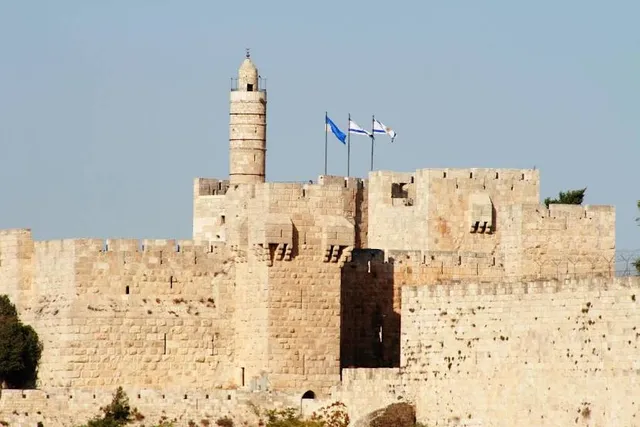
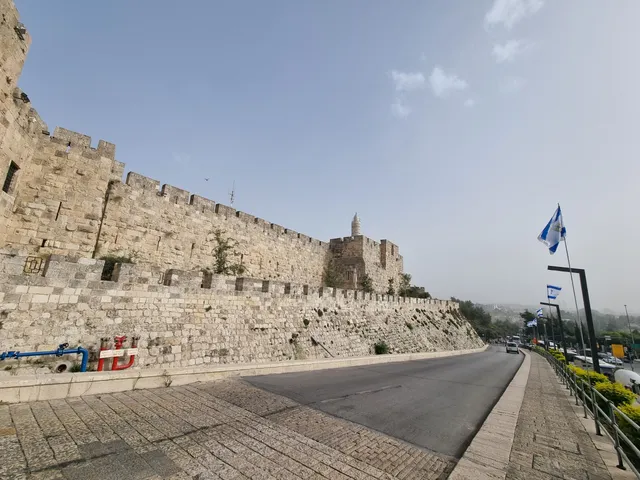
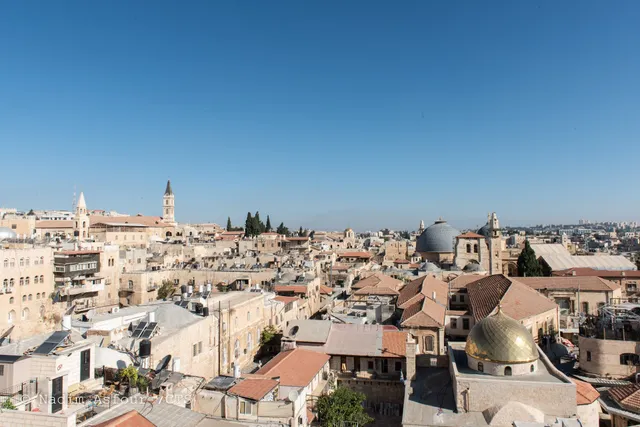
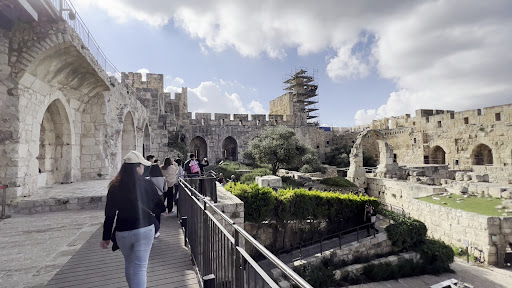
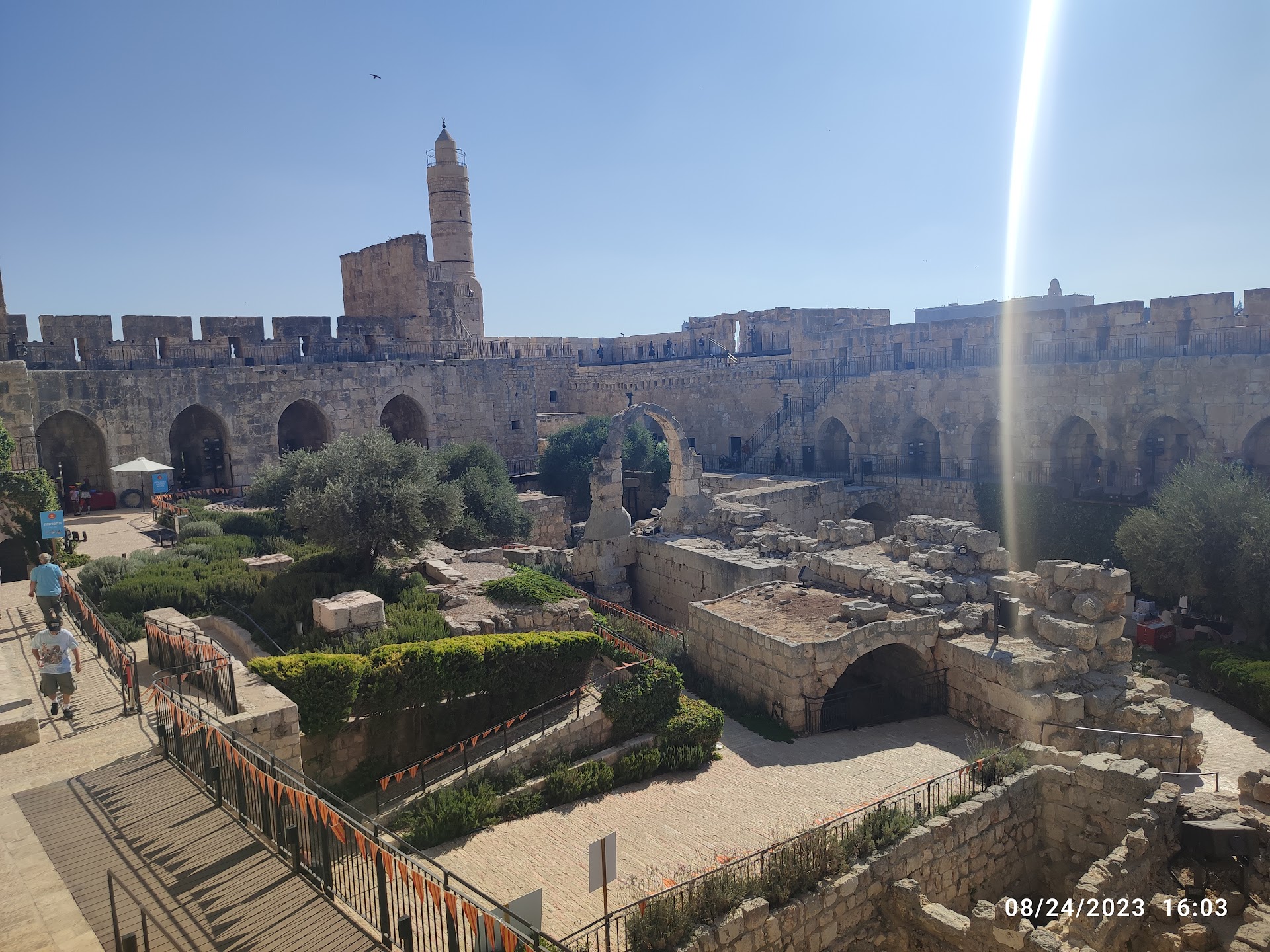
Breathtaking panoramic views of Jerusalem, through the passageways of the citadel and through the archaeological garden. The Tower of David, also known as the Citadel, is an ancient citadel located near the Jaffa Gate entrance to the Old City of Jerusalem.
The 500-year-old walls are part of the Turkish citadel; its name derives from a tower so massive that early Jerusalemites ascribed it to their great King David and despite the name being ‘The Tower of David’ it was actually build by King Herod.
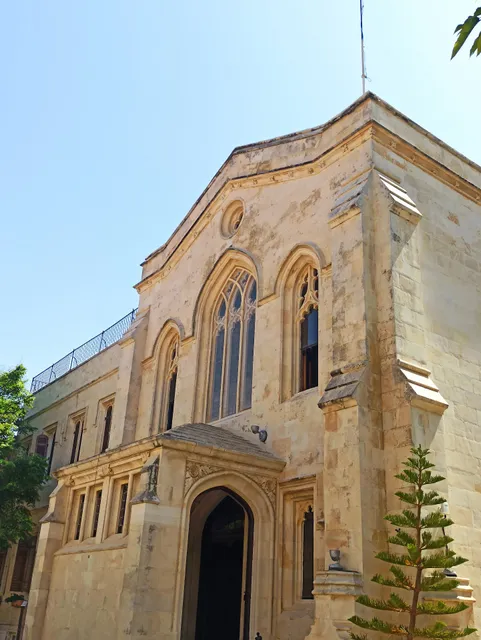
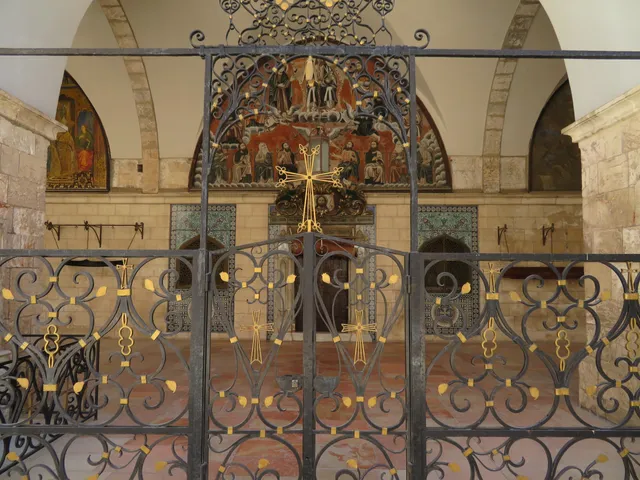
Through Zion gate to Armenian quarter. First Protestant church to be built in the Middle East, 19th century, reach out toy the Jewish community. Armenians known for their hand painted pottery. You can pray in David and Moses’ names because they were holy men.
Allenby refused to let his men to ride in, I will not ride where my Lord walked. Towards where the Jaffa gate was. He was instrumental to how the land was claimed and given to us.
The dark rocks are remnant of Herod the Great.
Municipal school children - Muslim children being taught about the museum. Historical references to the museum.
Ancient quarry that had to be taken out for this place to be built. When we talk about a stone, they talk about it being rejected. Moriah - mighty to Jehovah. Moriah stone e.g. what do you mean you rejected the stone. The crusaders built the moat to walk now.
This huge palace took the entire Armenian quarter. This is the Herod’s pool. Why did Herod get so upset with the Magi? The wiseman from the east have come but instead of praising him, they said to Herod the great, where is the new king? He is freaking out because he is to be replaced by a baby in a manger. Looking at this palace, he is filled with the wealth of the world. Herod had an identity issue.
Bases for columns that were used for pillars Governor lives in a praetorium and king lives in palace. He will come only when the Jews are having their feasts. Start observing the feasts of the Lord.
This was a prison, the map of Israel, 78% were given to form trans-Jordan, etzel group. Since 1922, a Palestinian land was formed, what we call Jordan today. Water system that was built by Herod the great. Time after David and Solomon, the wall.
Pontius Pilate would have come here to show the force, a way of controlling people. We will see even riot police all decked up, but by showing force, you are showing to anyone who wants to mess, I’m in control here.
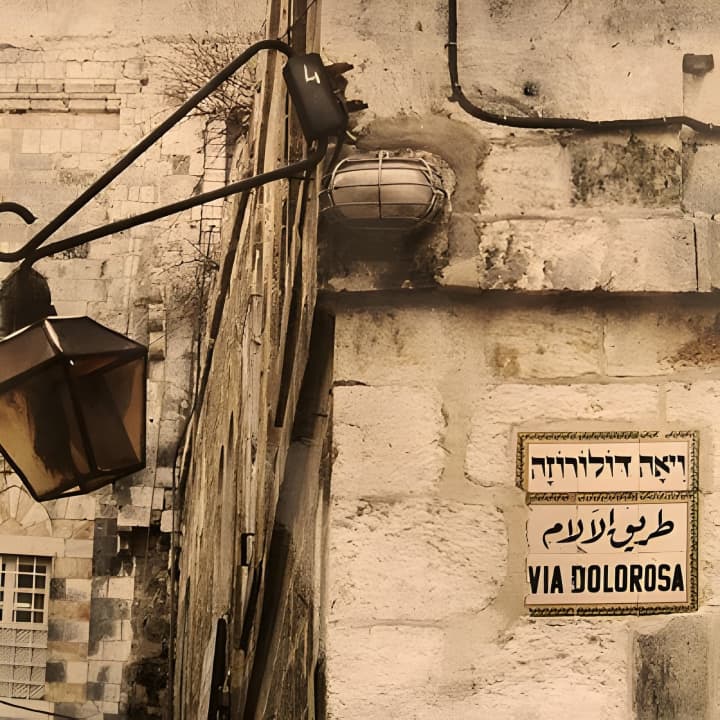
Caiphas house to here and from here, praetorium, Jesus is condemned by Pilate and Herod Antipas (son of Herod the Great) and walked to the Holy Sepulchre church.
Kishle means police station. For 19 years there was a divide between...
Read moreView from the wall near Tower of David Beautiful town
The Tower of David (Hebrew: מגדל דוד, romanized: Migdál Davíd), also known as the Citadel (Arabic: القلعة, romanized: al-Qala'a), is an ancient citadel located near the Jaffa Gate entrance to the Old City of Jerusalem.
The Tower of David and the city walls The citadel that stands today dates to the Mamluk and Ottoman periods. It was built on the site of a series of earlier ancient fortifications of the Hasmonean, Herodian, Byzantine and Early Muslim periods, after being destroyed repeatedly during the last decades of Crusader presence in the Holy Land by their Muslim enemies.[1] It contains important archaeological finds dating back over 2,500 years including a quarry dated to the First Temple period,[citation needed] and is a popular venue for benefit events, craft shows, concerts, and sound-and-light performances.
Dan Bahat, the Israeli archeologist, writes that the original three Hasmonean towers standing in this area of the city were altered by Herod, and that "The northeastern tower was replaced by a much larger, more massive tower, dubbed the "Tower of David" beginning in the 5th century C.E."[2] The name "Tower of David" migrated in the 19th century from the Herodian tower in the northeast of the citadel, to the 17th-century minaret at the opposite side of the citadel, and after 1967 has been officially adopted for the entire citadel.
Since the Israeli occupation after the Six-Day War in 1967, the citadel's cultural role was revived.[clarification needed]
The Tower of David Museum of the History of Jerusalem was opened in 1989 by the Jerusalem Foundation. Located in a series of chambers in the original citadel, the museum includes a courtyard which contains archeological remains dating back 2,700 years.
The exhibits depict 4,000 years of Jerusalem's history, from its beginnings as a Canaanite city to modern times. Using maps, videotapes, holograms, drawings and models, the exhibit rooms each depict Jerusalem under its various rulers. Visitors may also ascend to the ramparts, which command a 360-degree view of the Old City and New City of Jerusalem.
As of 2002, the Jerusalem Foundation reported that over 3.5 million visitors had...
Read moreThe Tower of David Museum is found within the historic Citadel and is a very good place to visit for those who want to a good introduction to the history of Jerusalem.
The Citadel is a bastion situated near the Jaffa Gate in the Old City. The complex dates to the medieval period and includes important modifications added in the early 16th century during the reign of Suleyman the Magnificent.
There is much architecture to enjoy at the Citadel including towers you can wander and climb and ramparts you can walk. Views inward into excavations within the fortification and outward overlooking the Old City and beyond to the Mount of Olives, Mount Zion and the modern City are very good.
The museum within the Citadel is very well laid out in a manner that allows visitors to walk through the various historical periods which have seen Jerusalem ruled. These include Israelite, Persian, Hellenistic, Roman, Byzantine, Early Muslim, Crusader, Mamluk, Ottoman, British and most recently the State of Israel which was established in 1948.
Displays are found within exhibition rooms situated throughout the Citadel. You follow a path, allowing you to view each in chronological fashion. What you find is a nice mix of artefacts, text and image displays. Plan on spending approximately 10 minutes per room. Information is mostly an overview but of enough detail that you can easily grasp how Jerusalem evolved over the centuries under its different ruling parties.
Note: You can comfortably visit the Tower of David Museum, going through the exhibition rooms in approx. 90+ minutes.
Overall, the entry fee is somewhat pricey for the Tower of David Museum. However, the fortification is enjoyable to walk through and the museum collection is educational and worth the time for those who want to maximise their tourist experience...
Read more