HTML SitemapExplore
logo
Find Things to DoFind The Best Restaurants

Monumental Complex of San Pedro next to Court - Hypogeum and Palatine Chapel — Attraction in Salerno

Name
Monumental Complex of San Pedro next to Court - Hypogeum and Palatine Chapel
Description
Nearby attractions
Cathedral of Santa Maria degli Angeli, San Matteo and San Gregorio VII
Piazza Alfano I, 84125 Salerno SA, Italy
Church of St. George
Via Duomo, 19, 84121 Salerno SA, Italy
Giardino della Minerva
Vicolo Ferrante Sanseverino, n° 1, 84121 Salerno SA, Italy
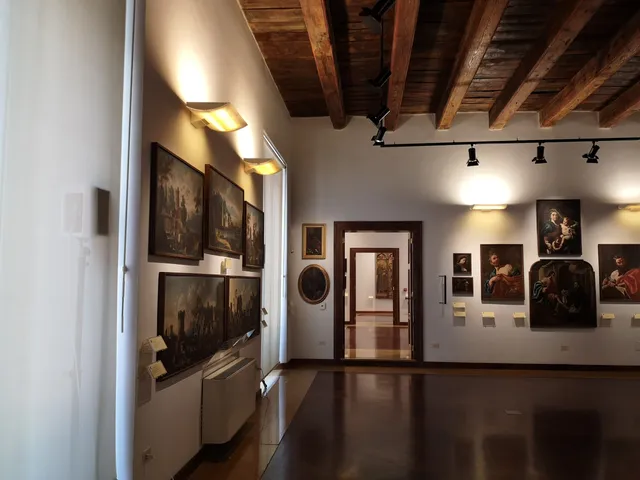
Provincial Art Gallery of Salerno
Via Mercanti, 63, 84121 Salerno SA, Italy
Diocesan Museum of San Matteo
Largo Plebiscito, 12, 84121 Salerno SA, Italy
Villa Comunale di Salerno
Via Roma, 84100 Salerno SA, Italy
Virtual Museum of Salerno's Medical School
Chiesa di San Gregorio, Via Mercanti, 74, 84121 Salerno SA, Italy
Church of Saint Mary of the Announcement
Via Portacatena, 84121 Salerno SA, Italy
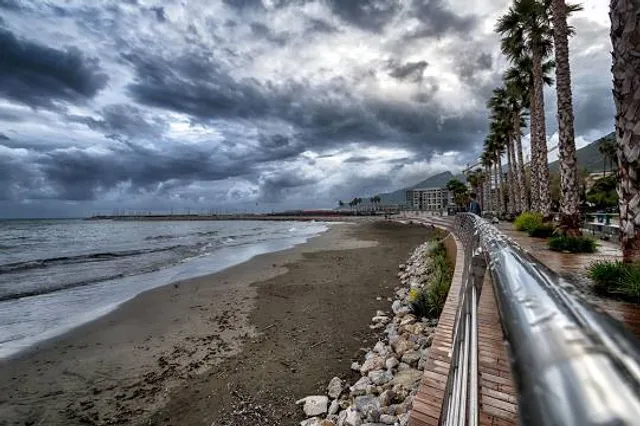
Spiaggia di Santa Teresa
Italy
Provincial Archaeological Museum of Salerno
Via S. Benedetto, 28, 84122 Salerno SA, Italy
Nearby restaurants
Ingordo
Via Roma, 188, 84121 Salerno SA, Italy
Il Duca
Via Giovanni da Procida, 27, 84121 Salerno SA, Italy
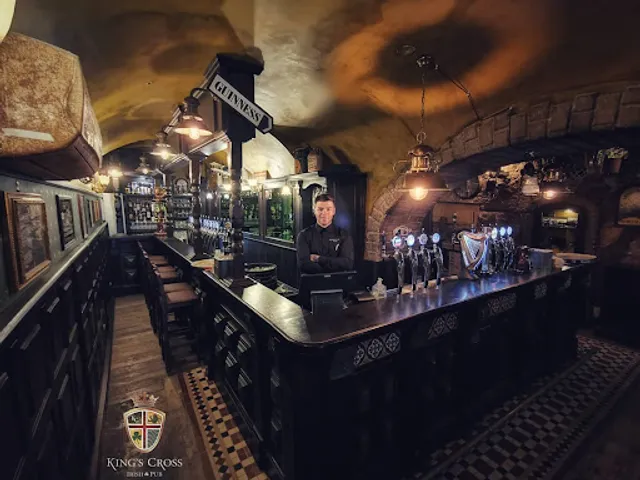
King's Cross
Via Roma, 214, 84121 Salerno SA, Italy
Antonio la Trippa
Via Roma, 190, 84121 Salerno SA, Italy
Salerno Centro Pizza Gourmet
Via Roma, 202, 84121 Salerno SA, Italy
El Salvador Ristorante Messicano
Via Roma, 178, 84121 Salerno SA, Italy
Vicolo della Neve
Antica Pizzeria, Vicolo della Neve, 24, 84100 Salerno SA, Italy
Messico e Nuvole
Larghetto Fra, Via fra Giovanni da Salerno, 7, 84121 Salerno SA, Italy
A'Corte
Vicolo Antica Corte, 84121 Salerno SA, Italy
La Smorfia
Piazza Alfano I, 5, 84121 Salerno SA, Italy
Nearby hotels
Guest House Salerno
Via Porta di Mare, 30, 84121 Salerno SA, Italy
Salerno Centro
Vicolo Giudaica, 22, 84121 Salerno SA, Italy
Casa Santangelo Suites
Via Giovanni da Procida, 41, 84121 Salerno SA, Italy
Le Petit Bouganville Casa Vacanza Salerno
Vicolo dei Barbuti, 4, 84121 Salerno SA, Italy
B&B Palazzo Fruscione
Vicolo dei Barbuti, 9, 84121 Salerno SA, Italy
Albergo del Centro Storico Salerno
Via Roma, 210, 84121 Salerno SA, Italy
Antiche Melodie
Via Dogana Vecchia, 40, 84121 Salerno SA, Italy
B&B Adelberga
Vicolo Adelberga, 9, 84121 Salerno SA, Italy
Casa Maria
Vicolo delle Galesse, 25, 84121 Salerno SA, Italy
B&B Dei Mercanti
Via delle Botteghelle, 4, 84121 Salerno SA, Italy
Related posts
Keywords
Monumental Complex of San Pedro next to Court - Hypogeum and Palatine Chapel tourism.Monumental Complex of San Pedro next to Court - Hypogeum and Palatine Chapel hotels.Monumental Complex of San Pedro next to Court - Hypogeum and Palatine Chapel bed and breakfast. flights to Monumental Complex of San Pedro next to Court - Hypogeum and Palatine Chapel.Monumental Complex of San Pedro next to Court - Hypogeum and Palatine Chapel attractions.Monumental Complex of San Pedro next to Court - Hypogeum and Palatine Chapel restaurants.Monumental Complex of San Pedro next to Court - Hypogeum and Palatine Chapel travel.Monumental Complex of San Pedro next to Court - Hypogeum and Palatine Chapel travel guide.Monumental Complex of San Pedro next to Court - Hypogeum and Palatine Chapel travel blog.Monumental Complex of San Pedro next to Court - Hypogeum and Palatine Chapel pictures.Monumental Complex of San Pedro next to Court - Hypogeum and Palatine Chapel photos.Monumental Complex of San Pedro next to Court - Hypogeum and Palatine Chapel travel tips.Monumental Complex of San Pedro next to Court - Hypogeum and Palatine Chapel maps.Monumental Complex of San Pedro next to Court - Hypogeum and Palatine Chapel things to do.
Monumental Complex of San Pedro next to Court - Hypogeum and Palatine Chapel things to do, attractions, restaurants, events info and trip planning
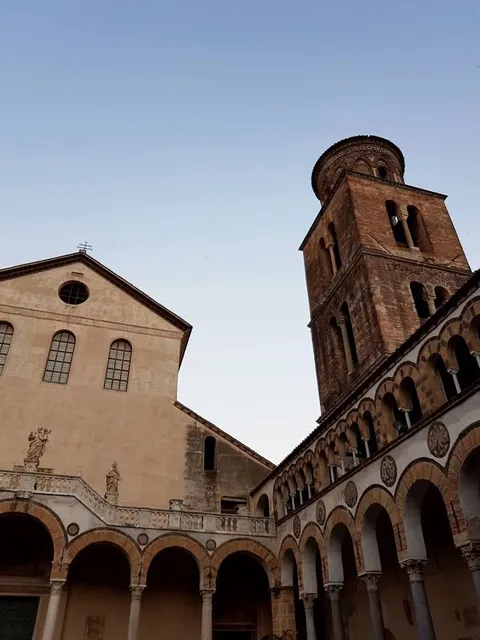
Monumental Complex of San Pedro next to Court - Hypogeum and Palatine Chapel
ItalyCampaniaSalernoMonumental Complex of San Pedro next to Court - Hypogeum and Palatine Chapel

Basic Info

Monumental Complex of San Pedro next to Court - Hypogeum and Palatine Chapel

Larghetto S. Pietro a Corte, 8, 84121 Salerno SA, Italy
4.6(156)
Open 24 hours
Save
spot

Ratings & Description

Info

Cultural
Scenic
Family friendly
Accessibility
attractions: Cathedral of Santa Maria degli Angeli, San Matteo and San Gregorio VII, Church of St. George, Giardino della Minerva, Provincial Art Gallery of Salerno, Diocesan Museum of San Matteo, Villa Comunale di Salerno, Virtual Museum of Salerno's Medical School, Church of Saint Mary of the Announcement, Spiaggia di Santa Teresa, Provincial Archaeological Museum of Salerno, restaurants: Ingordo, Il Duca, King's Cross, Antonio la Trippa, Salerno Centro Pizza Gourmet, El Salvador Ristorante Messicano, Vicolo della Neve, Messico e Nuvole, A'Corte, La Smorfia
logoLearn more insights from Wanderboat AI.
Phone
+39 347 688 9701
Website
vincenzoavagliano.com

Plan your stay

hotel
Pet-friendly Hotels in Salerno
Find a cozy hotel nearby and make it a full experience.

hotel
Affordable Hotels in Salerno
Find a cozy hotel nearby and make it a full experience.

hotel
The Coolest Hotels You Haven't Heard Of (Yet)
Find a cozy hotel nearby and make it a full experience.

hotel
Trending Stays Worth the Hype in Salerno
Find a cozy hotel nearby and make it a full experience.

Reviews

Nearby attractions of Monumental Complex of San Pedro next to Court - Hypogeum and Palatine Chapel

Cathedral of Santa Maria degli Angeli, San Matteo and San Gregorio VII

Church of St. George

Giardino della Minerva

Provincial Art Gallery of Salerno

Diocesan Museum of San Matteo

Villa Comunale di Salerno

Virtual Museum of Salerno's Medical School

Church of Saint Mary of the Announcement

Spiaggia di Santa Teresa

Provincial Archaeological Museum of Salerno

Cathedral of Santa Maria degli Angeli, San Matteo and San Gregorio VII

Cathedral of Santa Maria degli Angeli, San Matteo and San Gregorio VII

4.6

(2.6K)

Open 24 hours
Click for details
Church of St. George

Church of St. George

4.7

(255)

Open until 6:30 PM
Click for details
Giardino della Minerva

Giardino della Minerva

4.4

(1.7K)

Open 24 hours
Click for details
Provincial Art Gallery of Salerno

Provincial Art Gallery of Salerno

4.4

(167)

Open until 7:45 PM
Click for details

Things to do nearby

Make pasta and tiramisu with an Italian farmer
Sat, Dec 6 • 5:00 PM
80051, Pianillo, Campania, Italy
View details
Pompeii tour & Savor Wine/Food at Vesuvius slope
Sun, Dec 7 • 10:00 AM
80045, Pompei, Campania, Italy
View details

Nearby restaurants of Monumental Complex of San Pedro next to Court - Hypogeum and Palatine Chapel

Ingordo

Il Duca

King's Cross

Antonio la Trippa

Salerno Centro Pizza Gourmet

El Salvador Ristorante Messicano

Vicolo della Neve

Messico e Nuvole

A'Corte

La Smorfia

Ingordo

Ingordo

4.3

(744)

Click for details
Il Duca

Il Duca

3.8

(474)

Click for details
King's Cross

King's Cross

3.9

(887)

Click for details
Antonio la Trippa

Antonio la Trippa

4.0

(563)

Click for details
Get the Appoverlay
Get the AppOne tap to find yournext favorite spots!
Wanderboat LogoWanderboat

Your everyday Al companion for getaway ideas

CompanyAbout Us
InformationAI Trip PlannerSitemap
SocialXInstagramTiktokLinkedin
LegalTerms of ServicePrivacy Policy

Get the app

© 2025 Wanderboat. All rights reserved.
logo

Reviews of Monumental Complex of San Pedro next to Court - Hypogeum and Palatine Chapel

4.6
(156)
avatar
5.0
3y

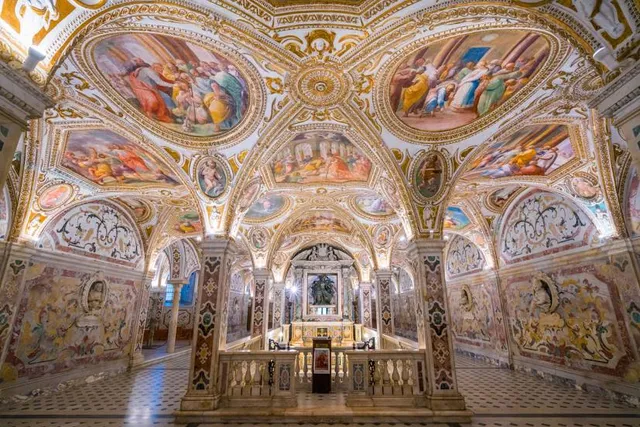
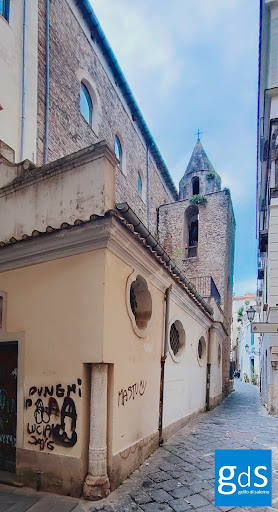
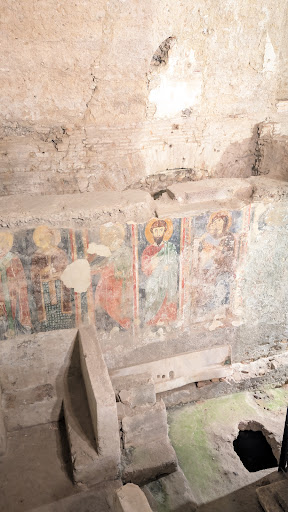
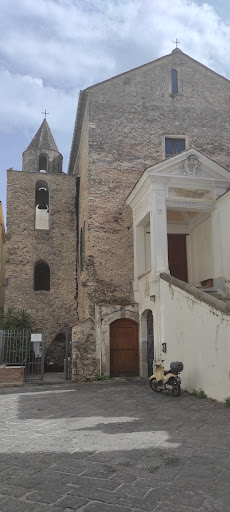
The monumental complex of S. Peter at the Court in Salerno, consists of the hypogeum - Chapel of St. Anne, the bell tower the courtroom and the upper hall of representation from the Church of St. Peter at the Court (Palatine Chapel), dedicated to Saints Peter and Paul. Duke-Prince Arechis II founded it during the Lombard age in the 8th century AD, during the time span between 758 and 774. It is a unique example in Europe of preservation of standing original walls of Lombard civil architecture. The area where the Palatium was built had been occupied in the Roman period by a thermal bath of the Flavian-Trajan era (1st-2nd cent. AD). The groundwater of the historic centre is fed by two important streams: the Rafastia and the Fusandola. The Rafastia is the river that feeds the ancient frigidarium of S. Pietro a Corte. In late antiquity the structures, long abandoned due to flooding, were partly re-used as a place of Christian worship with an attached burial ground that returned inscriptions dating from the 5th to the 7th century AD. In the 8th century, in order to build the Palatium, the vaults of the thermal building were demolished, and inside the hall and its early Christian burial forepart were built powerful pillars and half-pillars designed to hold the overlying floor of the hall of representation of the Church (Palatine Chapel). The monumental complex has five main layers: • Roman baths (1st-2nd cent. AD); • Building of early Christian worship, with an adjoining burial ground (5th-7th cent. AD); • Throne hall and private chapel of the palace of the Lombard period (second half of the 8th century AD); • The Church of St. Peter 'at the Court' with its phases and the Romanesque frescoes (from the 12th century). • The medieval public palace: during the 13th century, the building was also the site of the meetings of Parliament and in it was held the ceremony of conferring the degrees of the Salerno Medical School. In the alluvial layer were placed the burials of an ecclesia built in the thermal environments and frequented over the centuries 5th-7th from the various Socrates, Albulus, Teodenanda, Eutychia, Christians, therefore, of different ethnicity: Greek, Gothic, Roman. The "Chronicon Salernitanum" bears witness to a bell tower erected by Prince Guaimar II around 922 AD. The present Romanesque bell tower that stands on the north side of the church belongs to a period later than the 10th century, as it was established based on stratigraphic relationships with the other surviving structures and quotas of the ancient roadways. Against the north wall of the complex, the small chapel dedicated to St. Anne, adjoining the Hypogeum has a 16th century painting representing the Virgin and Child with Saints as well as other frescoes on the north face and the vault devoted to the life of the Virgin attributed to Filippo Pennino, of the second half of the 18th century. During the building of the chapel of the Lombard Duke’s palace, the vaults of the underlying space were eliminated and a loft was made, where colored marble “carpets” coming from buildings of the Imperial age were put. “Comacine” masters who worked at the Lombard court expertly assembled the pieces of red porphyry, green serpentine, bardiglio, cipollino and other types of polychrome marble and some of these are still today a unique exemplar of the early medieval decorative floor review. Even the apse of the church was covered with a marble mosaic made up of several pieces of glass painted in gold, according to an old technique of the Roman tradition, also known by the glassmaker masters of the...

   Read more
avatar
5.0
1y

Oggi abbiamo visitato la parte bassa della Cappella, nello specifico Le terme Romane ed il Cimitero Paleocristiano.. ho avuto l'onore di trovare il Dott. CELANO che ci ha mostrato, illustrato e spiegato nei minimi dettagli, passo passo tutta la storia di questo luogo e non solo. Voglio complimentarmi sia per la gentilezza e sia per com'è tenuto questo bene. Consiglio, la visita è completamente gratuita aperta a tutti.

Storia:

Alla base dell'intera struttura vi è parte di un edificio d'età medio-imperiale (fine del I - inizio del II secolo). Il complesso si sviluppava in altezza per circa 13 m, mentre si articolava secondo il susseguirsi dinamico di ambienti con volte a crociera e a botte. In particolare l'aula del frigidarium era separata in due ambienti il primo dei quali era coperto da una volta a crociera mentre il secondo, che ospitava una vasca in marmo, da una volta a botte. Attualmente questi spazi si trovano nell'area ipogea a circa 5 metri sotto l'attuale livello stradale.

Gli ambienti proseguono verso nord-est, sotto l'attuale palazzo Fruscione, dove è stato recentemente messo in luce un pavimento musivo, mentre l'ipotesi di un calidarium sotto la chiesa del S. Salvatore non è stata avvalorata dall'indagine archeologica che invece ha evidenziato l'esistenza di un balneum altomedievale che si appoggia ai pilastri di età longobarda.

Le terme vennero abbandonate, probabilmente a causa di un'alluvione, nel IV secolo.

L'aula del frigidarium fu riutilizzata nel V secolo da una comunità di cristiani che adibirono l'area a ecclesia con annesso cimitero. Il fondatore della chiesa cimiteriale è il vir spectabilis Socrates, un personaggio di rango della Salerno bizantina che realizzò per sé e per i suoi cari una cappella funeraria privata. Il suo sepolcro fu posto di fronte all'ingresso sotto un precedente arco romano che, chiuso, andò a costituire l'arco solio della struttura tombale (di tradizione paleocristiana).

L'analisi dei nomi che compaiono sulle epigrafi di questo ed altri sepolcri (databili fino al VII secolo), testimonia la presenza in città di una popolazione multietnica: romani, goti...

   Read more
avatar
5.0
2y

È una delle più importanti acquisizioni della storia recente della città di Salerno, poiché una vasta campagna di scavi ha restituito vari strati del complesso.

La Cappella Palatina di San Pietro a Corte venne edificata per volontà del principe Arechi II, tra il 758 e il 787, all’interno di un preciso programma politico, secondo il quale il principe riteneva necessario fornirsi di una seconda città ben fortificata oltre a Benevento, capitale del Ducato. La costruzione del palatium e della chiesa coinvolse un edificio termale romano, attivo tra il I e il III secolo. La cappella, collegata al palazzo da un loggiato, fu sovrapposta all’aula di un grande frigidarium, in parte già riutilizzato in età paleocristiana come luogo di culto e sepolcreto.

Il campanile, che sorge sul lato settentrionale della cappella, è un’aggiunta del XVI secolo, insieme con la scalinata, che oggi consente l’accesso alla chiesa dall’esterno, restaurata nel XVIII secolo. L'interno è a navata unica con abside. Sulla parete nord si osservano, ai lati del campanile, due bifore con colonna centrale, mentre, in direzione dell'abside, la parete termina con due monofore. Le finestre e il loggiato costituivano le uniche prese di luce per l’interno della cappella.

Nel XIII secolo la chiesa venne utilizzata per pubbliche cerimonie, tra cui il conferimento delle lauree della Scuola Medica Salernitana.

Dal Cinquecento all’Ottocento la chiesa, con alterne vicende, venne contesa tra gli abati di San Pietro a Corte e gli arcivescovi salernitani. Con la legislazione del 1867, la badia venne soppressa. Nel 1881 i principi Pignatelli vendettero l'immobile alla confraternita dell'Immacolata Concezione, estintasi la quale, la chiesa passò nel 1938 alla confraternita di Santo Stefano, da cui prese...

   Read more
Page 1 of 7
Previous
Next

Posts

Ugo Terzi (Golfo di Salerno)Ugo Terzi (Golfo di Salerno)
The monumental complex of S. Peter at the Court in Salerno, consists of the hypogeum - Chapel of St. Anne, the bell tower the courtroom and the upper hall of representation from the Church of St. Peter at the Court (Palatine Chapel), dedicated to Saints Peter and Paul. Duke-Prince Arechis II founded it during the Lombard age in the 8th century AD, during the time span between 758 and 774. It is a unique example in Europe of preservation of standing original walls of Lombard civil architecture. The area where the Palatium was built had been occupied in the Roman period by a thermal bath of the Flavian-Trajan era (1st-2nd cent. AD). The groundwater of the historic centre is fed by two important streams: the Rafastia and the Fusandola. The Rafastia is the river that feeds the ancient frigidarium of S. Pietro a Corte. In late antiquity the structures, long abandoned due to flooding, were partly re-used as a place of Christian worship with an attached burial ground that returned inscriptions dating from the 5th to the 7th century AD. In the 8th century, in order to build the Palatium, the vaults of the thermal building were demolished, and inside the hall and its early Christian burial forepart were built powerful pillars and half-pillars designed to hold the overlying floor of the hall of representation of the Church (Palatine Chapel). The monumental complex has five main layers: • Roman baths (1st-2nd cent. AD); • Building of early Christian worship, with an adjoining burial ground (5th-7th cent. AD); • Throne hall and private chapel of the palace of the Lombard period (second half of the 8th century AD); • The Church of St. Peter 'at the Court' with its phases and the Romanesque frescoes (from the 12th century). • The medieval public palace: during the 13th century, the building was also the site of the meetings of Parliament and in it was held the ceremony of conferring the degrees of the Salerno Medical School. In the alluvial layer were placed the burials of an ecclesia built in the thermal environments and frequented over the centuries 5th-7th from the various Socrates, Albulus, Teodenanda, Eutychia, Christians, therefore, of different ethnicity: Greek, Gothic, Roman. The "Chronicon Salernitanum" bears witness to a bell tower erected by Prince Guaimar II around 922 AD. The present Romanesque bell tower that stands on the north side of the church belongs to a period later than the 10th century, as it was established based on stratigraphic relationships with the other surviving structures and quotas of the ancient roadways. Against the north wall of the complex, the small chapel dedicated to St. Anne, adjoining the Hypogeum has a 16th century painting representing the Virgin and Child with Saints as well as other frescoes on the north face and the vault devoted to the life of the Virgin attributed to Filippo Pennino, of the second half of the 18th century. During the building of the chapel of the Lombard Duke’s palace, the vaults of the underlying space were eliminated and a loft was made, where colored marble “carpets” coming from buildings of the Imperial age were put. “Comacine” masters who worked at the Lombard court expertly assembled the pieces of red porphyry, green serpentine, bardiglio, cipollino and other types of polychrome marble and some of these are still today a unique exemplar of the early medieval decorative floor review. Even the apse of the church was covered with a marble mosaic made up of several pieces of glass painted in gold, according to an old technique of the Roman tradition, also known by the glassmaker masters of the 8th century.
RobRob
The Monumental Complex of San Pietro a Corte is a small but very interesting site right in the historic center of Salerno. It’s free to enter, quick to visit, and full of traces of the city’s past. When I went in the afternoon (September), there was almost no one there, which made the visit even more enjoyable. Not a big site, but definitely worth a stop if you are walking around the center.
Ilaria OrlandiniIlaria Orlandini
Il complesso è aperto con orario continuato e si visita gratuitamente. Il cartello all'ingresso spiega come il complesso sia di origine longobarda, fondato dal re Arechi II nel momento del trasferimento della capitale da Benevento a Salerno. In realtà gli scavi hanno messo in luce delle strutture romane, probabilmente termali, su cui ci innestò più tardi un sepolcreto. Nel percorso attraverso la passerella è possibile vedere ancora resti di affreschi bizantini. Sul lato destro un palazzo che faceva parte dell'originario complesso e di cui oggi si conservano delle arcate pensili (girate intorno a questo palazzo perché la parte più interessante è dietro). In questo luogo venivano consegnati, nel medioevo, i diplomi di laurea agli studenti della scuola Medica di Salerno!
See more posts
See more posts
hotel
Find your stay

Pet-friendly Hotels in Salerno

Find a cozy hotel nearby and make it a full experience.

The monumental complex of S. Peter at the Court in Salerno, consists of the hypogeum - Chapel of St. Anne, the bell tower the courtroom and the upper hall of representation from the Church of St. Peter at the Court (Palatine Chapel), dedicated to Saints Peter and Paul. Duke-Prince Arechis II founded it during the Lombard age in the 8th century AD, during the time span between 758 and 774. It is a unique example in Europe of preservation of standing original walls of Lombard civil architecture. The area where the Palatium was built had been occupied in the Roman period by a thermal bath of the Flavian-Trajan era (1st-2nd cent. AD). The groundwater of the historic centre is fed by two important streams: the Rafastia and the Fusandola. The Rafastia is the river that feeds the ancient frigidarium of S. Pietro a Corte. In late antiquity the structures, long abandoned due to flooding, were partly re-used as a place of Christian worship with an attached burial ground that returned inscriptions dating from the 5th to the 7th century AD. In the 8th century, in order to build the Palatium, the vaults of the thermal building were demolished, and inside the hall and its early Christian burial forepart were built powerful pillars and half-pillars designed to hold the overlying floor of the hall of representation of the Church (Palatine Chapel). The monumental complex has five main layers: • Roman baths (1st-2nd cent. AD); • Building of early Christian worship, with an adjoining burial ground (5th-7th cent. AD); • Throne hall and private chapel of the palace of the Lombard period (second half of the 8th century AD); • The Church of St. Peter 'at the Court' with its phases and the Romanesque frescoes (from the 12th century). • The medieval public palace: during the 13th century, the building was also the site of the meetings of Parliament and in it was held the ceremony of conferring the degrees of the Salerno Medical School. In the alluvial layer were placed the burials of an ecclesia built in the thermal environments and frequented over the centuries 5th-7th from the various Socrates, Albulus, Teodenanda, Eutychia, Christians, therefore, of different ethnicity: Greek, Gothic, Roman. The "Chronicon Salernitanum" bears witness to a bell tower erected by Prince Guaimar II around 922 AD. The present Romanesque bell tower that stands on the north side of the church belongs to a period later than the 10th century, as it was established based on stratigraphic relationships with the other surviving structures and quotas of the ancient roadways. Against the north wall of the complex, the small chapel dedicated to St. Anne, adjoining the Hypogeum has a 16th century painting representing the Virgin and Child with Saints as well as other frescoes on the north face and the vault devoted to the life of the Virgin attributed to Filippo Pennino, of the second half of the 18th century. During the building of the chapel of the Lombard Duke’s palace, the vaults of the underlying space were eliminated and a loft was made, where colored marble “carpets” coming from buildings of the Imperial age were put. “Comacine” masters who worked at the Lombard court expertly assembled the pieces of red porphyry, green serpentine, bardiglio, cipollino and other types of polychrome marble and some of these are still today a unique exemplar of the early medieval decorative floor review. Even the apse of the church was covered with a marble mosaic made up of several pieces of glass painted in gold, according to an old technique of the Roman tradition, also known by the glassmaker masters of the 8th century.
Ugo Terzi (Golfo di Salerno)

Ugo Terzi (Golfo di Salerno)

hotel
Find your stay

Affordable Hotels in Salerno

Find a cozy hotel nearby and make it a full experience.

Get the Appoverlay
Get the AppOne tap to find yournext favorite spots!
The Monumental Complex of San Pietro a Corte is a small but very interesting site right in the historic center of Salerno. It’s free to enter, quick to visit, and full of traces of the city’s past. When I went in the afternoon (September), there was almost no one there, which made the visit even more enjoyable. Not a big site, but definitely worth a stop if you are walking around the center.
Rob

Rob

hotel
Find your stay

The Coolest Hotels You Haven't Heard Of (Yet)

Find a cozy hotel nearby and make it a full experience.

hotel
Find your stay

Trending Stays Worth the Hype in Salerno

Find a cozy hotel nearby and make it a full experience.

Il complesso è aperto con orario continuato e si visita gratuitamente. Il cartello all'ingresso spiega come il complesso sia di origine longobarda, fondato dal re Arechi II nel momento del trasferimento della capitale da Benevento a Salerno. In realtà gli scavi hanno messo in luce delle strutture romane, probabilmente termali, su cui ci innestò più tardi un sepolcreto. Nel percorso attraverso la passerella è possibile vedere ancora resti di affreschi bizantini. Sul lato destro un palazzo che faceva parte dell'originario complesso e di cui oggi si conservano delle arcate pensili (girate intorno a questo palazzo perché la parte più interessante è dietro). In questo luogo venivano consegnati, nel medioevo, i diplomi di laurea agli studenti della scuola Medica di Salerno!
Ilaria Orlandini

Ilaria Orlandini

See more posts
See more posts