I have been reading stories of Takashi Nagai and the famous bell they saved at this site after the atomic Bomb. Isn’t it amazing that Takashi continues to inspire people in Japan and all around the world?! I plan on visiting Japan one day so I can see the stories come to life. God Bless ✝️✨🙏🏻💕🕊️
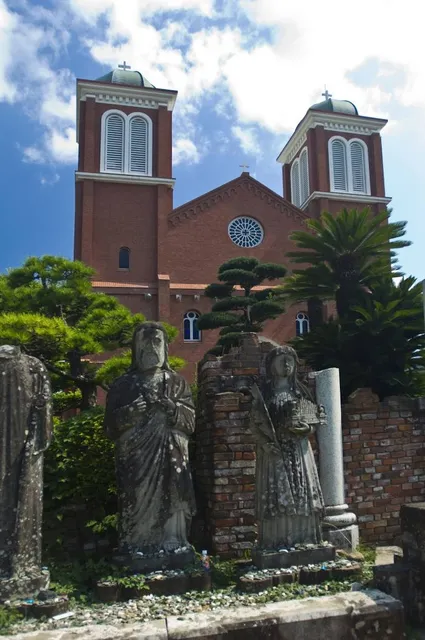
The story of the Cathedral helps us understand why it was the perfect inspiration for the title of his book. In 1872, Nagasaki Catholics returned from captivity after another government persecution. Their first years back were primitive. All of their property, including their tools, had been stolen. Their first priority was to build a Church. They initially built a wooden Church. Then, over 20 years, they saved enough money to finally start construction on a cathedral of stone. Almost every family was involved. Men used barges to transport huge foundation stones and then hauled them up the hill. Women and children worked in shifts to make hundreds of thousands of red bricks. It was all done by people just above the poverty level. During the construction, they ran out of money and materials several times and had to stop. Finally, after twenty-two years of work and sacrifice, their cathedral was completed. This same Cathedral stood until 1945 and was the Church that was so influential during Takashi's conversion. It was the center of life in Catholic Nagasaki and a grand symbol of the faith and perseverance of its persecuted people. When the atomic bomb struck, the building was annihilated through the force of the blast and a subsequent fire. One of the bells was hurled several yards away, cracked beyond repair. The other bell dropped straight down and was covered by tons of brick, masonry, and ash. When December came around, Takashi enlisted his friend Ichitaro Yamada to help dig for the buried bell. Yamada and several young men went to work clearing the mountain of rubble, and by late morning on December 24th, they could see the top of the bell. They had lunch, and Takashi led them in the Rosary. Throughout the afternoon, they worked to clear the sides of the bell and found no cracks. By the time they had the bell hanging securely on a tripod of cypress logs, it was dark and almost 6 P.M. They decided to ring the bell for the Angelus. Because they didn't know if the bell would ring, they hadn't advertised their project to the Urakami Christians. As Christmas approached, the Catholic neighborhood was surrounded by the effects of the war. For those who had moved back, they were sitting down in drafty huts with meager suppers. Their cathedral was destroyed and Mass was held in a burnt-out hall of the Saint Francis Hospital. Christmas was just another reminder of the friends and families who had died and the difficult life that they continued to live. Then suddenly the bell rang and a real miracle transformed the winter darkness. The sound of the bell was all the more clear in the absence of any tall buildings in the suburb of huts. It was as if the cathedral had risen from the ashes to herald Christ's birth for Christmas. The people listened in awe and suddenly remembered the call to pray the Angelus each day and the life of faith they had before the bomb. That night the title of Takashi's book was born-" The Bells of Nagasaki.' He would complete it on August 9th, 1946, the one-year anniversary of Midori's death. Its message would be that not even an atomic bomb can silence the bells of God. Citations “The Bells” from the app...
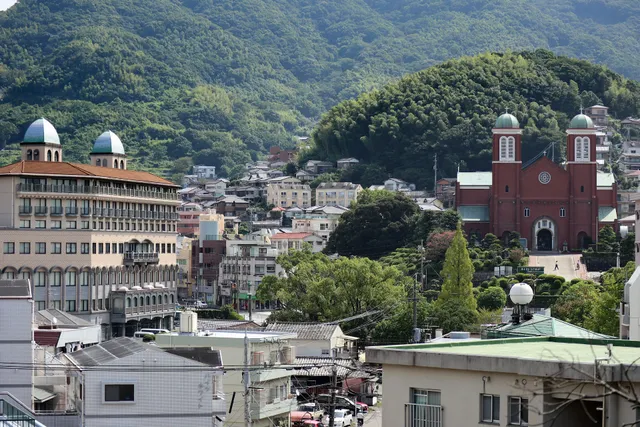
Read moreLa Catedral de la Inmaculada Concepción, también conocida como la catedral de Urakami es una catedral católica localizada en el distrito de Urakami, Nagasaki, Japón. Una visita imprescindible si recalas en Nagasaki. "La catedral de Urakami cuenta con un estilo neorrománico, y la construcción se inició en 1875, después de que la persecución del cristianismo fuera abolida. En 1865, el sacerdote francés Bernard Petitjean descubrió que casi todos los aldeanos de Urakami eran cristianos. Entre 1869 y 1873, más de 3600 aldeanos fueron desterrados. Durante su exilio murieron 650 mártires. Los perseguidos Kakure Kirishitan (cristianos ocultos) volvieron a su aldea después de siete años en 1873, y decidieron construir su propia iglesia. Compraron la tierra al jefe local en el lugar donde las humillantes interrogaciones habían tomado lugar por dos siglos. Estas interrogaciones "fumie" requerían a los presentes pisar imágenes religiosas de la Virgen María o Jesús. Por lo que los aldeanos de Urakami pensaron que era el lugar apropiado considerando la memoria de su persecución y la de sus antepasados. La construcción de la catedral la inició el padre Francine y fue completada bajo la dirección del padre Regani. Las columnas frontales presentaban 64 metros de altura y fueron erigidas en 1875. La catedral terminó de construirse en el año 1925 (Taishō 14), para ese entonces era la catedral católica más grande del este de Asia. Desafortunadamente la bomba atómica que cayó sobre Nagasaki el 9 de agosto de 1945 detonó en Urakami, a tan solo 500 m de la catedral, destruyéndola completamente. Como estaban en la novena de la solemnidad de la Asunción de María se llevaba a cabo misa ese día y muchos cristianos estaban congregados en la iglesia. Debido a la gran reacción térmica de la deflagración y derrumbe total del edificio todos los asistentes murieron. Años más tarde, en 1959 se reconstruyó nuevamente la catedral en su lugar y forma original, después de serios debates entre en el gobierno de la ciudad de Nagasaki y la congregación. El gobierno de la ciudad sugirió preservar la catedral destruida como patrimonio histórico, y ofreció un nuevo sitio alterno para la nueva catedral. Sin embargo, los cristianos en Nagasaki se opusieron fervientemente y decidieron que la catedral fuera reconstruida en su sitio original por razones históricas y el aun mayor patrimonio histórico y gran simbolismo que representaba. El lugar es un símbolo de la persecución de los cristianos en Japón y su sufrimiento. En 1980 fue remodelada de manera que tuviera una apariencia más similar al original estilo francés historicista y el símbolo nacional de la iglesia, es el pez, es decir Piscis signo del zodiaco. Las estatuas y objetos dañados en el bombardeo, incluyendo la campana del Angelus de origen francés, se encuentran ahora en exposición. El cercano Parque de la paz de Nagasaki contiene restos de las paredes de la catedral original. El resto se encuentra en exposición en el Museo de la Bomba Atómica de Nagasaki..." (⛲ Fuente: Wikipedia) 📕: "El quinteto de Nagasaki ", de Aki...
Read moreDefinitely worth the walk uphill from the Hypocenter Park. The rebuilt cathedral is beautiful in itself. If you are wanting to attend mass or receive any sacraments, the priests are only Japanese speaking there.
Was not allowed to take pictures inside the cathedral so could not get a picture of the Bombed Mary (sometimes called Our Lady of Nagasaki). Very chilling yet powerful to see.
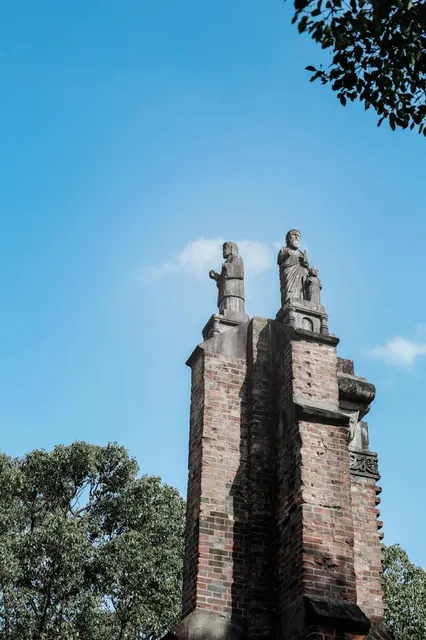
Some statues from the old belfry stand outside
Another small building (I think it has a chapel downstairs) has a small exhibit of relics from the original church. A real testament to the destructive forces of the atomic bomb. The remnants of the twisted and broken bell demonstrate this well.
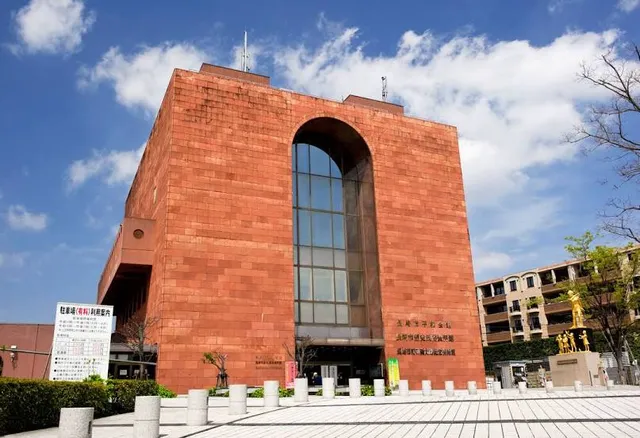
There are more exhibits from the cathedral at the Atomic Bomb museum down the road...
Read more