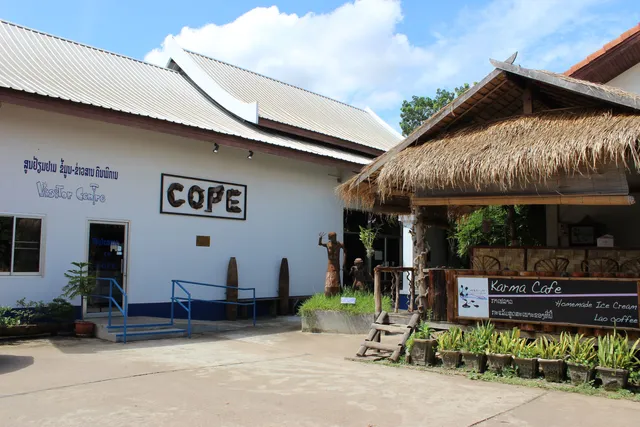
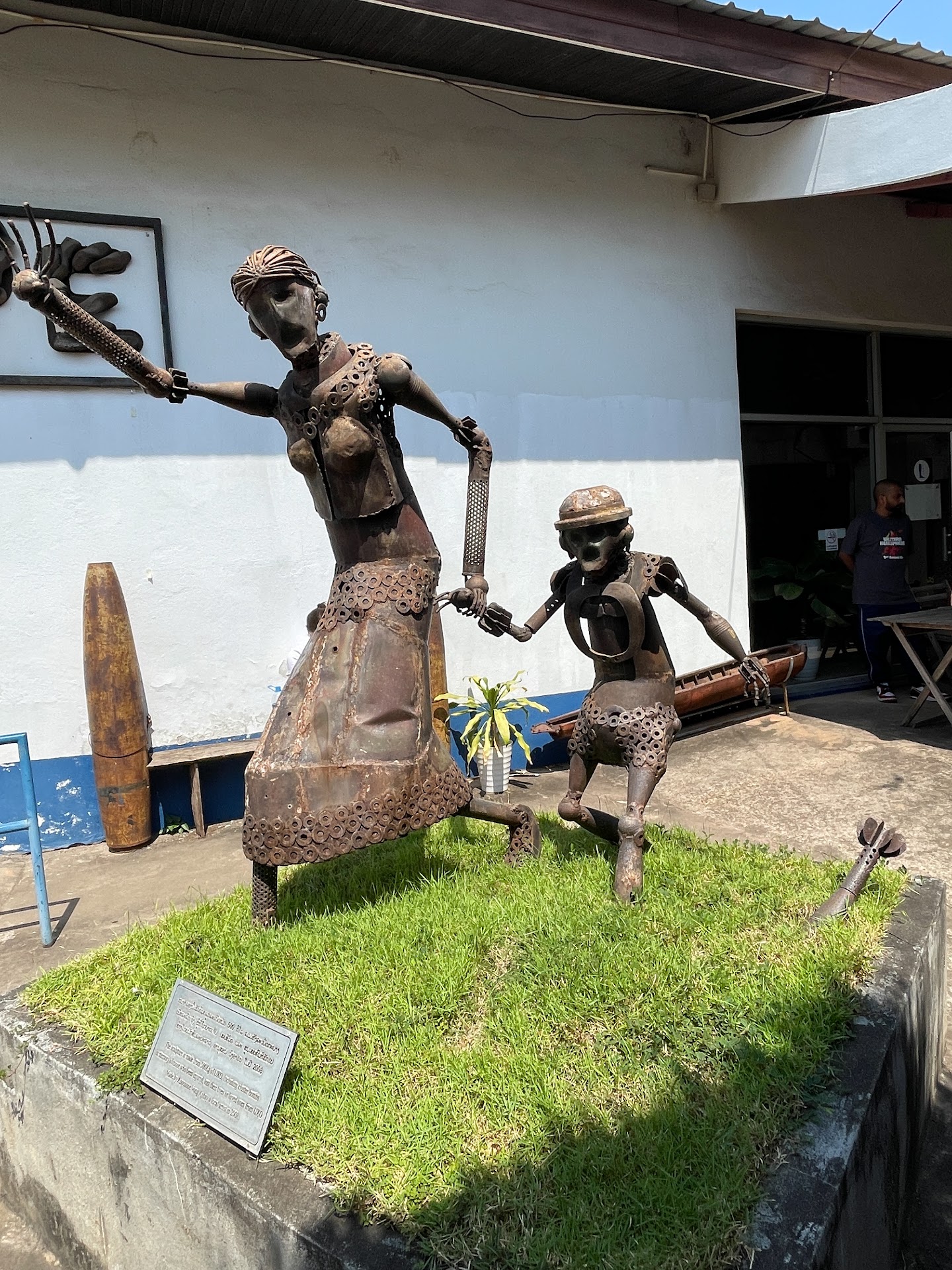
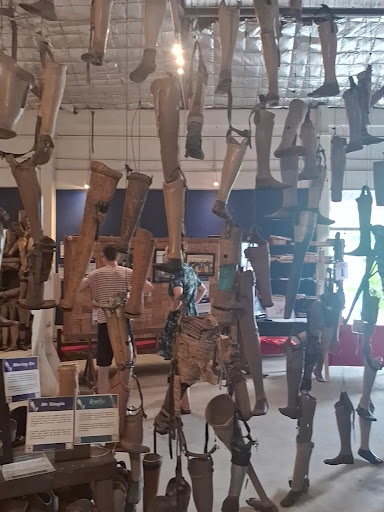
This small exhibition should be on everyone’s “must see” list when in Vientiane. It details the human tragedies wrought by the American bombing of Laos between 1964 and 1972, and the work being done to this day to provide rehabilitation support for people who have been severely injured by the unexplored ordnance (UXO) in the country.
There are only a few physical exhibits, but they’re fascinating. Of particular interest is an exhibit that replicates a traditional rural Laotian home, inside of which are all manner of day-to-day items (e.g.: lamps; plates; bowls; utensils; flower pots etc.) made from the metal left behind by the bombings. The exhibition highlights the resiliency and adaptability of the Laotian people, but also highlights a grim reality: many people have been killed or maimed when foraging for scrap metal from the UXO scattered around the country. These people join those who are injured and killed as they go about their daily life: farming, cooking, playing, etc.
You can view the stories of some of these people, and how they have been helped by COPE since its inception in 1996, in a series of compelling short films shown in the Centre’s Cave Cinema. We highly recommend taking the time to watch one of these short films as they do a great job highlighting both the human tragedies and COPE’s work to help rehabilitate people affected.
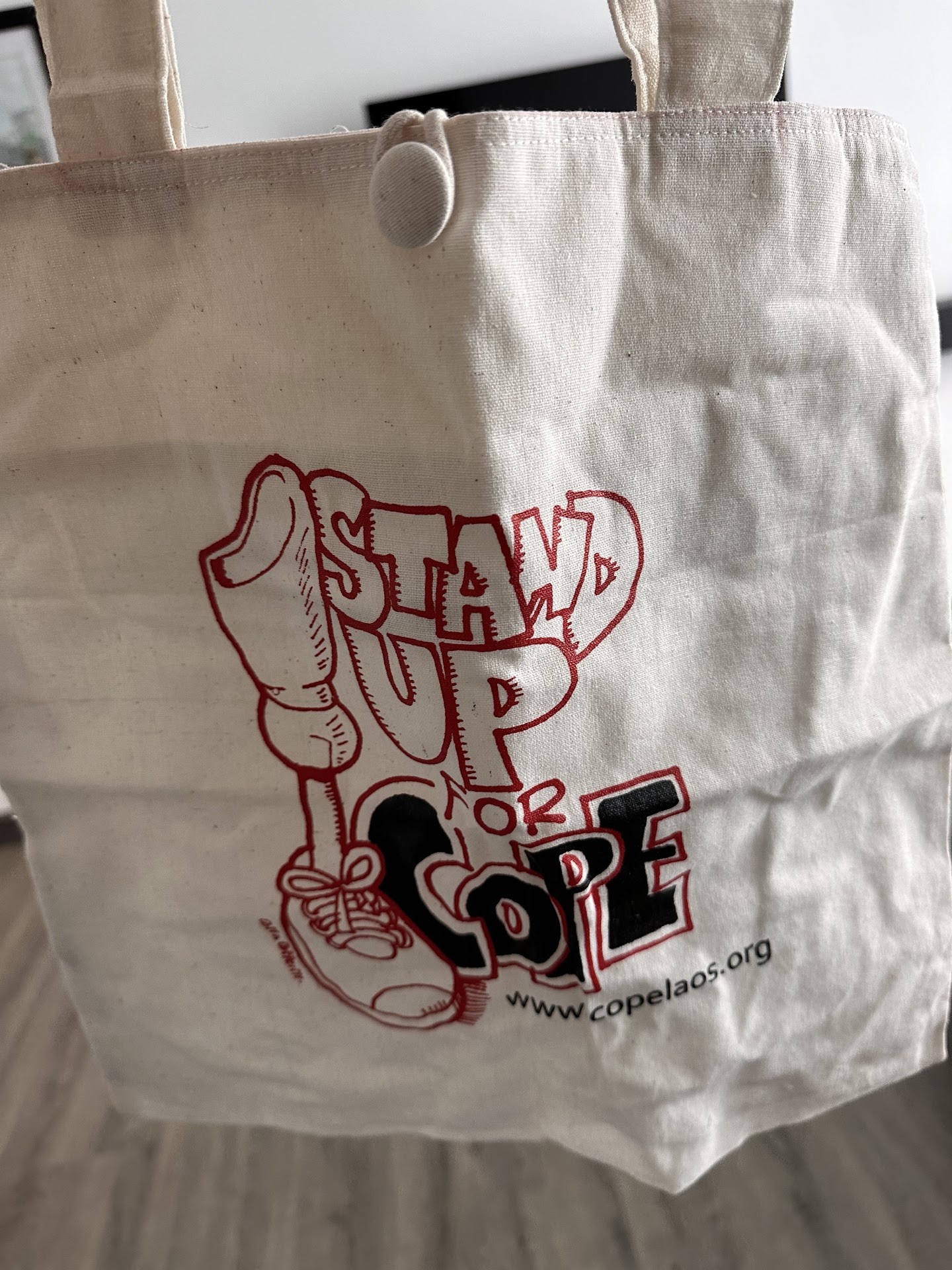
The COPE exhibition is funded by a variety of international agencies, as well as by gift shops purchases and donations by people who visit the centre. It is affiliated with , which works to provide prosthetics and physical rehabilitation services to people throughout Laos. We strongly encourage anyone visiting COPE to leave a donation to support this work.
*A bit of history:
During the Vietnam Way (or American War as people in this region refer to it) Laos earned the dubious distinction of being the most heavily bombed country in the world per capita. From 1964 - 1972 the American forces flew a bombing sortie over Laos every eight minutes, 24 hours a day, seven days a week. A total of approximately million munitions - mostly in the form of cluster bomblets (or “bombies” as they are called in Laos) - were dropped on the country. Civilian casualties were very high during that period, and tragically those casualties have continued as UXO continues to kill and maim people, mainly in rural areas of Laos.
Entry: Free (Donations strongly recommended) Gift Shop and...
Read moreAn amazing experience. As an American I was embarrassed that I didn't know about the bombings of Laos during the Vietnam War. It is a great place to learn more about what the Lao people went through and are still going through. The entry is free but I think everyone should donate what they can as this is going to a great cause. They do show different documentaries throughout the day so if one is playing and you have the time, they are really fascinating. We watched part of one that explained how the UXOs are removed from around the country and the training that is necessary for the bomb teams. It also talked about the scrap trade and the many people injured trying to dig up sand sell munitions.
Some interesting statistics from COPEs exhibit: Laos is the most heavily bombed country in the world. Over 2 million tons of ordnance were dropped on Laos by the US from 1964-1973 during the Vietnam War. Up to 30% of the bombs failed to detonate and over 20,000 people have been injured or killed since 1974, of that 40% are children. COPE’s mission is to help people with mobility-related disabilities from UXOs move on by supporting access to physical rehabilitation services in...
Read moreMUST GO TO MUSEUM.
It's eye opening but definitely depressing. It's worth visiting. You will learn a lot of things about Laos. I had 0 knowledge about the country before coming here and I learned soooo much spending an hour at this place. They have documentaries you can watch in the center, and also a live story telling from a Laotian, and someone who translate into English. I'm unsure if this was part of a tour, or you can request from the front desk. I just saw them and heard some of the things they were sharing. If you don't have the option to join a story telling group, just going around the centre and reading the information on the walls are enough.
You can go through the centre for a good 30-40 minutes not including watching the documentaries available in the room on the left side after entering the place. Basic information is shared on the video at the beginning of your tour.
Please make sure to donate or buy something from the centre to help out. It's really heart wrenching. The price to...
Read more