HTML SitemapExplore
logo
Find Things to DoFind The Best Restaurants

Sinaia Monastery — Attraction in Sinaia

Name
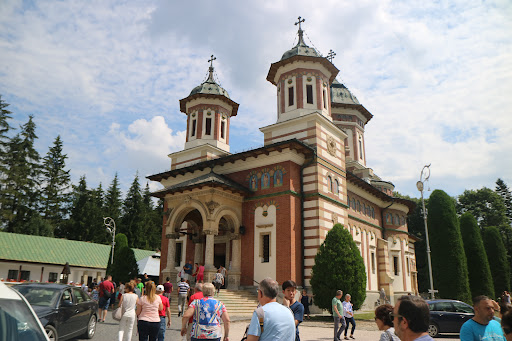
Sinaia Monastery
Description
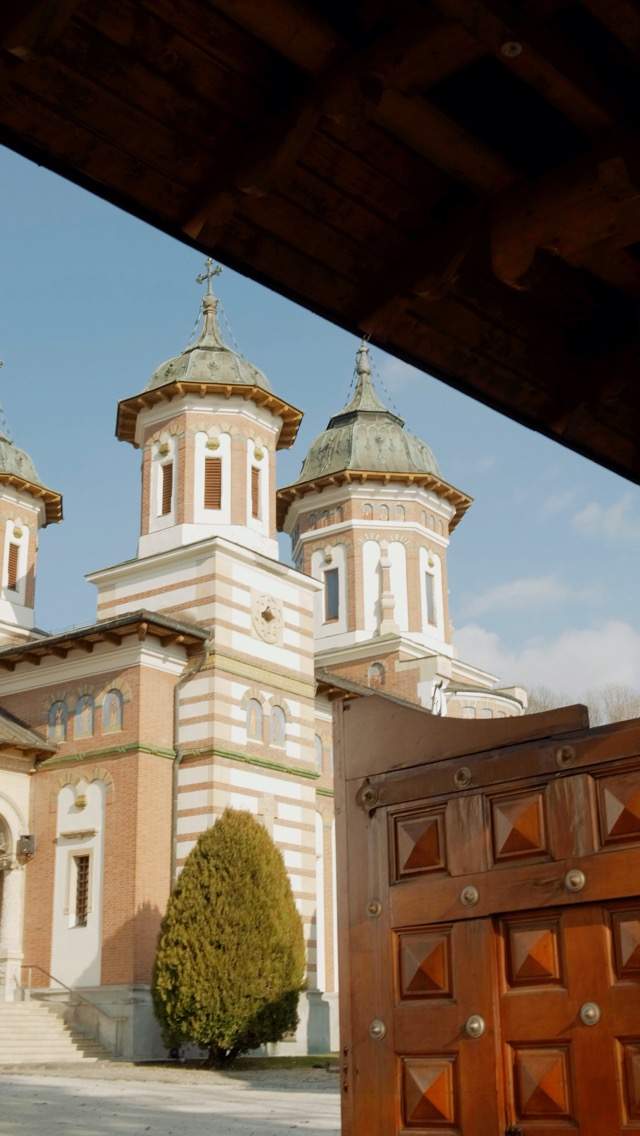
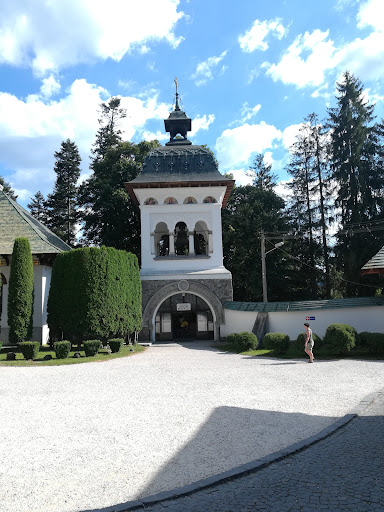
The Sinaia Monastery, located in Sinaia, in Prahova County, Romania, was founded by Prince Mihail Cantacuzino in 1695 and named after the great Saint Catherine's Monastery on Mount Sinai in Egypt. As of 2005, it is inhabited by 13 Christian Orthodox monks led by hegumen Macarie Boguș.
Nearby attractions
Dimitrie Ghica Park
Bulevardul Carol I, Sinaia 106100, Romania
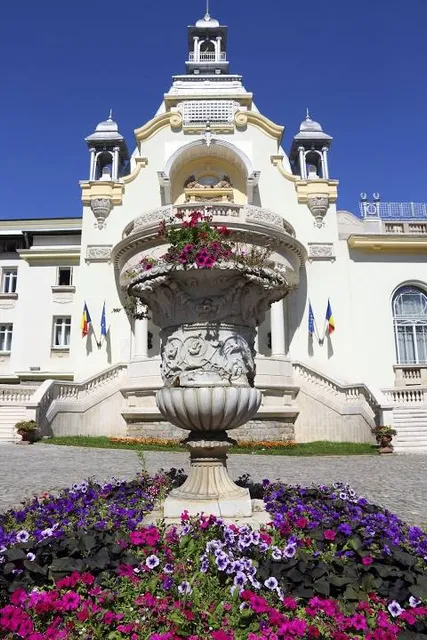
The Casino of Sinaia
Bulevardul Carol I 2, Sinaia 106100, Romania
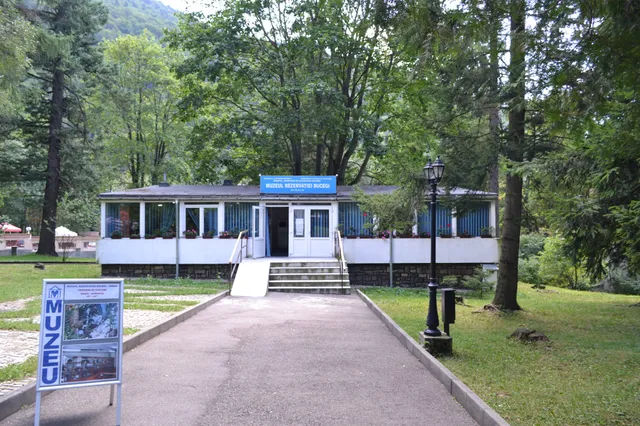
The Museum of Bucegi Nature Preserve
Bulevardul Carol I, Sinaia 106100, Romania
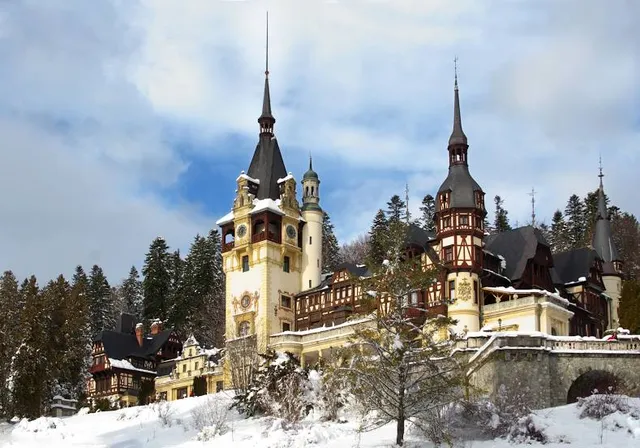
Peleș Castle
Aleea Peleșului 2, Sinaia 106100, Romania
The Știrbey Castle
Bulevardul Carol I 28, Sinaia 106100, Romania
Photo spot for Peleș Castle
Aleea Peleșului, Sinaia 106100, Romania
"Pelișor" Castle
Aleea Peleșului 2, Sinaia 106100, Romania
Nearby restaurants
Restaurant Vânătoresc Furnica
Strada Săniușului, Sinaia 106100, Romania
Nearby hotels
Hotel Palace Sinaia
Strada Octavian Goga 4, Sinaia 106100, Romania
STĂVILAR
Aleea Peleșului 2, Sinaia 106100, Romania
Casa Adina Sinaia
Strada Răscoalei din 1907 21, Sinaia 106100, Romania
Casa SEMA
Strada Mănăstirii 15, Sinaia 106100, Romania
Vila Camelia
Strada M Cantacuzino 5, Sinaia 106100, Romania
Casa Ana Sinaia
Strada Răscoalei din 1907 10A, Sinaia 106100, Romania
Hotel Sinaia
Bulevardul Carol I 8, Sinaia 106100, Romania
Hotel Regal 1880
2, Strada Octavian Goga Street, Sinaia 106100, Romania
Hotel Tanți
Strada Octavian Goga 35-37, Sinaia 106100, Romania
Excelsior Boutique
Strada Octavian Goga 13, Sinaia 106100, Romania
Related posts
Keywords
Sinaia Monastery tourism.Sinaia Monastery hotels.Sinaia Monastery bed and breakfast. flights to Sinaia Monastery.Sinaia Monastery attractions.Sinaia Monastery restaurants.Sinaia Monastery travel.Sinaia Monastery travel guide.Sinaia Monastery travel blog.Sinaia Monastery pictures.Sinaia Monastery photos.Sinaia Monastery travel tips.Sinaia Monastery maps.Sinaia Monastery things to do.
Sinaia Monastery things to do, attractions, restaurants, events info and trip planning
Sinaia Monastery
RomaniaPrahovaSinaiaSinaia Monastery

Basic Info

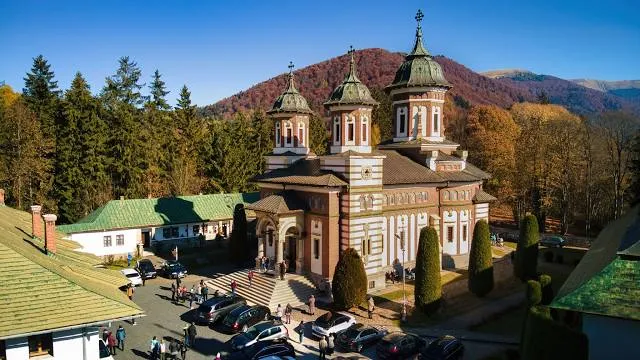
Sinaia Monastery

Strada Mănăstirii 2, Sinaia 106100, Romania
4.7(5K)
Open 24 hours
Save
spot

Ratings & Description

Info

The Sinaia Monastery, located in Sinaia, in Prahova County, Romania, was founded by Prince Mihail Cantacuzino in 1695 and named after the great Saint Catherine's Monastery on Mount Sinai in Egypt. As of 2005, it is inhabited by 13 Christian Orthodox monks led by hegumen Macarie Boguș.

Cultural
Family friendly
attractions: Dimitrie Ghica Park, The Casino of Sinaia, The Museum of Bucegi Nature Preserve, Peleș Castle, The Știrbey Castle, Photo spot for Peleș Castle, "Pelișor" Castle, restaurants: Restaurant Vânătoresc Furnica
logoLearn more insights from Wanderboat AI.
Phone
+40 244 314 917
Website
manastireasinaia.ro

Plan your stay

hotel
Pet-friendly Hotels in Sinaia
Find a cozy hotel nearby and make it a full experience.

hotel
Affordable Hotels in Sinaia
Find a cozy hotel nearby and make it a full experience.

hotel
The Coolest Hotels You Haven't Heard Of (Yet)
Find a cozy hotel nearby and make it a full experience.

hotel
Trending Stays Worth the Hype in Sinaia
Find a cozy hotel nearby and make it a full experience.

Reviews

Nearby attractions of Sinaia Monastery

Dimitrie Ghica Park

The Casino of Sinaia

The Museum of Bucegi Nature Preserve

Peleș Castle

The Știrbey Castle

Photo spot for Peleș Castle

"Pelișor" Castle
Dimitrie Ghica Park

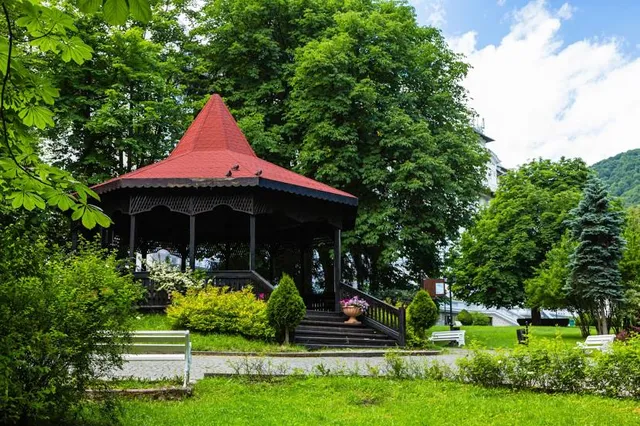
Dimitrie Ghica Park

4.7

(7K)

Open 24 hours
Click for details
The Casino of Sinaia

The Casino of Sinaia

4.7

(1.8K)

Open 24 hours
Click for details
The Museum of Bucegi Nature Preserve

The Museum of Bucegi Nature Preserve

4.4

(247)

Open 24 hours
Click for details
Peleș Castle

Peleș Castle

4.7

(23.5K)

Open 24 hours
Click for details

Nearby restaurants of Sinaia Monastery

Restaurant Vânătoresc Furnica
Restaurant Vânătoresc Furnica

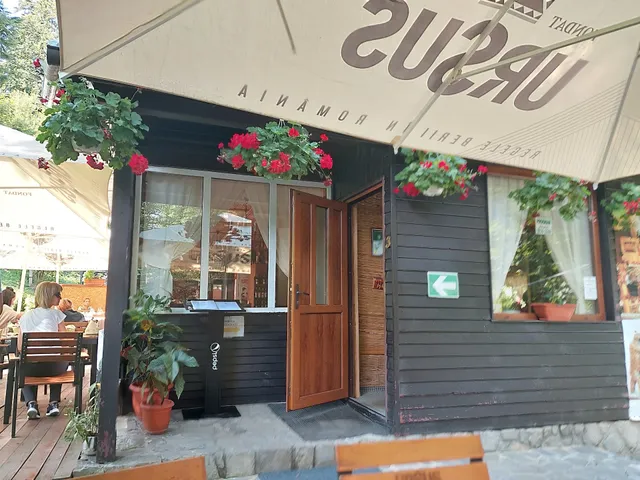
Restaurant Vânătoresc Furnica

4.2

(714)

$$

Click for details
Get the Appoverlay
Get the AppOne tap to find yournext favorite spots!
Wanderboat LogoWanderboat

Your everyday Al companion for getaway ideas

CompanyAbout Us
InformationAI Trip PlannerSitemap
SocialXInstagramTiktokLinkedin
LegalTerms of ServicePrivacy Policy

Get the app

© 2025 Wanderboat. All rights reserved.
logo

Reviews of Sinaia Monastery

4.7
(4,994)
avatar
5.0
6y

Wonderful monastery situated near the Casino of Sinaia, with a long history starting somewhere around the 17th century with a Cantacuzino family member that returned from the Holy Lands and built what is now known as the "old Church", which resides inside the same walls. The old church is more of a chapel due to its small dimensions, something around 18m long and 6m high, but it definitely stands out as a unique piece of architectural work of its time due to its unique byzantine-like style. Its outer painting is really different from most of Eastern orthodox churches', with representations of Hell and the Devil on the right side of the entrance being a little faded due to its old age, but still observable. Its columns are also worth to be mentioned. The interior paintings of the old church is a wonderful piece of byzantine 17th century orthodox style, highly influenced by the mentioned Cantacuzino that traveled to the famous Greek churches and monasteries, such as the Athos Monastery. The main church, nicknamed "the cathedral of Carpathian Mountains", is larger and still in use. Its design is also beautiful and worth seeing, as it incorporates elements of both church and the late 19th and early 20th royalty of the past Kingdom of Romania. Really beautiful sight that comes with a piece of traditional Eastern orthodox spirituality. The place is quiet, cool and free of fee entrance, so you can spend as much time as you need and want here with your thoughts. The Monastery also houses the tomb of Take Ionescu, one of the most influential Prime Ministers of the Kingdom. The monastery is a must-visit place if...

   Read more
avatar
1.0
8y

A few things struck me as very odd here: Right at the doorstep, we were stopped by a 'guard' to pay an entry fee. The guy had a badge (which was just a few words printed on a white piece of paper without any logos), some tickets in his hand (which we never received after we paid, and later realised were just blank pieces of paper), and even his own booth just behind the main gate. However, he was only cherry-picking people to pay the 'fee'. Not all tourists were asked to pay, and the tickets, if genuine at all, really should have been provided. Obviously there isn't proper bookkeeping here either. This is pretty strange, and surely the monastery knows this and yet allows it to happen.

We arrived during some liturgy of sorts, and it was being carried out by a young man, who looked way too young.

Just outside the great church, we saw an older priest (or monk), holding a girl who looked no older than 10. While talking to some older worshippers, he was touching/rubbing her arms and face in a very inappropriate way. He later led her alone through the walkway towards the old church, and when I followed after, they had disappeared, possibly into one of the surrounding rooms.

These events left me with an impression of the place that is very far from pleasant. It could be a lack of understanding of the customs, but surely I can't be the only one with...

   Read more
avatar
5.0
1y

Mănăstirea Sinaia datează din secolul al XVII-lea şi, conform surselor documentare, se identifică cu începuturile istorice ale oraşului Sinaia, fiind prima construcţie atestată pe acest teritoriu. Fondatorul mânăstirii este Marele Spătar Mihail Cantacuzino, care împreună cu mama sa Elena şi cu sora sa Stanca, face un pelerinaj la Locurile Sfinte şi ajunge, cu această ocazie, şi la Muntele Sinai, unde s-a rugat în mănăstirea „Sfânta Ecaterina“. Impresionat de măretia biblică a locurilor vizitate, construieşte, la reîntoarcerea în Ţara Românească, o frumoasă mânăstire pe care o numeste Sinaia, „în amintirea Sinaiei celei mari“, mănăstire pe care o închină Sfintei Fecioare Maria. „Am zidit din temelie şi am înălţat un schiţişor, numindu-se Sinaia, după asemănarea Sinaiei cei mari şi după-cum arată şi Patriarchul Ţarigradului Gavriil (1702), pe care Sinaia au numit-o bine făcând, îndemnându-se de multă dragoste şi cucernicie ce avea către sfântul şi de Dumnezeu umblatul muntele Sinaiei”, scrie în actul de fondare al bisericii. Construcţia mănăstirii începe în 1690 şi va dura până în 1695. De muntele Sinai se leagă episodul biblic al locului unde Moise a primit tablele legii cu cele zece porunci. La început, mănăstirea a fost construită să adăpostească doisprezece călugări (după modelul Mântuitorului Iisus Hristos care şi-a ales doisprezece apostoli), dar, cu timpul, numărul a crescut fiind necesară construirea unei alte biserici mai mare şi a unor chilii suplimentare. Noile construcţii (ceea ce se numeşte astăzi „curtea nouă“), au fost realizate între anii 1842-1846, prin grija stareţului Ioasaf şi Paisie. Pelerinii care ajung la Mănăstirea Sinaia găsesc aici şi un adevărat muzeu de artă şi de spiritualitate românească. Vechea biserică cu hramul „Adormirea Maicii Domnului“ este construită în stilul brâncovenesc, arhitectură caracteristică Ţării Româneşti, stil ce poartă numele Domnitorului Constantin Brâncoveanu. Acest stil, de influenţă barocă, are drept caracteristici coloanele sculptate în piatră şi ornate cu motive florale şi vegetale. Forma exteriorului bisericii, în cruce latină - absidele în contur rectangular, este puţin obişnuită în epocă. În general, bisericile ortodoxe sunt formate din: pronaos, naos şi altar, iar stilul brâncovenesc adaugă acestora trei pe cea de a patra, sub forma unei camere deschise susţinută de coloane, pridvorul. Foarte important este portalul intrării în pronaos care este sculptat în piatră, reprezentând la dreapta pe Moise cu Tablele Legii, şi în partea stângă pe fratele lui, Arhiereul Aaron, cu toiagul înfrunzit. La mijlocul portalului se găseşte stema familiei fondatoare - familia Cantacuzino, vulturul bicefal ce ţine în gheare semnele imperiale ale puterii: sceptrul şi crucea. Pictura din pridvor şi pronaos (Pantocratorul) este în cea mai mare parte cea originală, realizată de Pârvu Mutu Zugravul, pictorul preferat al Cantacuzinilor. Cupola pridvorului este pictată cu scene din viata Sfintei Ecaterina (ocrotitoarea Mânăstirii de la Muntele Sinai), a Sfântului Gheorghe (protectorul Moldovei şi al militarilor) şi a Sfântului Dumitru (ocrotitorul Ţării Românesti). Tabloul votiv îl reprezintă pe fondatorul mânăstirii, Mihail Cantacuzino, înconjurat de optsprezece copii (din care 12 adoptaţi), de prima soţie (Maria) şi cea de a doua (Teodora), precum şi de alţi membri ai familiei Cantacuzino, la loc de frunte fiind fratele ctitorului, stolnicul Constantin Cantacuzino. Sunt pictati cinci voievozi ai Ţării Româneşti, cu care ctitorul era înrudit: prin mama sa, Elena, se tragea din Constantin Şerban (1654-1658), Radu Şerban (1601-1611) şi Neagoe Basarab (1512-1521); domnitorul Şerban Cantacuzino (1679-1688) era fratele său, iar Ştefan Vodă Cantacuzino (1713-1716) îi era nepot de frate. Prin grija Regelui Carol I, biserica mare a Mănăstirii Sinaia a fost dotată cu energie electrică, fiind prima biserică şi mănăstire ortodoxă din România care a fost electrificată. "Pe-un picior de plai, pe-o gură de rai ...", este ceea ce cu toții vom rosti la...

   Read more
Page 1 of 7
Previous
Next

Posts

zachtheleonzachtheleon
Possibly my favorite stop in Sinaia is the Sinaia Monastery, built in 1695 and named after Saint Catherine’s Monastery on Mount Sinai in Egypt.
Leuca DanielLeuca Daniel
Wonderful monastery situated near the Casino of Sinaia, with a long history starting somewhere around the 17th century with a Cantacuzino family member that returned from the Holy Lands and built what is now known as the "old Church", which resides inside the same walls. The old church is more of a chapel due to its small dimensions, something around 18m long and 6m high, but it definitely stands out as a unique piece of architectural work of its time due to its unique byzantine-like style. Its outer painting is really different from most of Eastern orthodox churches', with representations of Hell and the Devil on the right side of the entrance being a little faded due to its old age, but still observable. Its columns are also worth to be mentioned. The interior paintings of the old church is a wonderful piece of byzantine 17th century orthodox style, highly influenced by the mentioned Cantacuzino that traveled to the famous Greek churches and monasteries, such as the Athos Monastery. The main church, nicknamed "the cathedral of Carpathian Mountains", is larger and still in use. Its design is also beautiful and worth seeing, as it incorporates elements of both church and the late 19th and early 20th royalty of the past Kingdom of Romania. Really beautiful sight that comes with a piece of traditional Eastern orthodox spirituality. The place is quiet, cool and free of fee entrance, so you can spend as much time as you need and want here with your thoughts. The Monastery also houses the tomb of Take Ionescu, one of the most influential Prime Ministers of the Kingdom. The monastery is a must-visit place if you're in town.
ChungChung
A few things struck me as very odd here: 1. Right at the doorstep, we were stopped by a 'guard' to pay an entry fee. The guy had a badge (which was just a few words printed on a white piece of paper without any logos), some tickets in his hand (which we never received after we paid, and later realised were just blank pieces of paper), and even his own booth just behind the main gate. However, he was only cherry-picking people to pay the 'fee'. Not all tourists were asked to pay, and the tickets, if genuine at all, really should have been provided. Obviously there isn't proper bookkeeping here either. This is pretty strange, and surely the monastery knows this and yet allows it to happen. 2. We arrived during some liturgy of sorts, and it was being carried out by a young man, who looked way too young. 3. Just outside the great church, we saw an older priest (or monk), holding a girl who looked no older than 10. While talking to some older worshippers, he was touching/rubbing her arms and face in a very inappropriate way. He later led her alone through the walkway towards the old church, and when I followed after, they had disappeared, possibly into one of the surrounding rooms. These events left me with an impression of the place that is very far from pleasant. It could be a lack of understanding of the customs, but surely I can't be the only one with some questions.
See more posts
See more posts
hotel
Find your stay

Pet-friendly Hotels in Sinaia

Find a cozy hotel nearby and make it a full experience.

Possibly my favorite stop in Sinaia is the Sinaia Monastery, built in 1695 and named after Saint Catherine’s Monastery on Mount Sinai in Egypt.
zachtheleon

zachtheleon

hotel
Find your stay

Affordable Hotels in Sinaia

Find a cozy hotel nearby and make it a full experience.

Get the Appoverlay
Get the AppOne tap to find yournext favorite spots!
Wonderful monastery situated near the Casino of Sinaia, with a long history starting somewhere around the 17th century with a Cantacuzino family member that returned from the Holy Lands and built what is now known as the "old Church", which resides inside the same walls. The old church is more of a chapel due to its small dimensions, something around 18m long and 6m high, but it definitely stands out as a unique piece of architectural work of its time due to its unique byzantine-like style. Its outer painting is really different from most of Eastern orthodox churches', with representations of Hell and the Devil on the right side of the entrance being a little faded due to its old age, but still observable. Its columns are also worth to be mentioned. The interior paintings of the old church is a wonderful piece of byzantine 17th century orthodox style, highly influenced by the mentioned Cantacuzino that traveled to the famous Greek churches and monasteries, such as the Athos Monastery. The main church, nicknamed "the cathedral of Carpathian Mountains", is larger and still in use. Its design is also beautiful and worth seeing, as it incorporates elements of both church and the late 19th and early 20th royalty of the past Kingdom of Romania. Really beautiful sight that comes with a piece of traditional Eastern orthodox spirituality. The place is quiet, cool and free of fee entrance, so you can spend as much time as you need and want here with your thoughts. The Monastery also houses the tomb of Take Ionescu, one of the most influential Prime Ministers of the Kingdom. The monastery is a must-visit place if you're in town.
Leuca Daniel

Leuca Daniel

hotel
Find your stay

The Coolest Hotels You Haven't Heard Of (Yet)

Find a cozy hotel nearby and make it a full experience.

hotel
Find your stay

Trending Stays Worth the Hype in Sinaia

Find a cozy hotel nearby and make it a full experience.

A few things struck me as very odd here: 1. Right at the doorstep, we were stopped by a 'guard' to pay an entry fee. The guy had a badge (which was just a few words printed on a white piece of paper without any logos), some tickets in his hand (which we never received after we paid, and later realised were just blank pieces of paper), and even his own booth just behind the main gate. However, he was only cherry-picking people to pay the 'fee'. Not all tourists were asked to pay, and the tickets, if genuine at all, really should have been provided. Obviously there isn't proper bookkeeping here either. This is pretty strange, and surely the monastery knows this and yet allows it to happen. 2. We arrived during some liturgy of sorts, and it was being carried out by a young man, who looked way too young. 3. Just outside the great church, we saw an older priest (or monk), holding a girl who looked no older than 10. While talking to some older worshippers, he was touching/rubbing her arms and face in a very inappropriate way. He later led her alone through the walkway towards the old church, and when I followed after, they had disappeared, possibly into one of the surrounding rooms. These events left me with an impression of the place that is very far from pleasant. It could be a lack of understanding of the customs, but surely I can't be the only one with some questions.
Chung

Chung

See more posts
See more posts