I really don't understand all those 5* reviews... People should not forget that while writing one, you are not reviewing only the place but also its management.
First thing to know: 20 € ticket/person is not for a specific time. It is valid for 2 weeks, anytime you come. That necessarily means nobody knows how many people will come at some point, but I can tell that nobody from the staff cares.
As we took time to read many negative experiences with traffic jams and organized tours to Transylvania castles, we decided to go on our own. We took a train from Bucharest to Sinaia and then a local bus (since we walked 30 thousand steps on the previous day, we tried to avoid too much standing and walking). However, the bus didn't stop at every scheduled stop, and the stops weren't marked in any way, so we missed ours. We had to walk another 25 minutes from the final stop.
What we found there was a disaster. A few dozen meters of unorganized queue, wide and – literally – wild. Rude and impatient people were getting ahead of others all the time. Although there were a couple of cops somewhere in the front, they were able to manage like 10 % of the cases. Basic human decency did not exist there, people were screaming and arguing. I don't know if we came on one of the extreme days, but even tourist guides seemed confused.
After 2 full hours of standing in the fierce midday sun, we got to the beginning of the queue. There were barriers just before the entrance to the castle, so the queue had to be narrowed down a lot. We were pressed there very tightly, it was suffocating.
Just a few minutes before we could enter the castle, there came a young couple who found a staff member to tell him they bought an English guided tour via Booking. "We can't let you in until at least 10 people who booked this tour as well arrive," was the answer. When the couple offered to pay for the whole tour, the staff laughed at them: "No way. If you want, find another 8 people who will be willing to buy a tour online. But better do it quickly, the tour starts in 5 minutes and it is only once an hour."
To be fair, after two hours in the middle of this horror queue, anything could probably be in the castle, and we wouldn't be excited anymore. However, not only was the castle just under renovation (so we did not have a full experience from the outside), but the inside wasn't breathtaking either.
Yes, there were some unique chandeliers, beautiful furniture, and several interesting exhibits, BUT – as we were walking through the castle not in groups, but as a one human snake – there was no time to truly enjoy the place, to read about what you are looking at, not to mention taking good photos. Moreover, I've never seen worse lighting for photos – the light bulbs on many of the walls were pointed directly at the lens, as if on purpose (as seen in my photo with decorated mirrors, I decided to publish only acceptable pics, otherwise).
The individual interior tour takes 45-60 minutes. After 2 hours of waiting in the queue and the tour, be prepared to spend another 15 minutes in the queue for the toilets. There are a few disgusting toilets for thousands of visitors. As we were waiting, we witnessed a man smashing his forehead while leaving the restroom area – there was a place with a lowered ceiling (with only a small and almost invisible warning). Since it was completely battered, I can guess this poor man was neither the first nor the last who got hurt this way.
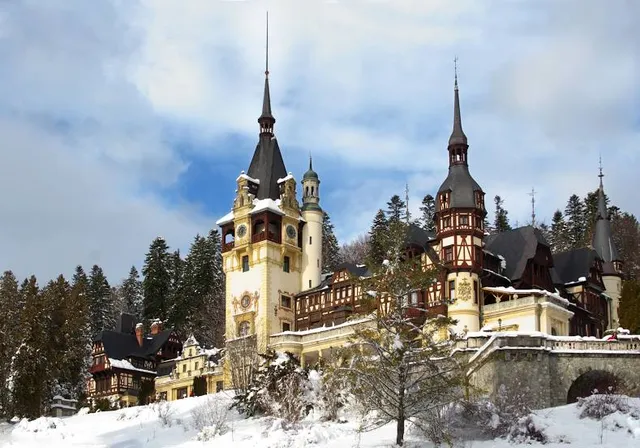
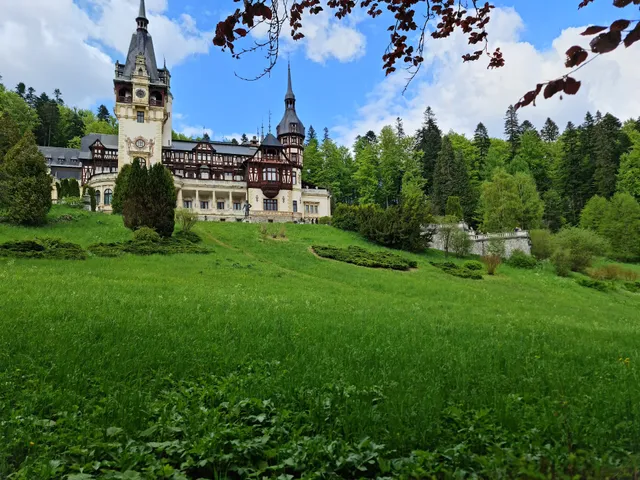
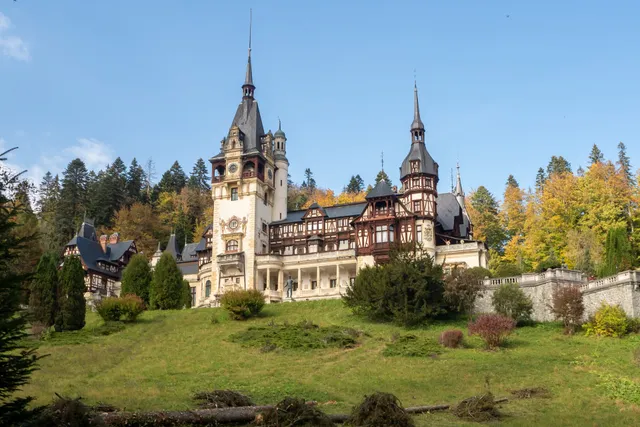
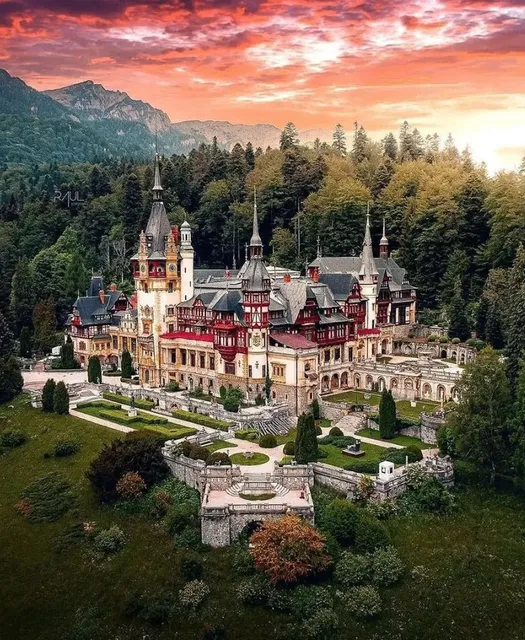
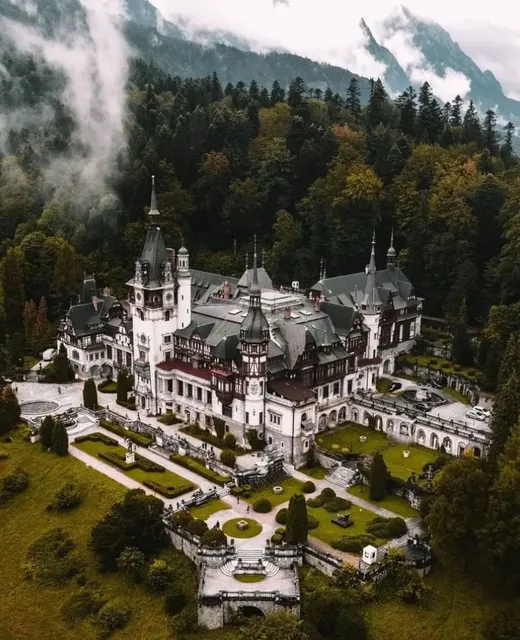
So – the famous Peles Castle. Undoubtedly, the worst-organized tourist attraction I've ever experienced. Overcrowded, overpriced, overrated.
I regret going there, as it meant missing Bran Castle because of its excruciatingly awful...
Read moreA castle that I simply adore, but to which I cannot give more than 3 stars (and that with indulgence).
The castle itself is a marvel, from the charming surrounding landscape to the extensive royal collections housed within, encompassing weaponry, porcelain, books, and furniture - everything is superlative.
And then, why only 3 stars?
The price. The cost for the ground floor tour is 10 euros, extending to 20 euros for the intermediate tour (ground floor + 1st floor), and culminating in 30 euros for the full tour. A comparison to the Palace of Versailles, which charges 28 euros for a comprehensive tour, underscores a point of contention.
Absence of information. Despite being a pivotal site in the birth of modern Romania, the informational content within the castle falls short. Historical plaques often provide mundane details, such as the origin of furniture, rather than delving into the rich history, including significant narratives surrounding the royal family. The info plaques in the castle read like a DIY furniture manual. : "This coffee table was made by a carpenter who lived in town X". "This cabinet was made by a craftsman who lived across the street from the craftsman who made the coffee table." Seriously? C'mon, bring on the royal drama!
In addition, the employees walking around the rooms have no other role than to tell visitors: "Don't touch that!" "You are not allowed to go up there!", "Don't cross the demarcation line!".
The "complete" tour is not really complete. Many rooms that could be visited in the past are now restricted (the Oriental Hall, for example - one of my favorites)
Although the castle is a very profitable business, the owner does not invest enough money in the renovation and preservation of the building. Peeling plaster, decaying statues, a garden wall supported by wooden beams... these are signs that the preservation efforts are insufficient.
The place is always very crowded; little chance of being able to take some beautiful photos.
Speaking of crowding - there are very few toilets for such a big number of visitors. Forget the forest toilet idea unless you fancy meeting a local bear. Don't worry, they don't come to the castle, but they might teach you a lesson in nature etiquette.
For an enhanced visit, consider the following recommendations::
Choose the intermediate tour. The basic tour is insufficient and, if you don't know Romania's recent history very well, the full tour is useless (and somewhat boring). On the top floor you can see a bunch of apartments and some explanations like: "Some writer slept here when he came to visit Sinaia".
Familiarize yourself with Romania's royal history and the political landscape spanning 1866-1945 to enrich your visit.
Select off-peak times. To avoid congestion, consider visiting during weekdays or the off-season.
Choose twice before deciding to buy anything from street vendors in the area.
The visit takes quite a long time, so it would be good to stop to eat something in town before starting the climb to the castle. Avoid the restaurants in the vicinity of the castle (if you read the reviews on the internet, you will understand why you should consider this piece of advice).
Stay within designated areas. Venture outside the tourist area only if you're with someone who can guide you (don't trust the bears, they are not reliable guides).
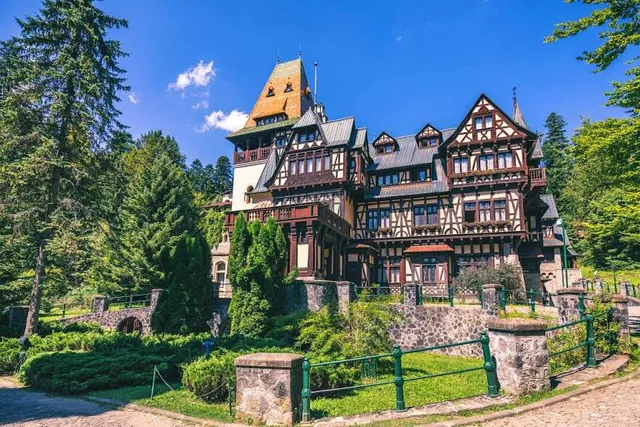
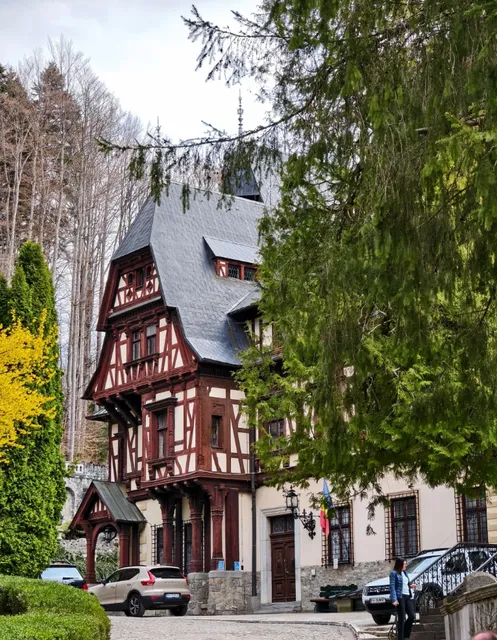
Consider Pelișor Castle. As an adjunct to your Peleș experience, Pelișor Castle offers a complementary yet less grandiose encounter.
Ok, that's all. I hope you'll...
Read morePeles Castle is a must to see in Romania! It is truly a beautiful summer palace. If you get the chance go see it! Also buy tickets in advance!!
Peleș Castle, located in Sinaia near Brașov, is a masterpiece of Neo-Renaissance architecture, commissioned by King Carol I and Queen Elisabeth of Romania. Construction began in 1873 and was largely completed by 1883, though additions continued until 1914, costing an estimated 16 million gold Romanian lei (roughly $120 million today). The castle was one of the first in Europe to have electricity, powered by its own hydroelectric plant on the Peleș River, and featured modern amenities like central heating, a central vacuum system, and an early form of air conditioning. Its 160 rooms are adorned with exquisite details, including Murano glass chandeliers, German stained-glass windows, and hand-carved walnut woodwork, with the Honor Hall showcasing a retractable glass ceiling for stargazing. The castle’s armory holds over 4,000 pieces of weaponry, including medieval swords, armor, and even a unique 15th-century executioner’s sword. King Carol I, a German prince from the Hohenzollern-Sigmaringen family, was chosen as Romania’s first king in 1866 and ruled until 1914. He envisioned Peleș as a royal summer retreat and a symbol of Romania’s modernization. A disciplined and pragmatic ruler, Carol I oversaw Romania’s independence from the Ottoman Empire in 1877 and fostered industrial and cultural progress. He personally supervised Peleș’s construction, ensuring every detail reflected his vision of blending European elegance with Romanian identity, including local stone and wood in the design. Queen Elisabeth, known as Carmen Sylva (her literary pseudonym), was a creative and intellectual force. A poet, writer, and patron of the arts, she contributed to the castle’s cultural significance by hosting artists and writers in its salons. Elisabeth’s love for music and literature is reflected in the castle’s Music Room, which houses her collection of instruments and manuscripts, and she even designed some of the castle’s decorative motifs inspired by Romanian folklore. Elizabeth and king Carol had one daughter who died of scarlet fever when she was only 4 years old. They passed leadership to a close family member as a result. Peles Castle was briefly a museum before being returned to the royal family in the 1990s. The castle’s secret passages, including one behind a bookcase, were used to move discreetly between floors, adding an air...
Read more