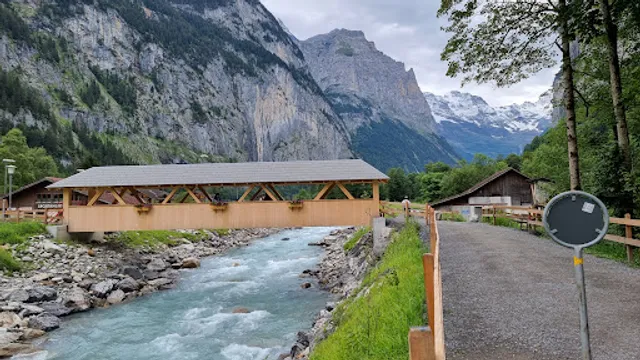
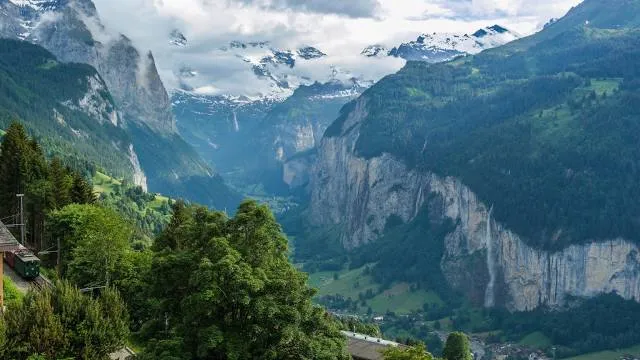
Lauterbrunnen is first mentioned in 1240 as in claro fonte. In 1304 it was mentioned as Luterbrunnen.[3]
The oldest trace of a settlement in the area is a single Roman coin which was discovered in the Blumental.
When the Lauterbrunnen Valley first appears in the historic record, during the 13th century, it was owned by the Freiherr of Wädenswil. In 1240 the Freiherr of Wädenswil sold the Sefinen Valley to Interlaken Monastery. Over the following century, the Monastery and other local lords began to expand their power in the Lauterbrunnen and neighboring valleys. However, around 1300, the Lord of Turn began to settle his Walser speaking people in the nearby Lötschen Valley and into the highlands of the Lauterbrunnen Valley. By 1346, the Walser villages of Lauterbrunnen, Gimmelwald, Mürren, Sichellauenen and Trachsellauenen all had village governments and a certain amount of independence from the Monastery. Three years later, much of the Bernese Oberland unsuccessfully rose up against Monastery. When the Monastery suppressed the rebellion, the Walser villages bore the brunt of the Monastery's wrath.[3]
By the 15th century, the villages of the valley were part of the large parish of Gsteig bei Interlaken (now part of Gsteigwiler). In 1487-88 the villagers in Lauterbrunnen built a filial church of the parish. In 1506, the parish appointed a full-time priest for Lauterbrunnen. In 1528, the city of Bern adopted the new faith of the Protestant Reformation and began imposing it on the Bernese Oberland. Lauterbrunnen joined many other villages and the Monastery in an unsuccessful rebellion against the new faith. After Bern imposed its will on the Oberland, they secularized the Monastery and annexed all the Monastery lands. Lauterbrunnen became the center of a new Reformed parish.[3]
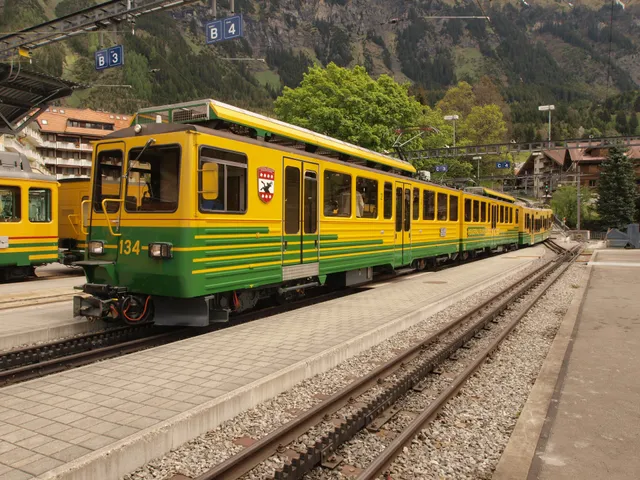
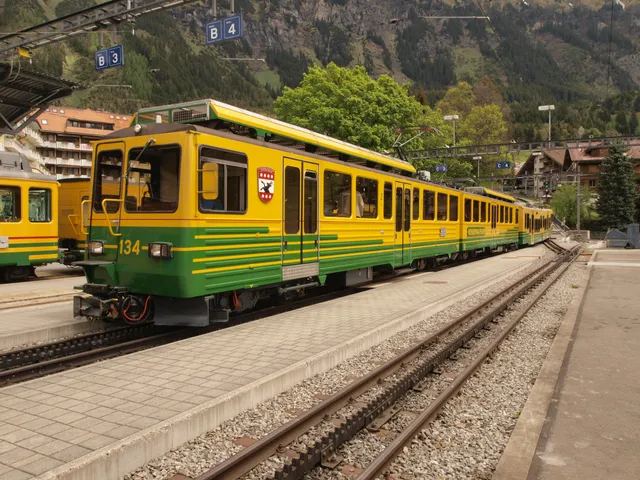
Mines were built in the Trachsellauenen area in the upper valley beginning in the late 16th century. An iron smelter was built in Zweilütschinen (now part of Gündlischwand) in 1715 to process the iron ore from Trachsellauenen. However most of the money from the mines went to the noble landowners. The villagers remained very poor. In the 17th and 18th centuries the poverty was so widespread that many of the villagers joined mercenary regiments or emigrated. A majority of the emigrants moved to the Carolinas in the United States. Beginning in the late 18th century, foreign mountain climbers began to use Lauterbrunnen as a starting point for their expeditions into the nearby Alps. Initially the climbers stayed in the village rectory. However, as Lauterbrunnen's fame grew and with the completion of a road from Interlaken in 1834 and the 1890 Bernese Oberland Railway, more hotels were needed for tourists. As new hotels were built, other tourist infrastructure was also built in the village. They built cable cars to Mürren in 1891 and to Wengen in 1893. But the most significant piece of infrastructure was the Jungfrau railway which was built in 1912. The Jungfrau rack railway runs 9 km (5.6 mi) from Kleine Scheidegg to the highest railway station in Europe at Jungfraujoch. The railway runs almost entirely within a tunnel built into the Eiger and Mönch mountains and contains two stations in the middle of the tunnel, where passengers can disembark to observe the neighboring mountains through windows built into the mountainside. In 1909 the English brothers Walter and Arnold Lunn popularized skiing, curling and bobsledding at Lauterbrunnen. These winter sports provided a whole new group of winter tourists and converted the summer tourist industry into a year-round business. The tourist economy of Lauterbrunnen was devastated due to World War I and II and the Great Depression. However, following the end of World War II, tourism rebounded. Many new vacation homes and chalets were built along with ski lifts, chair lifts and a...
Read moreWhoa, hold onto your hobbit hats, because this place is straight out of a Lord of the Rings movie set, or so you'd think! But guess what? The real-life magic here is even better! This jaw-dropping wonderland actually inspired J.R. Tolkien himself! How cool is that?
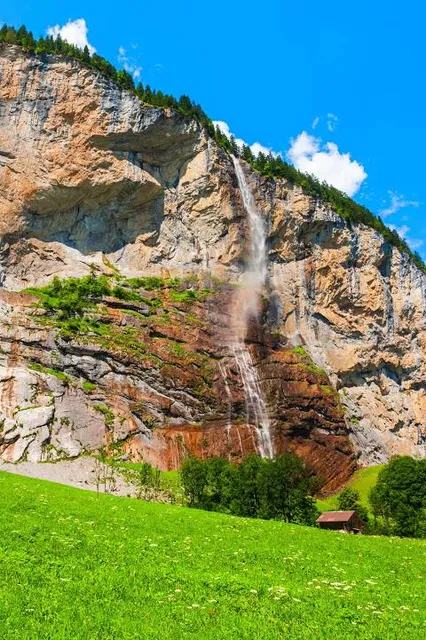
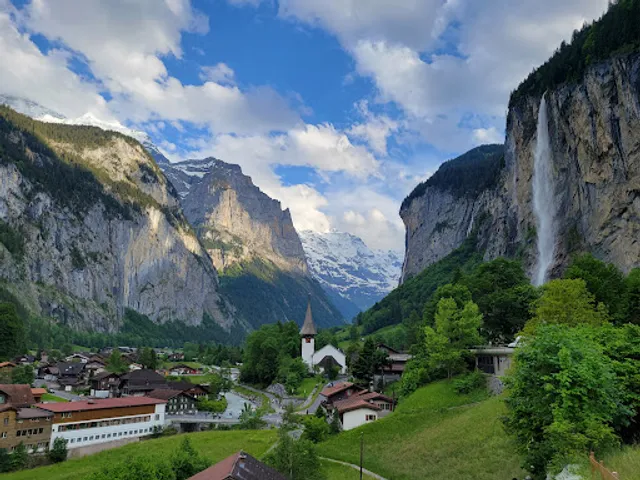
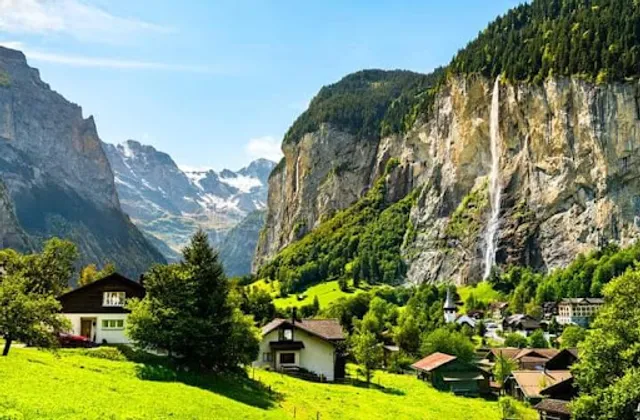
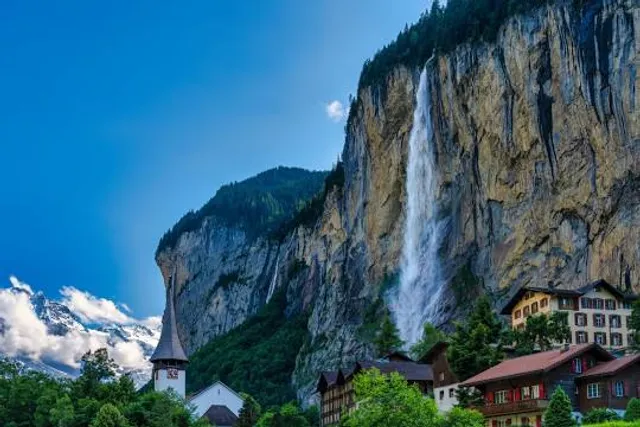
Now, let me spill the beans on this epic adventure. Picture this: an easy trek that leads you to the magnificent Staubbach Waterfall, and with every step, you're stepping into a fantasy realm. The views are simply enchanting, and the waterfall itself will leave you spellbound. It's like a real-life Rivendell, only better!
But wait, there's more! As you venture closer to the base of the trail, a caffeinated surprise awaits! There's an amazing barrister (yes, like a coffee wizard) whipping up some magical brews. Sip on your favorite potion and fuel up for the rest of your adventure!
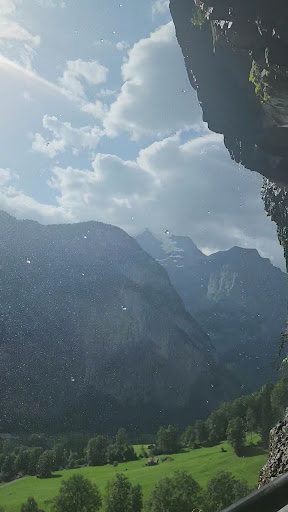
Now, brace yourself for the real gem. The trek takes you right inside the waterfall! You read that right—inside! It's like being part of a quest, only this time, you're chasing breathtaking views and loads of picture-perfect moments. Talk about an Instagram-worthy adventure!
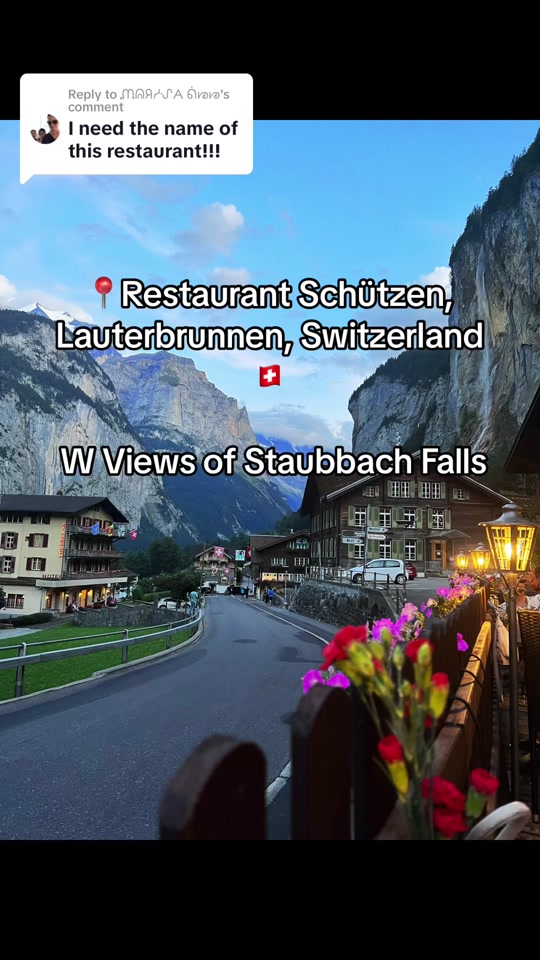
Oh, and did I mention the charming town of Lauterbrunnen that lies beneath this natural wonder? Staubbach Waterfall's beauty spills over, and from its great vantage point, you can capture a view that'll make your friends green with envy.
So, fellow adventurers, gear up for an epic journey to Staubbach Waterfall, where fantasy meets reality, and every step takes you closer to pure enchantment. Don't forget your camera, because you'll want to capture every moment of this fantastic escapade! Let's go,...
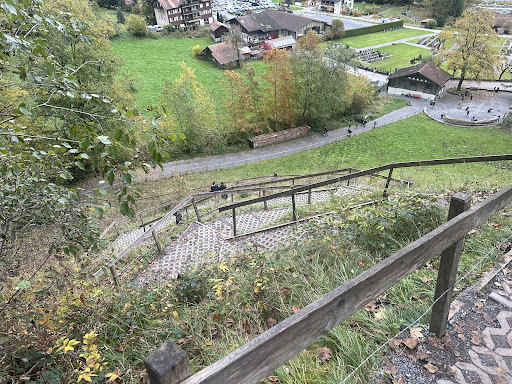
Read moreGoing to post this from a POV of a parent to small children. The hike itself is more of an uphill stroll. It’s a pretty quick hike. We went up the hike with a 6, 4, 3, 18 month, and 10 month old. (We had 4 adults). It’s not stroller friendly, so be aware you’ll be leaving your stroller at the base of the hike. (We left ours off to the side, no big deal) At the top of the switch backs there’s a tunnel that leads to the actual mountain portion of the hike. BE AWARE that up until the tunnel, the path is paved and easy. The rest of the walk after the tunnel gets wet, and can be pretty slick as you are now using a trail right on the mountain that’s not paved. (Water on rock) They do have a rope you can grab on to for stabilizing after the metal staircase, but everyone wants it coming down and going up, so it could also get a little congested. It’s not much further after the metal staircase though! I’d say it’s definitely doable until with kids, but proceed with a bit of caution pending your children’s capabilities to keep walking (or your own to keep your balance while holding a child) Left some images so you can determine prior how far you’d like to go with your little ones, but you can definitely go up to at least a high up scenic part of the walk with them, no problems! It’s a beautiful view even...
Read more