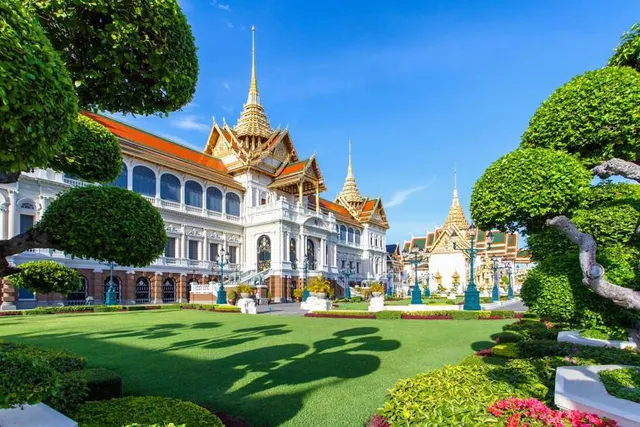
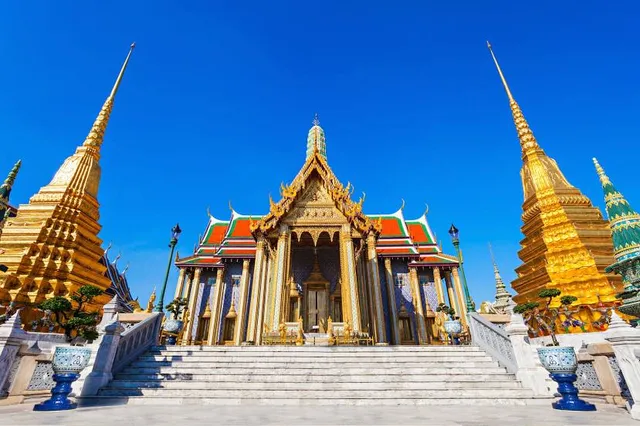
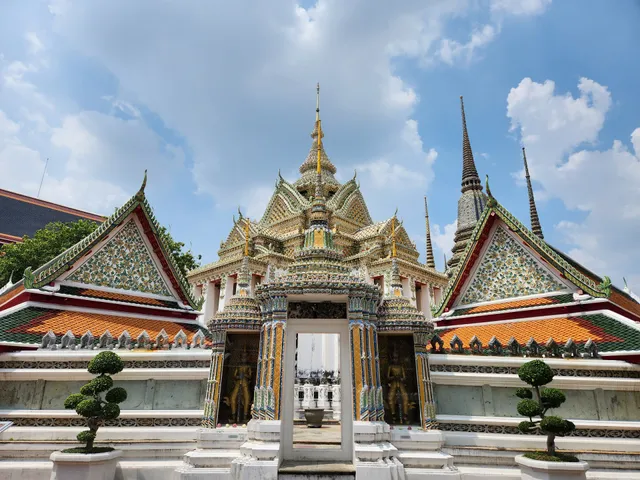
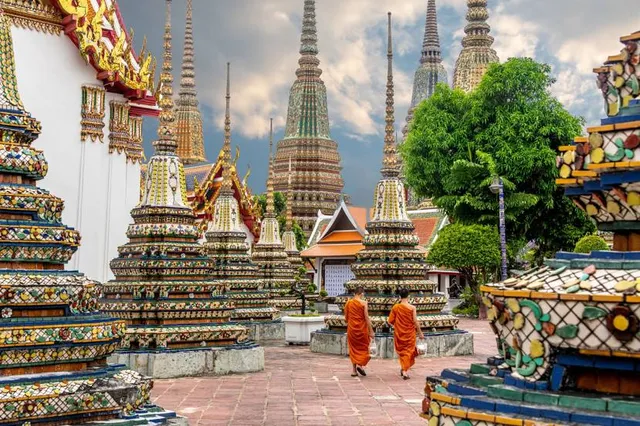
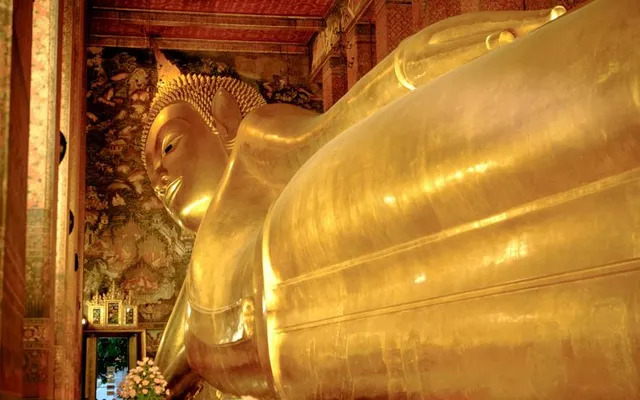
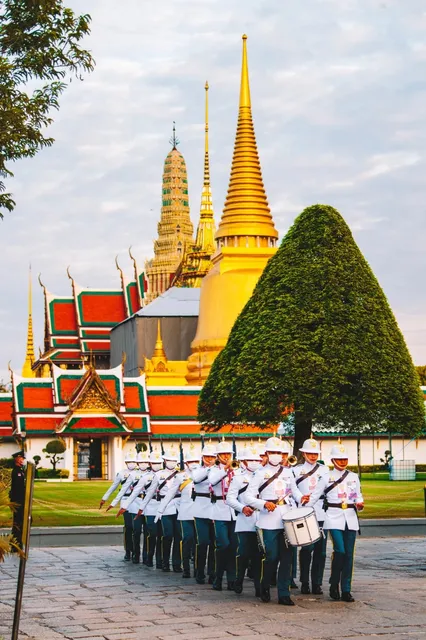
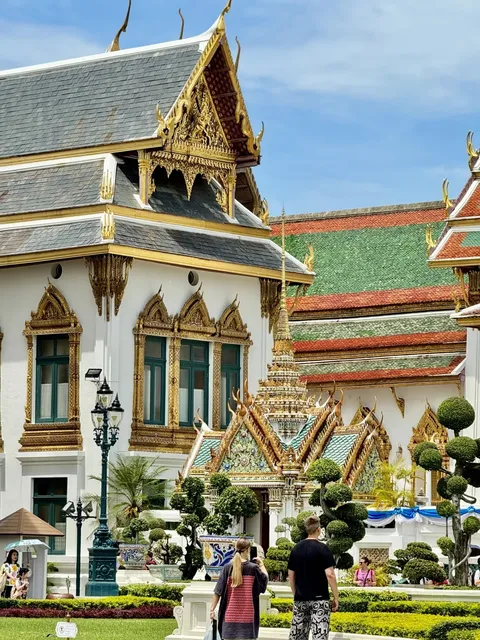
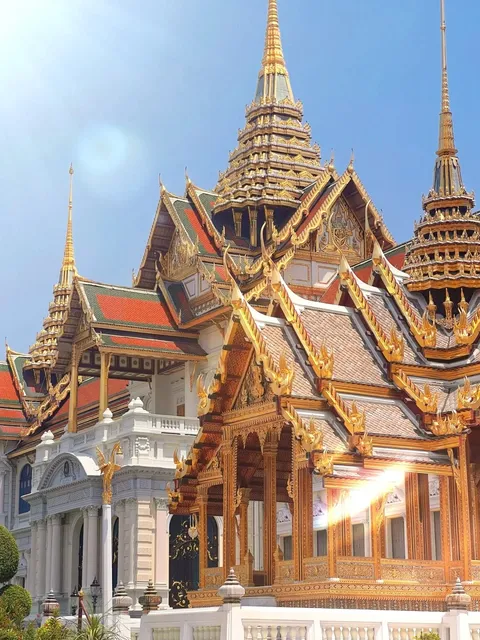
The Grand Palace in Bangkok is simply breathtaking, a place where you can see amazing architecture and history, which makes it an incredible place to visit. The intricate details of the buildings are mesmerizing, and it's easily one of the most beautiful places I've ever seen. The sheer scale of the complex is impressive, and I could easily spend a whole day exploring its extensive grounds.
To truly appreciate the palace, arriving early is crucial. The crowds really swell up during the day, and you might find the experience less enjoyable as the day progresses.If you want to avoid the crowds and get some great photos, I'd recommend going early in the morning or just before closing time. As a photography enthusiast, I always look for unique angles, and these times are better for that. I don't usually take pictures of myself, so I try to get some nice scenic shots and videos to remember the place by. I've found that it's best to stick around until the end if you want good photos.
The 500 baht entrance fee gives access to four different sites within the complex. Tickets can be purchased on site or online, and I recommend taking the free English tour, which adds historical context to the visit. It helps to brush up on the history of the palace beforehand. While some reviews mention printed guides at the entrance, I found only a few in Chinese, which was a little disappointing. For those who prefer a more independent exploration, audio guides are available for a small fee.
Dressing modestly is a must, with shoulders and knees covered, as the dress code is strictly enforced and randomly checked, even inside the complex. You'll also have to remove your shoes in some buildings. The palace provides free umbrellas, which, along with hats and sunglasses, are essential for navigating the outdoor areas under the intense Bangkok sun. Make sure you stay hydrated and protect yourself from the heat. Unfortunately, there are not enough umbrellas for everyone.
The Temple of the Emerald Buddha, one of the palace's main attractions, has a strict no-photography policy. Despite this, many visitors ignore the numerous 'No Photography' signs and security guards, sneaking photos and even colluding with others to avoid detection. It's disappointing to see such disregard for the rules designed to preserve the sacred atmosphere. In addition, Google Reviews show many photos of the Emerald Buddha... and most of them are from inside, with many even covering the "No Photo" signs.
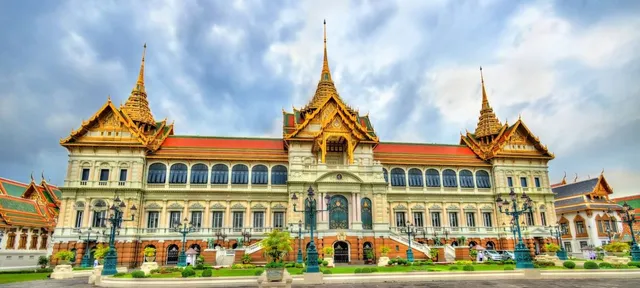
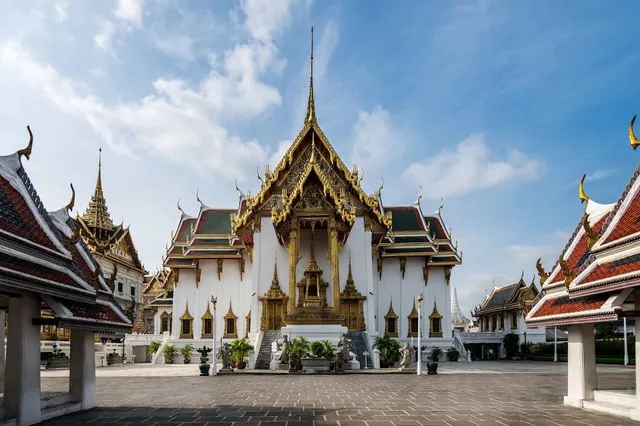
The palace itself is dazzling, with its ornate facades and stunning open spaces. The intricate detail is exquisite and no photograph can do it justice. At the time of my visit, admission included a performance at the Royal Theatre, which we took advantage of and found to be a delightful addition.
Despite the crowds, it's important to remember that places like the Grand Palace are treasures of human heritage, and everyone deserves the opportunity to witness their beauty. Yes, the complex fills up quickly and the presence of large groups can be overwhelming, but it's a small price to pay for the chance to see such a magnificent site. People often complain about the crowds, but with the world's population growing, it's inevitable, and everyone has the right to experience such beauty, even if they have to save for years to visit.
Overall, the Grand Palace is a must-see in Bangkok and offers a completely overwhelming (in a good way) experience. The stunning buildings, open spaces and beautiful, off-limits temple make for a visit that is both visually and spiritually enriching. It's a place you'll never forget, and despite the crowds, it's worth...
Read moreLocated within the historic grounds of the Grand Palace in Bangkok, Wat Phra Kaew (officially known as Wat Phra Si Rattana Satsadaram) is regarded as Thailand’s most sacred Buddhist temple. A visit to Bangkok would be incomplete without experiencing this awe-inspiring masterpiece of Thai architecture, culture, and spirituality.
A Glimpse into History
Wat Phra Kaew was established in 1782 by King Rama I, the founder of the Chakri Dynasty, when he moved the capital of Siam to Bangkok. Unlike other temples, Wat Phra Kaew does not have resident monks. Instead, it serves as a royal chapel and the spiritual anchor of the Thai monarchy.
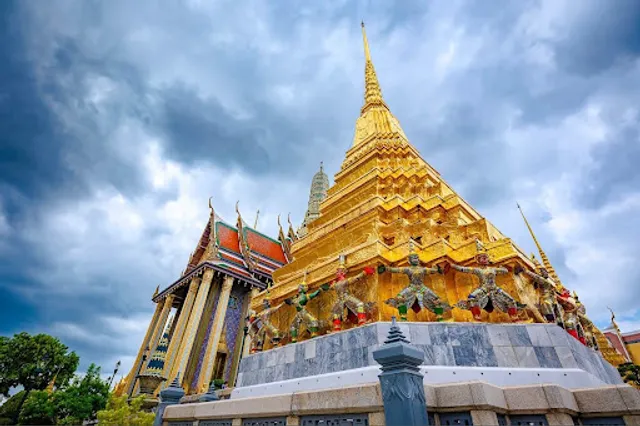
The temple was built specifically to house the Emerald Buddha, a highly revered statue believed to bring prosperity and protection to the kingdom. Though small in size (standing just 66 centimeters tall), the Emerald Buddha is carved from a single block of jade and is considered one of the most important religious relics in Thailand.
Architectural Grandeur
Wat Phra Kaew is a stunning showcase of Thai artistry and craftsmanship. The temple complex is adorned with intricate gold-leaf designs, shimmering mosaics, mythological guardians, and towering pagodas. Each structure tells a story drawn from Buddhist cosmology, Thai folklore, and royal tradition.
Don’t miss: • The Emerald Buddha Hall (Ubosot) – where the statue is enshrined on a high pedestal under a nine-tiered umbrella. • The Phra Si Ratana Chedi – a golden stupa housing sacred relics. • The Library (Phra Mondop) – decorated with mother-of-pearl inlays and murals. • The Ramakien Gallery – which depicts scenes from Thailand’s national epic, the Ramakien, with detailed murals that wrap around the walls.
Cultural Significance
Wat Phra Kaew is more than just a historical monument — it remains an active place of royal and national ceremonies. The Thai king himself presides over rituals here, especially during important Buddhist and seasonal events. The temple’s architecture and traditions reflect the deep intertwining of Buddhism and the Thai monarchy.
Tips for Visitors • Dress respectfully: Visitors are required to wear modest clothing (no shorts, sleeveless tops, or sandals without a heel strap). • Best time to visit: Early morning to avoid crowds and midday heat. • Admission: Your ticket usually includes access to the Grand Palace and nearby attractions.
Final Thoughts
A visit to Wat Phra Kaew offers more than just photo opportunities — it’s a profound encounter with Thailand’s spiritual roots, royal heritage, and artistic brilliance. Whether you’re a history enthusiast, a spiritual seeker, or simply a curious traveler, this temple is a must-see destination that leaves a...
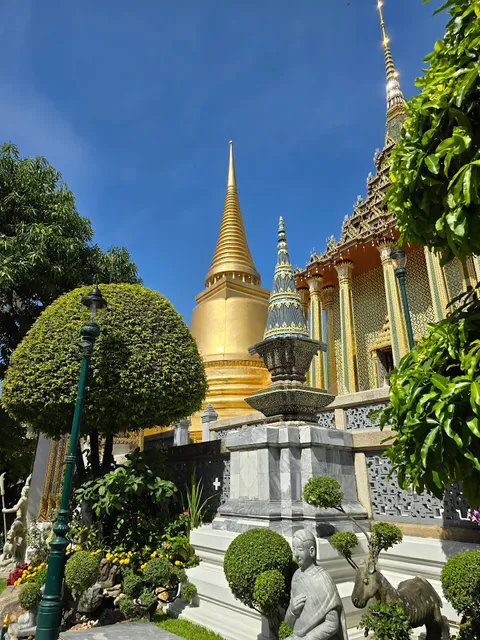
Read moreLocated at Phra Borom Maha Ratchawang, Phra Nakhon, Bangkok, Thailand 🇹🇭 The Grand Palace is a complex of buildings in the heart of Bangkok. The Palace has been the official residence of the Kings of Siam (later Thailand) since 1782. The King, his Court, and his Royal Government were based in the grounds of the Palace until 1925. The current King resides at Amphorn Sathan Residential Hall in the Dusit Palace. The Grand Palace is still used for official events. Several Royal ceremonies and state functions are held at the Palace each year. Today, the Palace is one of the most popular tourist attractions in Thailand, it has over 8 million visitors per year. Construction of the Palace began on 6th May 1782, under the order of King Phutthayotfa Chulalok, when he moved the capital city from Thonburi to Bangkok. The Palace was expanded through successive reigns when extra buildings were added to the complex. By 1925, the King, his family, and his government were no longer permanently settled at the Palace, and had moved to other residences. After the Abolition of Absolute Monarchy in 1932, all government agencies completely moved out of the Palace. The Palace complex is roughly rectangular shaped and has a combined area of 218,400 square metres surrounded by four walls. It is situated on the banks of the Chao Phraya River. The Palace is made up of several buildings, halls, pavilions set around lawns, gardens and courtyards. It is divided into several quarters. The Temple of the Emerald Buddha, the Outer Court, the Middle Court, the Inner Court and the Siwalai Gardens Quarter. The Palace is currently partially opened to the public as a museum, but it remains a working palace, with several working Royal offices still inside. The architecture of the palace buildings are simply stunning. The intricate design and workmanship that went into the carvings etc are so beautiful. The gardens throughout the palace grounds are so lovely. You will need a comfortable pair of shoes because there’s a lot of walking. I recommend you allow at least 2-3 hours to fully experience your visit. Also, make sure your shoulders and knees are covered properly. Otherwise you won’t be allowed into the Palace. I also recommend exploring the Palace on your own, instead of using a guide. This way, you can take as long as you want. Free maps are provided in multiple languages. There’s also an audio tour available from the Palace. You can easily purchase your tickets from the kiosk or the ticket booth. The entrance fee is 500 baht per person for foreigners (which includes a free Khon, which is a masked dance performance). This was an amazing experience and I would definitely recommend a visit. Thumbs...
Read more