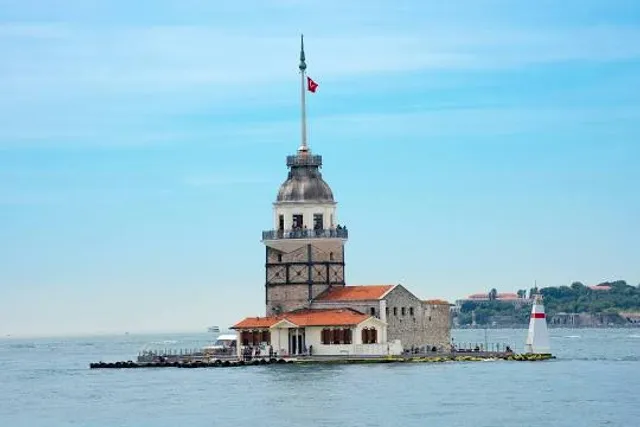
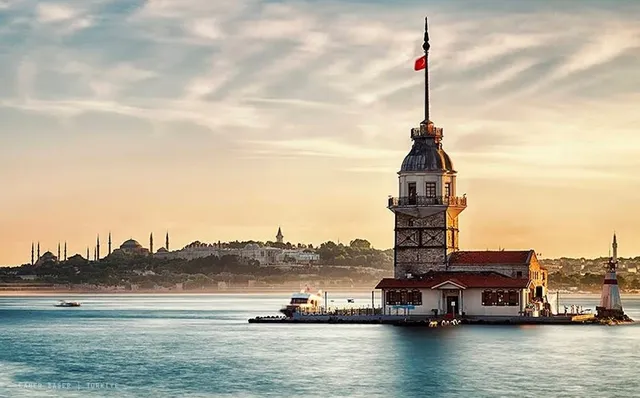
The Kız Kulesi, or Maiden's Tower, stands as an iconic silhouette against the shimmering waters of the Bosphorus, a timeless sentinel guarding the entrance to Istanbul. This enchanting structure, steeped in legend and history, is a must-visit for anyone exploring the captivating city.
A Tapestry of Legends
The tower's allure is heightened by the romantic and tragic tales woven around it. One of the most famous legends speaks of a king's premonition about his daughter being bitten by a venomous snake. To protect her, he built the tower on a small islet, isolating her from the mainland. Despite these efforts, fate intervened, and the princess met her tragic end.
Another legend connects the tower to the love story of Hero and Leander, a tale of forbidden love and tragic sacrifice. While the historical accuracy of these legends is debatable, they undoubtedly contribute to the tower's mystique and draw visitors seeking a touch of romance and drama.
A Historical Journey
Beyond the realm of myth, the Kız Kulesi boasts a rich historical significance. Initially constructed as a Byzantine lighthouse, the tower played a crucial role in maritime navigation. Its strategic location offered unparalleled views of the Bosphorus, making it an invaluable asset for both military and civilian purposes.
Over the centuries, the tower underwent various transformations. It served as a customs house, a quarantine station, and even a military outpost. Each era left its mark on the structure, adding layers of complexity to its history.
A Modern Encounter
Today, the Kız Kulesi has been transformed into a captivating tourist destination. Visitors are greeted by a charming ferry ride to the islet, creating a sense of anticipation before setting foot on the tower's grounds.
Upon arrival, one is struck by the tower's elegant architecture and the breathtaking panoramic views. The upper floors house a restaurant, offering a truly unforgettable dining experience with a backdrop of the bustling city skyline and the tranquil Bosphorus. The menu boasts a delectable fusion of Turkish cuisine and international flavors, allowing visitors to savor both culinary delights and the stunning scenery.
Descending to the lower levels, visitors can explore a small museum showcasing the tower's fascinating history through artifacts and exhibits. The museum provides valuable insights into the tower's various functions over the centuries, offering a deeper appreciation for its significance.
A Symbol of Istanbul
The Kız Kulesi is more than just a historical landmark; it has become an iconic symbol of Istanbul itself. Its image adorns postcards, souvenirs, and countless photographs, capturing the essence of the city's unique blend of history, culture, and natural beauty.
Whether you are a history enthusiast, a lover of legends, or simply seeking a breathtaking view, the Kız Kulesi offers an unforgettable experience. It is a place where the past and present intertwine, where history and romance converge, and where the spirit of Istanbul comes alive.
Practical Information
Location: Üsküdar, Istanbul, Turkey Opening Hours: The tower is typically open to visitors daily, with varying hours depending on the season. It is advisable to check the official website for the most up-to-date information. Admission Fee: There is usually an entrance fee to visit the tower and museum. Transportation: Ferries operate regularly from the Üsküdar and Kabataş piers, providing convenient access to the islet. Tips: Consider visiting during the golden hour for stunning sunset views. Make a reservation for the restaurant in advance, especially during peak season. Wear comfortable shoes, as there might be some walking involved. In Conclusion
The Kız Kulesi is an enchanting gem that deserves a place on every Istanbul itinerary. Its captivating history, stunning location, and modern amenities make it a truly unforgettable experience. Whether you are seeking a romantic escape, a historical journey, or simply a moment of tranquility, this iconic tower has something to...
Read moreMaiden’s Tower: History, Transformation, and Current Status
The Maiden’s Tower (Kız Kulesi), an iconic symbol of Istanbul, stands proudly on a small islet at the southern entrance of the Bosphorus. Its fascinating history spans over 2,500 years, making it one of the city’s most enduring landmarks.
Historical Background
The origins of the Maiden’s Tower date back to ancient times. The first known structure on this islet was built in 408 BCE by the Athenian general Alcibiades to control naval traffic through the Bosphorus. During the Byzantine period, Emperor Alexius Comnenus commissioned a tower here in 1110 CE as part of the city’s defense system. The structure we see today was significantly shaped during the Ottoman era, with Sultan Mehmet the Conqueror and later Sultan Mahmud II contributing to its fortifications and uses.
Over the centuries, the tower has served various purposes: a watchtower, a lighthouse, a quarantine station during epidemics, and even a customs checkpoint for ships entering the Bosphorus. Its most romantic association comes from legends, such as the story of a Byzantine princess sent to the tower to escape a prophecy that she would die from a snake bite—a prophecy that tragically came true when a snake hidden in a basket of grapes reached her.
Transformations Through Time
The Maiden’s Tower has undergone several renovations, each leaving its mark on its architecture: Ottoman Renovations: After being damaged in an earthquake in the 16th century, it was rebuilt using stone instead of wood. Sultan Mahmud II also added a small mosque and a cistern. 19th Century Lighthouse: In 1832, the tower was outfitted with a lighthouse to aid in navigation, marking its role as a beacon for maritime safety. 20th Century Preservation: In the early 1900s, it was abandoned for some time but later restored and converted into a signal station.
In the late 20th century, the tower became a cultural and tourism hub. A series of renovations modernized the interior while preserving its historical charm.
Current Status
Recently, the Maiden’s Tower underwent another extensive restoration, completed in 2023, as part of Turkey’s broader efforts to preserve its cultural heritage. The restoration aimed to address structural vulnerabilities, including damages caused by age and environmental conditions. Modern techniques ensured that the tower’s historic fabric was maintained while enhancing its safety and accessibility.
Today, the Maiden’s Tower is a beloved tourist destination, featuring a café and restaurant offering breathtaking views of Istanbul. Accessible by boat, it continues to captivate visitors with its blend of history, legends, and unparalleled location. It also serves as a venue for cultural events and exhibitions, connecting Istanbul’s past with its vibrant present.
Conclusion
From its ancient roots as a defensive outpost to its modern role as a cultural treasure, the Maiden’s Tower has witnessed countless transformations. It remains a symbol of resilience and continuity in Istanbul’s ever-evolving skyline, standing as a bridge between history...
Read moreThe Maiden's Tower (Turkish: Kız Kulesi), also known as Leander's Tower (Tower of Leandros) since the Byzantine period, is a tower on a small islet at the southern entrance of the Bosphorus strait, 200 m (220 yd) from the coast of Üsküdar in Istanbul, Turkey. After the naval victory at Cyzicus, in 408 BC the Athenian general Alcibiades probably built a custom station for ships coming from the Black Sea on a small rock called Arcla (small castle) and Damialis (its calf) in front of Chrysopolis (today's Üsküdar).[3]
In 1110 Byzantine Emperor Alexius Comnenus built a wooden tower protected by a stone wall.[3] From the tower an iron chain stretched across to another tower erected on the European shore in the Mangana quarter of Constantinople.[3] The islet was then connected to the Asiatic shore through a defence wall whose underwater remains are still visible.[3] During the Ottoman conquest of Constantinople in 1453, the tower held a Byzantine garrison commanded by the Venetian Gabriele Trevisano.[3] Subsequently, the structure was used as a watchtower by the Ottomans during the reign of sultan Mehmed the Conqueror.[3]
The tower was destroyed during the earthquake of 1509, rebuilt, and then burned down in 1721.[3] Reconstruction was ordered by the grand vizier Damad Ibrahim Pasha and the new building was used as a lighthouse; the surrounding walls were repaired in 1731 and 1734. Then in 1763 the tower was reconstructed in more durable stone.[3] From 1829 it was used as a quarantine station before being restored again by Sultan Mahmud II in 1832.[3] In 1945 it was the turn of the harbour authority to patch it up.[3] Then in 1998 it was restored again, shortly before appearing in the James Bond movie The World Is Not Enough.
After the 17 August 1999 earthquake and tsunami in the Sea of Marmara steel supports were added to the tower to strengthen it.[4] The interior was converted into a café and restaurant, with views of the former Roman, Byzantine and Ottoman capital at Sarayburnu.[5] Private boats ply back and forth between the tower and the shore throughout the day.[6]
In 2021 work on restoring the tower yet again . The work was completed in 2023 and the tower reopened to the public in May of...
Read more