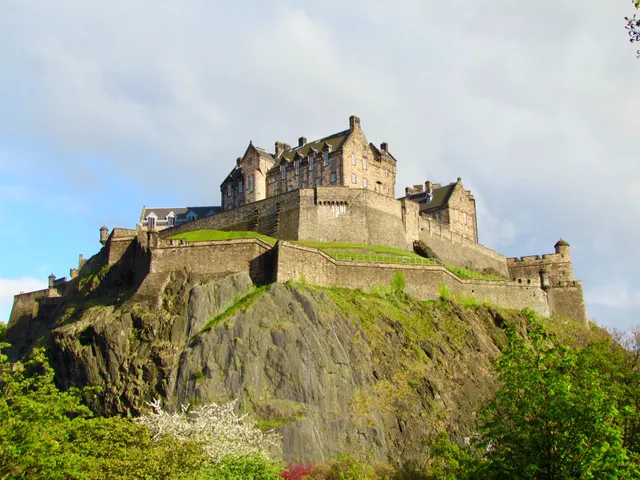
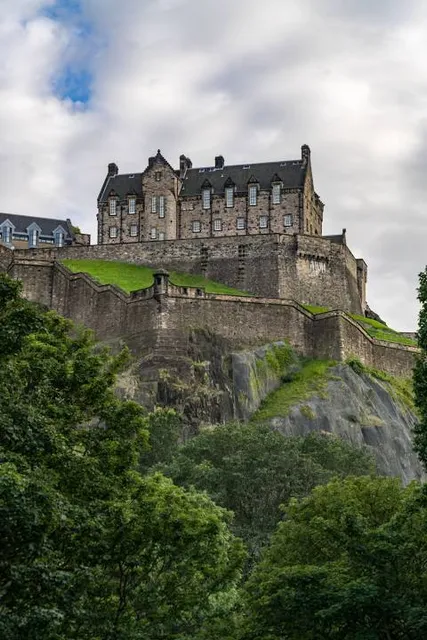
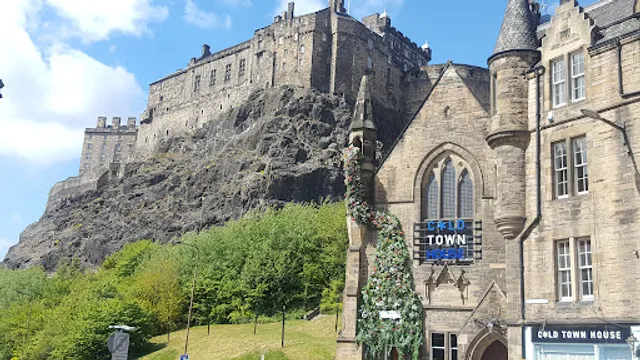
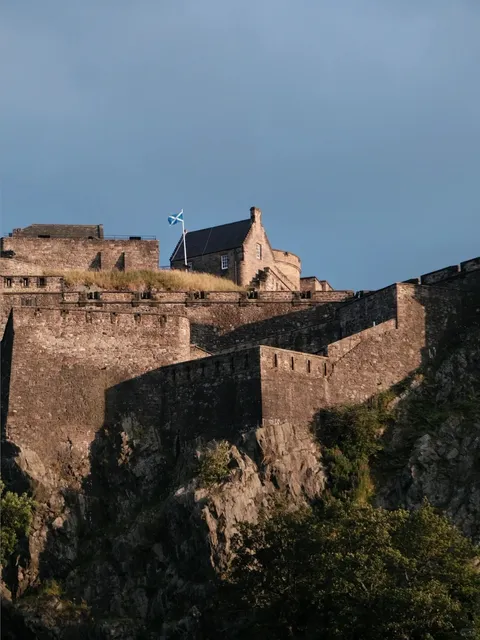
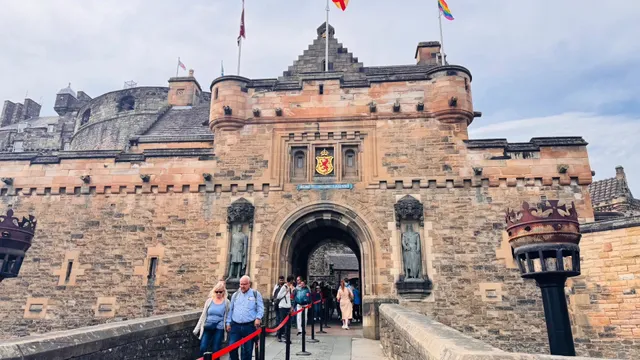
Edinburgh Castle stands as one of Scotland's most iconic landmarks and represents over a millennium of Scottish history. Perched dramatically on Castle Rock, a volcanic plug formed over 350 million years ago, this ancient fortress has dominated Edinburgh's skyline for centuries and serves as a testament to Scotland's rich heritage1.
Ancient Origins and Early History
The strategic importance of Castle Rock was recognized as early as the Iron Age, when Celtic warriors built a hill fort on this naturally defensible position1. The site has been continuously occupied for at least 3,000 years, with early medieval poetry telling tales of war bands that feasted here before riding to battle1. By 600 CE, a Celtic tribe called the Votadini had established Eidyn's Hill Fort on the rock5].
The castle's royal connections began in the 11th century during the reign of Malcolm III Canmore (1058-93), who was the first Scottish king known to have made his residence on Castle Rock[5]. His devout wife, Queen Margaret, died in the castle in 1093 and was later canonized as St. Margaret of Scotland[1. In her honor, David I built St. Margaret's Chapel around 1130, which remains the oldest surviving building not only in the castle but in all of Edinburgh2.
Medieval Development and Royal Residence
Under King David I's reign in the 12th century, Edinburgh Castle took on a more recognizably medieval form, influenced by Norman architecture7]. The castle served as one of Scotland's chief royal residences during the 1400s and 1500s, with monarchs commissioning grand buildings to demonstrate their wealth, power, and refined taste[6].
The Royal Palace within the castle walls witnessed significant historical moments, including the birth of James VI (later James I of England) to Mary Queen of Scots in 1566[5. The castle continued as a royal residence until 1633, when Charles I became the last monarch to stay overnight in Edinburgh Castle4.
Military Significance and Sieges
Edinburgh Castle holds the distinction of being the most besieged place in Britain, with research identifying 26 sieges in its 1,100-year history1. During the Wars of Scottish Independence (1296-1357), the castle became a fiercely contested prize between Scottish and English forces4. The fortress changed hands multiple times, with one of the most famous recaptures occurring in 1314 when Thomas Randolph, nephew of Robert the Bruce, led a daring night raid to retake it from the English1.
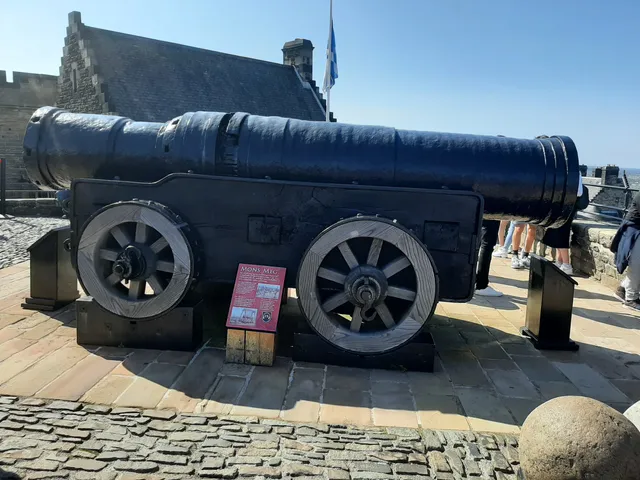
The devastating Lang Siege of 1571-73 largely destroyed the medieval defenses, leading to significant reconstruction efforts1. The aftermath saw the construction of the distinctive Half Moon Battery and other fortifications that armed the castle for centuries1. Notable artillery pieces include Mons Meg, one of the greatest medieval cannons ever made, gifted to King James II in 14571.
Modern Role and Cultural Significance
From the 15th century onward, the castle's residential role declined, and by the 17th century, it primarily served as a military garrison4]. Today, Edinburgh Castle remains an active military base while simultaneously functioning as Scotland's leading tourist attraction, receiving over one million visitors annually[3.
The castle houses several important national treasures, including the Honours of Scotland (the Scottish Crown Jewels) consisting of the crown, sceptre, and sword of state, as well as the Stone of Destiny, traditionally used for Scottish coronations2. The fortress also contains the Scottish National War Memorial, the National War Museum, and serves as the regimental headquarters for the Royal Regiment of Scotland4.
Visitor Experience and Cultural Events
As part of the Old and New Towns of Edinburgh UNESCO World Heritage Site, the castle offers visitors a comprehensive historical experience2. Key attractions include the Great Hall with its late-medieval ceiling built around 1510 for James IV, the...
Read moreOur recent trip to Edinburgh Castle with our family of five was, in a word, magical, finding an attraction that genuinely captivates everyone can be a challenge. Edinburgh Castle not only met but far exceeded our expectations, creating memories that I know we'll all cherish for years to come. From the moment we ascended Castle Rock and stepped through the formidable gates, we were transported. The sheer scale and ancient grandeur of the castle immediately impressed us all. The panoramic views of Edinburgh from the ramparts were breathtaking, offering a fantastic perspective of the city we had been exploring. We started our adventure by exploring the Crown Jewels and the Stone of Destiny. The kids were absolutely mesmerised by the sparkling jewels and the ancient tales surrounding them. The interactive displays and well-placed information plaques kept even our youngest engaged, making history feel alive rather than just a dry account from a textbook. We spent a good amount of time in the Great Hall, imagining royal banquets and important assemblies – the sheer size and historical weight of the room were palpable. One of the absolute highlights for our family was the Mons Meg, the colossal medieval siege cannon. The kids were in awe of its size, and the stories of its power sparked endless questions and imaginative play. We spent a solid half-hour just discussing its history and how it would have been used. The National War Museum of Scotland, located within the castle grounds, also proved surprisingly engaging for the whole family. It offered a poignant and informative look at Scotland's military history, presented in a way that was accessible and thought-provoking for different age groups. My older children found the stories of courage and sacrifice compelling, while our youngest was fascinated by the uniforms and artifacts. What truly made the experience exceptional, beyond the incredible history and stunning architecture, was the atmosphere. Despite the crowds, the castle managed to maintain an aura of majesty and wonder. The staff were all incredibly friendly and helpful, answering our myriad questions with patience and enthusiasm. We opted for the audio guide, which was a brilliant investment. It allowed us to explore at our own pace and provided rich, engaging narratives that brought each part of the castle to life for both adults and children. We wisely packed snacks and drinks, but there are also several good cafes within the castle grounds if you need a proper refuel. We enjoyed a lovely picnic lunch with the city sprawling beneath us. Our visit culminated with the famous One O'Clock Gun. We timed it perfectly, and the booming cannon blast sent a thrilling shockwave through us all. It was a spectacular and memorable way to mark the end of our castle exploration. Leaving Edinburgh Castle, we all felt a sense of awe and connection to Scotland's rich past. It wasn't just a sightseeing trip; it was an immersive journey into history, a real-life fairytale that sparked our children's imaginations and left us all feeling inspired. If you're a family looking for an unforgettable experience in Edinburgh, a trip to the castle is an absolute must. It's an adventure that truly offers something for everyone, leaving you with memories as grand and enduring as the...
Read moreEdinburgh Castle is undeniably one of the city’s most iconic landmarks, but it comes with a hefty price tag that feels a bit steep for what’s on offer. While the castle boasts a wealth of historical significance, much of the experience feels tailored for tourists, and navigating the site independently can be challenging without a guide. Many of the historical areas are tucked away, and unless you’re part of a tour group, you might miss out on some of the deeper context and stories behind the castle’s walls.
We booked two tickets for an 11 a.m. slot on a weekday, and while it wasn’t as crowded as it could have been, there were still plenty of tour groups and tourists milling about. The entry process felt a bit rushed—our QR codes were supposedly scanned at the barriers, but I’m not entirely convinced they were checked properly, especially since my partner’s ticket didn’t seem to be scanned at all. We were quickly ushered through, which left us wondering how thorough the process really was.
Once inside, it was clear that much of the castle has been refurbished for tourist appeal. While the grounds are impeccably maintained and spotlessly clean, some areas felt overly sanitized, losing a bit of their historical authenticity. For example, the stairs within the castle seemed newer and less worn than some of the ancient steps you’d find in other parts of Edinburgh.
Even on a weekday, the castle was busy with visitors, and I can only imagine how chaotic it must be on weekends or during peak holiday periods. The crowds can be overwhelming, and not everyone adheres to British queuing etiquette—be prepared for some pushing and shoving, especially around popular photo spots. Patience is definitely a virtue here!
There are some educational highlights, such as the prison areas, though these felt overly reliant on dioramas, which detracted from the authenticity and made the experience feel a bit artificial. On the other hand, the Dragoons Museum was a standout, showcasing the stunning war-era dressage of the Scots—a must-see for history enthusiasts.
We stumbled upon the firing of the cannons at 1pm by chance as we exited one of the interior museum sections - again, how were we to know without a guide? While it’s a fascinating tradition, it draws large crowds, and the area becomes quite congested both before and after the event. Many visitors seem to use the cannon firing as a cue to leave, which can create a sudden rush toward the exits.
Overall, Edinburgh Castle is an interesting experience, but it feels overpriced for what it offers. The additional costs for maps, guides, and extra information add to the sense that the pricing is somewhat predatory. While it’s worth visiting for the historical significance and the stunning views of the city, it’s best to manage your expectations and be prepared for the crowds and tourist-centric atmosphere. It’s an okay experience, but not quite the immersive historical journey...
Read more