The omission of 11 days in 1752, from 3 September (3/9)-13 September (13/9) The Julian calendar reformed by Pope Gregory XIII was initially introduced into Catholic Europe on Thursday, 4 October 1582 (10 days) as the New Style/Stile (NS): Portugal, Spain, Italy (most parts), Poland (most parts), Belgium (most parts), France, Denmark, Catholic Netherlands, Germany and Switzerland, followed by Protestant regions, but not including Russia, Sweden and England (Cohen 2000; Freiberg 2000; Genung 1904; Lamont 1920; Reform of the Calendar 1922). In England and throughout the British dominions in Europe, Asia, Africa and America, by the Act of Parliament, 11 days were omitted in September 1752 with 19 days remaining: Wednesday, 2 September, was followed by Thursday, 14 September (1, 2, 14, 15, etc.), thus, the adopted dates became consistent with most of continental Europe (Freiberg 2000; Genung 1904; Lamont 1920).
Julius Caesar introduced a 365-day Julian Calendar designed by astronomers of Alexandria and instituted with leap years (bissextile): 366 days in every four years; the 366th day was designated on the 24th and 25th of February, six days prior to the Kalends (first) of March (Reform of the Calendar 1922). The Julian calendar error indicated 11 minutes and fourteen seconds less than 365 days; in every 128 years, a 24-hour discrepancy was discerned as 24 hours was derived from 11 minutes multiplied by 128.
‘Britain's going Gregorian in 1752 evoked reactions’ (Freiberg 2000: 11), a few ‘diehards’ included (Freiberg 2000: 17): Hogarth immortalised ‘An Election Entertainment’ (1755) through the portrayal of a celebration featuring a banner bearing the inscription: ‘Give us our eleven days’ (Freiberg 2000; Genung 1904; Lamont 1920). Benjamin Franklin’s Poor Richard's Almanack of 1752, depicts the British alteration in the month of September: ‘And what an indulgence is here for those who love their pillows, to lie down in peace on the second of this month, and not perhaps awake, or be disturbed, till the fourteenth in the morning’ (as cited in Genung 1904; Lamont 1920). The Gentleman's Magazine (September 1752) also featured a note from a tormented reader (Cohen 2000: 6-7).
*Sol refers to the extra thirteenth month between June and July in the reform advised by Moses B. Cotsworth of Vancouver (Calendar Reform 1922).
Sources: Bevan, R. n.d. The Calendar Riots of 1752: when Britain lost 11 days. Sky Channel. https://www.history.co.uk/article/the-calendar-riots-of-1752-when-britain-lost-11-days
Calendar Reform. 1922. The Scientific Monthly, 15(1), 91–91. http://www.jstor.org/stable/6261
Cohen, E. L. 2000. Adoption and reform of the Gregorian Calendar. Math Horizons, 7(3), 5–11. http://www.jstor.org/stable/25678248
Dabney, T. G. 1918. Reform of the World’s Calendar. Science, 47(1218), 439–440. http://www.jstor.org/stable/1641711
Franklin, B. 1752. Poor Richard Improved, 1752. Franklin Papers. https://founders.archives.gov/documents/Franklin/01-04-02-0082
Freiberg, M. 2000. Going Gregorian, 1582-1752: A Summary View. The Catholic Historical Review, 86(1), 1–19. http://www.jstor.org/stable/25025653
Genung, C. H. 1904. The Reform of the Calendar. The North American Review, 179(575), 569–583. http://www.jstor.org/stable/25105305
Hudson, M. 2020. Did a calendar change cause riots in England?. Encyclopedia Britannica. https://www.britannica.com/story/did-a-calendar-change-cause-riots-in-england
Johnson, B. 2014. Give us our eleven days. The History and Heritage Accommodation Guide. Historic UK. https://www.historic-uk.com/HistoryUK/HistoryofBritain/Give-us-our-eleven-days/
Lamont, R. 1920. The Reform of the Julian Calendar vol. 28, 18-32.
Reform of the Calendar. 1922. The Catholic Historical Review, 7(4), 464–468. http://www.jstor.org/stable/25011820
The Editors of Encyclopaedia Britannica. 2019. Ten days that vanished: the switch to the Gregorian Calendar. Encyclopedia Britannica....
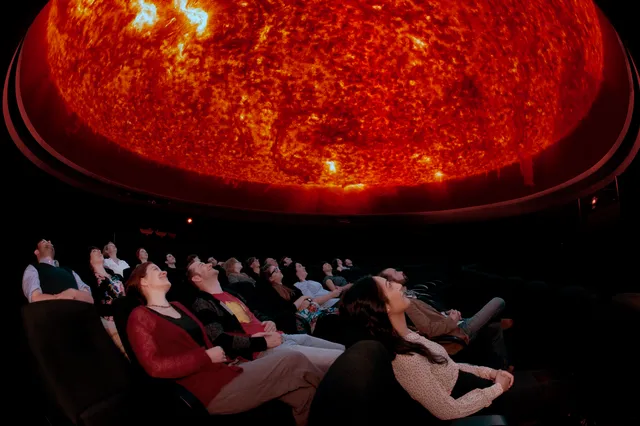
Read moreLove stars and constellations. Abserwatory show is a really good value.
I would add more constellations and the connection between these constellations, drawing on ancient Greek mythology and history. Exciting stories of relationships between people and gods full of magical strains, honor, love, courage, and valor that the people of that time possessed and which is a good example for learning.
It would be more enticing and informative for children counchisnes if you would look that after all, children's consciousness today is so heavily loaded with created images, ready-made created images from TV screens.
Is it possible that the organ of imagination is no longer necessary for a human being?
Imagination, with which each child builds his personal, individual inner world and creates intricate, magical, mysterious images of his characters. This entails the development of the creative spiritual organs of each child, which is necessary for a harmonious development person as a living divine being.
In our case (day of upt visit), the constellation Cassiopeia was shown in relation to the Andromeda galaxy. Well, this is scientific, interesting. but half of the oudience was kids 8 to 14 years old.
Well, what a beautiful story develops around the cassiopeia and her daughter Andromeda.
The conceited feeling of narcissism of the cassiopeia almost led to the loss of her only daughter named Andromeda.
Suffice it to mention the appearance of a valiant hero Perseus on his brave pegasus horse and a secret weapon, the head of the gorgon medusa. Who saves the beauty of the andromeda and destroys all the conspiracies and obstacles of his father.
In my opinion, it is interesting and informative and expands the horizons not only for children but also for adults.
Important do not rush to byu on-line the tickets from third parties. Tickets displayed the wrong time for the show starting, so we came 1 hour earlier, and in addition, the tickets won't scann on the Abserwatory desk. Thanks to local personnel, they reissued us with tickets(we were lucky as there were a few tickets not yet selled) during the show the...
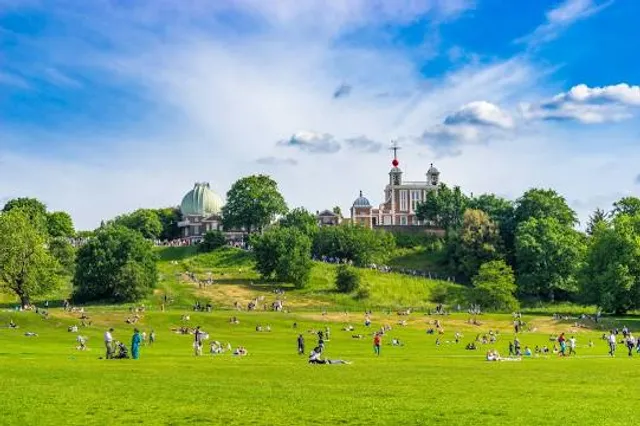
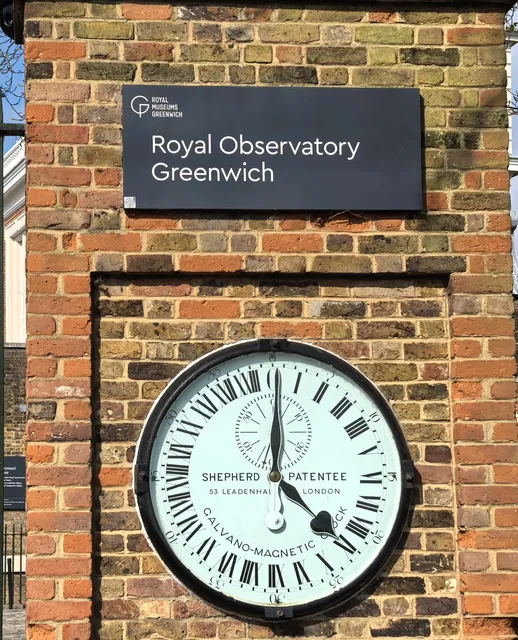
Read moreA really excellent visit at the Royal Observatory Greenwich, and we felt that the £16 adult tickets were very good value. Before you enter the ticket office, you walk through a beautiful garden with various sundials, part of an original telescope used by William Herschel, and a ring of bricks which is all the remains of a 100-ft deep tunnel in which a telescope was enclosed in. All have really informative and detailed signage, and this continues round the museum and Observatory buildings.
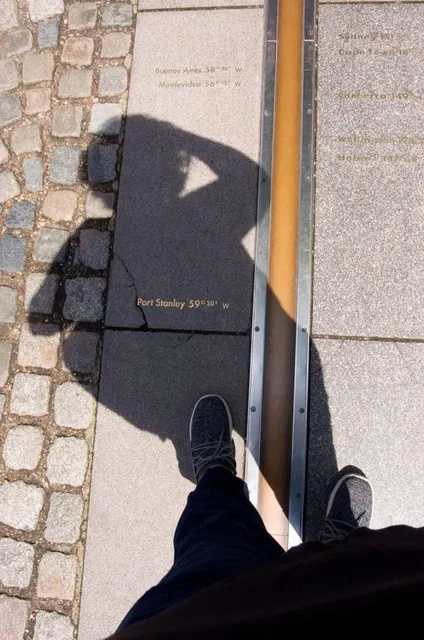
Worth arriving at the observatory / ticket office comfortably before 1pm, as at 12:55pm the bright red ‘dropping ball’ moves up to the top, and at 1pm drops down, to signal to ships passing on the Thames that it is 1pm. This happens daily, only at 12:55-1pm, and is best seen from the courtyard outside Flamsteed House / the GMT Meridian line. There is also free introduction talk in the courtyard (as you leave the ticket office) which is well worth catching. It seems to be at half-past the hour, and when we visited the talk was held at 1:30pm & again at 2:30pm.
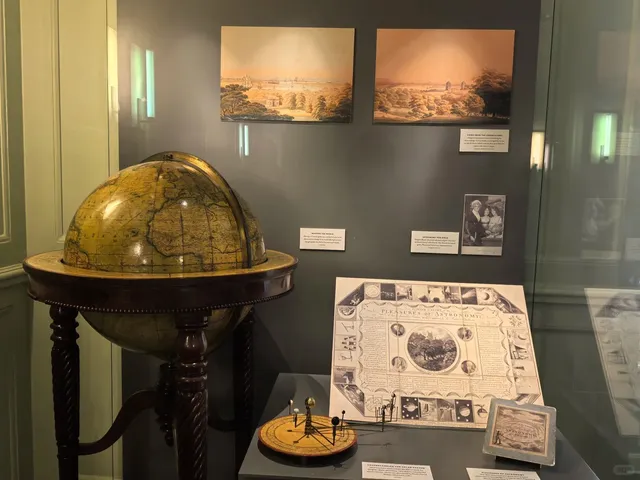
Flamsteed’s house is first on the tour, and it’s work downloading the Smartify app to access the free audio guide as well (there are QR codes on site to download whilst you’re there, also). It was great to see the inside of the Octagon Room, of which the front window can be seen from miles north of Greenwich. There were also free talks happening inside the Octagon room by two guides who have spent their life studying astro-physics, physics and history of science, which was absolutely fascinating. These talks run between 11:30-2:30, and talk about how our understanding of Mars has developed over the years, as well as terrain-mapping tools.
Unfortunately the Camera Obscura was closed which was a shame, so if you’re keen to see this in particular, worth checking ahead if it...
Read more