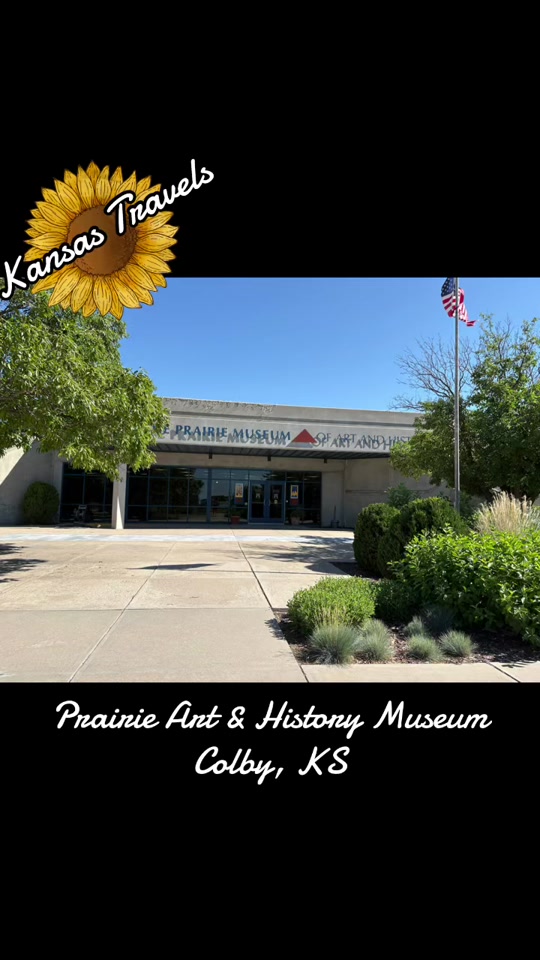
I was excited to learn about the prairie, the art, and the history of the people of Kansas. Though I was in a bit of a time crunch, I stopped in because it felt important to understand the ecoregion and sociopolitical foundation of the state. I am interested in Indigenous people's history, architecture, and the accurately portrayed history and storytelling of minority groups in different regions- by folks in those minority groups. These are the things I anticipated learning.
I was particularly interested in learning about how the Native American's lived, and currently live, on the land and how they are represented in the storytelling in the museum. The storytelling of the history of the Indigenous people in Kansas at this particular museum was flat and appeared to be somewhat misrepresented. So, I asked the folks working on that day a few questions about the Native people, and one of the staff referred to some groups of Native Americans in the 16th century as "savages." This response was appalling to me.
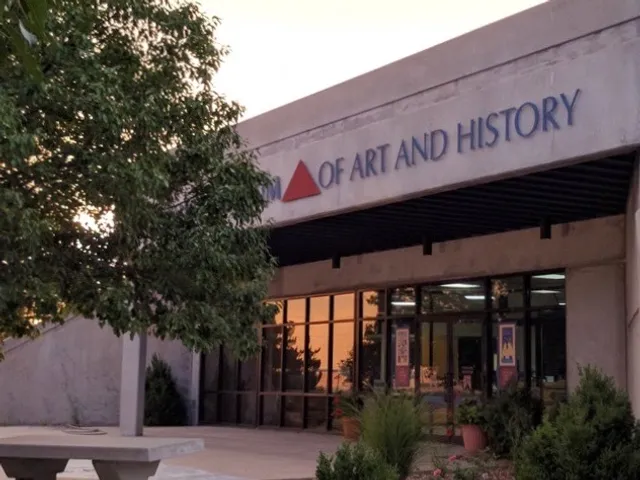
Eventually, after asking several questions that the staff could not answer, I went outdoors to see the different buildings on site. Admittedly I was impressed to learn about the Sod house and how it was built - this structure had plenty of exciting information about the building process. I was also curious about the museum architecture, as it has exterior living walls and appears to have been designed to merge with the surrounding landscape. I wondered if the design was to retain water, built to support the community in the case of a tornado, and/or designed to keep the building cool with very little electrical output. Again, my questions could not be answered.
Lastly, since the museum is called the Kansas Prarie Museum of Art and History, I expected to see galleries full of local art. I anticipated immersing myself in local painting, sculpture, fiber arts, metalwork, glasswork, woodwork, weaving of local grasses, ceramics, poetry, visual art forms, and multimedia art by local artists. Alas, there was one room with the walls lined with portraits of local people who graduated from the local high school - I did not walk into this as I was more interested in a regional perspective, not a hyperlocal perspective.
I would recommend a name change to represent what the museum currently is: the Colby, Kansas Museum of Local Artifacts, Collectibles and History.
I recommend skipping this museum and instead stopping into a state park, or National Wildlife Preserve where the history may be more accurately...
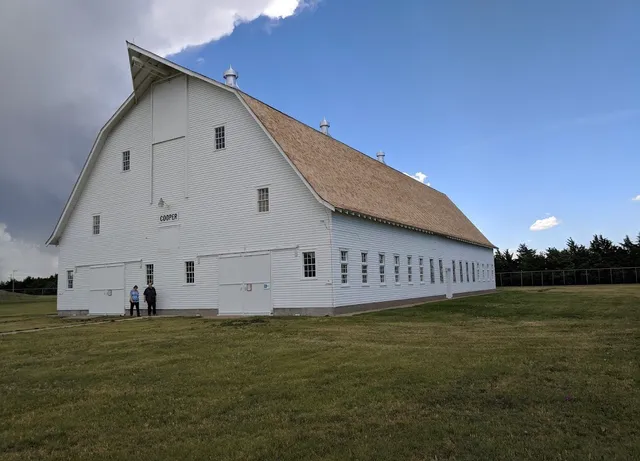
Read moreThe Thomas County Historical Society was organized in 1959 as a 501(c)3 non-profit educational organization to collect photographs, artifacts and histories of the region. The Society received the Kuska Collection in 1975 and opened the Thomas County Museum just one year later. In 1988, the Society closed the Thomas County Museum in downtown Colby and opened the Prairie Museum of Art & History in a new 21,500 sq. ft. museum building, 1/4 mile north of I-70 between exits 53 & 54. Over the next few years, the Cooper Barn, Eller House, Nicol School, Lone Star Church, Vacin Barn and the sod house were added to the...
Read moreThis was a very wonderful museum. And for the price it was amazing. Costing only 8 dollars. It took us about a hour and a half to go through it. But it could have lasted more easily. The inside part was full of wonderful historical facts. And great works of art. There is a lot of historical information about the coldy area. The furniture pieces they had in the museum were amazing to look at. The museum had a someo functional historical pieces that you can play with.
When you go out side and see the historic building out side. It is kinda mind blowing what our Ancestry had to...
Read more