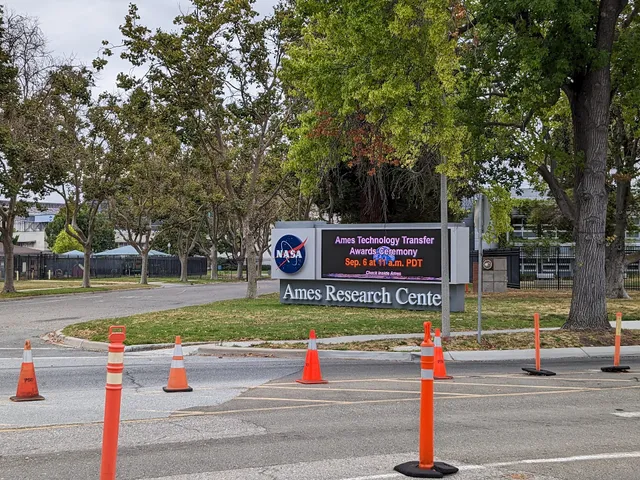
On December 20, 1939, The National Advisory Committee for Aeronautics (NACA) founded NASA Ames (named after "Joseph Sweetman Ames" on December 20, 1939) Research Center as an aircraft research laboratory and in 1958; it became part of the National Aeronautics and Space Administration (NASA).
Ames was "originally" founded to engage in wind-tunnel research on the aerodynamics of propeller-driven aircraft; however its role has developed to encompass spaceflight and information technology.
Ames plays a critical role in many of today's NASA missions in support of America's space and aeronautics programs and Moffett Field is one of 10 NASA field installations.
Ames is a leader in information technology research with a focus on super computing, networking, intelligent systems, and conducts the critical research and development that make NASA missions possible.
It leads in nanotechnology, fundamental space biology, biotechnology, aerospace and thermal protection systems, and human factors research.
Their research in astrobiology focuses on the effects of gravity on living things, and the nature and distribution of stars, planets and life in the universe.
In addition, Ames works collaboratively with the Federal Aviation Administration (FAA), conducting research in air traffic management to make safer, cheaper and more efficient air travel a reality.
Ames engages in information and education outreach, forms collaborative partnerships, and fosters commercial application of NASA technologies. Ames is developing the NASA Research Park, an integrated, dynamic research and education community created to cultivate diverse partnerships with academia, industry and non-profit organizations in support of NASA's mission.
Ames operates one of the world's fastest supercomputers, Pleiades, which will be further enhanced and is scheduled to reach 10 petaflops of processing power by 2012.
Although Ames is a NASA Research Center, and not a flight center, it has nevertheless been closely involved in a number of astronomy and space missions.
From 1965 to 1978, the "Pioneer space program's" eight successful space missions were managed by Charles Hall at Ames, initially aimed at the inner solar system.
In 1972, Ames supported the bold flyby missions to Jupiter and Saturn with Pioneer 10 and Pioneer 11. Those two missions were trail blazers (radiation environment, new moons, gravity-assist flybys) for the planners of the more complex Voyager 1 and Voyager 2 missions, launched five years later.
In 1978, the end of the program saw a return to the inner solar system, with the Pioneer Venus Orbiter and Multiprobe, this time using orbital insertion rather than flyby missions.
On September 28, 2005, both Google and Ames Research Center went into a long-term research partnership. The Planetary Content Project seeks to integrate and improve the data that Google uses for its Google Moon and Google Mars projects.
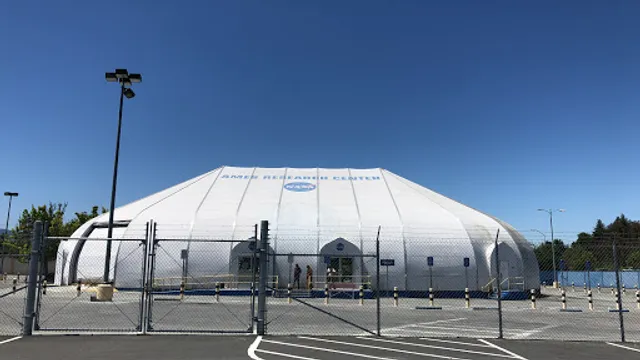
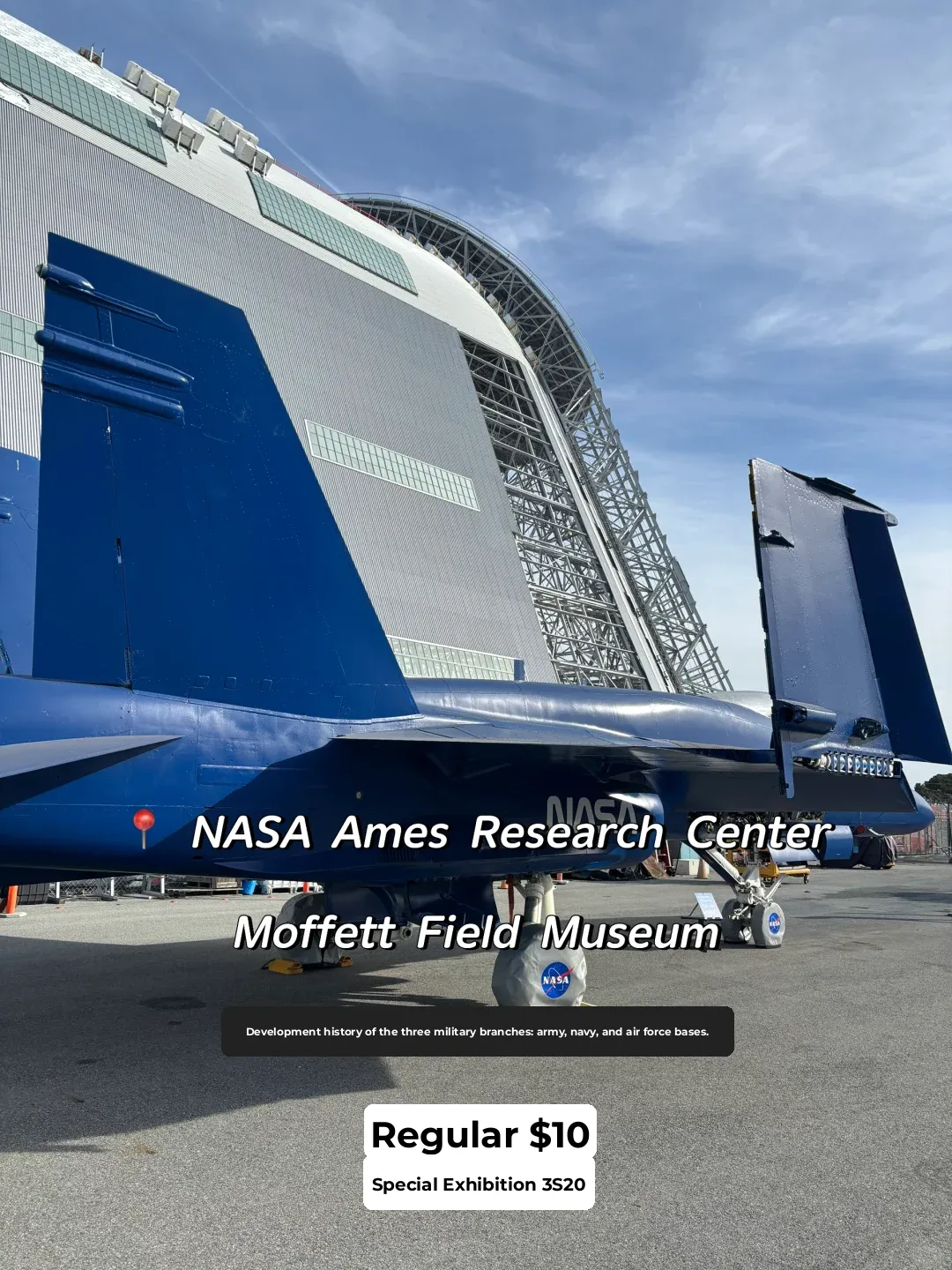
Our visit: So my son was doing a school project on space and one of the requirements was to visit the "NASA's Ames Research Center in Moffett Field" to obtain further information on space exploration.
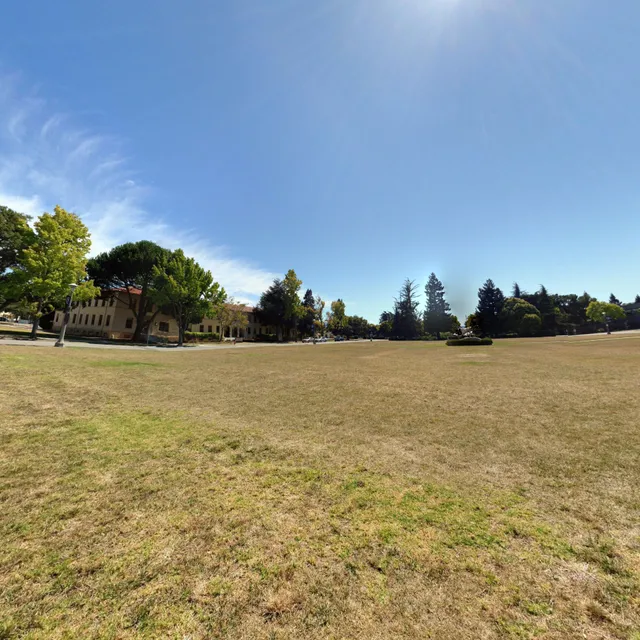
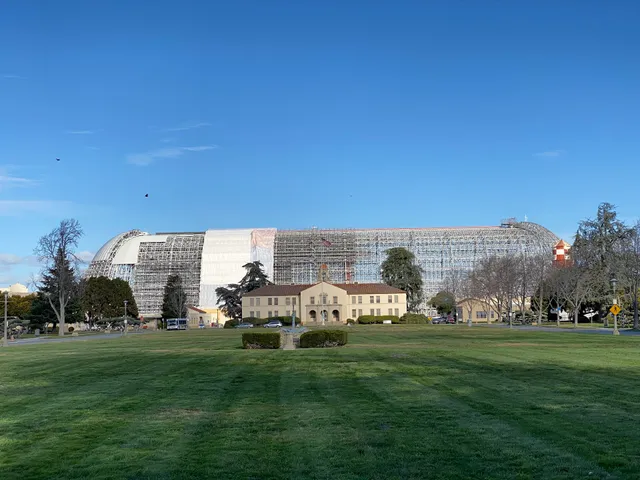
Moffett Field used to be a thriving military base but "thanks our government's 1991 reorganization" which included base closures, NAS Moffett Field was closed!"
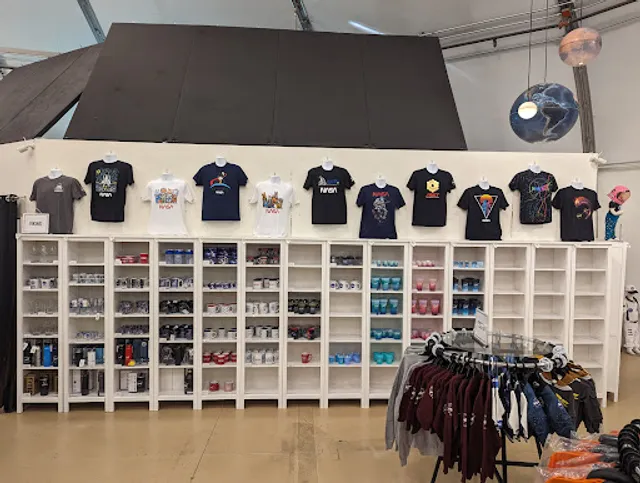
The gift shop was set up in such a way that it looked like you were walking into another museum, at least, that's my thought. The gift shop had planes hanging from the ceiling with maps and paintings on the wall and other items that was fun to look and a lot of material relating to the space program.
Overall, it was a good place to tour NASA's space program but there's not much else to do on this base.
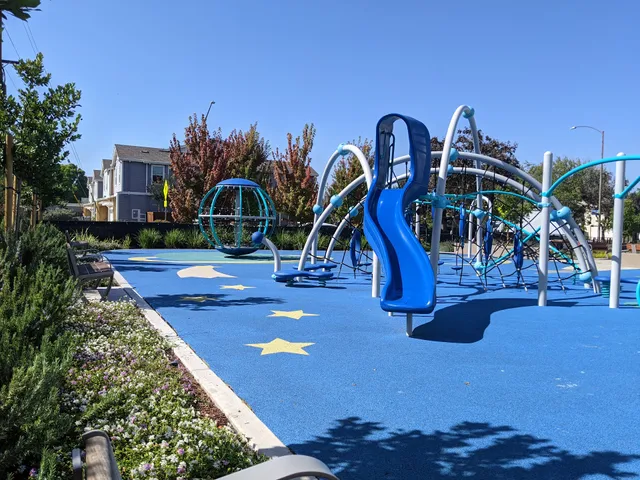
Construction of the new Google project which is near Google's Googleplex headquarters began in 2013 and has a target opening date of 2015.
It's called "Bay View" as it overlooks San Francisco Bay...
Read moreA remarkable facility as the NASA Ames Research Center offer insightful innovations to reflect upon. On our visit back in February Dad and I witnessed the 'Blue - G' mirror film and we simply could not stop beaming about this NEW technology application. Developed independently by Google entrepreneurs 'Blue-G' is best described as an index refraction character index system. It's based on the notion that letters have an order that fall upon the eye and that the hue of characters offer rank. Blue-G was glued on two mirrored pillars, the first one in Bosnia and the second in the Czech Republic by Military Intelligence (MI) - Cyber Lieutenants from Germany and Italy who only spoke their native language, Lieutenant Reich Spiegel and Lieutenant Ricco Specchio respectively. The film consisted of a beryllium gel (atomic number 4) that reacted as such to become what the Lieutenants saw as wingtips of an Bugle Angel Bel, an logarithmic unit of sound intensity equal to 10 decibels. Incredible as Blue-G acted as a lube to their sight which in turn allowed their eyes to bulge & hear! The secret to this Military Intelligence comes from the transfer of the mirror itself as two key particles go in, ići the Bos and Jít the one who checks his work. Take for example the Google logo brand itself, it's a multi color cam assembly in which the double 'oo' elements are red - yellow. And both letter, 'G' & 'g' are blue mirrored of each other. It was there between the 'oo' a gap that when parted revealed the ['go' word 'ogledalo'] to the Lieutenants, in other [words - go'ogle ミラdalo] or mirror 'could'. Could this be true? A mirror that looks at itself, a mirror of Information Technology that reveals a True Image. I myself saw the e.fects of Blue-G and for me the experience was like that of novel experience of X-Ray glasses where when I looked into the mirror seven of my upper ribs on each side of my chest were visible and the five ribs underneath bot sets of seven were not. Top to it all off each of those true ribs were exactly 1,852 meters apart, a (MI) unit of length used in navigation based on the distance spanned by one minute of arc in latitude. 'Blue G' (TM) is a miracle that is gel Patent Pending and is now introduced to the World Wide Web as a (MI) EL LEU bug from our mirror station in Chesterfield Missouri. Mark your calendar for February 4th-7th, I hope that you will like what you see Virtual...
Read moreI was very excited to visit the Ames Research Center earlier this month! I am glad the VTA 51 bus stops nearby. First of all, I must mention that I had high expectations of the gift shop when I saw older reviews of when it still contained an exhibit. So when I finally arrived, I was disappointed to see almost nothing I saw in the pictures. Today I learned that all of the cool stuff had been moved to the Chabot Space & Science Center. The fact that I didn’t know was mainly my fault, however, I should have checked before going. Still, the Ames gift shop was a neat place. The bulk of what the store offers is clothing, but I bought a poster of the ISS and a Metal Earth model of the Voyager space probe design. I wished there was more merch of spacecraft and rovers, because I love those! The cashier was very sweet and helpful and let me use the bathroom when I returned later. Additionally, I took walk around the boundaries of the research center, since the public cannot enter it. There is lots to see and admire from the outside, and if you travel far enough near Google Bay View, you will reach a nice trail. All-in-all, visiting the Ames Research Center was a 4/5 experience, and I would like to...
Read more