LIVE MUSIC EVERY DAY!
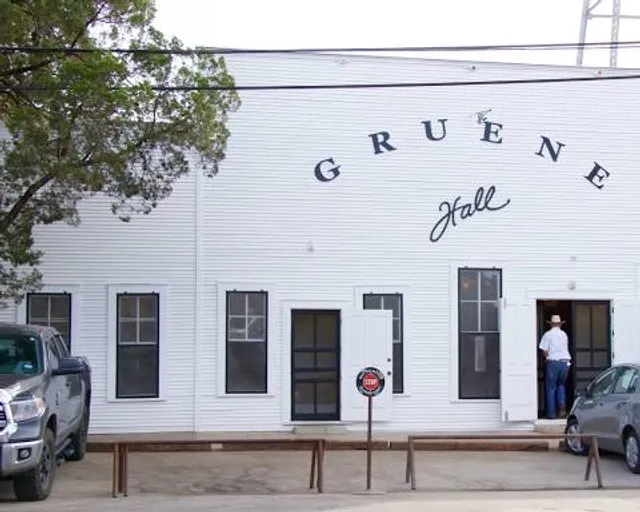
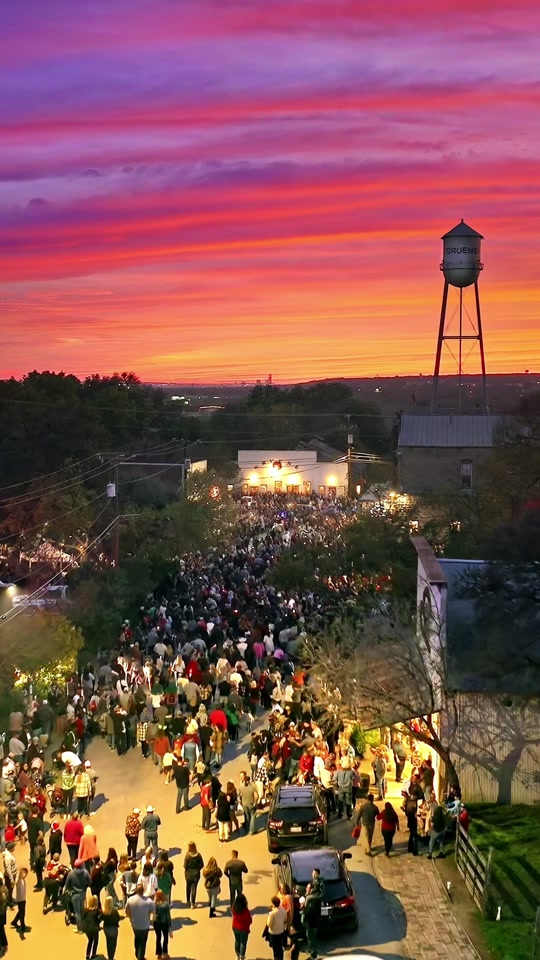
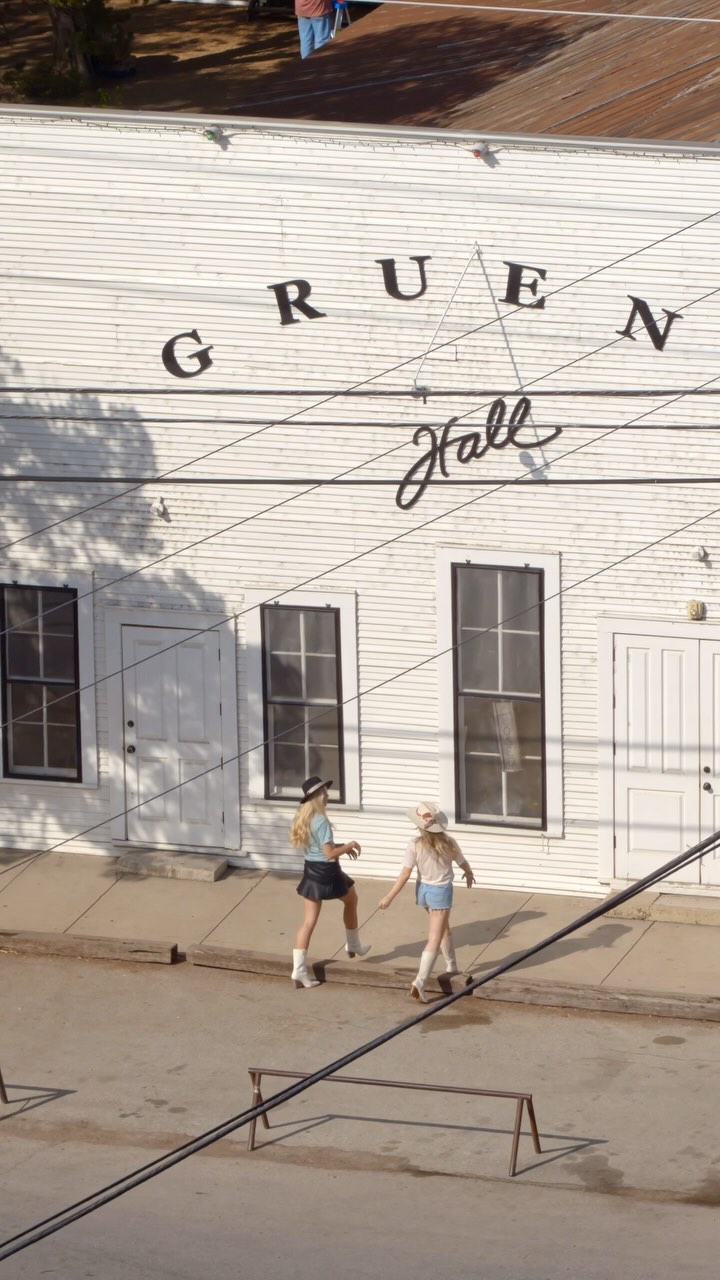
Gruene Hall, built in 1878, is Texas’ oldest continually operating and most famous dance hall. By design, not much has physically changed since the Hall was first built. The 6,000 square foot dance hall with a high pitched tin roof still has the original layout with side flaps for open air dancing, a bar in the front, a small lighted stage in the back and a huge outdoor garden.
Through the years, big winners have always been Gruene Hall’s patrons. A person watching a show never knows if the artist they see at the Hall today will be a star tomorrow, but they can know that the music they hear will always be top notch.
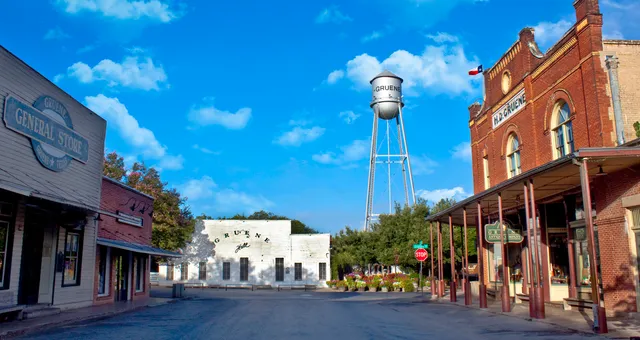
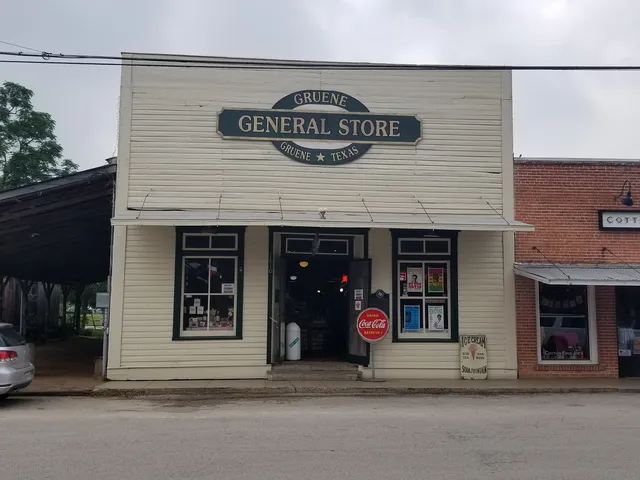
Gruene, Texas, (originally known as Goodwin) was settled in the mid-nineteenth century by German farming families. As the head of one of these families, Ernst Gruene moved with his wife and two sons to the area northeast of New Braunfels in 1872. The second of his two sons, Henry (Heinrich) D. Gruene, firmly established the family's presence in the area by acquiring enough cotton-producing land to support between twenty and thirty tenant-farm families. In 1878 he built the dance hall known today as Gruene Hall. Before his death in 1920 he built the town's first mercantile store, cotton gin, lumberyard, and bank. He also provided land for a school and served for a time as postmaster.
Henry Gruene's Dance Hall provided area residents a place for socializing and offered hard-working farm families a diversion from their difficult lives. A sign hanging over the bar proclaimed "Den feinsten Schnaps, das beste Bier, bekommt man bei dem Heinrich hier" ("The best liquor, the best beer, you get at Henry's here"). In addition to serving both "the best beer" and "dime-a-shot whiskey," and providing a venue for polka bands and square dancing, the hall often was used by traveling salesmen for displaying their wares. Gruene Hall also became a popular location for Saengerfests (German singing festivals), high school graduation ceremonies, political elections, and both dog and badger fights. During Prohibition, Henry Gruene hung a sign in the bar that read, "Only Near Beer is Sold Here. Real Beer is Sold Near Here."
In the early part of the twentieth century, weekend dances usually began early on Saturday evenings. Typically, there would be a break at midnight for sandwiches and coffee, followed by more dancing until 5 A.M. The late Oscar Haas, a long-time resident of New Braunfels, remembered "those wonderful all-night dances at Gruene Hall—the long bar and the beer—the midnight supper—the children sleeping in the side room, as the parents danced until 5 A.M….the polkas, schottisches, waltzes, and the happiest of all, the ring-arounds."
Despite such joyous occasions, the residents of Gruene faced difficult times as well. In 1925 a boll weevil infestation devastated area crops. The Great Depression and the attendant decline in cotton prices nearly wiped out what was left of the town, though Gruene Hall continued to stay open.
In the early 1970s developers planned to raze the town in order to build new homes. While visiting the dormant community in 1974, Cheryle Fuller began her own efforts to save the town through devising a development plan and conducting a historical survey. In 1975 Gruene was added to the National Register of Historic Places.
Guuene Hall attracts performers that have made it a musical landmark, as well as a destination for hundreds of music fans. George Strait, for example, played regularly at Gruene Hall in the 1970s and 1980s. Others who have performed there over the years include Kris Kristofferson, Lyle Lovett, Tish Hinojosa, Robert Earl Keen, Jr., Jerry Jeff Walker, Stevie Ray Vaughan, Jerry Lee Lewis, Don Walser, Chris Isaac, the Austin Lounge Lizards, the Fabulous Thunderbirds, Jimmy LaFave, Kelly Willis, Slaid Cleaves, and Charlie Robison.
Gruene Hall offers live music seven nights a week, as well as Saturday and Sunday afternoons.
What a GREAT...
Read moreA Disappointing Departure from Tradition: A Visit to Texas' Dance Halls
I walked into what I hoped would be a refuge—a sanctuary where the heart and soul of Texas could still be felt in the twang of the guitar and the rhythm of a true two-step. The dance halls of Texas, for generations, have echoed with the spirit of country music—the kind that speaks to the soul, that tells the stories of our land, our people, and our history. But what I found was a bitter reminder that those traditions are fading, and with them, a part of the Texas I once knew.
Instead of the familiar, authentic sounds of honky-tonk and old-school country, I was overwhelmed by the hollow, manufactured beats of pop country—a far cry from the grit and heart that once filled these halls. The music was no longer the soundtrack of hard work, heartbreak, or hope. It had been replaced by something less, something commercial. Even worse, the energy of the room was not the familiar hum of anticipation and connection, but a disjointed atmosphere where no one seemed to care enough to dance, let alone embrace the culture that once thrived here.
I had hoped to find a place where the essence of Texas—its pride, its passion, its grit—was still alive. Instead, I was left with a hollow shell of what used to be. The dance floor, which should have been alive with movement and joy, was eerily quiet. The audience seemed more focused on projecting an image than embracing the true spirit of the music and the culture.
It’s heartbreaking to witness. The Texas that once felt so alive in these spaces seems to be slipping away, replaced by something that feels more like a shadow of itself. As I left, I couldn’t help but feel that something precious had been lost—perhaps not irretrievably, but certainly at risk.
This is not just a critique of the music, or the crowd, but of the slow erosion of what it means to experience Texas in its truest form. I can only hope that as the years go on, there will still be places where the real spirit of country music can live on, where people still gather to dance for the sheer joy of it, and where authenticity is the true measure of what it means...
Read moreI came to Gruene (pronounced Green) Hall to watch my son play. #AlexHuther, #Silvercloud I adored this building. My son took me up on the old stage, and I saw graffiti thank you notes from a couple of names I recognized. Ricky Skaggs' brother left a note, so look for it.
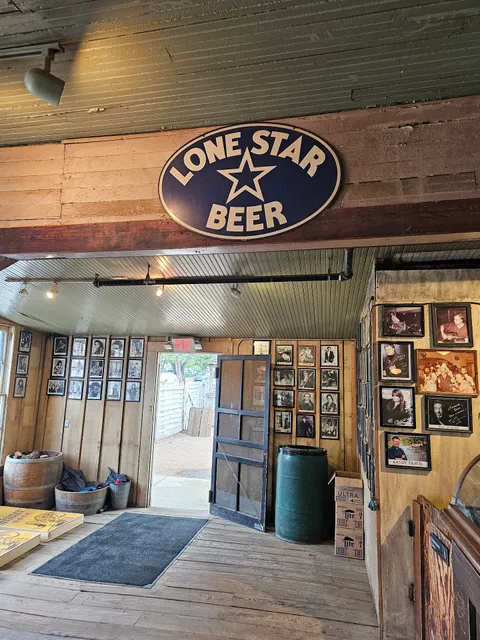
This is a historic building. John Travolta was filmed here for "Michael," and George Strait started here. There are pictures all over so take time to look around.
This place is no frills, but, to me, it's adorable. Half of the room is tables with benches. Most people straddle these to face the band. The other half of the room is the dance floor, and I was told when a lot of people are in the room the floor sinks.
Everything I could see was clean. I didn't go to the bar, but from the neon signs, the boxes collecting the empties, and the bottles coming into the hall, they have a large assortment of beers.
If you didn't eat before you came, there is a restaurant right next door. Or you can walk across the street to the right corner shop and get a ice cream cone (trust me, the scoops are large). If you want to do anything else during sets by the band, you can return to this store or there is also a antique store on the left corner who keeps later hours.
Just go. Look, listen, sing along,...
Read more