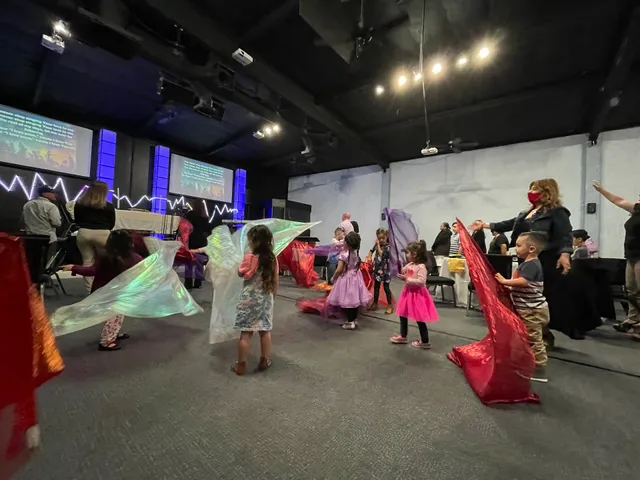
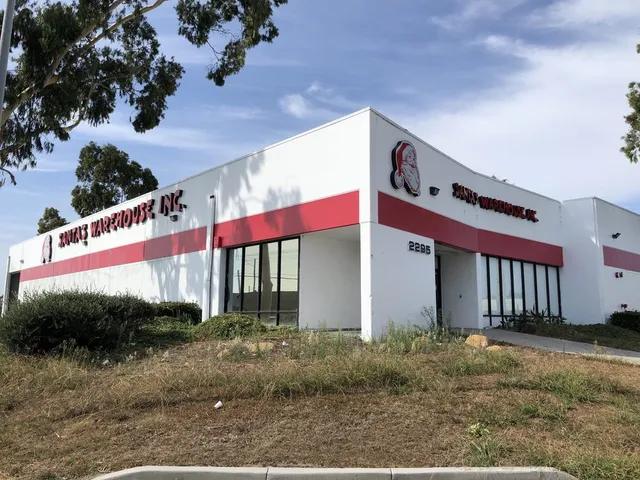
First and foremost I invite everyone reading this to visit our YouTube channel to watch past sermons and join us live every Saturday at 3 PM or in person at 2:30 PM.
Now my story…
I wasn't ready to write this before I didn't fully understand what the Secret Place Deliverance and Healing Ministry was truly doing for me. But now, with a clear mind and a changed heart, I can say this ministry transformed my life, and I refuse to let anyone or anything stand in the way of someone else experiencing the same. So here we go.
I want to take a moment to deeply thank The Secret Place Deliverance and Healing Ministry for all they've done in my walk with Christ. Years ago, I was baptized at the lowest point in my life. That moment marked the beginning of my journey with Jesus. But the truth is, where I started, deliverance was never mentioned. It wasn't taught, and it wasn't believed in.
Like many believers today, I was left spiritually vulnerable stuck in cycles of sin, confusion, and bondage. I believed that salvation was the end of the process. But what I've come to understand is that many in the Church are still living bound because they've never been taught the full truth about deliverance.
Today, many believers are unknowingly enslaved by lust, pride, disobedience, anger, depression, suicide, addiction, gossip, slander, unforgiveness, and more. These are not just personal struggles they are spiritual battles. And without deliverance, these open doors allow the enemy to operate in and through people, even within the church. They become vessels for the enemy's schemes, spreading seeds of confusion, destruction, and division -- because the enemy's agenda is always to kill, steal, and destroy (John 10:10).
But the Bible makes it clear that deliverance is not only for unbelievers it is very much for believers: those who have already come to Christ.
While unbelievers need salvation (deliverance from sin and eternal death), believers often need ongoing deliverance from Bondage, Oppression, Strongholds and Spiritual warfare.
Biblical Proof of Deliverance for Believers:
2 Corinthians 10:4-5
"The weapons of our warfare are not carnal but mighty through God for the pulling down of strongholds..."
This is written to the Church in Corinth not unbelievers.
Strongholds can exist in a believer's mind, heart, and life, and they require deliverance.
Galatians 5:1
"It is for freedom that Christ has set us free. Stand firm, then, and do not let yourselves be burdened again by a yoke of slavery."
Freedom is available but not automatic. Deliverance is the path to walk it out.
The Reality, Salvation saves your spirit, deliverance frees your soul and life from the enemy's grip. Even after salvation, believers may still carry wounds from the past, generational curses, demonic oppression and addictions or patterns of sin.
And these require intentional deliverance through prayer, repentance, and the power of Jesus.
Thank You, Secret Place
That's why I am so grateful for The Secret Place Deliverance and Healing Ministry. This ministry doesn't shy away from the full Gospel they preach truth, power, and love. They expose the schemes of the enemy, they equip the saints for spiritual warfare, and they create a safe place where people can be healed, set free, and restored.
Too many churches are avoiding the topic of deliverance and people are perishing for lack of knowledge. But here, at The Secret Place, the Word is rightly divided. Repentance is taught. Deliverance is ministered. Truth is honored. And the result is freedom in Christ not just in word, but in power.
I now walk in clarity, authority, and freedom. My spiritual eyes have been opened. And I know I'll never go back to religion without relationship or faith without freedom.
This ministry changed my life because it pointed me to the truth that was already written, and helped me walk it out for myself.
If you are tired of cycles, confusion, or spiritual stagnation come to The Secret Place. Deliverance is real. Freedom is available. And Jesus is still setting...
Read moreWe're sharing this review to reflect honestly on our past experience at The Secret Place Church, where we were members for a season. Though some time has passed since we left, we hope this account will help others seeking a safe, spiritually grounded church community.
When we first arrived, we were warmly welcomed, especially since we had a personal relationship with the founding family.
During our time at the church, we experienced leadership approaches that felt controlling and sometimes used Scripture in ways that were twisting truth .There was a strong emphasis on shame and pressure, and a lack of clear accountability . We felt rushed into making a decision about committing long-term and were discouraged by how questions or hesitations were handled by leadership
A key concern for us was the church's approach to deliverance. The teaching that Christians can carry demons -- and the frequency and manner of deliverance practices. After studying Scripture and seeking counsel outside the church, we came to a different understanding that emphasizes freedom in Christ and spiritual identity rooted in the finished work of Christ.
In accordance with Matthew 18 we brought up several issues: doctrinal clarity, how tithes were being used as well as team dues , and instances where private matters were mentioned from the platform.
On several occasions, we became aware of conversations within leadership -- including messages -- where there was discussion about individuals who were seen as disruptive or not aligned, with implications that they were being spiritually removed or "prayed out." This was deeply unsettling and contributed to our decision to leave, as it raised serious concerns about how conflict and disagreement were being handled behind the scenes.
I had a deeply uncomfortable experience with one of the Pastor Miguel . He insisted on speaking to me in person at a time when my husband was not present, even though I had asked for someone else to be present due to a prior interaction that left me unsettled.
The tone and timing of the communication felt intimidating and dismissive of my boundaries. I've included a screenshot of the message I received after declining the in-person conversation. This interaction, combined with being removed from the team in such a condescending manner, made it clear that my emotional safety and dignity were not valued.
At one point, we became aware of language being used during the women's prayer line that included prayers directed at those who had spoken critically of the ministry. The tone and focus of some of these prayers deeply concerned us, as they didn't reflect the spirit of intercession and grace we believe Scripture teaches. We brought this up with leadership as one of several issues, but it was not meaningfully addressed.
We also experienced breakdowns in relationships with others at the church following our departure. Private information shared with leadership in confidence was discussed with others, and some mutual friends shared that they felt pressured to choose sides because of requests coming from a family member of leadership . This dynamic created a heavy emotional burden during an already difficult transition.
Slander is tied to falsehood, not truth
“You shall not go about as a slanderer among your people, and you shall not stand up against the life of your neighbor; I am the LORD.” — Leviticus 19:16
A slanderer spreads false or malicious reports. Speaking what is true, with the aim of protecting others, is not slander
Scriptures on Truth & Accountability • “You shall not go about as a slanderer among your people…” — Leviticus 19:16 • “These are the things you shall do: Speak the truth to one another…” — Zechariah 8:16 • “A false witness will not go unpunished…” — Proverbs 19:5 • “Have nothing to do with the fruitless deeds of darkness, but rather expose them.” — Ephesians 5:11 • “If anyone knows the good they ought to do and doesn’t do it, it is sin.” — James 4:17 • “Woe to you… you appear righteous but inside are full of hypocrisy.” —...
Read moreDuring our time at The Secret Place, we noticed certain practices—such as daily deliverance sessions and frequent prayer calls—were strongly emphasized. On one call, we heard someone pray for God to bring “torment” to those opposing the pastor so they would repent, followed by speaking in tongues. We also heard individuals give instructions to archangels, which was new to us and raised some questions.
At first, conversations with leadership were helpful, but after we asked questions about a sermon and some public statements, our interactions became more difficult. We also asked about who provided spiritual covering for the ministry, since we had heard different explanations at different times, which left us confused.
While serving on the ministry team, we were asked to stay after services to help clean the building monthly. Leadership did not typically join in the cleanup. Team members were also asked to contribute $20 per person monthly, which felt unusual to us.
We inquired about where tithes and offerings were going and asked for a profit and loss statement. We were told no financial records were available because the ministry was small, though that might be possible in the future.
There were times when personal information about other members was shared with us by leadership in text messages and conversations. This made us feel uncomfortable.
In our experience, attending regularly led to greater acceptance, but if someone missed or did not attend, it sometimes created strain in relationships. For example, a member was mentioned from the stage after missing service to attend a family funeral, and this situation left us feeling uneasy.
Later, during a team meeting where I hoped to share some concerns, I was told I would be removed from ministry and that I had “brought destruction” to my household. After this, we no longer felt there was a safe place to raise questions.
There were also moments that gave us pause personally, such as during a deliverance session when the pastor placed his hand along my back while explaining his perspective about where spirits could hide. My wife and I also felt some conversations were spoken to us in a tone we experienced as condescending, including during a 21-day fast.
On another occasion, the pastor called me and referenced the widow in Scripture who gave all she had, explaining that even though she gave into a system that was imperfect, Jesus did not stop her. This was used to encourage us not to question giving. To us, the concern was not questioning God but wanting clarity about financial practices.
While some may find this community meaningful, our personal experience was that questions about leadership, finances, and ministry practices were not well received. We encourage anyone considering attending to thoughtfully reflect on whether this approach is the right...
Read more