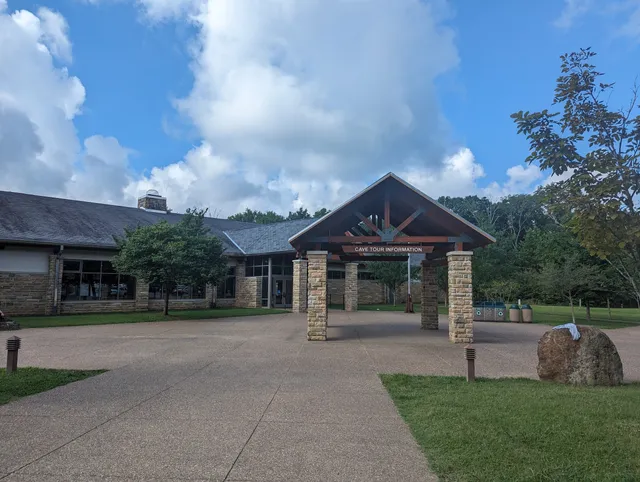
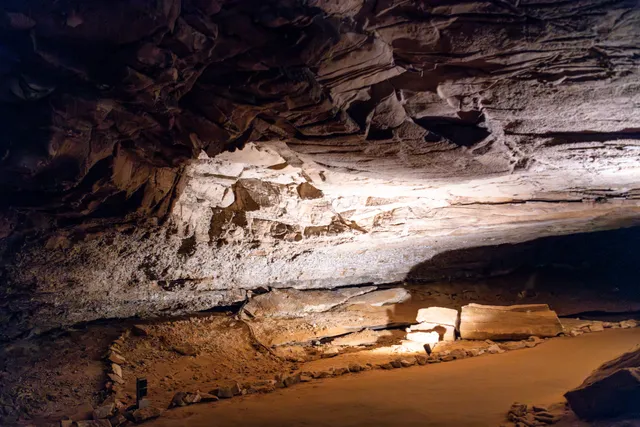
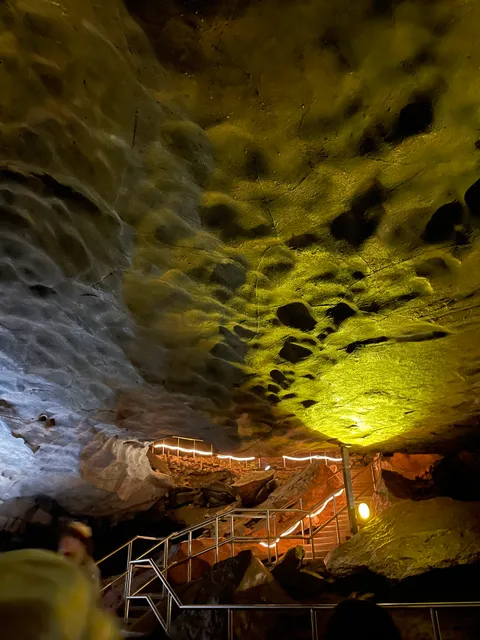
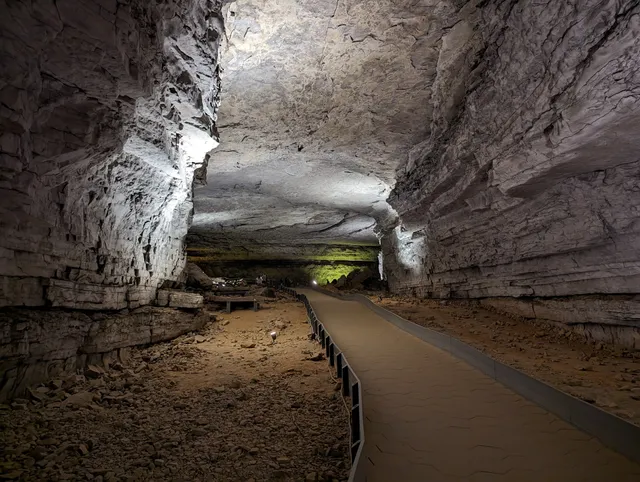
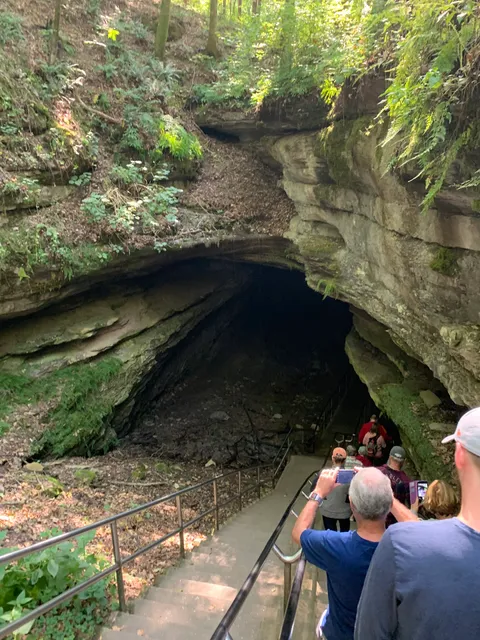
Mammoth Cave National Park preserves the cave system, a part of the Green River Valley, and the rolling hills of south central Kentucky. While cave tours of the 10 miles available in the cave are the park's big attraction, there is plenty more to do and explore while visiting this beautiful wilderness area, such as hiking, camping, horseback riding, fishing and kayaking.
In 1926, a group of private citizens formed Mammoth Cave National Park Association to protect the park. Mammoth Cave National Park was officially dedicated as a national park by 1941.Mammoth Cave National Park was officially dedicated at as a national park by 1941. It then became a World Heritage Site in 1981 and an International Biosphere Reserve in 1990.
With an NPF grant, Western Kentucky University's Education Department initiated the largest inquiry-based outdoor learning training for future teachers.
By partnering with Western Kentucky University Education Department (WKU), Mammoth Cave National Park received a National Park Foundation grant to initiate the largest inquiry-based outdoor learning training for education majors in the country.
Focusing on students who are about to become teachers, it demonstrates the advantages of using outdoor settings and inquiry-based learning techniques to teach critical thinking skills in both science and social science subjects. Since the grant began two years ago, 400 WKU students have been immersed in the overnight, in-park learning experience.
The Active Trails program promoted healthy lifestyles while simultaneously protecting and enhancing these precious land and water trail resources. This multi-faceted program offers many ways in which volunteers, community groups, corporate partners, students and educators can get involved with their national parks through hands on trail work, citizen science, formal and informal learning activities, special events and community activities.
The world’s longest cave lies in Kentucky — Mammoth Cave. The 412+ miles of the cave are further combined with more than 200 caves that sit within Mammoth Cave National Park. The area’s unique features create the perfect classroom for natural science.
The karst basins that have formed here are now the most thoroughly understood conduit flow aquifers in the world. This is particularly important, as about 40 percent of the U.S. population drinks water from karst aquifers. Another cool characteristic of the caves? Many of the underground waters eventually flow out as springs within the park, including the River Styx Spring and Echo...
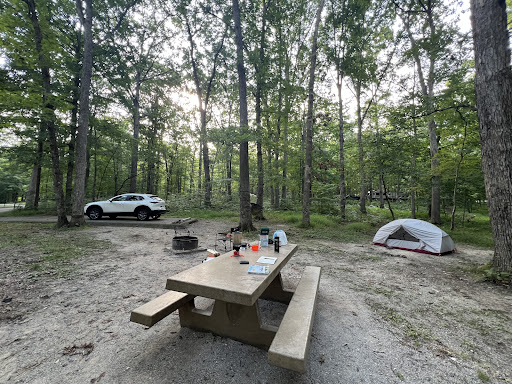
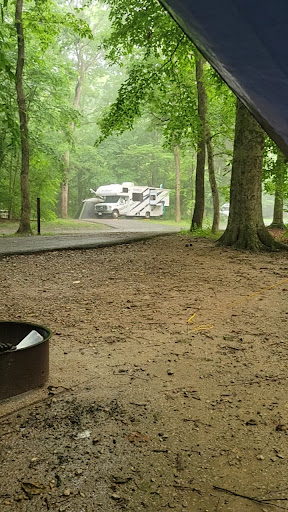
Read moreThis was my first time visiting Mammoth Cave, and the campground was FABULOUS! My site (105D) was a perfect balance -location wise for meeting neighbors and seeing nature-- no neighboring campsite on one side, and the back was the forest. My site was level and it was clean when I arrived, and the cement tables and fire pit were in great condition! The parking pad is a perfect size for two SUVs if you need more than one car. The sites in my loop were also a good distance away from each other-- not super close to your neighbors but close enough if you want to meet each other.
The campground itself was a great blend of solo and couple campers and young families-- it wasn't overrun by any one type of camper. I was a female solo camper and I felt safe. Park rangers would patrol every hour or so until 10pm-ish in EV ATVs, which were very quiet. Everyone followed the quiet hours rule, and the bathroom facilities were kept clean- they were cleaned every day around lunchtime. The shower house is a bit of a walk if you're in the back of the campground but is still plenty walkable, I never needed to wait on an open shower (took showers between 5-10pm), despite there only being 3 shower stalls, and they were very clean (though I'd still bring shower shoes).
While I visited I saw deer, turkey, and rare woodpeckers within the campground. There also wasn't an overwhelming swarm of bugs despite visiting in August. The campground is also within walking distance to the national park visitor center (where the cave tours start/end), the lodge and restaurants, and many hiking trails— I didn’t need to use my car at all during my 3-night stay. Two things to note though-- don't expect cell service at the campground, and bring your lantern/flashlight with you if you go to a bath house after sundown-- it's quite dark at night unless there are many visitors with fires going, and the only sidewalks lit are the ones right outside the bath houses.
Overall, I highly recommend a visit if you want to be close to nature-- town was about a 20 minute drive and there was minimal cell service (though you had free wifi at the visitor center). This was exactly the type of trip I was looking for, and I will certainly be returning!!
Note: Almost ALL of the sites are primitive camping-- no electric/water/sewer hookups. Know this before you book! Also note that the night-time sounds of nature are rather loud with crickets and all- if you're a light sleeper bring earplugs and...
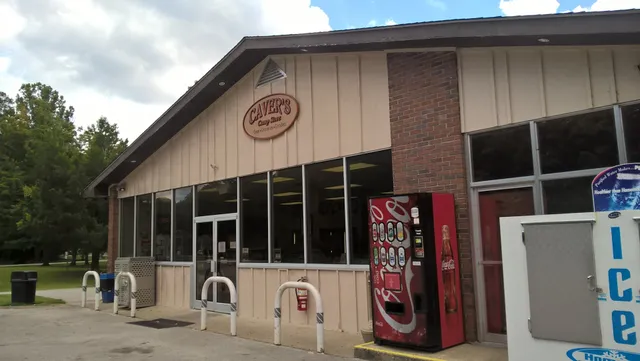
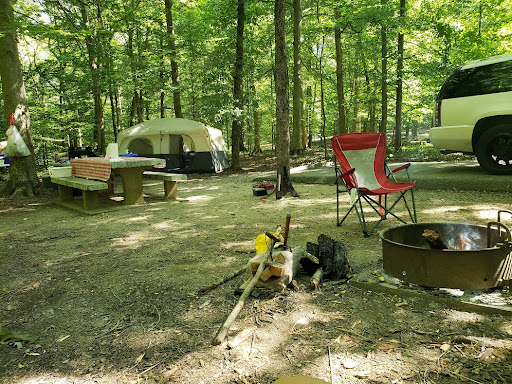
Read moreI have camped all over the United States, and this campground compares with all the rest as one of the top three. I tent camp without electricity (the way camping should be) and would rate everything as A+, with one major exception, and it’s a BIG one – I’ll save it for last. The camping lots are very big, so there’s no crowding between campers. They have the tent section nicely separated from the RV section, and the sites are flat and very tent friendly, which is a big plus. There’s lots of trees and wildlife including birds, turkeys, and deer everywhere, which was a lot of fun. The deer would actually walk up to our tent and stick their head in looking for a snack. I saw a few squirrels, but no racoons, which was unusual. No bug problem for us either. Walking and hiking paths are everywhere, and it’s within walking distance to the Welcome Center. There was no restaurant available as the Lodge is closed and being rebuilt, so if you did want to find a restaurant you would have to drive down into Cave City, which is a 25 minute drive, and only about 4 restaurants that you would want to eat at. If possible, I would recommend sneaking in your own firewood, because you won’t find it anywhere around here easily, even at the camp store, (wow) and if you do, you can expect to pay through the roof for a small bundle of 7 sticks (normally $5, we had to pay $10, and this was about 20 miles away from the park before we found any. (Unfortunately, there is price gouging aimed at tourists all around here) The bathroom shelters and water sites are plentiful, in good working order, and clean. The concrete picnic tables are a plus. This is a 5 star campground with one MAJOR exception, which makes it a solid 4 star campground. The shower house is a TOTAL, unacceptable joke. There are only four stalls, and you have to bring quarters to PAY $2 for a FIVE minute COLD shower! (Did I mention COLD?) Completely unacceptable for a National Park. And totally unacceptable for a family with children who are tent camping. Your better choices would be to drive miles away and pay for a LOVES shower station, or to make up your own improvised bath station with tubs back at your campsite. I honestly hope the park sees these reviews and corrects this shower...
Read more