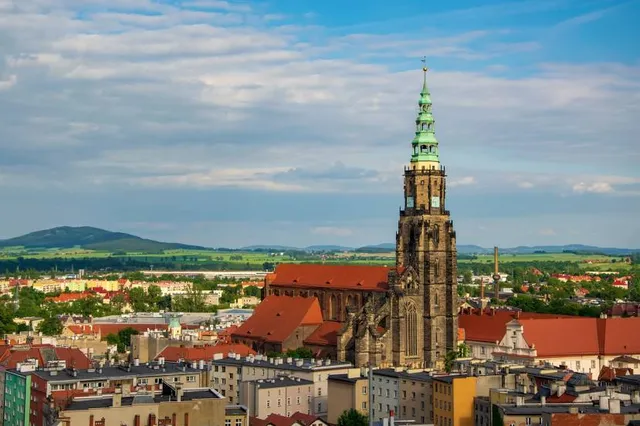
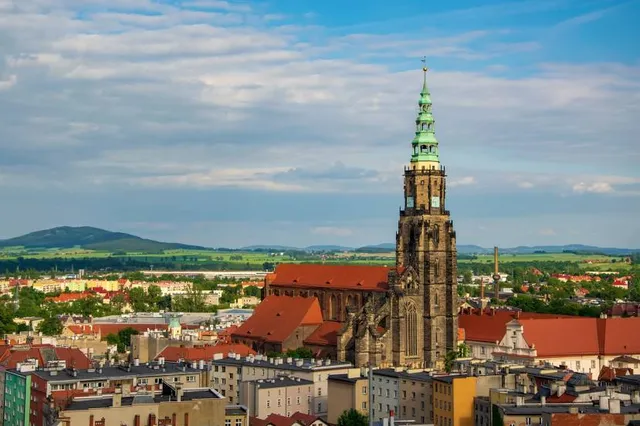
Magnificent Gothic church! Church in the style of the late Gothic, orientated, three-aisled basilica. Above the rear facade is dominated by a tower, visible from the view. Vin may 5 surfaces. On the rest, where to cross at the octagon, colonies are installed on the ridges, on which the statues of St. Stanislav and Wenceslas, Mary, St. Jadwiga Silezka, Sept. Peter and Paul, St. John the Baptist and saints. Ivan Evangelist.
On the rear facade, 4 portals with sculptures from the nursery, including sculptures: Mother of God with the Child, the Twelve Apostles, who were sleeping in Ogrozhets, and also St. Stanisława and św. Wacław (1427). On the offending side of the portals one can see the symbols of the evangelists - the evangelist's sign: an eagle (St. John) and a lion (St. Mark), a pivden: bik (St. Luke) and an angel (St. Matthew).
The gothic sculpture of St. Anna Samotrozkoy, the yak is stashed between the pivnichny portal and the central rear facade.
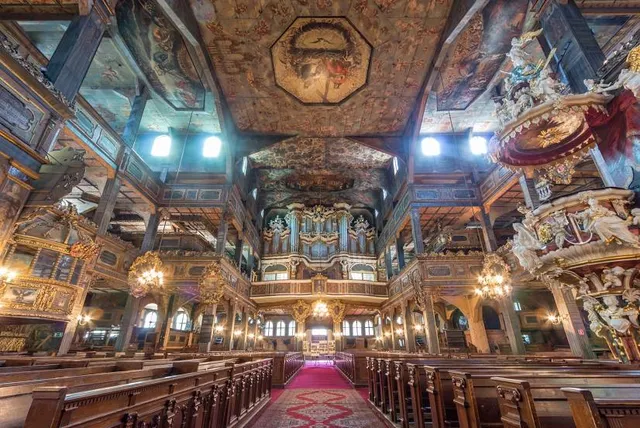
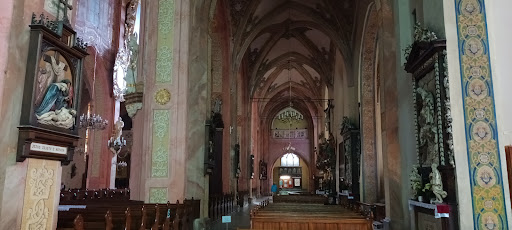
Cathedral crypt Inter'єr vrazhaє, persh for everything, the grandeur of life. The head of the nave itself is 71 m high, 10 m wide and 25 m high. The width of the three naves is 27 m. Under the presbytery, a twelve-piece chapel was planted, so that the crypt is guessed, as it does not grow in Gothic churches. Tse to call before a clear presentation of the presbytery and the head vvtar over the level of the church. Yogo horizontal projection is close to elips. The dawning crypt is supported on a round stoup, in which all the ribs are concentrated collectively, Tsikavimy here are the bases and arches - "servants" that support the end of the walls of the ribs.
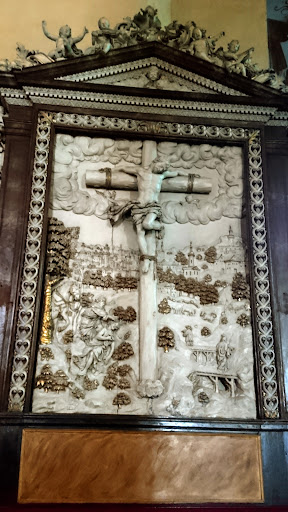
At the niches of the columns in the head nave there are sculptures at the turn of the 17th-18th centuries, depicting saints (for example, John the Baptist, Mikoli and Wolfgang). On the walls there are oil paintings of the 17th century, painted on canvases.
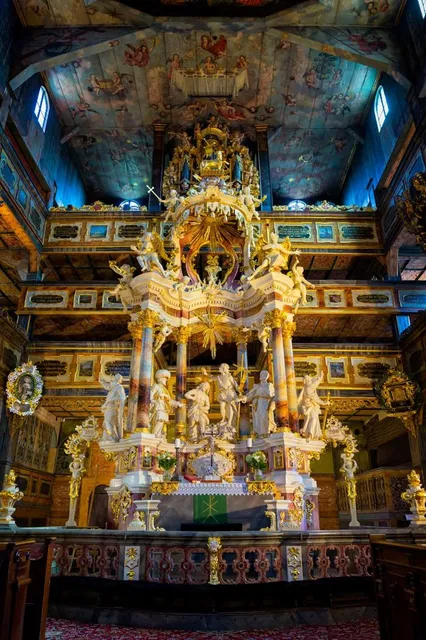
Golovny vіvtar The original gothic interior was painted later in 1532. In 1644-1776 pp. The church was rebuying in order єzuїtіv, yakі rebuked yogo in the baroque style at the turn of the XVII and XVIII centuries, the majority of sculptures and vіvtarіv were made by Jan Ridel. The main stage is a robot, the head stage with images of the Mother of God in silence, honed by saints, placed under a canopy, which is supported by simoma columns.
At the left part of the navy there is a historical pulpit, sculpted in 1698 by Jan Ridel.
On the wall of the cathedral there is the epitaph of Martin Fruaf, the remaining Catholic pastor before the Reformation (after his death, the evangelicals victorious church until 1629). In the middle, the bas-relief depicts the parafial priest, who stands on his knees before the majesty of the Holy Trinity, represented by the look, which is called the throne of grace. At the lower part of the epitaph, it was written in Latin language with appointments that the priest died at the age of 99 years, 3 months and 6 days.
In front of the entrance to the sacristy, there is a tombstone of parafial priest Svіdnitsa H'yu Simon, who died in 1897. Wrote Voluit Quiescit (Vіn khotіv vіdpochiti) to say that you want to be honored by this city. Vin knew the Polish language and was a chaplain of the Poznan regiment, in which the Poles served.
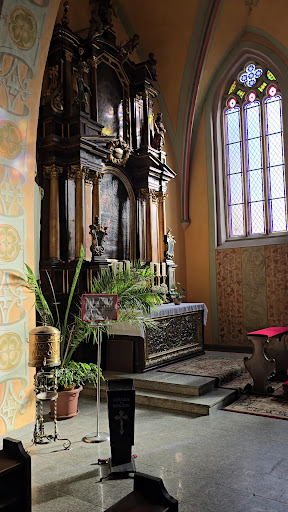
The grand organ of embellishments by the "Heavenly Orchestra", sculpted by Jerzy Leonard Weber (1704-1710); This robot is also in the vvtar at the chapel of Our Lady of Svіdnitsa, de є the miraculous image of Mary from the 15th century, as well as the statues of patrons on the consoles of international stovpіv.
Among the savings of elements of the middle technique, the most famous Gothic polyptych from 1492 r. On the scene of the Assumption of the Blessed Virgin Mary in the chapel, as if the choir of the townsfolk were in the house (copy of the artist Mariatsk); tsey v_vtar, ymovіrno, zrobiv student Veit Stoss.
In the middle, also Pieta with a more realistic form, around 1420.
At the churchyard there is a column of the saint. ...
Read moreCzternastowieczna świątynia jest świadectwem i manifestem dobrobytu i ambicji swego fundatora księcia Świdnickiego Bolka II Małego oraz mieszkańców miasta będącego ówczesnie ośrodkiem o największym, obok Wrocławia, gospodarczym i kulturowym znaczeniu na Śląsku. Masywna sylwetka świątyni, jednej z największych kościołów gotyckich w Europie, do dziś pozostaje główną dominantą panoramy Świdnicy. Należąca do najważniejszych świątyń Dolnego Śląska katedra charakteryzuje się wybitnymi walorami architektonicznymi oraz ponadregionalna klasą artystyczną wystroju oraz wyposażenia wnętrza. Znaczenia kościoła dopełnia fakt, że realizacje pochodzące z różnych epok uzupełniają się, tworząc harmonijną całość. Dzięki Opatrzności Bożej kościół nie został zniszczony w wyniku działań II wojny światowej, dlatego wartości dokumentacyjne, jakich jest nośnikiem są nie do przecenienia dla nauki. Tyle na wstępie. O katedrze i jej losach na przestrzeni wieków można poczytać w dostępnych materiałach, a nawet odbyć wirtualny spacer wewnątrz świątyni. Jest ona jednak głównym sercem Diecezji Swidnickiej od chwili niedawnego jej utworzenia. Jest też miejscem szczególnego kultu Matki Bożej Świdnickiej Uzdrowienia Chorych czczonej w jednej z bocznych kaplic po prawej stronie od wejścia do katedry. Katadra ta jest od wieków miejscem modlitwy, kultu Pana Boga, Jesusa i Maryi ale też miejscem zadumy nad czasem przemijania, historią tej ziemi, jej mieszkańców, historią kościoła, historią Polski. Patrząc na tą budowlę i oglądając jej wnętrze i wyposażenie wierzyć się nie chce, że ludziom w tamtych czasach i tamtych możliwościach technicznych chciało się podejmowac takie dzieła budowlane i artystyczne. Mamy im za co dziękować. Bardzo zachęcam do odwiedzenia Świdnicy, do wejścia w progi katedry. Proszę jednak wcześniej trochę poczytać o tym zabytku, bo to...
Read morePosileni a raczej najedzeni do syta w gruzińskiej piekarni przy rynku spacerkiem ul.Długą po pięciu minutach dotarliśmy do kościoła katedralnego św. Stanisława i św. Wacława i tu znowu doznaliśmy zachwytu na widok ogromnej (102 m) gotyckiej wieży zakończonej raczej renesansowymi hełmami i wielkiego okna (18 m x 9 m) tej gotyckiej świątyni której budowę korpusu głównego rozpoczął w 1330 roku ostatni piastowski książę świdnicki Bolko II Mały a zakończono w 1488 roku już pod panowaniem krolów czeskich.Samą wieżę ukończono w 1525 r.- jedyną z dwóch planowanych. Wnętrze zadziwia swym ogromem (71x27x25m) , pięknym sieciowym sklepieniem na wysokości 25 m pokrytym w XX w. polichromią podobnie jak wcześniej wszystkie ściany . Jedynym zachowanym gotyckim elementem wyposażenia wnętrza jest Chór Mieszczański z kaplicą maryjna w ktorej znajduje się piękny, błyszczący z daleka złotem gotycki ołtarz pentaptyk 1492 r. przypisywany szkole Wita Stwosza przedstawiający w centralnej części scenę zaśnięcia. NMP.. Pozostałe elementy wystroju powalają barokowym przepychem tak jak cudny ołtarz główny w prezbiterium czy zachwycająca kaplica marmurowa i ołtarz z cudownym obrazem Matki Boskiej Świdnickiej Uzdrowienia Chorych. trudno tu wymieniać wszystkie przepiękne obiekty jak ambona, liczne kaplice, organy, malowidła/freski i obrazy w przebogatych ramach czy mnogość niezliczonych rzeźb. To koniecznie trzeba zobaczyć na własne oczy a wrażenia i podziw dla talentu i kunsztu rzemiosła twórców tych dzieł pozostaną na zawsze. Warto tam za niewielką opłatą kupić przewodnik zawierający historię miasta i tej wspaniałej katedry którą można zwiedzać bez żadnych opłat prawie przez cały dzień. ...
Read more