The Solar Sunflower's Lament
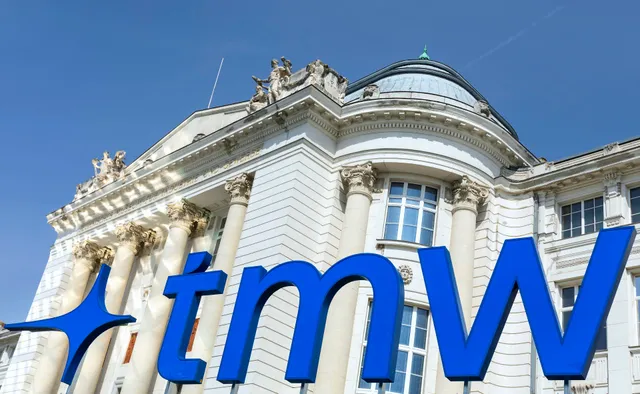
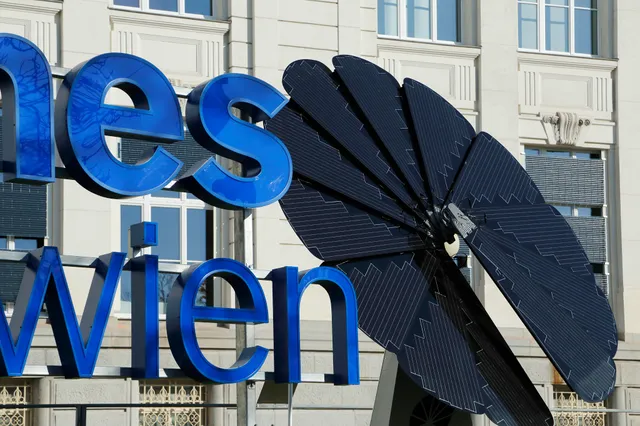
In late morning, an impressive piece of clean energy infrastructure stands guard at the museum's entrance - a solar power sunflower, purchased to help power the building itself. Yet it gazes stubbornly westward, searching for yesterday's sunset while today's power slips by behind its back. Like a sunflower bred to bloom at dusk, this technical specimen sets the stage for what awaits within.
Inside, the air is thick with more than history - the heat embraces you like an insistent Habsburg matron, while winter whispers barely above freezing beyond the walls. Through open windows, warmth escapes like imperial dreams, right next to exhibits warning of climate's change. The irony drips with every bead of sweat, as visitors in winter clothes roll up their sleeves and fan themselves beneath the stifling ceiling.
Steam engines and locomotives dominate the space, iron giants from an empire's twilight. They stand proud and numerous, these mechanical ghosts of a time when Vienna's reach stretched far beyond the Danube's banks. Above, the galleries trace rail's evolution from wooden tracks to modern trains, yet somehow the imperial era's achievements still command the lion's share of attention. More than half the museum stands as testament to pre-republican technology, the halls and floors an extensive catalog of empire's machinery.
Hidden in corners, as if embarrassed by their revolutionary power, crouch the titans of our modern age: the Enigma machine, whose decryption birthed modern computing and planted the seeds of our digital world; the NeXT Cube, Steve Jobs' bridge between his Apple empires, whose DNA flows through every iPhone ever touched; the Altair 8800, which beckoned two young programmers named Bill Gates and Paul Allen to write the code that would grow into Microsoft's global dominion. These aren't merely artifacts - they're the sparks that ignited our digital revolution, tucked away like humble footnotes in steam's lengthy chapter.
Like its capital city, the museum seems caught in a temporal embrace, dancing endlessly with ghosts of grandeur. The building itself pants with excess heat, as if trying to warm an empire long gone. Modern Austria's technical excellence peers in through those open windows, waiting to be acknowledged, while inside, the past reigns in carefully curated splendor.
That solar flower still points west as you leave, a perfect metaphor spinning slowly out of time - like the museum, like Vienna itself, seeking light from a sun that set long ago. Meanwhile, tomorrow's dawn rises unnoticed behind its back, along with all the clean energy it could have harvested, if only it had turned to face the future.
Here lies not just a museum, but a mirror - reflecting a nation's complicated dance between past glory and present identity, between imperial nostalgia and republican reality. The sweat on your brow might just be from the overheated halls, or perhaps it's from the weight of history, pressed so densely in these spaces that even the windows must be opened to let the present in.
Worth the visit? Yes - for in its contradictions lie truths more revealing than any perfectly curated...
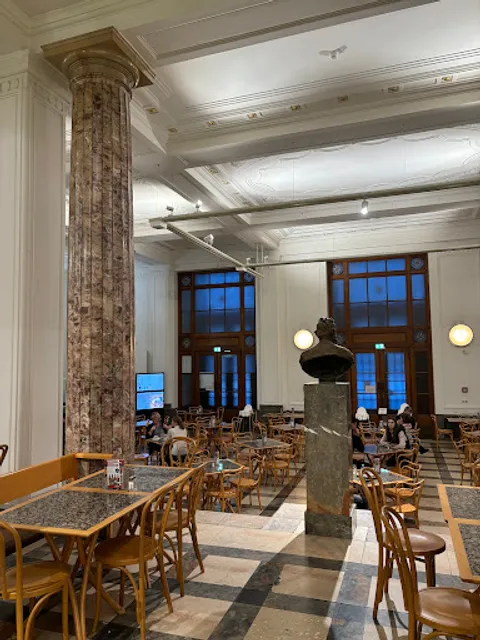
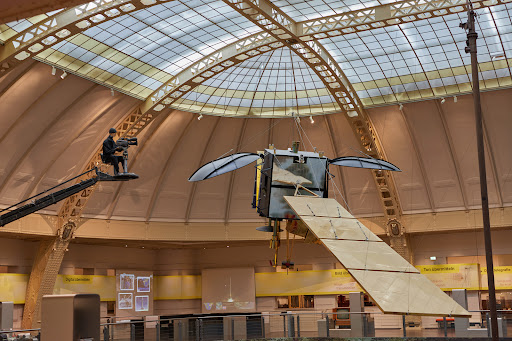
Read moreAs mentioned in many other reviews: The exposition is simply huge. You can find everything from metalurgy, through communication and multimedia, to the aerospace programme. A large part of the exposition is dedicated to work/employment and issues related to women's employment. I strongly recommend that you spend a whole day there and take a break in the museum's canteen. It is not very cheap, but very nice. On the other hand, the entrance fee is really low compared to the size of the museum. There are toilets everywhere, vending machines on the floors and you can lock your bags next to the entrance. So no complaints about the service.
However, I do have a few comments: a) We visited the museum on a hot day and the air inside was quite hot and humid. But I understand that air conditioning such a large building would be expensive. So take some bottles of water with you.
b) It would be great to recommend some tours for people who don't want to be there for 4+ hours. (Or did I miss it?) If you are not sure, start at the top. Many people waste too much time on metalurgy, work etc.
c) I like the exhibition focusing on employment and especially the position of women. (By the way, the museum emphasises the influence of women in science and technology several times. That's really great and helps to break down stereotypes). It is rather sad that in the middle of this employment exhibition, which focuses on breaking down stereotypes, there is a large wooden manager's desk with a lamp and the description that the vast majority of top management positions are held by men. Although the wording itself is far from objective, we can certainly agree with it. What I find a failure is the second part, where the authors describe that this desk, as well as similar ones, is completely clean because "the real work" is done elsewhere. (Sorry for the abridgment.) The phrase quite deliberately suggests that top managers are some kind of leeches, living off the people who do the 'real work'. As a member of the economics faculty, I dare to argue that such suggestions are a huge misunderstanding of management. As the grandson of a communist prisoner, I'm disturbed. All populist regimes have one thing in common: There is a part of society that is unnecessarily rich, although 'we' do the 'real' work. History clearly shows the consequences.
So, It would be great not to create the stereotype that all higher managers are old, lazy, fat guys who just play golf all the time. If we are trying to educate new generations. They should be free of such old stereotypes. But, maybe the museum management is just playing...
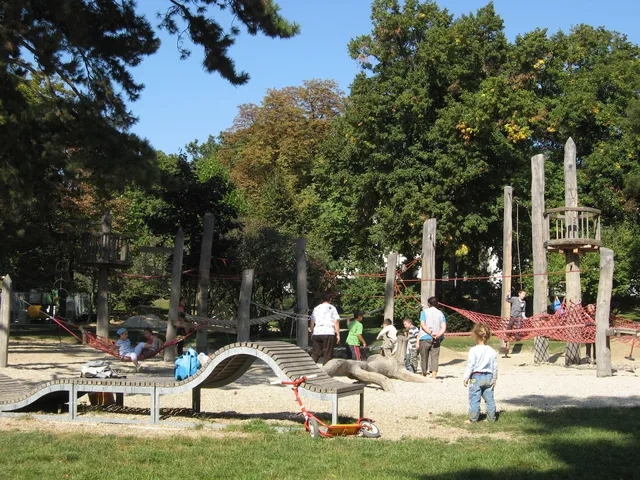
Read moreWe recently visited the museum again and were happy to see that there are new exhibitions on display. As always, the museum offers a great collection of science and technology, and there are many interactive elements designed especially for children, including two play spaces that are fantastic for younger visitors.
However, our overall positive impression was overshadowed by an unfortunate experience at the front desk. When we inquired about tickets for the play space, we were told by a staff member, who appeared to have a migrant background, that we needed to pay because we are not from "Stadt Wien." This contradicted both our experience from a visit two years ago and the information currently available online.
The conversation unfortunately escalated, and when my German-speaking husband joined to help clarify the situation, this staff member rolled her eyes and walked away. We then spoke with another employee who said they could make an exception this time, but that we would be expected to pay in the future. This left us feeling confused and unsure of the actual policy.
Later, during our time in the play space, we chatted with other parents who confirmed that the tickets should be free for everyone, regardless of residency or nationality, as long as there are tickets available. They also mentioned that on bad weather days or in winter, online booking is recommended, and in that case, a small fee (€2.50 per person) applies, which matches our experience from our previous visit.
We attempted to verify this with staff at the play space, but were told by one employee that they only scan tickets and don’t handle pricing. Another staff member we approached later also said they weren’t sure, but suggested the website should have the correct information.
It was honestly quite frustrating to be given inconsistent answers and to be treated dismissively when trying to clarify a simple question. For an institution that likely receives many international visitors, it's concerning that staff are not better informed, or at least willing to help find the correct information.
The museum itself remains a fantastic place for families and children, but we hope the management will take steps to improve staff training and customer service at the entrance. Clear communication and respectful treatment of all guests, regardless of their background, are essential for a welcoming...
Read more