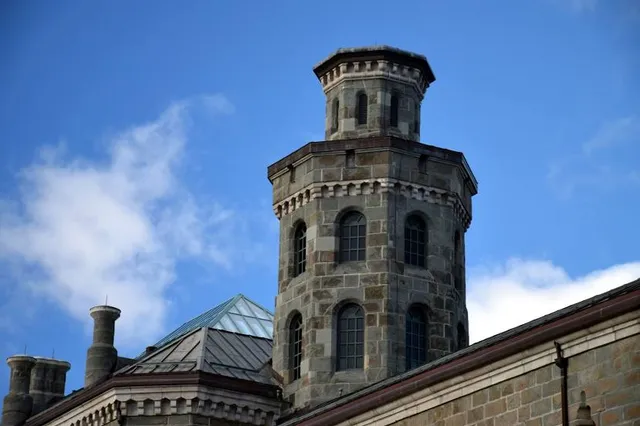
The Musée national des beaux-arts du Québec (English: National Museum of Fine Arts of Quebec), abbreviated as MNBAQ, is an art museum in Quebec City, Quebec, Canada. The museum is situated in Battlefield Park and is a complex consisting of four buildings. Three of the buildings were purpose-built for the museum. One building was initially built as a provincial prison before being repurposed for museum use.
The institution was opened as the Musée de la province de Québec in 1933. The museum was a provincial archives, arts, and natural science museum until 1962, when the natural science collection was removed. In the following year, the museum was renamed the Musée du Quebec. The provincial archives were relocated from the museum in 1979, leaving the institution with only an arts collection. In 2002, the museum was renamed the Musée national des beaux-arts du Québec.
The collection includes over 40,000 works from the 16th century to the present day. The collection primarily includes works that were produced in Quebec, or by a Quebec artist, although it also includes works from other parts of Canada, and the rest of the world. The museum is affiliated with the Canadian Museums Association, the Canadian Heritage Information Network, and the Virtual Museum of Canada.
Prior to the establishment of the museum, the province acquired several items and works in order to establish a provincial collection of art and natural history. The premier of Quebec, Lomer Gouin, first proposed the idea of establishing a provincial collection of art as a part of a program to "define the Quebec nation". However, the collections were primarily established and organized under his successor, Louis-Alexandre Taschereau. The program formally began in March 1920, when the cabinet minister, Athanase David, announced an initiative where the province would support Quebec-based artists by purchasing their works. A five-man jury initially selected works for the collection, selecting works they believed pushed the concept of a common rural past, and affirmed "innovative art trends", by artists in Quebec.
In 1922, the legislature of Quebec passed the Loi des musées de la province du Québec (English: Act Respecting Museums in the Province of Quebec), providing funding for the construction of museums throughout the province. However, construction for the Gérard-Morisset Pavilion did not begin until 1928; the museum finally opened to the public in June 1933. Initially, the institution served as an art, natural science museum, and provincial archive.
The natural history collection was removed from the museum in 1962, and the institution was renamed Musée du Québec the following year. The provincial archives moved from the museum to Université Laval in 1979, leaving the institution with only its art collection. The institution was formally made into a provincial Crown corporation in 1983.
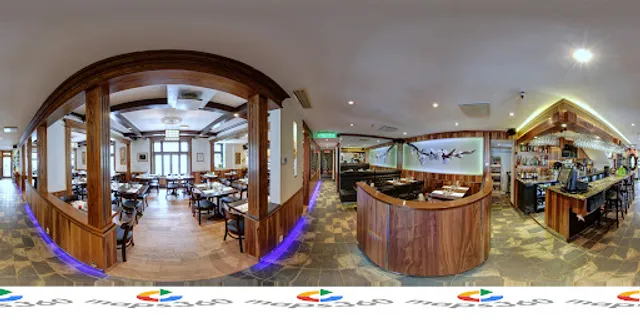
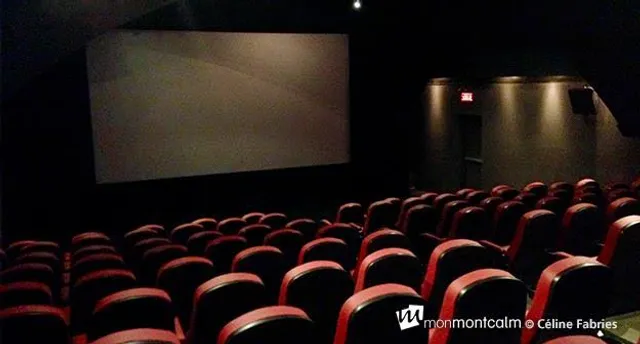
From 1989 to 1991, the museum renovated its original building, and expanded the building complex with the acquisition of the Charles Baillairgé Pavilion. The acquisition and renovation of the former prison building more than doubled the surface space the museum had. The renovation of the former prison expanded the museum's viewing space to 12 galleries, and provided space for an auditorium, a giftshop, restaurant, storerooms, and workshops. The museum's sculpture garden was completed shortly after the Charles Baillairginé Pavilion opened in 1993.
In 2002, the museum was renamed the Musée national des beaux-arts du Québec. Construction for the Pierre Lassonde Pavilion began in 2013 and opened to the public in 2016.
The property is situated in Battlefield Park, with the museum complex made up of four buildings, the Gérard-Morisset Pavilion, the Charles Baillairgé Pavilion, the Pierre Lassonde Pavilion, and the Central Pavilion/Grand Hall. A tunnel network connects...
Read moreI was harassed by the security guard.
I was going through the art a little fast in the 3rd floor because the museum was going to close in 30 minutes. The security guard came to me and told me I still had time and didn’t need to worry. I told him I still had to see the 1st floor exhibition, for this reason I was rushing.
Then he came back and started talking to me, even though I told him I wanted to see all the exhibitions and only had 30 minutes. He asked where I’m from, said he likes my country, asked where do I live, then asked how long I was staying in Quebec for and what day I was leaving. Lastly, he asked if I was traveling alone, and I said yes.
He left and minutes later passed behind me and quietly said: “can we keep in touch?” and I said no. It was terrible, from that moment onwards I was very uncomfortable being there. And it was a shame because it was the exposition I was enjoying the most. I was the only one in that section, as the museum was about to close. Which made me feel even more uncomfortable.
I skimmed through the rest of the art, tense, and went downstairs. After checking out the last exhibition and quickly passing by the gift shop, I went to report what happened to me. I was advised to speak to the “man who is responsible for the security” (in the museum’s worker words). I went and told him what happened. He asked if the security was on a break when he was talking to me, and I said he wasn’t. I don’t understand why he asked that, because regardless of him being on a break or not he was harassing a woman at work - the situation doesn’t change. Then, the security supervisor said he would speak to the specific security guard. Then I was about to leave and he told me I could report the situation by giving him my name, phone number, email, and address.
We went to the counter and he gave me an envelope to write my information. I thought that was weird, was expecting a form or something more serious. But I didn’t say anything and wrote my information there. After writing, he said I had two options: either continue reporting this to the museum, either going to the police. I said I wanted to report to the museum and decided to think about the police later.
He got the envelope from me and told me he was going to try to do something about it by watching the cameras, but the security guards there are a hired company, so they don’t work directly to the museum. I left. It was a terrible experience. I was enjoying the art, and suddenly the whole experience was ruined. I felt unsafe, uncomfortable, and disgusted. And in further reflection, I also feel extremely disappointed with the “men responsible for the security”. He was not helpful at all and I hardly believe the security guard will suffer any consequences.
I guess this is life reminding me of patriarchy! First time I was...
Read moreBeautiful museum with world class architecture and an impressive collection of Quebec and indigenous arts!
The Musee national res beaux-arts du Quebec is located on the historic Plains of Abraham. It consists of 4 separate buildings, connected with in underground tunnel, featuring an impressive collection of Quebec and Inuit arts.
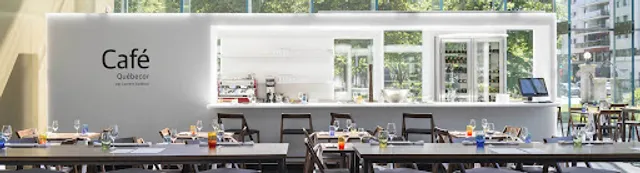
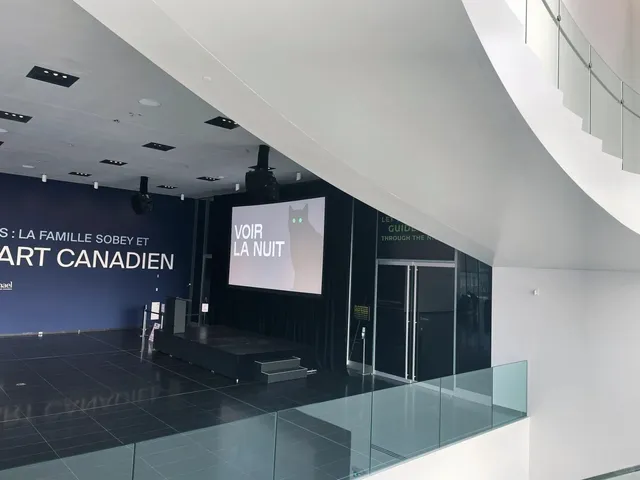
The newest building is Pierre Lassonde pavilion, designed by the leading OMA architecture firm. The pavilion includes a café in its main lobby, a courtyard adjacent to the lobby, a white spiral staircase, and a gold-coloured elevator. The building was named after Pierre Lassonde, a benefactor of the museum. The colouring of the gold elevator was chosen to reflect Lassonde's work with gold.
Currently at the museum, there is a special exhibition “America. Between dreams and reality”, featuring about 100 paintings, photographs, sculptures, and video works by 82 artists drawn from the prestigious collection of the Hirshhorn Museum--the Smithsonian Institution's national museum of modern arts, such as Pollock, Rothko, Kline, Hopper, Oldenburg, de Kooning, Warhol, etc.
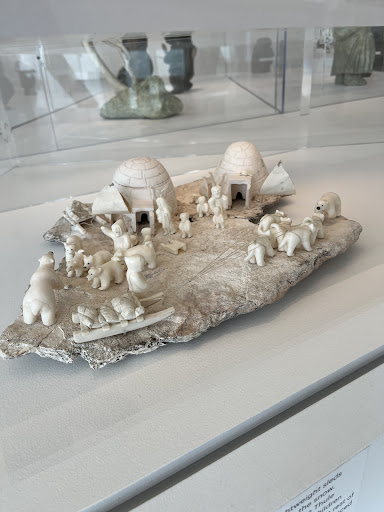
Equally impressive is the Raymond Brosseau collection of Inuit artist Manasie Akpaliapik’s works, located at the Gerard Morriset Pavillion. Originally from Baffin Island, Akpaliapik sculpts with bone, ivory, and stone. His sculptures typically have human or animal forms and are closely connected with traditional beliefs. it is a must-see for those whom love Inuit sculptures!
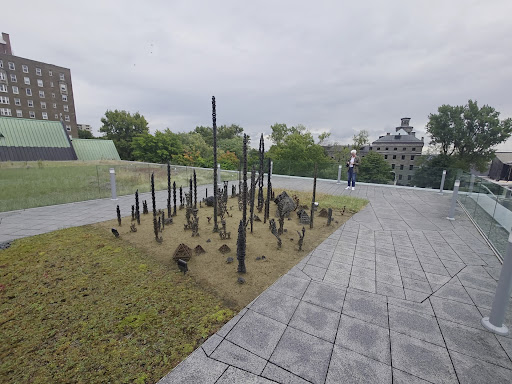
The rooftop garden is beautifully manicured, with native plants and 2 stacks of honeybee hives, perfectly incorporated into the building and surrounding landscape.
The museum is also friendly to the visually impaired, it has features to play descriptive info by...
Read more