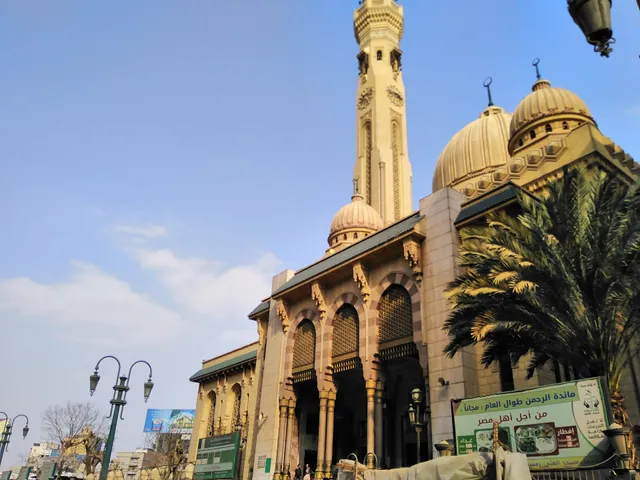
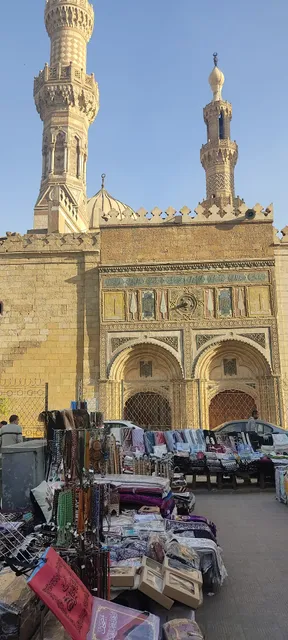
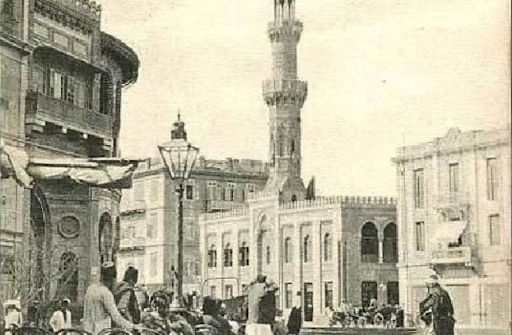
The mosque has its roots on the old mosque founded during the early Muslim conquests of Egypt. Today’s Ramses Square was a village known as Um Dunin in the 7th century, in which the Islamic conquerors had established their center and the adjacent mosque as well. Later the mosque was expanded by the Fatimid Caliph Al-Hakim bi-Amr Allah and named as "Al-Maqs Mosque". According to the map of Al-Maqrizi, the name was a reference to the nearby castle existed back then on the island at the Nile, known as Qal'at Al-Maqs، The mosque was also called as Jami Bab al-Bahr. It developed during the era of Al-Hakim in the site to provide the need for the mosque within the siege area, and returning the wealth to the ordinary people. During the Fatimid-era, there were numerous palm trees within the yard, and caliphs enjoyed the view of the mosque from the fleet on the Nile.
The mosque was also called as Awlad 'Anan Mosque, an ode to two brothers who were experts on tasawwuf during the era of the Mamluk sultan Tuman bay II, Muhammad and Abdul Qadir bin 'Anan. The elder brother Muhammad was buried in the site in 1499, who was said to be lived until 120 years old, and this gave the mosque the name of Awlad 'Anan.
However, this old mosque was destroyed by the French occupational forces along with several other mosques during the Revolt of Cairo in 1798. A military facility was built on top of the ruins named after a French officer.
Later, a new mosque was established on the same place by Arab Contractors, and inaugurated on February 22, 1990 by the former president of Egypt Hosni Mubarak during the celebration of Isra and Miraj. Newly founded mosque was named as "Al-Fath" which means "the conquest" in the Islamic context, and designed by the architect Hussein Bikri. The name...
Read moreThe construction of the mosque, located in Ramses Square, dates back to the reign of Al-Hakim Bi-Amr Allah in the Fatimid era, and according to the “Egypt Archive,” it was said that there was a monastery and a church in its place, so the Caliph had to demolish them to establish the mosque.
At that time, the mosque overlooked the Nile directly in the village of Umm Danin, now Ramses, which was at the time the headquarters of the naval fleet of the Fatimid state, and a place for the manufacture of warships.
The first name of the mosque was "Al-Maqs", according to what Al-Maqrizi planned at the time of its construction, and it is the same name given to a nearby fortress overlooking the Nile, and after a while, he rebuilt the ruling mosque by God's command.
According to the publication, some refer to the name “Al-Maqs” for another reason, which is a distortion of the word “tox”, which is taken from the name “Excise” tax, and it is collected on goods coming to Egypt through the port at the time on the Nile.
The area in which the mosque was located was completely overlooking the Nile River, and with time the water receded from its course. Before that, the mosque was surrounded by vast agricultural lands and palm gardens, as well as fertile lands, currently in the middle of the Faggala neighborhood lands.
Moving to the era of the Mamluk state, the name of the mosque became “Awlad Anan”, in reference to the mausoleum of Sheikh Muhammad bin Anan in which he was buried, to become the seat of Tuman Bay, the last Mamluk...
Read moreجامع أولاد عنان.. قصة مسجد بناه الفاطميون وقدسه «طومان باي»
يرجع تاريخ مسجد الفتح بميدان رمسيس إلى ربع قرن مضى من الزمان، ففي صباح الجمعة 22 فبراير 1990، تم افتتاح مؤسسة الفتح ومسجد أولاد عنان بميدان رمسيس فى الاحتفال بذكرى الإسراء والمعراج، بعد سنوات طوال من الإهمال لهذا المسجد التاريخى، والذي كان يعرف أيضًا بمسجد المقس.
تعود بداية الجامع الكبير، إلى العصر الفاطمي، في زمن الحاكم بأمرالله، والذي قيل إنه كان يوجد مكانه دير وكنسية فهدمهما لبناء الجامع، وكان موضعه يقع على النيل مباشرة بقرية "أم دنين" منطقة رمسيس الآن، حيث مقر الأسطول البحري للدولة الفاطمية، ومكانا لصناعة السفن الحربية والذي أنشأه المعز لدين الله الفاطمي ليكون المكان الذي يخرج منه الاسطول البحري فى عزواته.
جامع المقس
سمى هذا الجامع بـ«جامع المقس» وتعود أصل التسمية إلى معنى كلمة المقس المحرفة من كلمة المكس، وهى المكوس أي الضرائب، التي كانت تحصل على البضائع القادمة إلى مصر من خلال الميناء على النيل، ولكن هناك رواية أخرى ذكرت فى كتاب خطط القاهرة لابن عبدالظاهر، أنه عرف بالمقسم أي المكان الذي تقسم فيه الغنائم بعد الفتح الإسلامي لمصر أيام عمرو بن العاص.
وكان الجامع محاطا بحدائق النخيل ويفتح على أراضي «الطبالة» أو «الفجالة» الآن وكان بجواره استراحة للخليفة الفاطمي وكانت مخصصة لراحته وكان يخرج منها لتوديع الأسطوال المرابط على شاطىء النيل.
وفى أيام صلاح الدين الأيوبى، تم تخريب هذا المنظر، حيث أقام بهاء الدين قراقوش، برجا عاليا سمي فيما بعد بقلعة المكس «المقس»، وفى هذا العهد أهمل هذا الجامع أو تعمد إهماله على اعتبار أنه من جوامع الفاطميين.
وفى عام 1162م، أطاح فيضان مفاجىء لنهر النيل بأحد جدران المسجد، وظل الجامع على حالته المهدمة حتى عام 1368م، عندما جدد الوزير شمس الدين عبدالله المقسي الجامع، وهدم القلعة التي أمر صلاح الدين ببنائها فيما قبل.
جامع أولاد عنان
ظل الجامع محتفظ باسمه حتى أواخر عهد المماليك، وعرف وقتها بمسجد أولاد عنان، أى مريدي الشيخ محمد بن عنان، المدفون بالمسجد، وابن عنان كان من كبار مشايخ مصر، واشتهر بالزهد والورع وكان يضرب به الأمثال فى العفة وقيام الليل، وشاعت عنه كرامات أسطورية، وكان يقيم فوق الجوامع ومنها جامع عمرو بن العاص، وجامع المقس الذى دفن فيه، ومن أشهر مريديه طومان باي، أخر حكام المماليك، والذي يروي أنه كشف عن رجل ابن عنان ومرغ وجهه بها لتحميه من الجيوش العثمانية والتى انتهت بإعدامه على باب زويلة، وتذكر الروايات أن الشيخ محمد بن عنان بلغ من العمر 120 عاما حتى توفى فى عام 1516م.
فى أيام الحملة الفرنسة، هدمت أجزاء كبيرة من الجامع خلال ثورتي القاهرة الأولى والثانية، إلى أن جدده مريدى الشيخ عنان مرة أخرى.
بعد إطماء النيل واتجاهه ناحية الغرب، أصبح الجامع يقع على الخليج الناصري كما ذكر على مبارك فى خططه، وكان هذا فى أواخر عهد الخديوى إسماعيل عام 1869م.
كان يوجد بجوار المسجد فى عهد الخديدوي اسماعيل، مساحة كبيرة خالية، أنشأ نوبار باشا به منزلا خاصا به، فعرفت المسافة من شارع رمسيس حتى شارع وش البركه (نجيب الريحانى الآن) بشارع نوبار باشا، وهو جزء من شارع الجمهورية الآن.
وفى أواخر السبعينات، تم فك جدران جامع أولاد عنان، وضمها إلى مسجد السيدة عائشة، وبناء مسجد جديد مكانه عرف بـ«مسجد الفتح» وقد صدر قرار من رئاسة الوزرارء بتغير اسمه من الفتح إلى مسجد الفتح وأولاد عنان، ولكن ظل المسجد يعرف حتى الآن بمسجد الفتح. المصادر 1)دراسات فى التطور العمرانى لمدينة القاهرة لفتحى حافظ الحديدى 2)القاهرة جوامع وحكايات لحمدى ابو جليل 3) النجوم الزاهرة لإبن تغرى بردى .. 4) المقريزى .. السلوك لمعرفة دول...
Read more