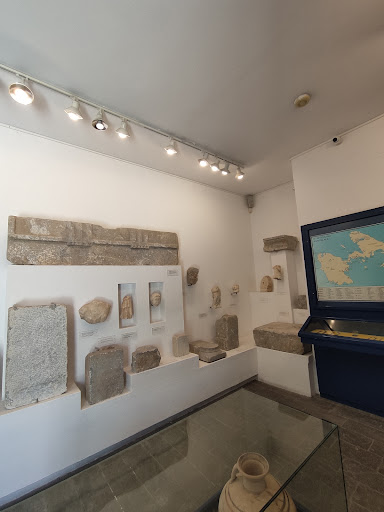
The Astypalea Archaeological Museum is housed in a ground floor room assigned to the Ministry of Culture by the Astypalaia Ecclesiastical Charity Fund in 1994. The museum's exhibition was organized between 1995-1996 and in the following years it was improved and enriched with the appropriate material program (Ichorama). The museum was inaugurated in September 1998.
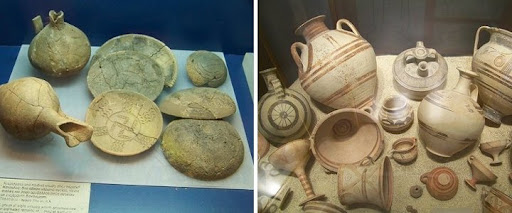
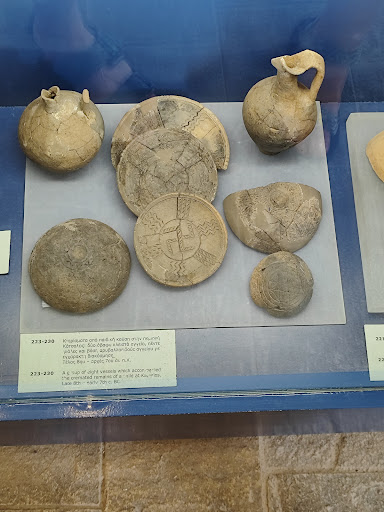
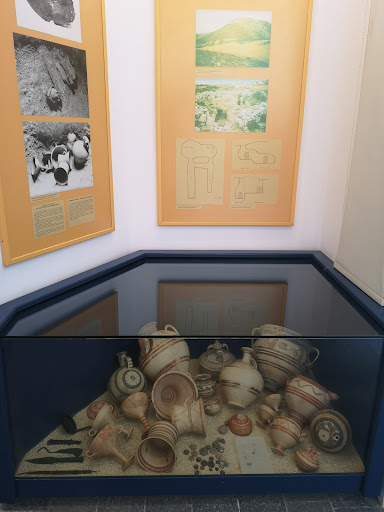
The exhibition is timeless and includes findings covering a wide range of times from prehistoric times to medieval times.Collection of prehistoric finds: clay pots, jewelery, bronze and stone tools from rich Mycenaean chamber tombs from the sites Armenohori and Syngaro, which indicate the island's prosperity since the late Bronze Age. Of particular interest is the finding of a very large number of stone tools in one of the graves, which are probably related to the status and occupations of the dead. Η Treasure of classical silver coins found on the island.Collection of votive inscriptions from the sanctuaries of the island, which tell us about the deities worshiped in Astypalaia in antiquity (Apollo, Artemis of Lechia and Elyithias, Asclepius and Aphrodite). It features a large votive inscriptional base of Apollo with traces of the foot of the statue of the 4th century BC. Findings of Classical and Hellenistic times: architectural members (inscribed epistles), tombstones and votive reliefs, tombstones, male and female statues, and important inscriptions (tombstones, votive, honorary resolutions, letters. Important findings in this category are: a) Male statuette torso - the wrapper wraps around the back, falls from the left shoulder and is held with the left hand, leaving the chest uncovered. b) Embossed with symposium tent. A pair of reclining beds is shown. At the foot of the bed seated in a double female form. Behind the bed is a small slave, a table with dishes, and a tree wrapped around a snake (depicting a dead man or a dead man?). (c) Sculpture with a mortuary scene. It depicts a male figure in a bed, on the edge of a seated female figure with a cloak and a cloak on a footstool. The show is defined by masts that have a cornice-shaped cornice. d) Trunk of a statue of a man of Roman era. e) Lower part of a female half-naked statue with a brick. The wrapper wraps around the back and falls with rich folds up to the legs (Aphrodite?). (f) Section of gold wreath with leaves and fruits. g) An inscribed column with a sacred law regarding the conditions for entering a sanctuary (3rd century BC) h) An inscribed stone column with a letter from Emperor Hadrian to the lords and the House of Knights. Λογή Collection of geometric to Roman-era clay pots from the necropolises of Katsalos and Kilindra. Marble shields, capitals and other parts of early Christian basilicas. Marble coat of arms of the Querini family of the island's rulers, from the Venetian...
Read moreGood overview of the history of the island but not full or comprehensive. Very small museum (tax of 5 euro is fair given how very small it is) and surprisingly many elements I was hoping to see were missing without mention including the Kylindros infant cemetery wasnt even mentioned despite being a unique of its scale in the world. Many other parts of the history of the island were disappointingly missing. I wish there had been more effort to showcase (even without afterfacts) the history. Still worth visiting if you want to get to know the place better rbut manage your...
Read moreMain museum is closed due to renovation. Temporary display room is mostly pottery, votives, some bronze items and gold jewellery. Pottery is unique, from burial plots and caves. Decoration on pottery recreated in displays, beautiful. Worth a visit, it...
Read more