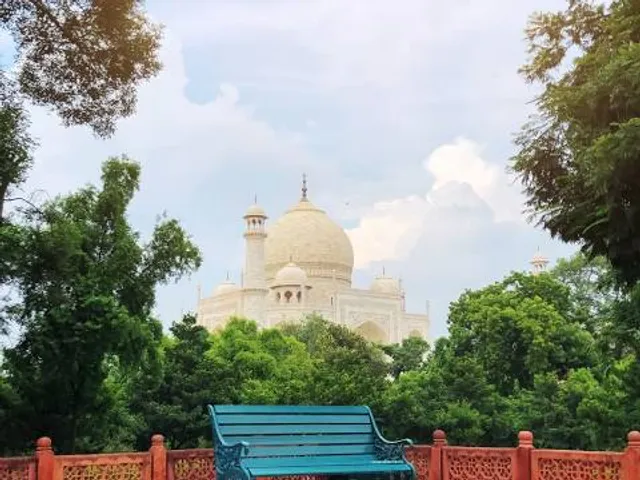
Nice place The Taj! OVERVIEW | Taj Grandstand View
"A white marble tomb built in 1631 - 48 in Agra, seat of the Mughal Empire, by Shah Jehan for his wife, Arjuman Banu Begum, the monument sums up many of the formal themes that have played through Islamic architecture. Its refined elegance is a conspicuous contrast both to the Hindu architecture of pre-Islamic India, with its thick walls, corbelled arches and heavy lintels, and to the Indo-Islamic styles, in which Hindu elements are combined with an eclecticassortment of motifs from Persian and Turkish sources."
Marvin Trachtenberg and Isabelle Hyman Architecture: from Prehistory to Post-Modernism. p223
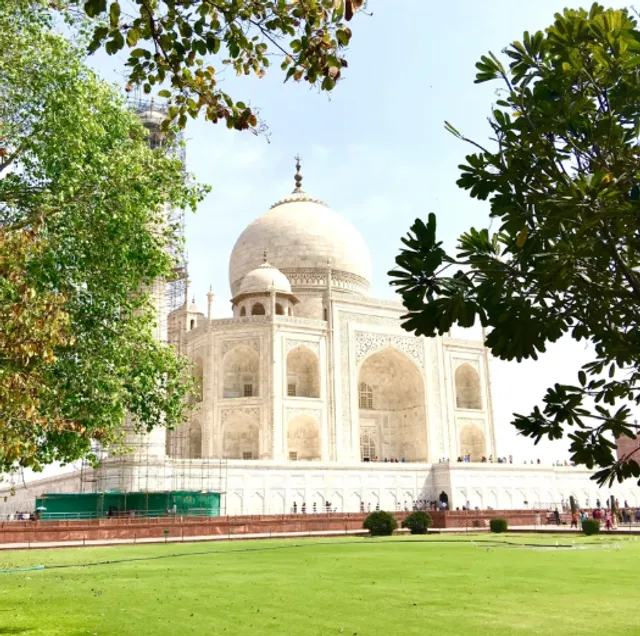
The Taj Mahal is considered the finest example of Mughal architecture, a style that combines elements from Persian, Indian, and Islamic architectural styles. In 1983, the Taj Mahal became a UNESCO World Heritage Site and was cited as "the jewel of Muslim art in India and one of the universally admired masterpieces of the world's heritage."
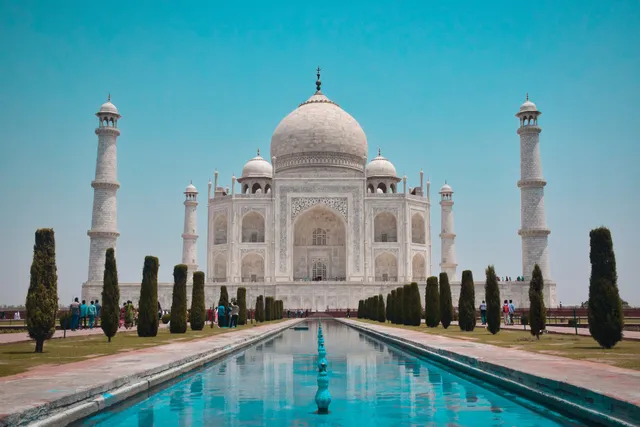
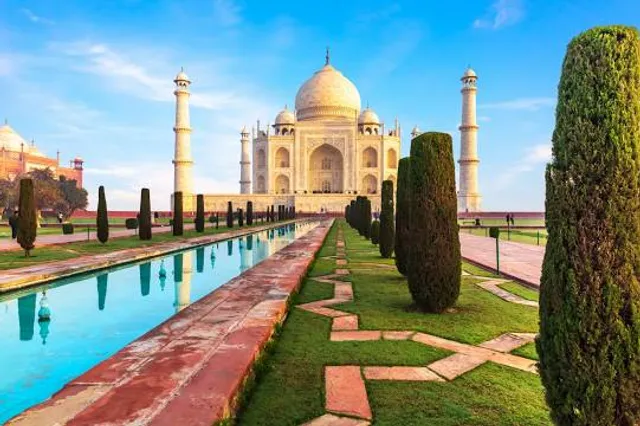
The Taj! An awe-inspiring poetry in marble stands high and serene by the banks of the River Yamuna is an inspiring result of the application of architectural and scientific research.
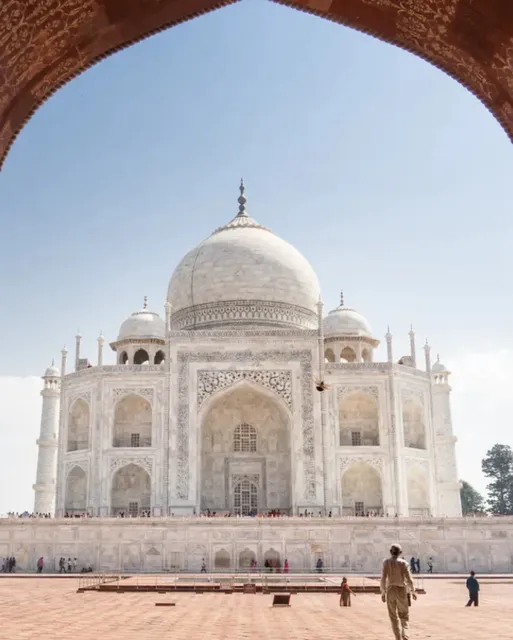
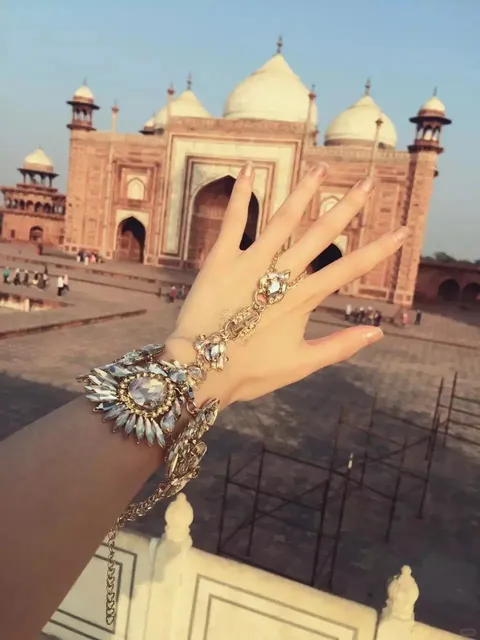
The tomb laid out in rectangular shape can be approached through an immense gateway with huge arch and alcoves strewn on either side that stands tall and erect, as though guarding something precious. Three other smaller gateways follow the red sandstone towers topped with domes in white marble together make a pretty picture.
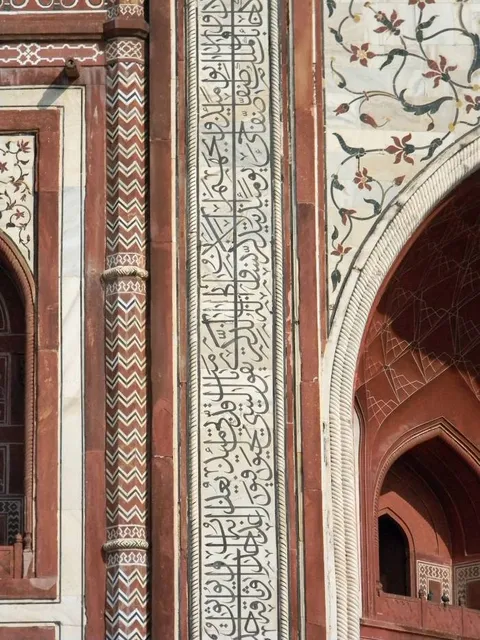
The Taj is an experience of its own kind, while on the one hand its magnanimity is so sublime, so on the other the exquisite inlay work and detailed craftsmanship together with the calligraphy is simply amazing. The combination simply leaves one absolutely mesmerized. The sheer splendour of the mausoleum is consummate, and the vastness is simply monumental.
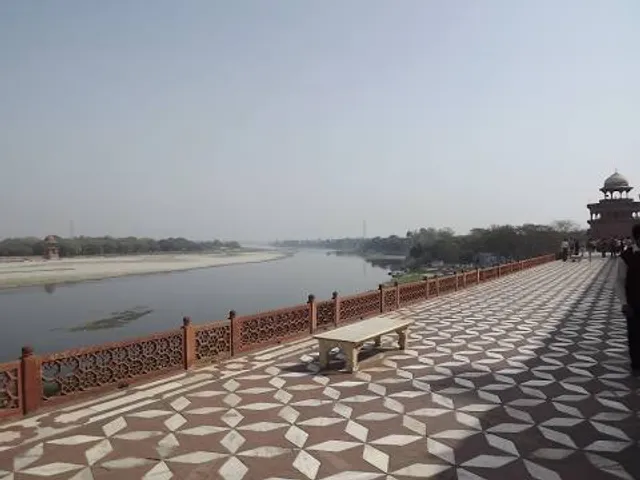
The tomb is at the northern end with an expanse of greenery and fountains between it and the gateways. The ceiling is adorned with floral patterns and the décor of floors with geometric designs. The inner of the main structure is in lakhauri [a kind of earthen brick], which have been carefully covered with marble, whereas the adjoining structures are covered with red sandstone.
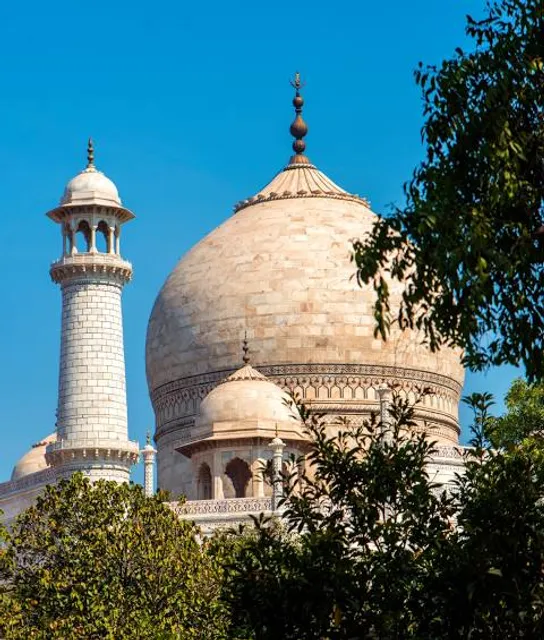
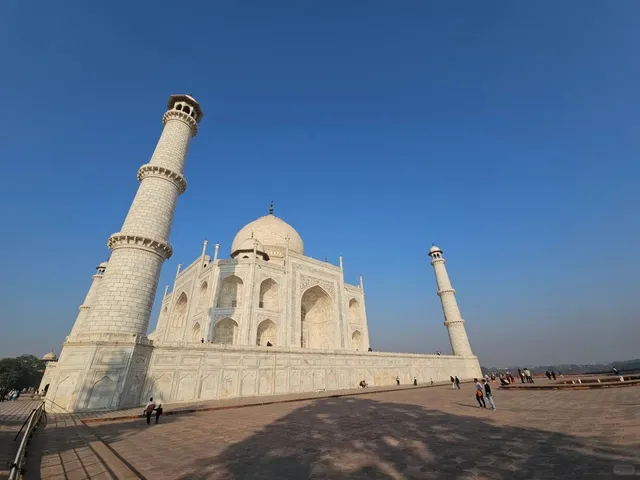
Majestic and sensuous, glistening brightly in the afternoon sun, the bulbous dome and minarets with a slight inward tilt, have all been inscribed meticulously with the Holy Verses bringingforth the arabesque ornamentation. The white marble from Makrana in Rajasthan has added its own natural beauty to this mausoleum that attracts tourists from all over the world.
As one goes around, the most breathtaking part remains the exquisite inlay work that looks up from every nook and corner of the façade. The blooms are worked out in immense detail and every dot and alphabet of the Holy Quran is neatly etched, cut and inlaid to perfection. The flowers, chiefly lilies mirror the Mughal love for gardens. One particular flower on the tomb of Mumtaz Mahal is said to have been inlaid with 35 different precious stones. Thecentral hall is surrounded by eight rooms that have a corridor running through them. The aura of serenity is all pervading, while translucent glass separates them to let-in the dim sunlight, making the interiors look solemn and intriguing. Indeed a masterpiece that none would ever be able to replicate including the orginal craftsmen, artisans and designers themselves.
While a visitor is still managing to grasp the symmetry of the structures set across the length and breadth of the complex, the Taj Mahal appears deep in the distance, indeed a spectacular sight to behold, forever!
However, it is the dome that leaves one gasping in awe. While the outer dome rises to 44.4 metres in height, the inner is 24.35 metres an architectural and technical feat. Ismail Afandi from Turkey, who also worked for the Ottomans is said to have been its designer. Marking an amalgam of Hindu and Islamic architecture are the typically Hindu Chhatris [An umbrella like structure] at the dome base from...
Read moreTak Mahal is a medieval times monument, a graveyard, with campus being the burial ground most famously for Mumtaz Mahal, the favourite queen of Mughal ruler Shah Jahan.
The main building is a white marble structure that is said to have been built upon the foundation of the sal wood frame. Though, this claim is not backed by the ASI, which has cited a lack of evidence. It is built on a raised platform and it's symmetrically identical from all four sides.
The campus has other buildings, resting places for guests, who were housed here before they proceeded to the fort. The resting places are like outhouses that we see in traditional Indian villages.
There are also rows of small rooms which were built for housing workers and architects. The main architects and designers were brought from Persia, the old country where Iran exists now, while the workers were Indians. The group also comprised some women but they were not involved in the direct building activities.
The mausoleum does not offer visitors a view of the original graves, which are some 20 feet below the duplicate ones that people see, and are opened only on the occasion of urs of Shah Jahan for three days, usually in February or March for ritualistic bath and prayers.
The other structures on the campus are made of red sandstone, a material that starts crumbling in a few centuries. Such decays have been repaired by the government at various times and places to give visitors a better tour experience.
The entry to the campus happens from three gates, named East, South and West, which is often used for VIP entrance, and the North, which is the final and only gate to enter the campus housing white marble structure. This gate creates an optical illusion. When you stand just outside the North gate, the Tak looks at an arms distance. The entrance at this gate is bisected by a median line that bisects the Taj too.
As you get past the North gate, the Taj suddenly appears some 500-600 metres away. This design makes its first big impression here. The campus is so designed that once you exit it, the Taj can't be seen.
Until a few years ago, the Yamuna used to touch the Taj, but now the government has reclaimed a small portion, building a small park-type guardrails to keep the water away. Almost exactly opposite this park across the river there is an open ground surrounded by trees and where shooting for films is allowed is the spot where the mythical Black Taj Mahal was to be built. It never happened and hence the myth.
The structure is beautiful and leaves you in awe, giving you a humbling experience. A worth touring place.
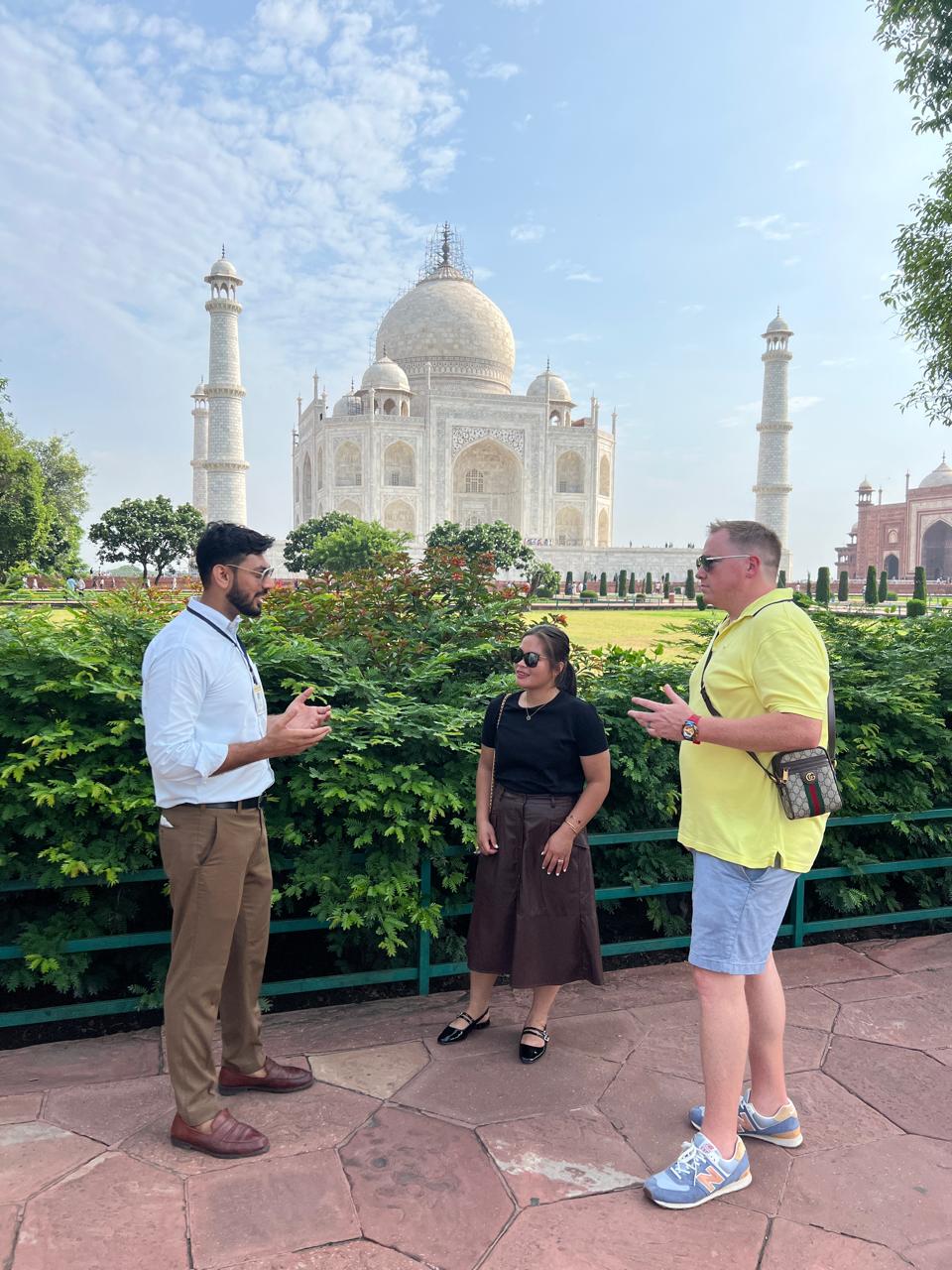
I took a guide. But it's better not to take one if you have interest in reading. Read materials from authentic sites and undertake the tour. Guides are not of much help as they follow a templated pattern. They may not know the curious questions that crop up in your mind. But if you don't want the trouble of reading, hire one. It will be helpful. I hired the guide thinking my daughter would be curious about those things but the template that the guide followed was perhaps not so engaging for her.
Another advice: Try to visit the campus early morning. It's quieter, I was told. I went in around 10 am. It was too much crowded.
Caution: No eatable items, water bottles and metal items are allowed inside.
Book your tickets online for smoother transit experience and don't forget to carry government-approved i-cards. You may not be allowed to enter despite...
Read moreThe Grand Canyon is one of the most awe-inspiring natural wonders on Earth, a massive geological formation that stretches across northern Arizona in the United States. Carved over millions of years by the Colorado River, the canyon reveals an extraordinary story of the planet’s history through its colorful layers of rock, which date back nearly two billion years. It is not only a testament to the forces of erosion and time but also a place of deep cultural, ecological, and scientific significance.
Measuring about 277 miles (446 kilometers) in length, up to 18 miles (29 kilometers) in width, and over a mile (1.6 kilometers) deep, the Grand Canyon is vast beyond imagination. From the rim, visitors can look down into a maze of cliffs, buttes, and gorges that descend toward the winding Colorado River far below. The sheer scale of the landscape often leaves people speechless, and it has become a symbol of the grandeur and power of nature itself. Sunlight interacts with the canyon’s rock layers in dramatic ways, creating a constantly changing palette of reds, oranges, purples, and golds throughout the day.
Geologically, the Grand Canyon offers a unique window into Earth’s past. The exposed rock layers represent a nearly continuous sequence of geological time, revealing ancient environments from oceans and deserts to swamps and mountain ranges. Some of the oldest rocks at the bottom of the canyon, known as the Vishnu Basement Rocks, are estimated to be about 1.8 billion years old. These formations record early continental processes, while the upper layers preserve fossils and sediments from more recent epochs. Geologists have studied these strata to better understand how the Earth evolved over time, and the canyon continues to be a living laboratory for geological research.
Culturally, the Grand Canyon holds immense significance for many Indigenous peoples. Tribes such as the Havasupai, Hopi, Navajo, Zuni, and Hualapai have long-standing spiritual and historical connections to the canyon. For the Havasupai, for instance, the canyon is not only home but also a sacred space tied to their origin stories. Artifacts and archaeological sites scattered throughout the region attest to thousands of years of human presence. These deep cultural roots remind visitors that the canyon is not just a natural marvel but also a place of profound human heritage.
In modern times, the Grand Canyon has become one of the world’s most popular tourist destinations. Grand Canyon National Park, established in 1919, attracts nearly five million visitors annually. Hiking trails such as the Bright Angel Trail and the South Kaibab Trail allow adventurers to descend into the canyon’s depths, while viewpoints along the South Rim and North Rim offer panoramic vistas. The park’s diverse ecosystems, ranging from desert scrub to forested plateaus, support a wide array of wildlife, including elk, bighorn sheep, condors, and numerous plant species adapted to the canyon’s varied climates.
Ultimately, the Grand Canyon stands as a reminder of the immense power of natural processes and the passage of time. It embodies both the fragility and resilience of our planet, inviting awe, reflection, and respect. Whether viewed from above or explored on foot, the Grand Canyon continues to inspire wonder and reverence in all who...
Read more