HTML SitemapExplore
logo
Find Things to DoFind The Best Restaurants

Tripolia Gate — Attraction in Jaipur Municipal Corporation

Name
Tripolia Gate
Description
Nearby attractions
The City Palace
Gangori Bazaar, J.D.A. Market, Pink City, Jaipur, Rajasthan 302002, India
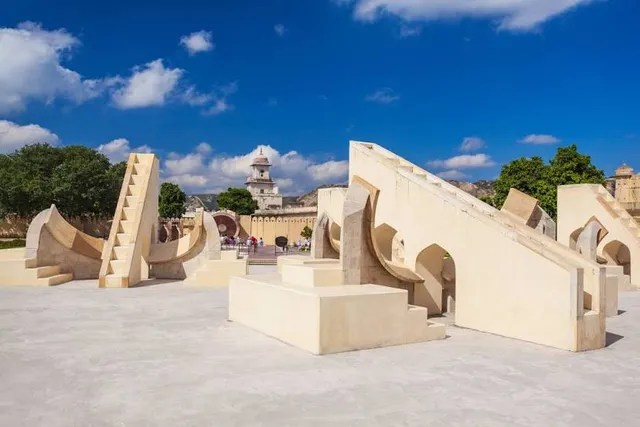
Jantar Mantar - Jaipur
Malve Nagar, J.D.A. Market, Pink City, Jaipur, Rajasthan 302002, India
Tarkeshwar Mahadev Temple
WRFF+53C, Chaura Rasta, Tripolia Bazar, Pink City, Jaipur, Rajasthan 302003, India
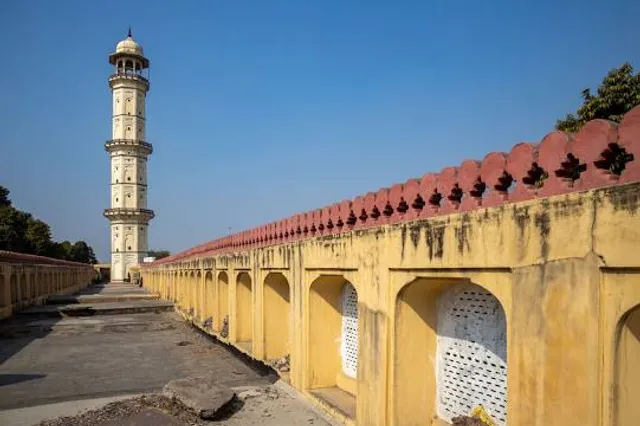
Isarlat Sargasooli
WRFC+Q8G, Aatish Market, Gangori Bazaar, J.D.A. Market, Kanwar Nagar, Jaipur, Rajasthan 302002, India
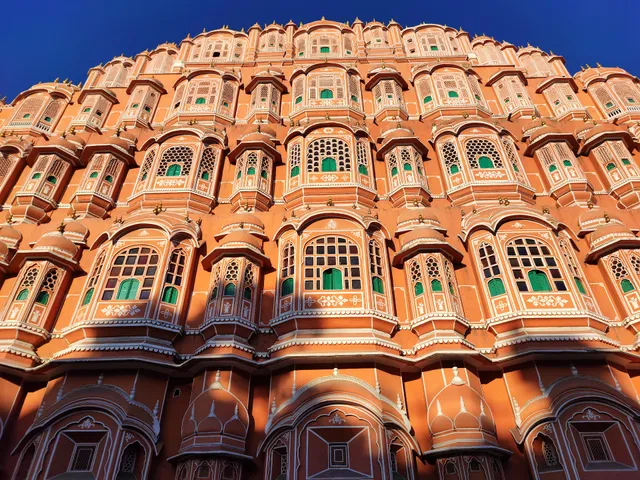
Hawa Mahal
Hawa Mahal Rd, Badi Choupad, J.D.A. Market, Pink City, Jaipur, Rajasthan 302002, India
Maharaja Sawai Man Singh II Museum
The City Palace, 221, Tripolia Bazar Road, Gangori Bazaar, J.D.A. Market, Kanwar Nagar, Jaipur, Rajasthan 302002, India
Mubarak Mahal City Palace
Jalebi Chowk, Near jantar mantar, Gangori Bazaar, J.D.A. Market, Kanwar Nagar, Jaipur, Rajasthan 302002, India
Chandra Mahal
WRGF+RC2, Agra Rd, Gangori Bazaar, J.D.A. Market, Pink City, Jaipur, Rajasthan 302002, India
Peacock gate
WRGF+JCV, Gangori Bazaar, J.D.A. Market, Pink City, Jaipur, Rajasthan 302002, India
Diwan-E-Aam
City Palace Complex, Diwan - e - Am., Tulsi Marg, Gangori Bazaar, J.D.A. Market, Pink City, Jaipur, Rajasthan 302002, India
Nearby restaurants
Shree Gopi Pavithra Bhojanalaya
Shop No.246, near Thadakeswar Mandir, Chaura Rasta, Tripolia Bazar, Biseswarji, Jaipur, Rajasthan 302003, India
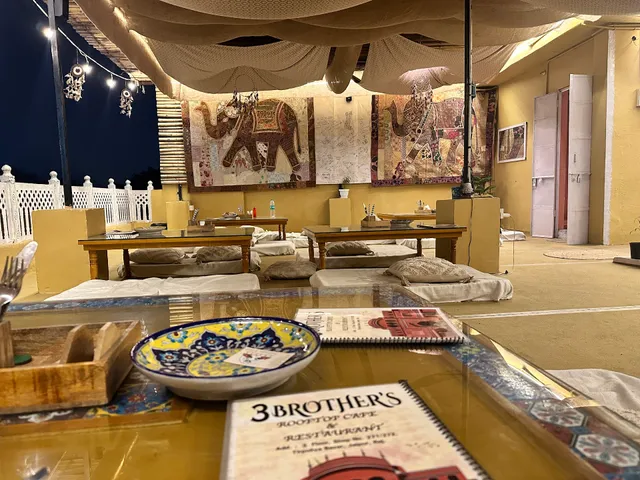
3 Brothers Rooftop Café
3rd Floor, Shop No:- 271, 272, Tripolia Bazar, Market, Jaipur, Rajasthan 302002, India
The Palace Cafe Restaurant
The City Palace, Johri Bazar, J.D.A. Market, Pink City, Jaipur, Rajasthan 302003, India
Samrat Restaurant
Shop No.273, Choura Rasta, Pink City, Bapu Bazar, Biseswarji, Jaipur, Rajasthan 302003, India
The Tattoo Cafe & Lounge
3rd floor, 30, Opposite Hawa Mahal, Hawa Mahal Rd, Jaipur, Rajasthan 302002, India
Mahaveer Rabri Bhandar
Shop No. 151, Mahaveer Bhawan, 152, Chaura Rasta Rd, Tripolia Bazar, Modikhana, Jaipur, Rajasthan 302003, India
SP DSP Pani Puri
351, Tripolia Bazar, Pink City, Jaipur, Rajasthan 302003, India
Ramchndra chat bhandar
161-a, Bapu Bazar, Pink City, Jaipur, Rajasthan 302003, India
Wind View Cafe
3rd Floor Rang Bihari Jee Ka Mandir Badi Chopad, Hawa Mahal Rd, opposite Hawa Mahal, Pink City, Jaipur, Rajasthan 302003, India
Jagannath Sharma Pakodi Wale
162, Tripolia Bazar, Malve Nagar, J.D.A. Market, Pink City, Jaipur, Rajasthan 302002, India
Related posts
Jaipur’s Must-See Attractions: A Rating Guide
Keywords
Tripolia Gate tourism.Tripolia Gate hotels.Tripolia Gate bed and breakfast. flights to Tripolia Gate.Tripolia Gate attractions.Tripolia Gate restaurants.Tripolia Gate travel.Tripolia Gate travel guide.Tripolia Gate travel blog.Tripolia Gate pictures.Tripolia Gate photos.Tripolia Gate travel tips.Tripolia Gate maps.Tripolia Gate things to do.
Tripolia Gate things to do, attractions, restaurants, events info and trip planning
Tripolia Gate
IndiaRajasthanJaipur Municipal CorporationTripolia Gate

Basic Info

Tripolia Gate

Tripolia Bazar, Badi Choupad, J.D.A. Market, Pink City, Jaipur, Rajasthan 302002, India
4.4(2.9K)
Open until 12:00 AM
Save
spot

Ratings & Description

Info

Cultural
Family friendly
attractions: The City Palace, Jantar Mantar - Jaipur, Tarkeshwar Mahadev Temple, Isarlat Sargasooli, Hawa Mahal, Maharaja Sawai Man Singh II Museum, Mubarak Mahal City Palace, Chandra Mahal, Peacock gate, Diwan-E-Aam, restaurants: Shree Gopi Pavithra Bhojanalaya, 3 Brothers Rooftop Café, The Palace Cafe Restaurant, Samrat Restaurant, The Tattoo Cafe & Lounge, Mahaveer Rabri Bhandar, SP DSP Pani Puri, Ramchndra chat bhandar, Wind View Cafe, Jagannath Sharma Pakodi Wale
logoLearn more insights from Wanderboat AI.
Phone
+91 141 282 2863
Open hoursSee all hours
FriOpen 24 hoursOpen

Plan your stay

hotel
Pet-friendly Hotels in Jaipur Municipal Corporation
Find a cozy hotel nearby and make it a full experience.

hotel
Affordable Hotels in Jaipur Municipal Corporation
Find a cozy hotel nearby and make it a full experience.

hotel
The Coolest Hotels You Haven't Heard Of (Yet)
Find a cozy hotel nearby and make it a full experience.

hotel
Trending Stays Worth the Hype in Jaipur Municipal Corporation
Find a cozy hotel nearby and make it a full experience.

Reviews

Nearby attractions of Tripolia Gate

The City Palace

Jantar Mantar - Jaipur

Tarkeshwar Mahadev Temple

Isarlat Sargasooli

Hawa Mahal

Maharaja Sawai Man Singh II Museum

Mubarak Mahal City Palace

Chandra Mahal

Peacock gate

Diwan-E-Aam

The City Palace

The City Palace

4.4

(20K)

Open 24 hours
Click for details
Jantar Mantar - Jaipur

Jantar Mantar - Jaipur

4.5

(14.5K)

Open until 6:30 PM
Click for details
Tarkeshwar Mahadev Temple

Tarkeshwar Mahadev Temple

4.8

(1.7K)

Open 24 hours
Click for details
Isarlat Sargasooli

Isarlat Sargasooli

4.5

(2.9K)

Open until 4:00 PM
Click for details

Things to do nearby

Hidden Gems of Pinkcity & Block Printing Workshop
Fri, Dec 5 • 8:00 AM
Jaipur, Rajasthan, 302001, India
View details
Vedanta presents Jaigarh Heritage Festival
Fri, Dec 5 • 10:00 AM
Devisinghpura, Amber, Jaipur, 302028
View details
Jaipur custom tuktuk an car adventures with Juber
Fri, Dec 5 • 9:00 AM
Jaipur, Rajasthan, 302006, India
View details

Nearby restaurants of Tripolia Gate

Shree Gopi Pavithra Bhojanalaya

3 Brothers Rooftop Café

The Palace Cafe Restaurant

Samrat Restaurant

The Tattoo Cafe & Lounge

Mahaveer Rabri Bhandar
SP DSP Pani Puri

Ramchndra chat bhandar

Wind View Cafe

Jagannath Sharma Pakodi Wale

Shree Gopi Pavithra Bhojanalaya

Shree Gopi Pavithra Bhojanalaya

4.1

(657)

Click for details
3 Brothers Rooftop Café

3 Brothers Rooftop Café

4.9

(124)

Open until 11:00 PM
Click for details
The Palace Cafe Restaurant

The Palace Cafe Restaurant

4.1

(113)

Click for details
Samrat Restaurant

Samrat Restaurant

4.2

(2.5K)

Click for details
Get the Appoverlay
Get the AppOne tap to find yournext favorite spots!
Wanderboat LogoWanderboat

Your everyday Al companion for getaway ideas

CompanyAbout Us
InformationAI Trip PlannerSitemap
SocialXInstagramTiktokLinkedin
LegalTerms of ServicePrivacy Policy

Get the app

© 2025 Wanderboat. All rights reserved.
logo

Posts

Jaipur’s Must-See Attractions: A Rating Guide
Kelly MartinKelly Martin
Jaipur’s Must-See Attractions: A Rating Guide
Kuldeep SharmaKuldeep Sharma
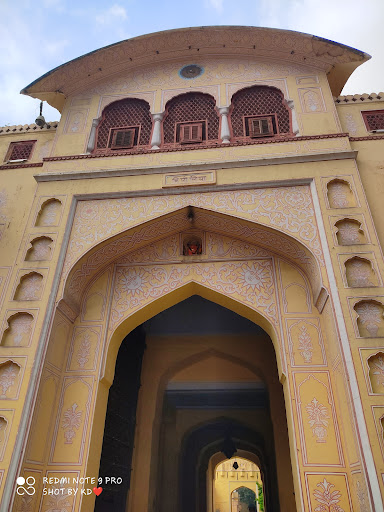
Tripoliya Gate The entrance of the City Palace in Pink City is called the Tripolia Gate which was built in the year 1734. This gate was used as the old entrance to the City Palace. The entrance is also through the grand gateway, with rich decorations named Udai Pol, or Atish Pol, which the stable gate. The other entrance is Virendra Pol which is close to the Mubarak Mahal. The third entrance is the Tripolia Gate, which is reserved for the Royal familIes. Jaleb Chowk and Tripolia Gate are the two main entrances to the City Palace Jaipur. The architect of this opulent structure Colonal Jacob has successfully combined the Mughal, Rajput and European styles of architecture Tripolia Gates are very famous from the time when they were built because the Royal possession used to come out through this gate only. The entrance through this gate is only allowed during celebrations or when some royal guests arrive in the City Palace. The death processions of the Maharaja would also pass through the same gate while those of the Maharanis were taken through other gates to the Chhatris of Maharanis where they were cremated. The gates are also famous because the processions of Teej and Gangaur used to come out through these gates only. Queens and other ladies of the palace can watch the processions through the holes which are built over the gate. The boxes which are visible from the sides of the gate were built by Maharaja Man Singh (1922-70) for making the gates more beautiful. Two canons outside these gates are placed by the present Maharaja Brigadier Bhawani Singh which were earlier lying near the outer gates of City Palace. Through these the beauty of the gates also increased. The first courtyard, while entering from the Tripolia side, houses the Mubarak Mahal, which was built by Maharaja Madho Singh II , late in the 19th century. The Mubarak Mahal, is also known as the Auspicious Palace, which was earlier used as the reception hall for the Maharaja of Jaipur. At present, the ground floor of this Mahal is used as an office and a library while the first floor houses the Textile Museum. Many weapons are kept in the museum which is used by the royal family members. The museum also has various collections of royal costumes, folk embroidery, rare and invaluable Pashmina Shawls, Sanganeri prints and Benaras silk saris. Some of the clothes worn by Maharaja Sawai Madho Singh I are also on display. Tripolia Bazar also gets its name through the Tripolia gate only because it is located near the entrance gate. This is actually the main entrance to the City Palace and Jantar Mantar. Tripolia Bazaar is known for ironware, brassware and carpets. The bazaar has many shops in it utensils, rugs, textiles, furniture, trinkets and range of other items. The Maniharon ka Rasta is also there in this bazaar which is a good place for lac bangles. Apart from this, do look for carpets in this bazaar, as Jaipur is known for colorful and elegantly designed carpets right from the days of Maharaja Sawai Ram Singh II (1835-1880). Known for Indo-Heratic designs, the motifs used in the carpets are human figures, landscapes, flora, fauna and geometric. Durrie, a type of low quality carpet is also available here, nowadays used as an alternative for carpets. The bazaar is closed on Sunday. After the merge of Jaipur state of into Rajasthan, these gates were closed for the general public. However, only the members of the royal family and their guests are allowed to enter that way. Common people and visitors can enter the palace complex only through the Virendra Pol and the Udai Pol or the Atish Pol. I Just Loved This Place ❤️ This place taken my 💓. Highly recommended to all ❤️
THE PAGRI SERIESTHE PAGRI SERIES
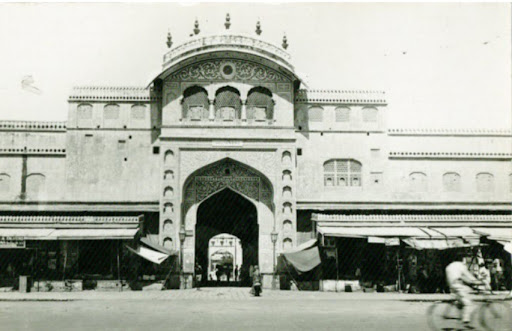
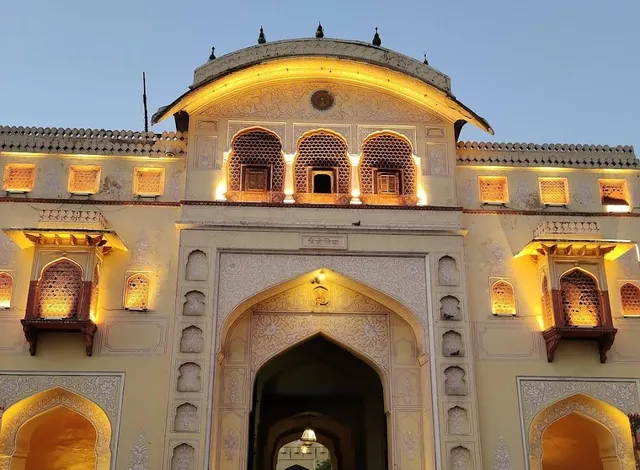
Importance Of Tripolia Gate Tripolia Gate is not open to the public. It is exclusively used by the members of the royal family. I need to make a special mention of the historical & cultural importance of Tripolia Gate. All royal processions would pass from Tripolia Bazar, a tradition that continues to date. Processions of the local festivals like Teej and Gangaur need a special mention. This gate leads to the Chandni Chowk of Jaipur City Palace on one side and Chaura Rasta on the other side. Chandni Chowk has a couple of heritage temples like Pratapeshwar Temple, Brijnidhi Temple, and Anand Bihari Temple. Continuing further is the famous UNESCO World Heritage Site Jantar Mantar and the main entrance to the City Palace. Chaura Rasta is another important bazaar in the walled city area of Jaipur. In comparison to Sirehdyodi entrance, Tripolia Gate is much smaller of the two but its importance weighs the scale in its favor. On the flip side, visitors are not allowed to pass through this gate. The lattice design has also undergone a change. Did I mention the shopfront? In the old days, the tarpaulin was used as awning or sunshade but now a shaded walkway has replaced the shopfront. There are two cannons placed in front of small gates. This also is a recent addition and adds to the beauty of the gate. There is a gaslight lamp-post on either side of the gate in the old picture which is missing in the new picture. They were imported from England during the reign of Maharajah Sawai Ram Singh II and installed at important places in the city. It is difficult to find these original heritage lamp-posts in the city. These were installed before the electricity supply started in Jaipur.  The government has installed its replica at many places including the heritage walkway in Jaipur and Ram Niwas Garden but it is no match for the original design. In the current picture, the high mast light is an eyesore. I often wonder why do we allow such things to be installed in the name of development. Why is aesthetics ignored? These heritage structures attract tourists to the city and we must make sure that the beauty of heritage structures is maintained. There are significant changes in the structure of the Tripolia Gate. In the old picture, small Jharokas or latticed windows are not present. The latticed screen can be seen only on one side. As per available information, these Jharokas were built by Maharajah Sawai Man Singh II, the last ruler of Jaipur. It must have been a beautification drive. These lattices allowed the royal ladies to witness the procession without coming out in the public. It’s an un-dated picture. I have no clue about the photographer but I assume this must be early 1940’s since there is a cyclist in the picture. Tripolia means three Pols. Pol means arched gateway. This gate derives its name from its three Pols. All important ancient city gates of Jaipur have three different Pols. They are joined together with the center Pol being the biggest of the three. In this particular design, the Pols are part of a single structure. The smaller Pols are more of a decorative element. I have already written a post on the variety of Pols in Jaipur. You can read this post by clicking this link – Jaipur Pol (Jaipur Gates)
See more posts
See more posts
hotel
Find your stay

Pet-friendly Hotels in Jaipur Municipal Corporation

Find a cozy hotel nearby and make it a full experience.

Jaipur’s Must-See Attractions: A Rating Guide
Kelly Martin

Kelly Martin

hotel
Find your stay

Affordable Hotels in Jaipur Municipal Corporation

Find a cozy hotel nearby and make it a full experience.

Get the Appoverlay
Get the AppOne tap to find yournext favorite spots!
Tripoliya Gate The entrance of the City Palace in Pink City is called the Tripolia Gate which was built in the year 1734. This gate was used as the old entrance to the City Palace. The entrance is also through the grand gateway, with rich decorations named Udai Pol, or Atish Pol, which the stable gate. The other entrance is Virendra Pol which is close to the Mubarak Mahal. The third entrance is the Tripolia Gate, which is reserved for the Royal familIes. Jaleb Chowk and Tripolia Gate are the two main entrances to the City Palace Jaipur. The architect of this opulent structure Colonal Jacob has successfully combined the Mughal, Rajput and European styles of architecture Tripolia Gates are very famous from the time when they were built because the Royal possession used to come out through this gate only. The entrance through this gate is only allowed during celebrations or when some royal guests arrive in the City Palace. The death processions of the Maharaja would also pass through the same gate while those of the Maharanis were taken through other gates to the Chhatris of Maharanis where they were cremated. The gates are also famous because the processions of Teej and Gangaur used to come out through these gates only. Queens and other ladies of the palace can watch the processions through the holes which are built over the gate. The boxes which are visible from the sides of the gate were built by Maharaja Man Singh (1922-70) for making the gates more beautiful. Two canons outside these gates are placed by the present Maharaja Brigadier Bhawani Singh which were earlier lying near the outer gates of City Palace. Through these the beauty of the gates also increased. The first courtyard, while entering from the Tripolia side, houses the Mubarak Mahal, which was built by Maharaja Madho Singh II , late in the 19th century. The Mubarak Mahal, is also known as the Auspicious Palace, which was earlier used as the reception hall for the Maharaja of Jaipur. At present, the ground floor of this Mahal is used as an office and a library while the first floor houses the Textile Museum. Many weapons are kept in the museum which is used by the royal family members. The museum also has various collections of royal costumes, folk embroidery, rare and invaluable Pashmina Shawls, Sanganeri prints and Benaras silk saris. Some of the clothes worn by Maharaja Sawai Madho Singh I are also on display. Tripolia Bazar also gets its name through the Tripolia gate only because it is located near the entrance gate. This is actually the main entrance to the City Palace and Jantar Mantar. Tripolia Bazaar is known for ironware, brassware and carpets. The bazaar has many shops in it utensils, rugs, textiles, furniture, trinkets and range of other items. The Maniharon ka Rasta is also there in this bazaar which is a good place for lac bangles. Apart from this, do look for carpets in this bazaar, as Jaipur is known for colorful and elegantly designed carpets right from the days of Maharaja Sawai Ram Singh II (1835-1880). Known for Indo-Heratic designs, the motifs used in the carpets are human figures, landscapes, flora, fauna and geometric. Durrie, a type of low quality carpet is also available here, nowadays used as an alternative for carpets. The bazaar is closed on Sunday. After the merge of Jaipur state of into Rajasthan, these gates were closed for the general public. However, only the members of the royal family and their guests are allowed to enter that way. Common people and visitors can enter the palace complex only through the Virendra Pol and the Udai Pol or the Atish Pol. I Just Loved This Place ❤️ This place taken my 💓. Highly recommended to all ❤️
Kuldeep Sharma

Kuldeep Sharma

hotel
Find your stay

The Coolest Hotels You Haven't Heard Of (Yet)

Find a cozy hotel nearby and make it a full experience.

hotel
Find your stay

Trending Stays Worth the Hype in Jaipur Municipal Corporation

Find a cozy hotel nearby and make it a full experience.

Importance Of Tripolia Gate Tripolia Gate is not open to the public. It is exclusively used by the members of the royal family. I need to make a special mention of the historical & cultural importance of Tripolia Gate. All royal processions would pass from Tripolia Bazar, a tradition that continues to date. Processions of the local festivals like Teej and Gangaur need a special mention. This gate leads to the Chandni Chowk of Jaipur City Palace on one side and Chaura Rasta on the other side. Chandni Chowk has a couple of heritage temples like Pratapeshwar Temple, Brijnidhi Temple, and Anand Bihari Temple. Continuing further is the famous UNESCO World Heritage Site Jantar Mantar and the main entrance to the City Palace. Chaura Rasta is another important bazaar in the walled city area of Jaipur. In comparison to Sirehdyodi entrance, Tripolia Gate is much smaller of the two but its importance weighs the scale in its favor. On the flip side, visitors are not allowed to pass through this gate. The lattice design has also undergone a change. Did I mention the shopfront? In the old days, the tarpaulin was used as awning or sunshade but now a shaded walkway has replaced the shopfront. There are two cannons placed in front of small gates. This also is a recent addition and adds to the beauty of the gate. There is a gaslight lamp-post on either side of the gate in the old picture which is missing in the new picture. They were imported from England during the reign of Maharajah Sawai Ram Singh II and installed at important places in the city. It is difficult to find these original heritage lamp-posts in the city. These were installed before the electricity supply started in Jaipur.  The government has installed its replica at many places including the heritage walkway in Jaipur and Ram Niwas Garden but it is no match for the original design. In the current picture, the high mast light is an eyesore. I often wonder why do we allow such things to be installed in the name of development. Why is aesthetics ignored? These heritage structures attract tourists to the city and we must make sure that the beauty of heritage structures is maintained. There are significant changes in the structure of the Tripolia Gate. In the old picture, small Jharokas or latticed windows are not present. The latticed screen can be seen only on one side. As per available information, these Jharokas were built by Maharajah Sawai Man Singh II, the last ruler of Jaipur. It must have been a beautification drive. These lattices allowed the royal ladies to witness the procession without coming out in the public. It’s an un-dated picture. I have no clue about the photographer but I assume this must be early 1940’s since there is a cyclist in the picture. Tripolia means three Pols. Pol means arched gateway. This gate derives its name from its three Pols. All important ancient city gates of Jaipur have three different Pols. They are joined together with the center Pol being the biggest of the three. In this particular design, the Pols are part of a single structure. The smaller Pols are more of a decorative element. I have already written a post on the variety of Pols in Jaipur. You can read this post by clicking this link – Jaipur Pol (Jaipur Gates)
THE PAGRI SERIES

THE PAGRI SERIES

See more posts
See more posts

Reviews of Tripolia Gate

4.4
(2,867)
avatar
5.0
4y

Tripoliya Gate The entrance of the City Palace in Pink City is called the Tripolia Gate which was built in the year 1734. This gate was used as the old entrance to the City Palace. The entrance is also through the grand gateway, with rich decorations named Udai Pol, or Atish Pol, which the stable gate. The other entrance is Virendra Pol which is close to the Mubarak Mahal. The third entrance is the Tripolia Gate, which is reserved for the Royal familIes. Jaleb Chowk and Tripolia Gate are the two main entrances to the City Palace Jaipur. The architect of this opulent structure Colonal Jacob has successfully combined the Mughal, Rajput and European styles of architecture

Tripolia Gates are very famous from the time when they were built because the Royal possession used to come out through this gate only. The entrance through this gate is only allowed during celebrations or when some royal guests arrive in the City Palace. The death processions of the Maharaja would also pass through the same gate while those of the Maharanis were taken through other gates to the Chhatris of Maharanis where they were cremated.

The gates are also famous because the processions of Teej and Gangaur used to come out through these gates only. Queens and other ladies of the palace can watch the processions through the holes which are built over the gate. The boxes which are visible from the sides of the gate were built by Maharaja Man Singh (1922-70) for making the gates more beautiful. Two canons outside these gates are placed by the present Maharaja Brigadier Bhawani Singh which were earlier lying near the outer gates of City Palace. Through these the beauty of the gates also increased. The first courtyard, while entering from the Tripolia side, houses the Mubarak Mahal, which was built by Maharaja Madho Singh II , late in the 19th century. The Mubarak Mahal, is also known as the Auspicious Palace, which was earlier used as the reception hall for the Maharaja of Jaipur. At present, the ground floor of this Mahal is used as an office and a library while the first floor houses the Textile Museum. Many weapons are kept in the museum which is used by the royal family members. The museum also has various collections of royal costumes, folk embroidery, rare and invaluable Pashmina Shawls, Sanganeri prints and Benaras silk saris. Some of the clothes worn by Maharaja Sawai Madho Singh I are also on display.

Tripolia Bazar also gets its name through the Tripolia gate only because it is located near the entrance gate. This is actually the main entrance to the City Palace and Jantar Mantar. Tripolia Bazaar is known for ironware, brassware and carpets. The bazaar has many shops in it utensils, rugs, textiles, furniture, trinkets and range of other items. The Maniharon ka Rasta is also there in this bazaar which is a good place for lac bangles. Apart from this, do look for carpets in this bazaar, as Jaipur is known for colorful and elegantly designed carpets right from the days of Maharaja Sawai Ram Singh II (1835-1880). Known for Indo-Heratic designs, the motifs used in the carpets are human figures, landscapes, flora, fauna and geometric. Durrie, a type of low quality carpet is also available here, nowadays used as an alternative for carpets. The bazaar is closed on Sunday.

After the merge of Jaipur state of into Rajasthan, these gates were closed for the general public. However, only the members of the royal family and their guests are allowed to enter that way. Common people and visitors can enter the palace complex only through the Virendra Pol and the Udai Pol or the Atish Pol. I Just Loved This Place ❤️ This place taken my 💓. Highly...

   Read more
avatar
5.0
44w

Importance Of Tripolia Gate Tripolia Gate is not open to the public. It is exclusively used by the members of the royal family. I need to make a special mention of the historical & cultural importance of Tripolia Gate. All royal processions would pass from Tripolia Bazar, a tradition that continues to date. Processions of the local festivals like Teej and Gangaur need a special mention. This gate leads to the Chandni Chowk of Jaipur City Palace on one side and Chaura Rasta on the other side. Chandni Chowk has a couple of heritage temples like Pratapeshwar Temple, Brijnidhi Temple, and Anand Bihari Temple. Continuing further is the famous UNESCO World Heritage Site Jantar Mantar and the main entrance to the City Palace. Chaura Rasta is another important bazaar in the walled city area of Jaipur. In comparison to Sirehdyodi entrance, Tripolia Gate is much smaller of the two but its importance weighs the scale in its favor. On the flip side, visitors are not allowed to pass through this gate. The lattice design has also undergone a change. Did I mention the shopfront? In the old days, the tarpaulin was used as awning or sunshade but now a shaded walkway has replaced the shopfront. There are two cannons placed in front of small gates. This also is a recent addition and adds to the beauty of the gate.

There is a gaslight lamp-post on either side of the gate in the old picture which is missing in the new picture. They were imported from England during the reign of Maharajah Sawai Ram Singh II and installed at important places in the city. It is difficult to find these original heritage lamp-posts in the city. These were installed before the electricity supply started in Jaipur.  The government has installed its replica at many places including the heritage walkway in Jaipur and Ram Niwas Garden but it is no match for the original design. In the current picture, the high mast light is an eyesore. I often wonder why do we allow such things to be installed in the name of development. Why is aesthetics ignored? These heritage structures attract tourists to the city and we must make sure that the beauty of heritage structures is maintained.

There are significant changes in the structure of the Tripolia Gate.

In the old picture, small Jharokas or latticed windows are not present. The latticed screen can be seen only on one side. As per available information, these Jharokas were built by Maharajah Sawai Man Singh II, the last ruler of Jaipur. It must have been a beautification drive. These lattices allowed the royal ladies to witness the procession without coming out in the public.

It’s an un-dated picture. I have no clue about the photographer but I assume this must be early 1940’s since there is a cyclist in the picture.

Tripolia means three Pols. Pol means arched gateway. This gate derives its name from its three Pols. All important ancient city gates of Jaipur have three different Pols. They are joined together with the center Pol being the biggest of the three. In this particular design, the Pols are part of a single structure. The smaller Pols are more of a decorative element. I have already written a post on the variety of Pols in Jaipur. You can read this post by clicking this link – Jaipur Pol...

   Read more
avatar
5.0
6y

Tripolia Gates are very famous from the time when they were built because the Royal possession used to come out through this gate only. The entrance through this gate is only allowed during celebrations or when some royal guests arrive in the City Palace. The death processions of the Maharaja would also pass through the same gate while those of the Maharanis were taken through other gates to the Chhatris of Maharanis where they were cremated. The gates are also famous because the processions of Teej and Gangaur used to come out through these gates only. Queens and other ladies of the palace can watch the processions through the holes which are built over the gate. The boxes which are visible from the sides of the gate were built by Maharaja Man Singh (1922-70) for making the gates more beautiful. Two canons outside these gates are placed by the present Maharaja Brigadier Bhawani Singh which were earlier lying near the outer gates of City Palace. Through these the beauty of the gates also increased. The first courtyard, while entering from the Tripolia side, houses the Mubarak Mahal, which was built by Maharaja Madho Singh II , late in the 19th century. The Mubarak Mahal, is also known as the Auspicious Palace, which was  earlier used as  the reception hall for the Maharaja of Jaipur. At present, the ground floor of this Mahal is used as an office and a library while the first floor houses the Textile Museum. Many weapons are kept in the museum which is used by the royal family members. The museum also has various collections of royal costumes, folk embroidery, rare and invaluable Pashmina Shawls, Sanganeri prints and Benaras silk saris. Some of the clothes worn by Maharaja Sawai Madho Singh I are also on display. Tripolia Bazar also gets its name through the Tripolia gate only because it is located near the entrance gate. This is actually the main entrance to the City Palace and Jantar Mantar. Tripolia Bazaar is known for ironware, brassware and carpets. The bazaar has many shops in it utensils, rugs, textiles, furniture, trinkets and range of other items. The Maniharon ka Rasta is also there in this bazaar which is a good place for lac bangles. Apart from this, do look for carpets in this bazaar, as Jaipur is known for colorful and elegantly designed carpets right from the days of Maharaja Sawai Ram Singh II (1835-1880). Known for Indo-Heratic designs, the motifs used in the carpets are human figures, landscapes, flora, fauna and geometric. Durrie, a type of low quality carpet is also available here, nowadays used as an alternative for carpets. The bazaar is closed on Sunday. After the merge of Jaipur state of into Rajasthan, these gates were closed for the general public. However, only the members of the royal family and their guests are allowed to enter that way. Common people and visitors can enter the palace complex only through the Virendra Pol and the Udai Pol or...

   Read more
Page 1 of 7
Previous
Next