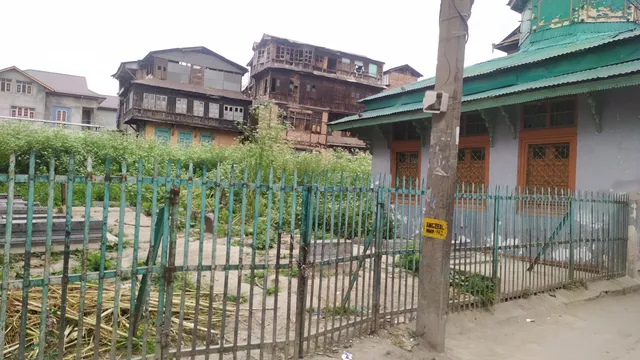
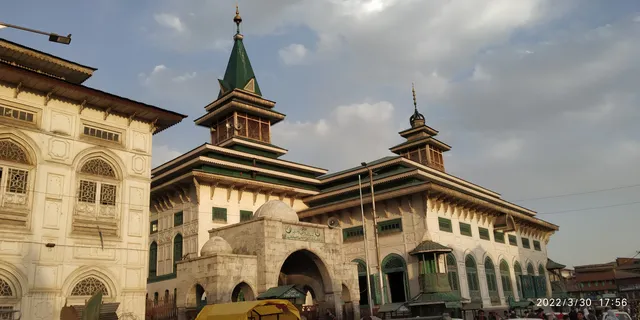
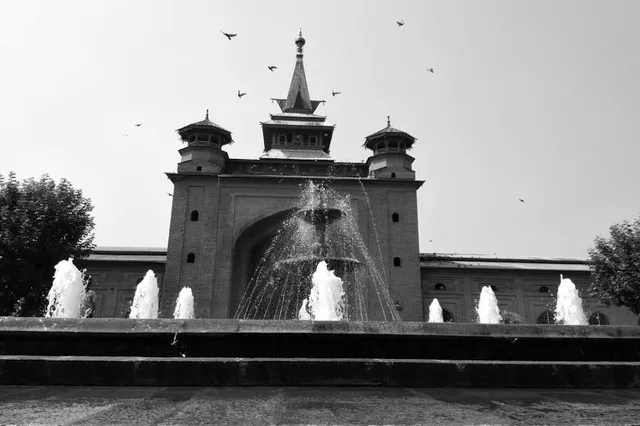
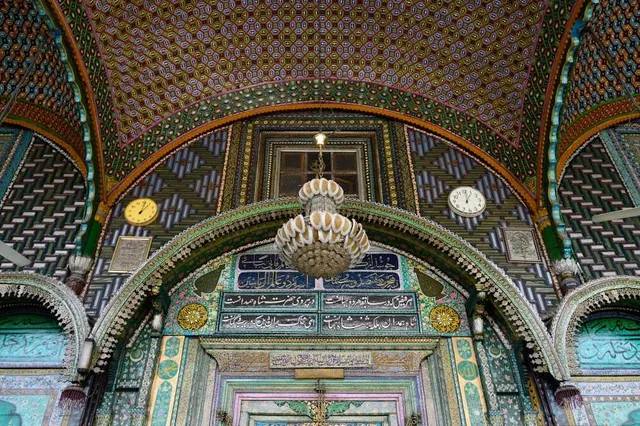
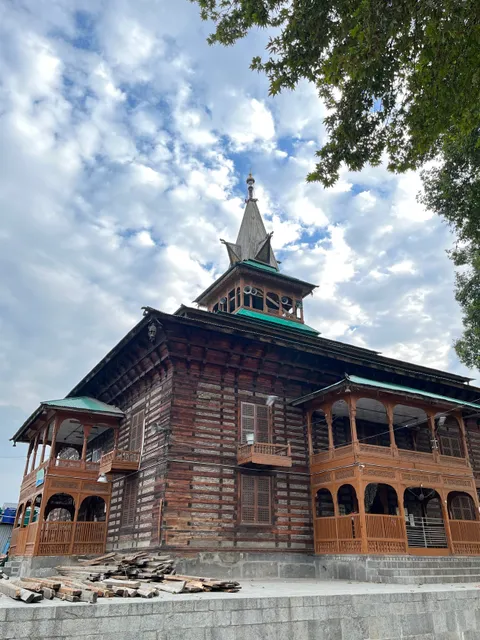
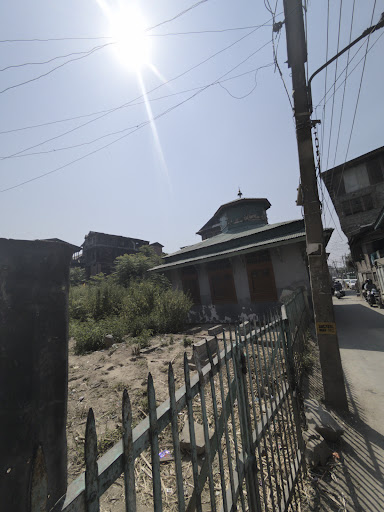
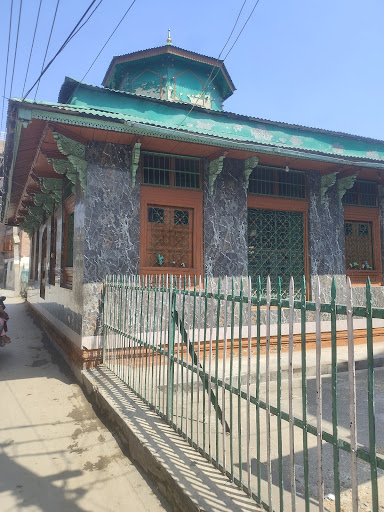
Roza Bal or Rauza Bal or Rauza Bol or Raza Bal, which means “Tomb of the Prophet”.
There are two tombs inside the Roza Bal (which is small wooden mausoleum) one tomb is of Ziarati Hazrati Youza Asouph or Yuz Asaph (or Asaf) and another grave is of Syed Nasir-u-Din (Islamic saint, a descendant of Imam Moosa Ali Raza, said to be a great devotee of Jesus, who buried here in 1451).
As per some ancient records, that indicate that the grave of Youza Asouph or Yuz Asaph (or Asaf) is to be as far back as 112 CE.
The Hebrew name of Jesus was Yuza, in Arabic or in the Koran his name was Hazrat Isa or Isa and Issa in Tibetan. Farhang-Asafia, which explains how Jesus healed some leper and then became Asaf (purified or healed) and the word Yuz mean “Leader”. Yuz Asaph or Youza Asouph mean “Leader of the Healed” which pointed to Jesus Christ.
The grave of Yuz Asaph also points east to west, according to Jewish tradition but the Muslim tombs are always points on the north-south axis.
The inner chamber of the grave of Yuz Asaph, there is a stone with the imprint of two feet showing what appear to be nail wounds. The wound on the left foot is round shaped and the wound on the right foot is an arc-shaped. As all we know that from his crucifixion Jesus would have suffered the same. It is a custom to place candles around the gravestones and when Dr. Fida Hassnain removed the wax, he discovered the footprint, also he found a cross and rosary. Many people feel that these are the signs for the identity of who is buried in Roza Bal.
The crucifixion of Jesus Christ is also mysterious. People die on the cross by starvation or suffocation. When the ribs of the crucified person press down on the lungs that made the person no longer to breathe and that may take several days. Jesus was nailed to the cross in the early afternoon of a Friday and taken down from the cross after four or five hours. Every year in the Philippines and Mexico there are commemorations of Jesus’ crucifixion where people are crucified on their own wish. They survive very easily. So it is most usual that Jesus was alive after the crucifixion.
Also, some records point his presence and some names of places that also relate his presence in Afghanistan and Pakistan. The Acts of Thomas describe the journey of Jesus and Thomas in Taxila (Now Pakistan) at the court of King Gundafor in the 26th year of his rule. That would be about 47 CE.
When Jesus came to Kashmir, he came with a group of followers and along with his mother “Mary”. During that time Mother Mary was too old. There is a small town called Mari, or Murree which is situated 170 kilometers west of Srinagar on the border of Kashmir near Rawalpindi. In this town, there is an ancient grave called Mai Mari Da Asthan, which meaning is “The Final Resting Place of Mother Mary”. This tomb is also in Jewish style, aligned on the east-west line. Before Jesus Christ reached Kashmir, she would have died. Still today the grave is maintained by Muslims as the resting place of Jesus’s mother. It is said that after the death of his mother Jesus traveled to Ashmuqam from the pass now called Yuz Marg, which is near to Pahalgam and reached...
Read moreDual Tombs: The shrine contains two tombs: one of Hazrat Yuz Asaf (also known as Yuz Asaf) and the other of Syed Naseeruddin, an Islamic saint and descendant of the Shia Imam Ali Raza. Cultural Landmark: Roza Bal is a significant site in Srinagar's Khanyar quarter, known for its tranquil ambiance and cultural importance, attracting both local and international visitors. The Claim of Jesus's Tomb Mirza Ghulam Ahmad's Theory: In 1899, the founder of the Ahmadiyya movement, Mirza Ghulam Ahmad, published his theory that the Roza Bal is the tomb of Jesus Christ, who he claimed survived crucifixion, traveled to India, and lived in Kashmir for many years. Evidence and Interpretations: Proponents of this theory point to several pieces of evidence, such as the Hebrew name Yuza, meaning "son of Joseph," Yuz Asaf's meaning "Leader of the Healed," and a rock carving in the shrine that shows wounds on the feet, suggesting crucifixion injuries. Historical Context: The theory gained traction as the legend of Jesus's "missing years" in the East, a concept present in some minority traditions, was linked to the shrine. Modern Perspective Myth or Belief: The claim remains controversial, with many historians and scholars dismissing it as a myth or urban legend, while it is a significant belief within the Ahmadiyya community and for some Christians. Cultural and Spiritual Attraction: Despite the differing views on its historical claim, the shrine remains an important religious and cultural landmark, attracting visitors who are drawn to its historical significance and...
Read moreI first found this sacred, Holy place in 1994, and saw a flat stone there, that was approximately 1/2 meter square, and 6 centimeters thick. It had foot prints with crucifiction wound scars in them, carved into the surface of that stone.
So this is the tomb where Yeshua (a.k.a. Jesus of Nazareth) was buried, when he passing away at the age of approximately 120 years, after having SURVIVED a murder attempt by crucifixion, in Jerusalem, at the age of 33 years. Read Professor Fida Hasnain's book: "A Search for the Historical Jesus."
After Jesus passed on, his much SMALLER stone tomb, slowly sank into the, then soft, muddy ground, on the banks of Dahl lake. When Muslims first arrived there, many years later, the lake had partly dried up, and so was smaller. The flat stone roof of Jesus' tomb was, by then, less than one meter above the ground. So the building in which the Muslim holy man is entombed, was built ABOVE the much smaller,...
Read more