A mind-boggling collection suffering from a lack of maintenance and empathy
Date of visit: Dec 26, 2024. 2pm-4pm.
This museum could have been at par with others renowned worldwide if the authorities had taken some time to ensure that basic museum etiquettes are being followed. Clearly the funds accumulated from the tickets sold are going somewhere else and not the maintenance of the building or improvement of operations and management. Even getting inside the foyer is a task because of how the queue for those with online tickets criss-crosses the queue for those purchasing tickets on the spot. It's no less than a marketplace.
Photography:- Tickets for mobile photography and camera photography are separate, and video recording of any kind is disallowed. *Some galleries prohibit photography, ex: Egyptian gallery and Bharhut gallery.
Wayfinding:- Navigating inside the museum was a subpar experience. There weren't many experienced people to ask around either about where a certain collection could be located.
Pre- and Protohistory gallery:- An almost endless and stunning collection of fossils and remains dating back to nearly 300 million years. Unfortunately, most of the artifacts lacked information understandable by common lay people. It would have been a much more enriching experience if some trivia had accompanied them to understand their significance.
Egypt gallery:- This was disappointing because it's plain overhyped. It's so dark inside that the mummy and sarcophagus are barely visible. There were more photographs and illustrations of ancient Egyptian artifacts than the artifacts themselves, but the few artifacts that were there were very well preserved. There were canopic jars, shabti figures and stone-carvings to name a few. As usual, management was deplorable. The space was very small, people were falling over each other trying get a good look at the mummy, and we couldn't get enough time to look and absorb the stuff there.
Archaeology gallery:- There are sculptures dating back to a plethora of very ancient times and dynasties, but the most grand ones are on display along the corridors, with no barricading to prevent people from getting too close, and no preventive measures to stop people from touching them, no protection from dust and pigeon poop. Needless to say, you'd find people running their fingers along these sculptures posing serious threat to their maintenance, kids climbing up and sitting on the pedestals supporting the sculptures, and immense crowding around them which could lead to a mishap anytime. This was the case even inside the sculpture gallery. The overseers were a bunch of useless lazy men who never budged from wherever their seats were stationed, so unless some rule was being flouted within their direct view, they couldn't care less. *This gallery provides entry to a bunch of other galleries listed separately in the website, namely the Bharhut gallery, Gandhara gallery, and Coin gallery. The only other way to access these is an almost invisible entrance at the security check in.
Recommendations Purchase a ticket online from the museum website (E-shop page) to avoid standing in line there. Reserve at least 3 hours to fully explore and appreciate the museum. There is apparently a cafe here as well. Make sure to ask the staff there where your desired galleries are, because you might miss out on some if you rely on the direction signage. A lot of the galleries are listed as individual entities in the website but they're in fact nested...
Read moreMy Visit Experience
I visited the Indian Museum, Kolkata on a weekday afternoon (arrived 11:00 am, stayed 2.5 hrs). Here’s how it felt from my perspective:
Highlights I absolutely enjoyed:
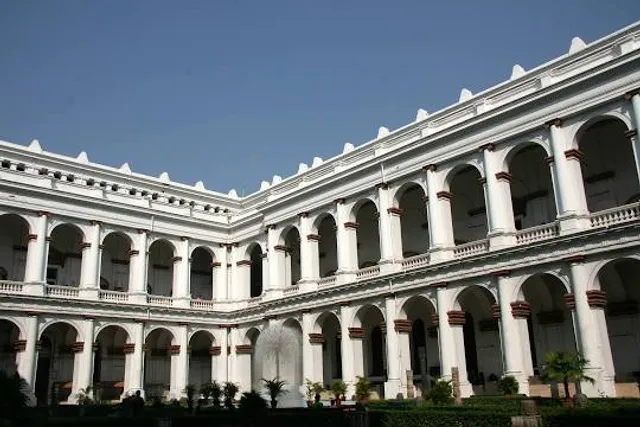
Walking into the museum, the historic building itself struck me—classic architecture, high ceilings, spacious halls. The museum is noted as the ninth-oldest museum in the world and the largest museum in India.
The variety of artefacts is impressive. From ancient Indian sculptures, Buddhist relics, to the Egyptian mummy in the Egypt Gallery—every gallery held something distinctive. One blog noted: “As I entered … the six major sections – Art, Archaeology, Anthropology, Geology, Zoology and Botany.”
For history and culture lovers, this place is a must-visit. One visitor review said:
“It was an amazing experience … ancient art, sculptures, traditions, attires and evolution of humans.”
The museum is quite central and accessible (near Park Street / Sudder Street area), making it easy to include in a city-day itinerary.
Things I observed that could be improved:
Some galleries appeared a bit dated: lighting in a few corners was dim, and display information signage seemed sparse or worn. A Reddit comment pointed out:
“The building is impressive. But TBH, it is not a tourist attractive museum … the presentation and maintenance is very poor.”
Because the museum has so many galleries (60+ as referenced) , visiting all in one go can be tiring. My legs felt it, so comfortable shoes and pacing is recommended.
Food / refreshment inside is minimal; the museum has amenities but you may want to plan snacking before or after.
✅ Key Facts & Special Features
Founded in 1814, by the Asiatic Society of Bengal.
Collection size: over 2.5 million objects in many disciplines.
It has six major sections: Art, Archaeology, Anthropology, Geology, Zoology, Botany.
Notable galleries: Egypt Gallery (with mummy & mummified hand) , Coin Gallery (50,000+ coins) , Decorative Arts section, etc.
Visitor Info: Open Tuesday to Sunday, 10:00 am to 6:00 pm; closed on Mondays and certain public holidays.
Entry Fee: Varies; different charges for adults, children, and for photography; check onsite.
📝 Practical Visitor Tips
Time needed: Minimum 2–3 hours to comfortably explore key galleries.
What to carry: Comfortable shoes, water bottle, camera (note that photography may incur additional fee in some galleries).
Ideal time to visit: Early in the morning (opening time) or just after lunch—less crowd in mid-day.
Nearby to combine: Since it’s centrally located near Park Street / Sudder Street, you could add a walk around New Market, or a café stop afterwards.
For students/families: Many artefacts and galleries will captivate kids and adults alike.
Note about condition: While the museum is historic and rich, some visitors report the need for better maintenance. So treat it as a heritage institution rather than a slick modern museum.
🎯 Final Thoughts
If you’re in Kolkata and want a deep dose of history, culture, art and natural-history all in one place, the Indian Museum is a top pick. I’d rate it 4.4 / 5, because it delivers enormously on heritage and content, though some galleries could benefit from modernization and better visitor-amenities.
Whether you’re a history buff, student, family or solo traveller, I recommend visiting the Indian Museum—it’s a landmark institution that gives you a real sense of India’s rich past and cultural richness.
Yes, recommend...
Read moreInside the museum, a 4,000-year-old Egyptian mummy is preserved and displayed, having been brought to Kolkata in 1882 as a gift from the tombs of kings in Gourvah, Egypt. Alongside it, Canopic jars and a mummified hand are also kept, with the latter having been donated in 1844. Fossils, particularly from the invertebrate section, have been meticulously showcased to help visitors understand the evolution of life on Earth. Specimens from across eras are arranged in a way that allows history to be seen through stone and bone. In the mammal section, the skeleton of a common minke whale, which was stranded along the coast of Myanmar in 1804, has been prominently placed, evoking wonder at the scale and diversity of Earth's creatures.
Traditional crafts and cultural items from Kolkata and beyond have been preserved in the decorative art section, where lacquer items, ivory artifacts, bronze helmets, betel boxes, and wooden mirror frames have been displayed to highlight intricate workmanship. The textile section holds garments and fabrics primarily from the 19th century, many of which were woven on handlooms and now give insights into India’s rich textile traditions. These pieces have been collected from various regions and cultures, each telling a story of technique and identity.
Birds from many regions, including the peacock, ostrich, penguin, and ring-necked pheasant, have been taxidermized and placed within the bird gallery, where they can be observed up close by students, researchers, and nature lovers. The mammal gallery also includes a wide selection of taxidermied animals, as well as bones and fossils, creating a comprehensive picture of wildlife both from the past and the present.
The museum remains open from Tuesday to Sunday, between 10:00 AM and 6:00 PM, while it remains closed on Mondays and major public holidays such as Republic Day, Independence Day, Gandhi Jayanti, Holi, Dussehra, Diwali, and Id-ul-Fitr. Entry is allowed upon the purchase of tickets, which are priced at INR 75 for Indian adults, INR 20 for visitors below the age of 18, and INR 500 for foreign nationals. Photography is permitted for an extra charge, with smartphone cameras requiring a fee of INR 50 and DSLR cameras INR 100, both subject to 18% GST.
From Kolkata Railway Station, the museum can be reached by taxi or app-based cab services, which usually cost between INR 150 and 200, depending on the traffic. Alternatively, the metro can be taken from Shyambazar Metro Station to Park Street Metro Station, which is located within walking distance of the museum. From the Netaji Subhas Chandra Bose International Airport, the museum is approximately 16 kilometers away and can be accessed by taxi or cab services with a fare ranging from INR 300 to 500. For those seeking more economical options, buses to Dum Dum Metro Station and then the metro to Park Street are also available.
The Indian Museum is not just a collection of artifacts but is considered a living archive of India’s diverse cultural and scientific history. Visitors are given a chance to walk through time, to stand face-to-face with ancient relics, fossils, and works of art that have been preserved with care and purpose. An experience both educational and awe-inspiring is offered here, and the visit is remembered long after the doors are exited. The museum’s significance as a national and international heritage institution continues to grow, and it remains one of the most important destinations for anyone...
Read more