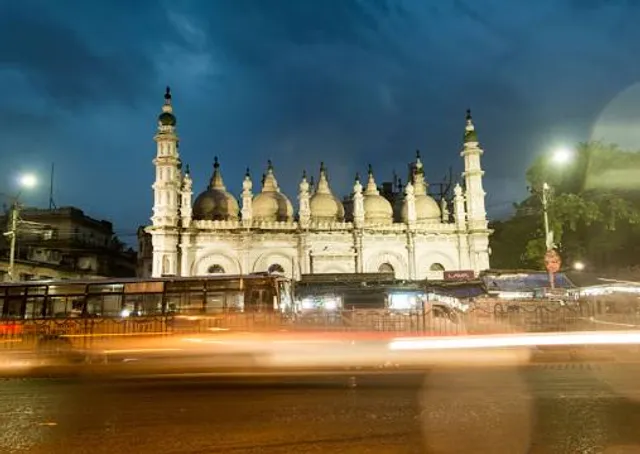
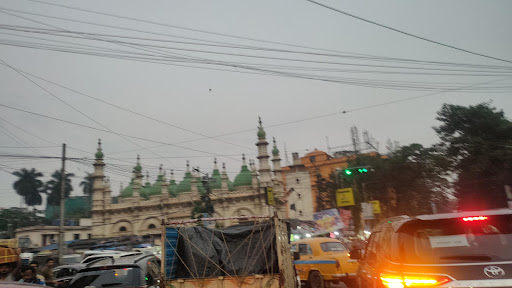
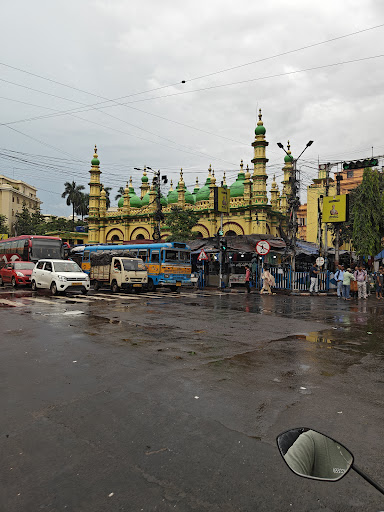
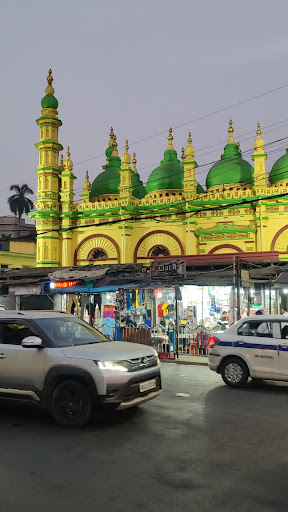
ٹیپو سلطان مسجد دھرم تلہ کولکاتا Tipu Sultan Masjid Dharmtalla Kolkata. قلب کولکاتا میں واقع ایک تاریخی مسجد جو انیسویں صدی عیسوی میں تعمیر کی گئی۔ Tipu Sultan Masjid, also known as the Tipu Sultan Mosque, is a historical mosque located in Kolkata, West Bengal, India. It is one of the largest and most prominent mosques in the city and is named after the famous ruler of Mysore, Tipu Sultan.
The mosque was built in 1832 by Prince Ghulam Mohammed, the youngest son of Tipu Sultan, as a tribute to his father. The construction of the mosque was completed in just two years, and it is said to have been modeled after the Nakhoda Mosque in Kolkata. The mosque is a fine example of Islamic architecture and is renowned for its beautiful minarets and domes.
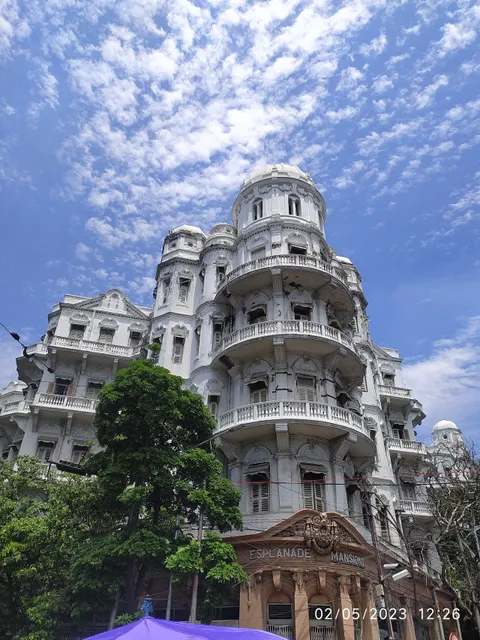
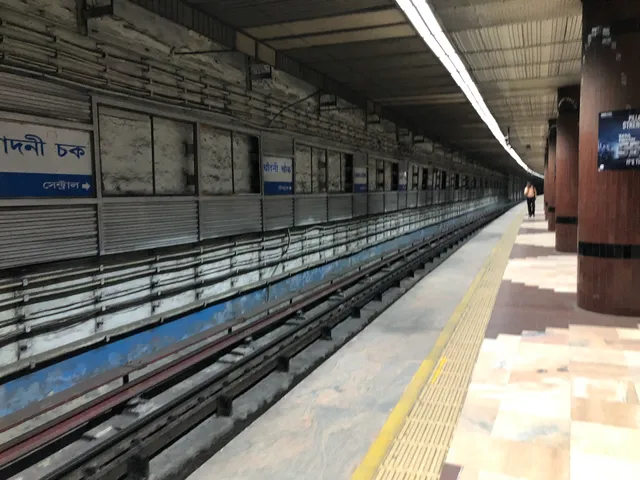
The Tipu Sultan Masjid is located on a busy street in the heart of Kolkata's business district. The mosque is surrounded by a bustling market and is always crowded with worshippers and visitors. The mosque is easily accessible by public transport and is just a short walk from the Esplanade metro station.
The mosque is built on a raised platform and is accessed through a flight of stairs. The main prayer hall of the mosque is spacious and can accommodate over 1,000 worshippers at a time. The hall is decorated with intricate designs and calligraphy, and the walls are adorned with beautiful paintings and murals.
The mosque has three domes and two minarets that are 129 feet high. The minarets have spiral staircases inside them, which lead to the top from where one can have a breathtaking view of the city. The mosque also has a large courtyard, where worshippers can gather for prayers and other religious activities.
The mosque is open to visitors of all religions and is a popular tourist destination in Kolkata. Visitors are advised to dress modestly and remove their shoes before entering the mosque. The mosque also has a separate section for women to offer their prayers.
The mosque has undergone several renovations and restorations over the years. The latest restoration was carried out in 2019, which included repairs to the minarets and domes, and restoration of the paintings and murals.
The Tipu Sultan Masjid is not just a place of worship but also a symbol of the rich cultural heritage of India. It is a testament to the architectural and engineering skills of the craftsmen of the past and stands as a reminder of the contributions of Tipu Sultan to the cultural and social fabric of India.
In conclusion, the Tipu Sultan Masjid is a magnificent mosque that is steeped in history and tradition. It is a must-visit destination for anyone interested in exploring the rich cultural heritage of...
Read moreThe Tipu Sultan Shahi Mosque (also known as Tipu Sultan Masjid) is a famous mosque in Kolkata, India.1 Located at 185 Dhartamtalla Street, the mosque is a relic of architectural and cultural heritage. Unlike usual Islamic culture, people from all sections of society and religions are obliged to visit and take pictures of this historical premises.This building was built in 1832 by Prince Ghulam Mohammed, the youngest son of Tipu Sultan. An identical mosque, which was later built by the Waqf committee is at Tollygunge. At first, Gholam Mohammed used his power and purchased a land in the central position of Calcutta and Built this mosque in 1842, in memory of his father Tipu Sultan. A news was also published on the occasion of the purchase. This mosque is a relic of the architectural and cultural heritage of Kolkata. In early 80’s Tipu Sultan Masjid was damaged due to constructions works of Metro Railway in the Esplanade area. The move was regarded as a highly communal stand of the state govt. Nonetheless, after that, fearing backlash, a committee was formed to repair the mosque. Afterwards, the Mosque was restored with the joint effort of Tipu Sultan Shahi Masjid Protection & Welfare Committee and the Metro Railway.“Tipu Sultan” (20 November 1750 – 4 May 1799) was a ruler of Mysore and well known as a scholar and poet. Tipu Sultan Mosque was built here in Calcutta (now Kolkata) by his 11th son Prince Gholam Mohammed. They were the ruler of Mysore but why his youngest son built this mosque in memory of his father, far away from Mysore here in Calcutta. There is a history behind this.
Haider Ali was the father of Tipu Sultan and when the Vijaynagar Kingdom was dissolute, the kings of Yadava dynasty constituted the state of Mysore. During that time Haider Ali was Naib of the state and in 1755 he was appointed as Foujdar of Mysore. During that time, Haider Ali usurped his power and occupied Mysore. After his father Tipu Sultan became ruler and six years after Tipu's death, the entire family was thrown to Calcutta by the British Government. During that period the capital of Mysore Srirangapatnam was captured by British Army. Son of Tipu Sultan, Gholam Mohammed was a kid when arrived in Calcutta. He was a man of varied qualities. He was also involved in many public works and associated with a committee formed for maintenance of roadways...
Read moreTipu Sultan Mosque, situated in the heart of Kolkata, West Bengal, is a revered Islamic shrine and a testament to the city's rich cultural heritage. Located on 185 Dharmatala Street, this magnificent mosque stands as a symbol of unity, peace, and communal harmony.
History
Built in 1832 by Prince Ghulam Mohammed, the youngest son of Tipu Sultan, the Tiger of Mysore, this mosque was dedicated to his father's memory. Tipu Sultan, a legendary ruler of Mysore, fought against British colonial rule, and his legacy inspires patriotism and courage.
Architecture
The mosque's stunning architecture blends Islamic, Persian, and Indian styles. Its imposing structure, adorned with intricate arches, domes, and minarets, is a masterpiece of Mughal design. The interior features beautiful calligraphy, ornate frescoes, and elegant chandeliers.
Significance
Tipu Sultan Mosque holds immense spiritual and cultural significance:
Prayer and worship: A sacred space for Muslims to offer prayers. Community hub: Hosts various social and cultural events. Historical landmark: Attracts tourists and history enthusiasts. Interfaith harmony: Welcomes visitors from all faiths.
Preservation and Restoration
In 2012, the mosque underwent extensive restoration, ensuring its structural integrity and preserving its original grandeur. The West Bengal Waqf Board and the state government collaborated to maintain this heritage site.
Tourist Attraction
Tipu Sultan Mosque is a popular tourist destination:
Guided tours: Explore the mosque's history and architecture. Photography: Capture stunning images of the mosque's beauty. Cultural immersion: Experience Islamic traditions and customs.
Conclusion
Tipu Sultan Mosque stands as a shining example of Kolkata's cultural diversity and tolerance. This iconic landmark continues to inspire devotion, community spirit, and historical appreciation, cementing its place as an integral part of the city's heritage.
Key Features:
Location: 185 Dharmatala Street, Kolkata Built: 1832 Founder: Prince Ghulam Mohammed Architecture: Islamic, Persian, and Indian styles Significance: Spiritual, cultural, historical, and...
Read more