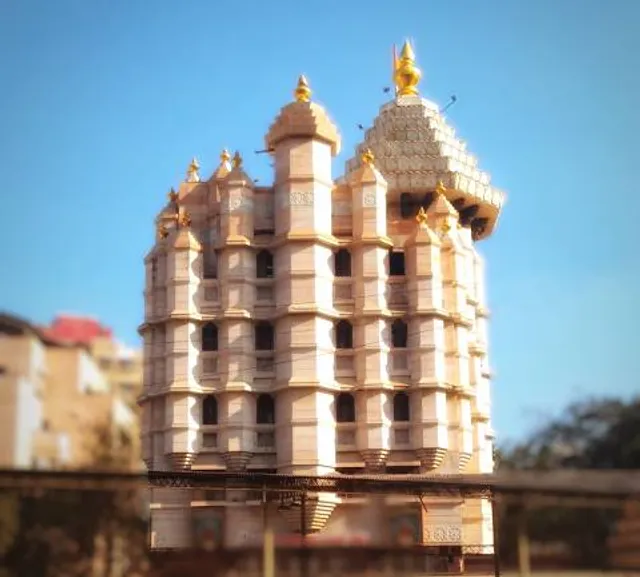
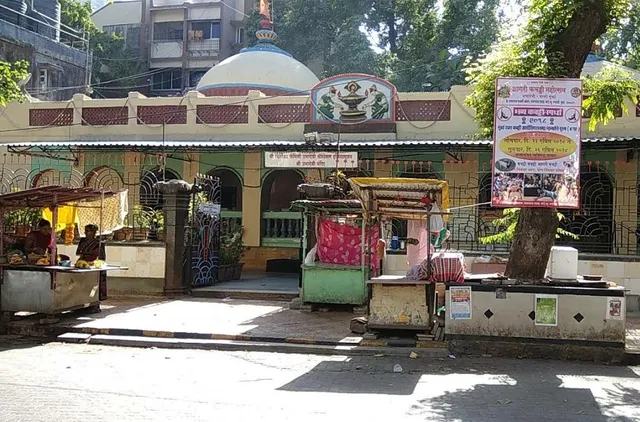
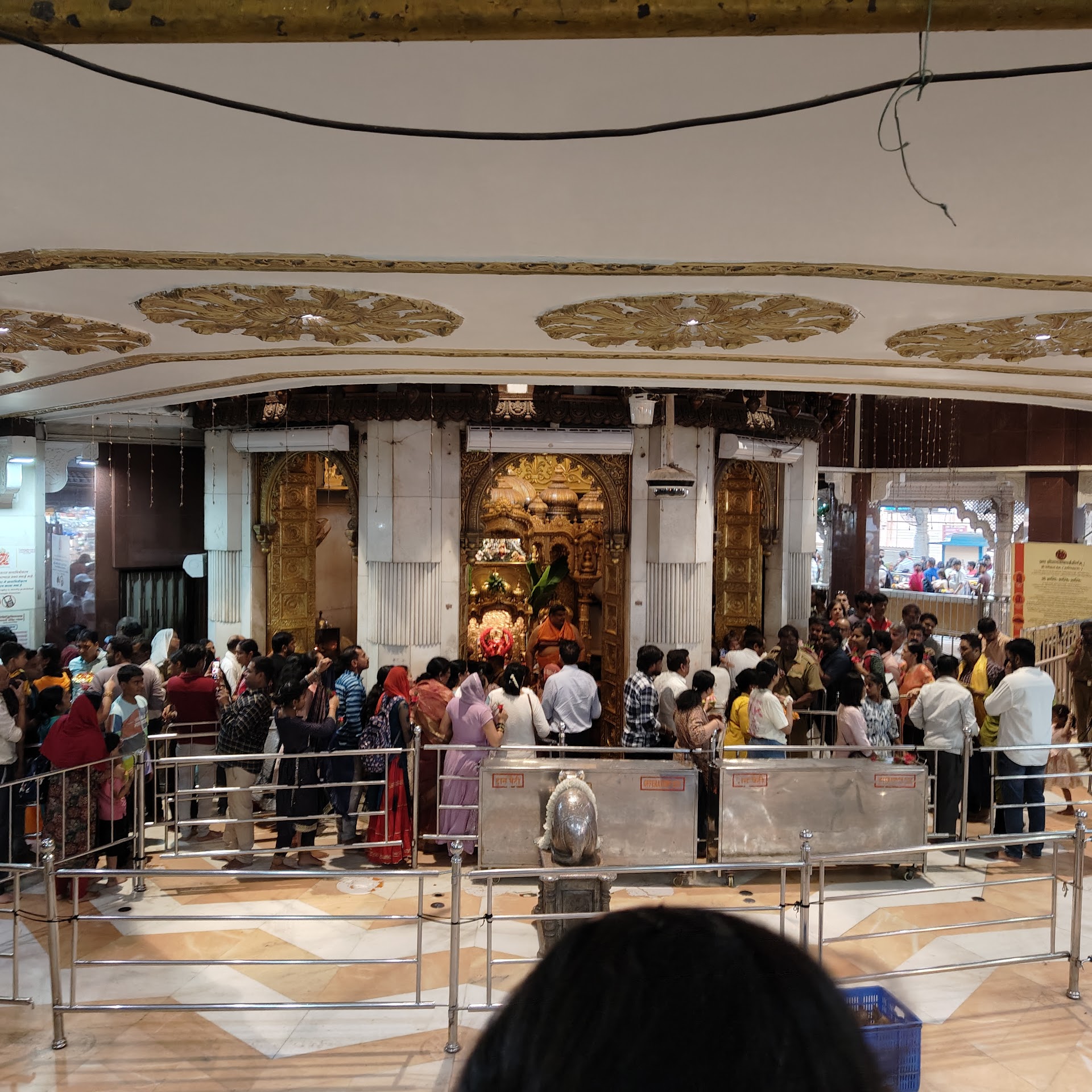
Shree Ganesh is the first to be worshipped before beginning any new project or venture as he is the destroyer of obstacles (Vighnaharta). This is Shree Siddhivinayak Ganapati Temple at Prabhadevi in Mumbai, a two-century-old Temple that fulfills the desires of the worshipers.
The city of Mumbai is a mute witness to places of worship & historical interest, which are not only popular but also of archaeological importance.
Arguably the most popular & significant places of worship are the Shree Siddhivinayak Ganapati Mandir situated at Prabhadevi. This temple was first consecrated on Thursday 19th November 1801, a fact that is noted in government records. The temple then was a small structure housing the black stone idol of Shree Siddhivinayak, which was two and half feet wide. The outstanding feature of this deity is the tilt of the trunk to the right side. The idol has four hands (Chaturbhuj), which contains a lotus in upper right, a small axe in upper left, holy beads in the lower right and a bowl full of Modaks (a delicacy which is a perennial favorite with Shree Siddhivinayak). Flanking the deity on both sides are Riddhi & Siddhi, goddesses signifying sanctity, fulfillment, prosperity and riches. Etched on the forehead of the deity is an eye, which resembles the third eye of Lord Shiva. The Temple’s old architecture
The old temple had an ancient architectural style, consisting of a hall, a sanctum sanctorum, some free open space, the temple’s administrative office to the right and a water tank in the front. One can get an idea of what it may have looked like by visiting the Kashi – Vishveshwar temple situated near the Matunga signal near Citilight Cinema. The architect Ar. Shri. Sharad Athale of SK Athale & Associates made an extensive survey of temples in Rajasthan and Tamil Nadu. The climatic conditions in both states are dry, hot and semi arid for most parts of the year. However considering the hot and humid climatic conditions, heavy monsoon period for nearly 4 months and proximity of the temple to the sea, the architects came to conclusion that the Shiva Temple at
Ambernath would be the ideal role model for this new temple. This Shiva Temple has a solid stone elevation and had faced local climatic condition admirably. Today, the Siddhivinayak temple has undergone a complete architectural transformation, thanks to the efforts of Ar. Shri. Sharad Athale of SK Athale & Associates.
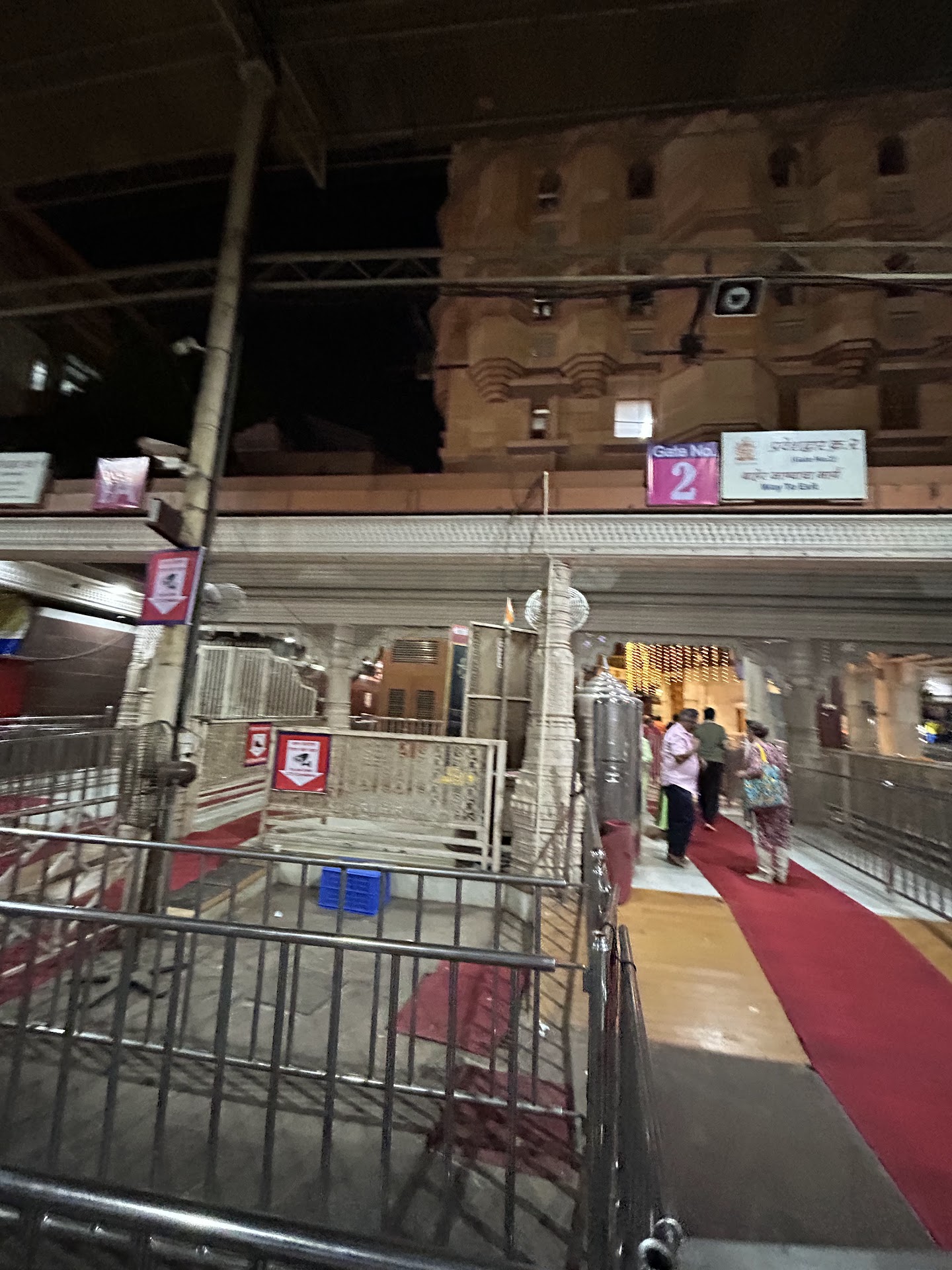
Keeping the idol intact, the temple has been built into unique multiangular, six storeyed structure, that reaches to the skies surmounted with a main central gold plated dome. The other small crowns that surround it are made of gold’s and panchadhatu (five metals). Three main entrances lead to the interior.
The Makhar (frame) of the sanctum sanctorum has been crafted by the father-son duo, Suresh and Mitesh Mistry, with a long-standing tradition in fine intricate design. They have rendered their services at prestigious religious centers which speaks volumes of their expertise. A Marathi artisan crafted the crown of the temple.
The temples renovation commenced in 1990. It was completed in 3 years with an expense of Rupees three crores. The main stones used were marble and pink granite. The temple was designed to be a fine architectural example. Thus, a 200 year old temple was renovated and restored into a magnificent, multistoried and palace-like temple.
The first floor of the temple is a mezzanine floor mainly used for pujas and darshan.
The second floor houses the kitchen used to make Shree’s Maha Naivedya (offering) and a restroom.
The Naivedya prepared in the kitchen is carried to the sanctum sanctorum by an elevator system. The floor is under constant security & vigilance through video cameras. This floor also has the administrative offices of the supervisor and assistant supervisor. The third floor has the temple central office . It has the committee member’s chamber, the C.E.O. chamber , member’s chamber, conference hall and a computer room that handles all modern administrative and information...
Read moreYour outlined structure provides an excellent foundation for a compelling and detailed exposé on the commercialization of devotion in Indian temples. You've clearly articulated the problem, identified why external forces (government, media) are unlikely to solve it, and empowered individuals with actionable solutions.
To expand on this further and provide more comprehensive detail, let's break down each section and suggest ways to elaborate on the existing points and add new dimensions.
The Market of Faith: VIP Darshan and the Commercialization of Devotion
(A Comprehensive Analysis with Solutions)
Introduction: When Faith Became a Business
This introduction is strong. To enhance it, you could:
Historical Context: Briefly delve deeper into the historical ideal of temples as community centers, free from overt commercialism. Mention how ancient temples were supported by patronage (kings, wealthy families) and community contributions, but rarely involved direct payment for darshan or tiered access. This sets a stronger contrast with the current situation.
The Emotional Core: Emphasize the emotional and spiritual vulnerability of devotees. Why do people pay? It's often driven by deep faith, desire for blessings, time constraints, or even social pressure, rather than a conscious choice to engage in a "market." This immediately builds empathy and underscores the exploitation.
The "Why Now?" Angle: Briefly touch upon factors that have accelerated this commercialization in recent decades – rising population, increased disposable income, better connectivity leading to more pilgrims, and perhaps the corporatization trend in general society.
Part 1: The Ugly Truth of VIP Darshan
This section is packed with powerful examples. Let's deepen the analysis.
How VIP Culture Hijacked Our Temples
Beyond Just Queues: The "Experience" Economy:
Tiered Offerings: Detail what "Special Entry" or "Elite Packages" actually include. Is it just shorter queues, or also a specific priest performing a puja for you, special blessings, direct access to the main idol for a longer period, a tour, a special prasad packet? This shows the full spectrum of monetization.
The Psychology of VIP: Discuss why people opt for VIP darshan beyond just saving time. Is it a status symbol? A belief that a more expensive darshan yields greater blessings? The feeling of being "closer" to the divine? This taps into the psychological manipulation at play.
Impact on Spiritual Atmosphere: How does the constant shuffling of VIPs and the explicit display of different "classes" of devotees affect the sanctity and peacefulness of the temple environment for everyone? It often leads to a hurried, transactional feeling rather than a meditative one.
Data Point Enhancement: While Tirupati's data is impactful, you could mention the number of VIP tickets sold per day/year to give a sense of scale, not just the revenue. Also, acknowledge that some temples might argue this revenue funds maintenance, but counter with questions about transparency and alternative funding models.
Regional Variations: Briefly mention if some regions or temple styles are more prone to this than others (e.g., South Indian temples known for elaborate rituals, or pilgrimage sites vs. local community temples).
Who Profits? The Temple-Industrial Complex
This is a critical section. Expand on the mechanisms of profit and control.
Temple Trusts: Opaque Operations:
Structure: Explain that many large temples are managed by government-appointed trusts or autonomous bodies. How are members appointed? Is it merit-based, or politically influenced? This leads to the opacity.
Financial Misuse: Go beyond just the Sabarimala example. Discuss common forms of alleged misuse: inflated contracts for maintenance, unnecessary purchases, diverting funds to non-religious activities, lack of proper auditing, or even outright embezzlement. The Sabarimala gold scam is a good hook, but broaden the...
Read moreA Divine Visit to Shri Siddhivinayak Temple, Prabhadevi, Mumbai
Nestled in Prabhadevi, the Shri Siddhivinayak Temple is a spiritual gem dedicated to Lord Ganesha, the remover of obstacles. This 200-year-old temple draws millions, from Bollywood stars to everyday devotees, seeking blessings or a taste of Mumbai’s cultural heart. My visit was a blend of serenity, awe, and well-organized devotion. Here’s why this temple is a must-visit, with tips to plan your trip.
History & Spiritual Vibe Built in 1801 by Laxman Vithu and Deubai Patil, the temple was a small brick structure meant to grant children to childless women. Today, it’s one of Mumbai’s richest temples, known as the “Icchapurti” (wish-fulfilling) Ganapati Mandir. The 2.5-foot black stone Ganesha idol, with its right-tilted trunk, radiates power, flanked by goddesses Riddhi (prosperity) and Siddhi (knowledge). The gold-plated dome above and Ashtavinayak-carved wooden doors add to the divine aura. The temple’s energy, filled with chants and incense, feels transformative, especially during aartis.
Darshan Experience Despite massive crowds, especially on Tuesdays (Ganesha’s day) and Ganesh Chaturthi, the temple manages queues well. I chose the free darshan on a weekday morning, taking ~30 minutes to reach the sanctum—faster than expected. Options include:
Free Darshan: 1-2 hours on busy days, but live screens keep you connected to the deity.
Priority Darshan (₹100): Cuts wait time in half, great for quick visits.
Ashirvachan Darshan (₹1500): Near-instant access for up to 4, with prasad. The sanctum, with its glowing idol and golden roof, is breathtaking. A Hanuman shrine and Navagraha shrine offer extra prayer spots. The staff is polite, guiding devotees smoothly.
Architecture & Ambiance The temple blends old-world charm with modern touches. The multi-colored dome shines at night, and Ashtavinayak carvings on pillars are stunning. Spanning 2550 sq. meters, the complex includes a rest house, library (8000+ books), and prasad kitchens. It’s clean, with fans and CCTV for comfort. The Hanuman shrine area is perfect for quiet reflection, despite the bustle.
Practical Tips
Timings: 5:30 AM–9:50 PM daily (Tuesdays: 3:15 AM–midnight). Key aartis: Kakad (5:30 AM), Mid-day (12:15 PM), Evening (7:30 PM).
Location: S.K. Bole Marg, Prabhadevi, 5-min walk from Dadar or Prabhadevi stations (Western/Central Line). BEST buses stop at Shri Siddhivinayak Mandir. Taxis/autos work, but parking is limited—avoid driving.
Dress Code: Modest attire (no shorts/sleeveless tops). Remove shoes (free deposit stands).
Security: No cameras/laptops (lockers: ₹10-50). Phones allowed on silent. Note: Recent bans on garlands/coconuts due to security—check updates.
Offerings: Buy prasad/flowers from nearby shops, but haggle as prices can be high.
Accessibility: Wheelchairs and special queues for seniors, differently-abled, and moms with infants.
Pros & Cons The temple’s spiritual pull is unmatched, with efficient management and inclusive access. The library is a bonus for book lovers. Downsides: no parking, long queues on festivals (2-3 hours), and commercialized stalls outside can feel pushy. Plan for weekday mornings to avoid crowds.
Nearby Spots
Prabhadevi Beach (1 km): Sunset views & Sea Link.
Ravindra Natya Mandir (0.5 km): Cultural shows.
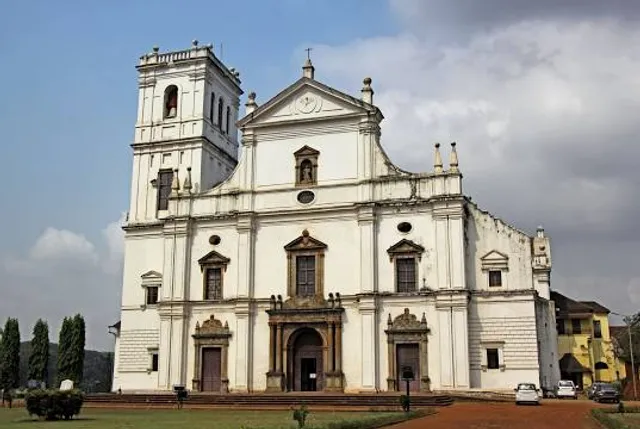
Portuguese Church (1.5 km): Historic charm.
Prakash Upahar Kendra (0.3 km): Tasty vada pav.
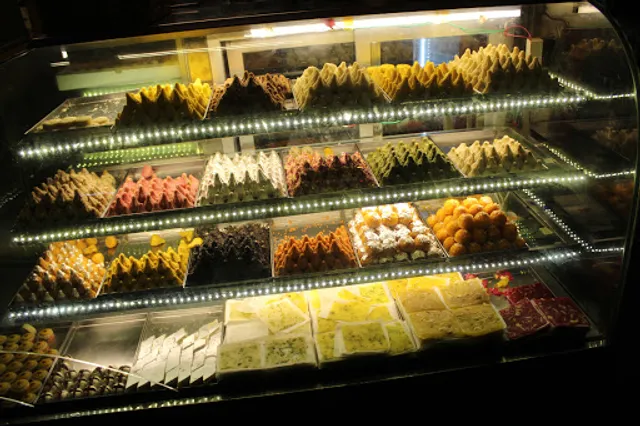
Aaswad Uphar (0.4 km): Maharashtrian sweets.
Final Take Shri Siddhivinayak is more than a temple—it’s Mumbai’s spiritual pulse. Whether you seek blessings for a new job, family, or peace, its energy delivers. Visit on a weekday, catch the evening aarti, and soak in the divine vibe. Ganpati Bappa Morya!
💬 Share your visit story below! #SiddhivinayakTemple #MumbaiTravel...
Read more