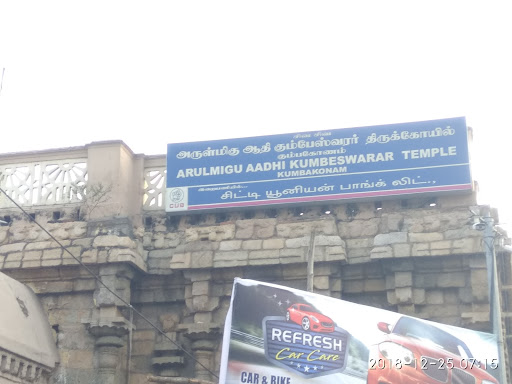
Adhi Kumbeswarar Temple Kumakonam:-

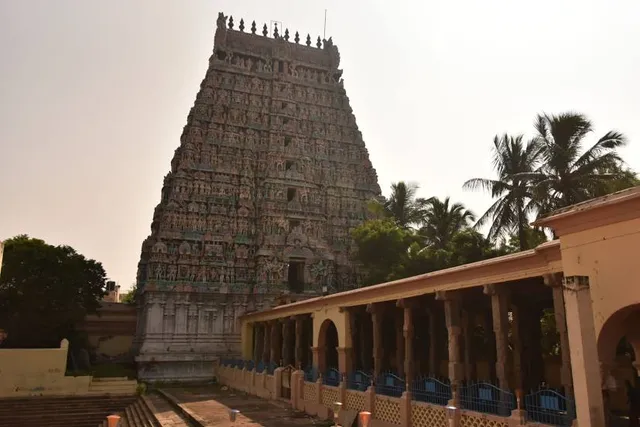
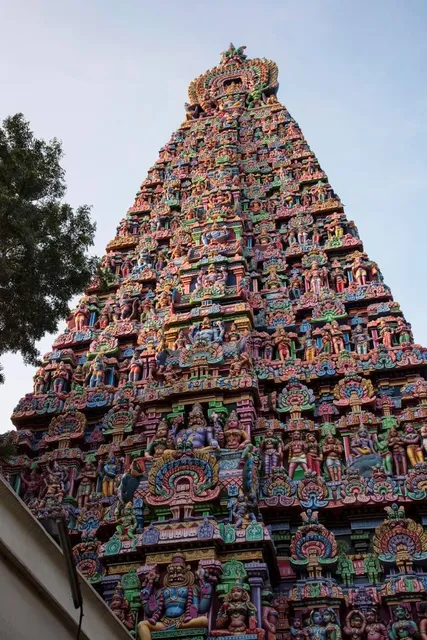
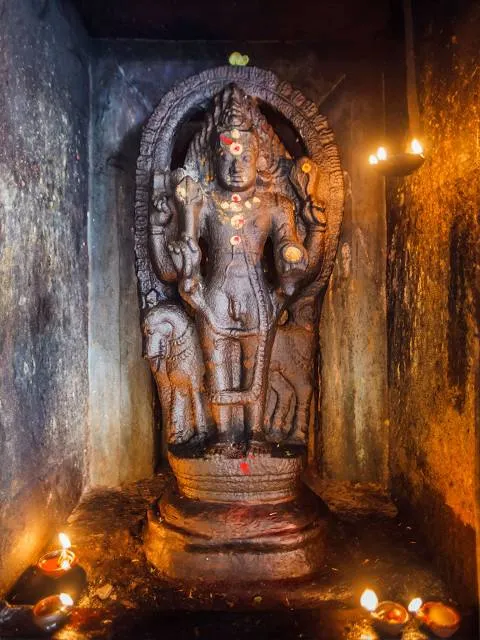
The famous temple in Kumbakonam is Adi kumbeswarer temple. In this place the sacred Amutha Kumbam has its resting for sacred rise. Because of this, this place is named as Kudamooku and in due course Kumbakonam and then Kudanthai. The temple situate in the midst of the populated area of residence and business attracts large gathering of devotees every day. The structure of building is monumental and carries the glory of historical period. The temple is beautiful in structure and of art. The Rajagopuram is fantastic and is rich in structure and height. There are 3 prakaram in and around the temple of course three Gopuram for each prakaram. In the east side Amman temple is located and the deity is Mangalambigai. The main idols of the temple are Adi Kumbeswarar, Sri Mangala Nayaki, Lord Ganapati & Lord Muruga (Karthikeya) and Kiratamurti. The unique feature of this temple is the 27 star sign and 12 sun shines that are sculptured in a large block of stone. The other major parts of the temple are Marriage hall and Mangala Theertham.
The Linga is broad at the bottom and narrows at the top in the shape of a needle. There is a Nadaswaram (a musical instrument) made of stone which is well maintained. A lion carrying some stones on head in the front hall of the temple stands as an example of the Tamil sculpture art. When the world was facing destruction due to the devastating tsunami, Lord Brahmma approached Lord Shiva to know wherefrom He had to restart creation. Lord Shiva suggested that Brahmma make a magic pot with the sand collected from various sacred places and float it in the flood water and also taught the procedure of leaving it on the water. The pot stopped at a place. Lord Shiva shot an arrow on the pot. The nectar spilled and spread on all directions. That nectar mixed with the sand and became a Linga. This Linga is Kumbeswarar.
Origin of Adi Kumbeswarar:-

When it was time for the destruction of this world a huge Pralaya came up. In order to save the vedha's Amirtham (Tamil language) and tools necessary to create lives on earth, Lord Brahma collected all these things and put them in a mud pot and kept the pot safety on the top of the Mount Meru (mythology).
Pralaya kalam (ie) the period of non stop heavy rain came and the pot of Brahma was washed away by the flood. In due course moving in the south direction it came to halt at a particular place. Then for the wish of all Devar's (ie) heavenly people Lord Shiva broke the pot with an arrow. Immediately Amudham (ie) the liquid given eternity flowed from the pot and formed two tanks. One is known as Mahamaha kulam and the other is Potramarai kulam. The remains of the pot and Amudham joined together to form Lord Kumbeswarar otherwise called (Shiva) in the Adi Kumbeswarar Temple. In the name of the broken pot (ie) Kumbam (Tamil language) that place was called Kumbakonam. The city of Kumbakonam, is linked to several instances & puranas in the Hindu mythology. Mythological legend has it that there was a deluge after the Dwapara Yugam; a pot of nectar and the seeds of creation were placed in a pot (kudam) and set adrift in the deluge. The drifting pot settled at Kumbakonam giving its ancient name Kudamookku. Kumbakonam is also colloquially known as Kudanthai,
Legends of Adi Kumbeswarar Temple:-

It is considered that post deluge and just before the advent of Kaliyuga the celestial pot that contained the nectar came to rest here. Lord Shiva disguised as a hunter, shot an arrow at the pot that was held by Lord Brahma and broke it. Its contents spilled all over resulting in the revival of life. Kumbham means the pot and Konam means crooked. The place where the nectar fell is known as the Mahamaham tank. The temple belongs to the 7th century and has been expanded by Nayaks during the 15-17th century. The temple is the largest Shiva temple of Kumbakonam. It has a 9-storeyed rajagopuram and three concentric compounds, elongated along an east-west axis have triple set of gopurams.
Deity Kumbeswarar...
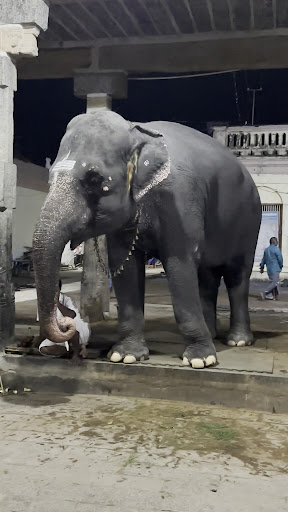
Read moreThe Adi Kumbeswarar Temple, located in Kumbakonam, Tamil Nadu, is a significant Hindu temple dedicated to Lord Shiva. Also known as Thirukudamooku, it is one of the prominent Paadal Petra Sthalams (temples revered in the 7th-century Tamil Saiva canonical work, the Tevaram, by the Nayanmar saints). Here’s a concise history of the temple: Historical Background • Construction: The temple was primarily built during the Chola dynasty in the 9th century CE, with later expansions and renovations by the Vijayanagara rulers and Thanjavur Nayaks in the 15th–17th centuries. It is believed to be over 1,200 years old, with its origins tied to the Chola period. • Patronage: The temple was maintained by the Cholas, Nayaks, and later by the Hindu Religious and Charitable Endowments Department of the Tamil Nadu Government. Mythological Significance • Origin of Kumbakonam: The temple’s name and the city of Kumbakonam are derived from a legend. During a cosmic dissolution (pralaya), Lord Brahma created a pot (kumbha) containing the seeds of life and the nectar of immortality (amrita), which was set adrift in the floodwaters. Lord Shiva, disguised as a hunter, shot an arrow at the pot, causing the nectar to spill and mix with the sand, forming a unique conical Shiva Lingam, the Adi Kumbeswarar Lingam, at the spot where Kumbakonam now stands. This event is said to mark the origin of life in the current yuga. • Name Derivation: The term “Kumbakonam” comes from kumbha (pot) and konam (angle or bend), referring to the slightly tilted shape of the Shiva Lingam. The temple is also called Thirukudamooku (kuda = pot, mooku = nostril or tip), as the nectar flowed through the pot’s nostril-like opening. Architectural Features • Structure: The temple spans 30,181 square feet (approximately 4 acres) and features a rectangular layout with an east-west orientation. It has three concentric compounds and four gateway towers (gopurams), with the eastern tower being the tallest at 128 feet with 11 stories. • Main Deity: Lord Shiva, worshipped as Adi Kumbeswarar, is represented by a unique conical Shiva Lingam, believed to be formed by Shiva mixing nectar and sand. The consort, Mangalambigai Amman, has a shrine to the left of the main sanctum. • Notable Features: ◦ A 16-pillared hall from the Vijayanagara period, with carvings of all 27 stars and 12 zodiacs on a single stone. ◦ Five silver-plated chariots used for processions during festivals. ◦ Intricate carvings, including a stone nadaswaram (musical instrument) and a unique six-handed Subramanya idol. ◦ A colonnaded hall with yali (mythological creature) brackets and a corridor 330 feet long and 15 feet wide. Religious and Cultural Importance • Paadal Petra Sthalam: The temple is one of the 127 temples on the southern banks of the Cauvery River, glorified in the Tevaram hymns by the Nayanmar saints, making it a significant pilgrimage site. • Festivals: ◦ The Mahamaham festival, held once every 12 years in the Mahamaham tank, is a major event where devotees take a holy dip. ◦ Other festivals include Masi Magam (February–March), Sabthasthanam (April–May), Thirukalyanam (May–June), Aadi Perukku, Aadi Pooram (July–August), and the Butter Pot Festival. • Rituals: The temple conducts six daily rituals from 5:30 AM to 9:00 PM and is known for its vibrant festival calendar. Later History • Renovations: The temple was expanded by Govinda Dikshitar, a chieftain under Achutha Nayakar of Thanjavur, in the 16th century. • Modern Administration: The temple is currently maintained by the Tamil Nadu Government’s Hindu Religious and Charitable Endowments Department. Significance Today • The temple remains a spiritual and cultural hub, attracting devotees for its divine atmosphere and unique Lingam. Visitors often note the serene ambiance and the presence of a temple elephant at the entrance. • Its proximity to other temples like Chakrapani Temple and Sarangapani Temple makes it a key stop in Kumbakonam’s...
Read moreAdi Kumbareswarar Temple @ Kumbakonam / Tamil nadu :
A visit to Tamilnadu temples is incomplete without a visit to Kumbakonam temples and Mahamaham holy tank..Kumbakonam is called as city of temples and boasts of more than 1000 plus temples ( both Saivite and Vaishnavite ) in and around Kumbakonam town.. It is believed in Hindu mythology that all forms of life again originated after pralaya yuga .. It is said that Lord Brahma put nectar in a earthen pot and allowed it to float in water during Pralaya . Pralaya caused cosmic dissolution as puranas say . Lord Shiva pierced this pot with an arrow in the Kumbakonam area and nectar spilled here and created all forms of life from here only !!
Adi Kumbareswarar Temple :
Adi Kumbeswara is the main deity of the temple. Adi is of primordial origin implies ancient or the first and the foremost. The Kumbeswarar is in Shiva Linga form which is formless and boundless. Aaru (formless) + uru (form) = aaruuru. The shape of the linga is of very special significance, it is a conical shaped lingam, ( see photo ) . This is a unique linga in the world. The Pururanas derive the meaning of the shape and the name. The city name Kumbakonam itself is derived from the name of God – Kumba and the slight angle of the Linga and hence the name “Kumbakonam”. Lord Shiva's consort is Mangalambika. It is also one of the 64 saktibheta sthala (Mantrabheta sthala).
History , architecture and holy thirtha :
The present masonry structure was built during the Chola dynasty in the 9th century, while later expansions are attributed to Vijayanagar rulers of the Thanjavur Nayaks of the 16th century. The temple complex covers an area of 30,181 sq ft (2,803.9 m2) and houses four gateway towers known as gopurams. The tallest is the eastern tower, with 11 stories and a height of 128 feet ..The temple complex houses many halls; the most notable is the sixteen-pillared hall built during the Vijayanagar period that has all the 27 stars and 12 zodiacs sculpted in a single stone. The temple has 3 concentric compounds, elongated along an east–west axis has triple set of gopurams.
The Mahamaham tank, Potramarai Tirtha, Varuna Tirtha, Kasyapa Tirtha, Chakkara Tirtha, Matanga Tirtha and Bhagavad Tirtha (bathing ghats along the river Cauvery) are the seven outlying water bodies associated with the temple. Mangala Kupam Asva, Naga tirtha, Kura tirtha are the three wells, while Chandra tirtha, Surya tirtha, Gautama tirtha and Varaha tirtha are the four tanks located inside the temple.[17] The Potramarai tank separates the Kumbeswarar temple from Sarangapani temple.
Special mention : Appar, the 7th century Tamil saivite saint poet and nayanar has revered Kumbeswarar and the temple in his verses in Tevaram, compiled as the Fifth Tirumurai. As the temple is revered in Tevaram, it is classified as Paadal Petra Sthalam, one of the 276 temples that find mention in the Saiva canon.
I have uploaded photos of this temple from my collection .. First 7 photos including Holy water tank photos are from internet ..
Kumbakonam visit is a must for devotees visiting Tamil Nadu ... Living Chola temples Thirubuvanam and Darasuram are within 8 km radius ... We can list out more than 30 plus big and important temples within 15 km radius of...
Read more