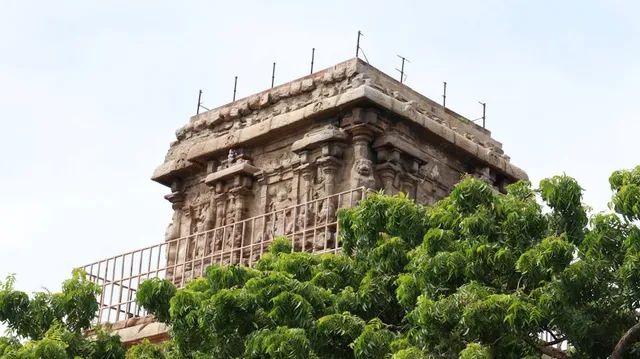
The Olakkannesvara Temple ("flame eye";1] commonly Olakkanatha; also known as, "the Old Lighthouse")[2] is in Mahabalipuram town, overlooking the Coromandel Coast of the Bay of Bengal in Kancheepuram District in Tamil Nadu, India. Like the Shore Temple, the Olakkannesvara Temple is a structural temple.[3] Built in the 8th century,[2] it is situated directly above the Mahishasuramardini mandapa on a hillock which provides scenic views of the town. As the area is within a high security zone because of a nuclear power station a few kilometres to its south, photography is prohibited.[4] The Olakkannesvara Temple is sometimes mistakenly referred to as a Mahishasura temple. It is dedicated to an incarnation of Shiva.[5] It is one of the Group of Monuments at Mahabalipuram that were designated as a UNESCO World Heritage Site since 1984.
Like the Shore Temple, the Olakkannesvara Temple was built during the reign of the Pallava dynasty king Rajasimha. Archaeologist Albert Longhurst observed that prior to the construction of the present lighthouse at this site in 1900, the roof of the Olakkannesvara Temple served as the lighthouse with perhaps a wooden shed structure on the roof.[9 Worship was offered in this temple till the nineteenth century.
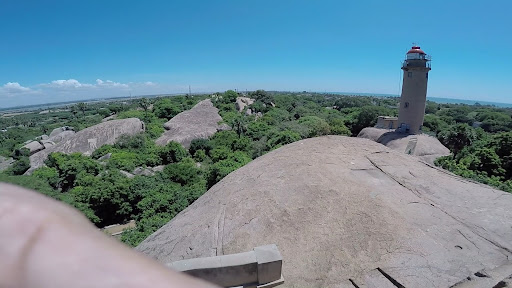
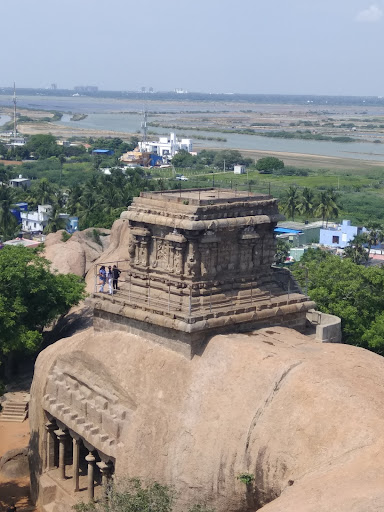
Olakkannesvara Temple is located in Mahabalipuram town. Facing east, the temple is accessed only be a series of cut steps on exposed rock. It is situated on the top of a hill, above the Mahishasuramardini mandapa near the modern lighthouse. It is approximately 58 kilometres (36 mi) from Chennai city (previously, Madras) and about 20 miles (32 km) from Chengalpet.8 The area is a high security zone as there is a nuclear power station about a few kilometers to its south.
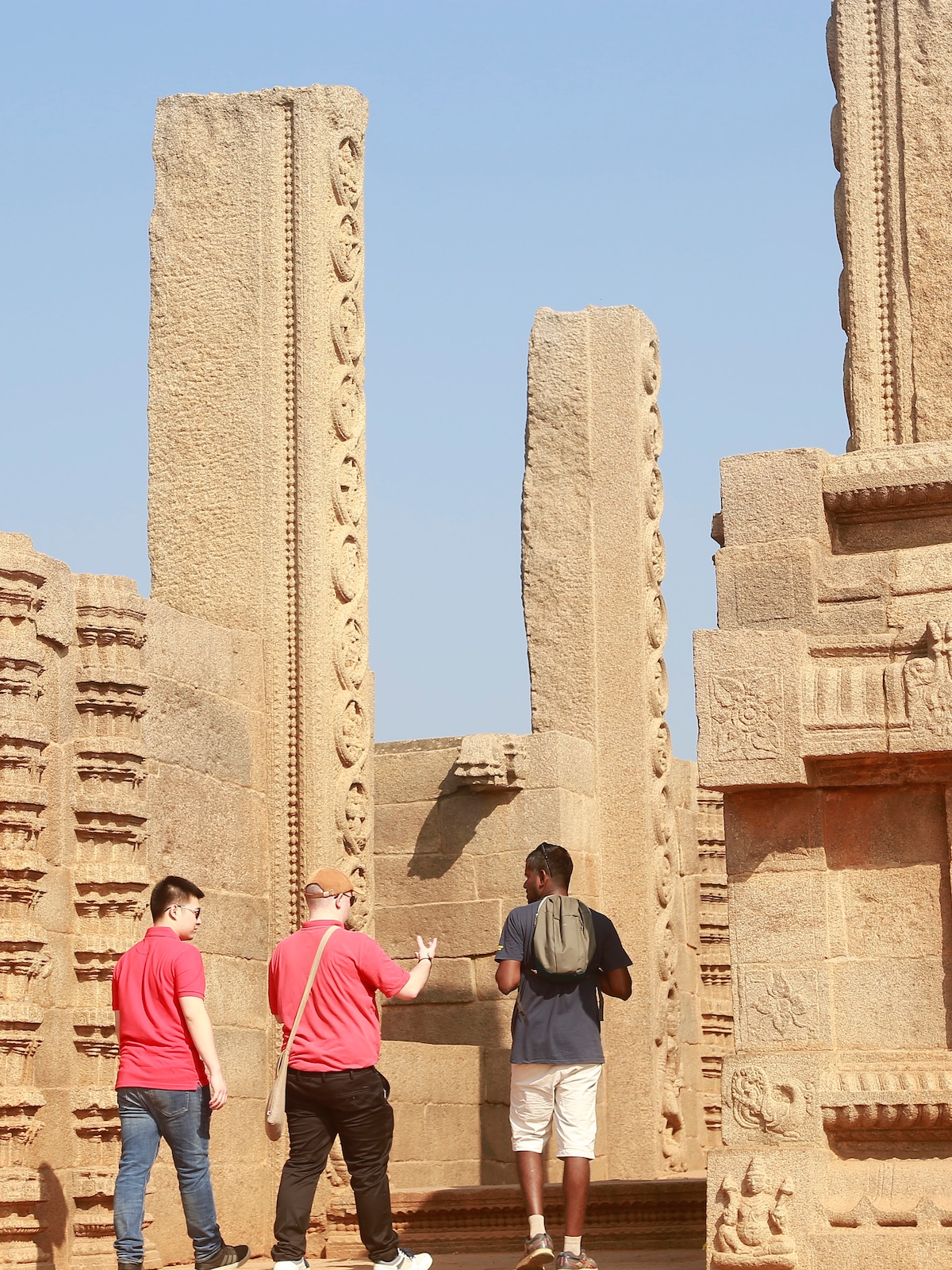
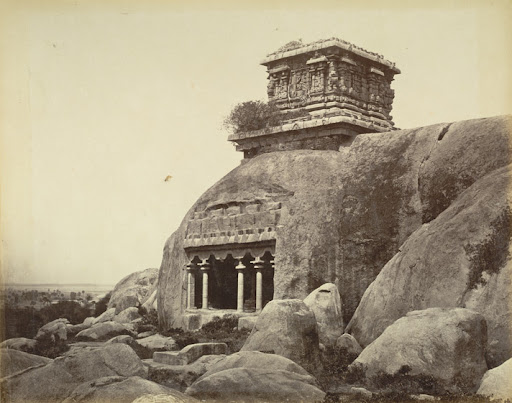
The structure is built of grey-white granite.11] The shikhara or tower of the temple is interpreted to have been built originally to the same style as the Shore Temple tower in Dravidian Architectural style but is now non-existent. A small ardha-mandapa (half hall) leads into a rectangular shrine. An unusual feature is that of the carving of dvarpalas (guards) of the main shrine, which are in half-profile though the space available could have used to make a full-face profile as per traditional practice of the front facing style. This is typical of Mahabalipuram Pallava style and a similar profile of dvarpalas is noted in the Trimurti Cave Temple. This is interpreted as a transition from the Mahendra style of architecture to the Rajasimha style; the transformation was from a full front facing to three-fourths and then to half profile facing each other. However, the guardians carved on the back wall of the temple are in full frontal profile.[9 The building was formerly lined with brick masonry.
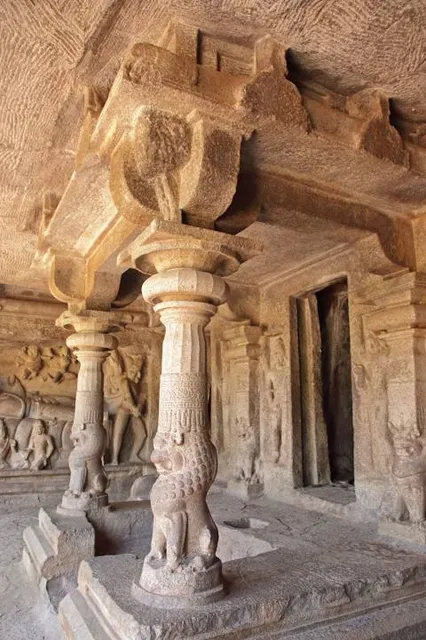
On the exterior walls, there are two sculpted images in the niches of the ardha-mandapa. Enclosed within pilasters, these images of Shiva as Kalantaka killing "Kaala" (Yama) are later additions, not attributable to the Pallavas. On external walls of the main shrine, there are other niches or devkoshtas; on the south wall the sculpture is of Shiva as Dakshinamurti under a tree in seated posture, on the west face an image of Shiva and Parvati seated on Kailash Mountain with Ravana trying to shake the mountain, and an image on the north wall is of Shiva in the posture of Nataraja. The sculptures are much ruined, and were plastered and painted over hence the originality is much less visible. There are a large number of lion pilasters on the walls. There are no images of any deity...
Read moreVisited on 29th Jul 2019 • After referring different documents, as a Traveller – Photographer – Reviewer, support the following details: {Pl refer our photos} NOTE: For more details on Mahabalipuram (The BRIEF HISTORY & Reasons for 3 Names) kindly refer to our review under : Group of Monuments at Mahabalipuram
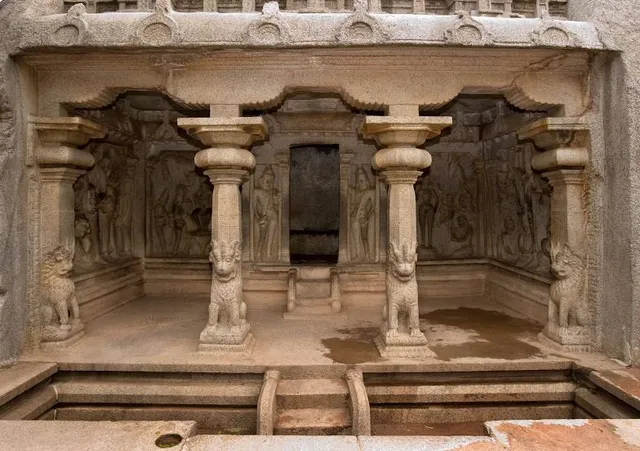
• ===========IMPORTANT=========== • Olakkannesvara Temple is commonly mistaken as Mahishasuramardini mandapa, as, Olakkannesvara is situated above the Mahishasuramardini mandapa (cave temple).
The OLAKKANNESWARA Temple ("Ulaikkanniswaran" - Tamil Word - Probably the GLOWING third Eye of Lord Shiva, on his fore head -"FLAME EYE"!). Locally known as Olakkanatha (also known as "the Old Lighthouse"). The Olakkannesvara Temple is a structural temple (Not Cave Cut) and used grey-white granite. This too is built in the 8th century and is dedicated to an incarnation of Lord Shiva.
It is situated directly above the Mahishasuramardini Cave Temple (Mandapa), on a hillock which provides scenic views of the whole town. The Olakkannesvara Temple was built during the reign of the Pallavas. Before present lighthouse (Built in 1900), the roof of the Olakkannesvara Temple served as the LIGHTHOUSE. Prayer was offered in this temple till the 19th century.
It is believed that the SHIKHARA (Top of the Temple Tower) or tower of the temple was built in typical Dravidian Architectural style, as in Seasgore Temple, which is presently missing! Presently, an “ardha-mandapa” (half hall) ends the rectangular shrine! Its is mentioned that Two DWARAPALAKAS (Guards) in the front of the Temple is Half (Completed) where as two DWARAPALAKAS in the back are completed. Sculptors on the walls contain Lord Shiva, Yama, etc. The south wall sculpture is Dakshinamurti (Incarnation of Shiva), seated under a tree. The west wall is of Lord Shiva and Parvati Devi, seated on Kailash Mountain, with Ravana trying to lift the mountain. On the north wall is of Nataraja. Huge Lion Pilasters decorates the walls, also.
It is one of the Group of Monuments at Mahabalipuram that were designated as a UNESCO World Heritage Site since 1984
On the exterior walls, there are two sculpted images in the niches of the ardha-mandapa. Enclosed within pilasters, these images of Shiva as Kalari killing "Kaala" (Yama) are later additions, not attributable to the Pallavas. On external walls of the main shrine, there are other niches or devkoshtas; on posture, on the west face an image of Shiva and Parvati seated on Kailash Mountain with Ravana trying to shake the mountain, and an image on the north wall is of Shiva in the posture of Nataraja. The sculptures are much ruined, and were plastered and painted over hence the originality is much less visible. There are a large number of lion pilasters on the walls. There are no DEITY images...
Read moreI recently had the pleasure of visiting the Olakkannesvara Temple in Mahabalipuram, Tamil Nadu, and it was truly a remarkable experience. The temple, dedicated to Lord Shiva, showcases the rich architectural and cultural heritage of the region. Here's my review of this magnificent site.
First and foremost, the temple's location is awe-inspiring. Situated in the coastal town of Mahabalipuram, it enjoys a breathtaking setting with the Bay of Bengal serving as a picturesque backdrop. The tranquil atmosphere and the sound of crashing waves add to the spiritual aura of the place.
The architecture of the Olakkannesvara Temple is exquisite. Dating back to the 8th century, it displays intricate carvings and elaborate sculptures that depict various mythological tales. The attention to detail is remarkable, and one can spend hours marveling at the craftsmanship that went into creating this masterpiece. The temple's pyramidal structure and the towering gopuram (entrance gateway) are particularly impressive.
Inside the temple, one can find several sanctums dedicated to different deities. The main deity, Lord Shiva, is worshipped with great reverence. The priests are knowledgeable and conduct rituals with utmost devotion. The ambience is serene, providing a peaceful space for meditation and reflection.
Another highlight of the Olakkannesvara Temple is its well-maintained premises. The temple authorities have done an excellent job in preserving the heritage site and ensuring cleanliness. The neatly manicured gardens and pathways add to the overall charm of the place.
One thing to note is that the temple can get crowded, especially during weekends and festivals. It's advisable to plan your visit accordingly to avoid the rush and have a more personal experience. Additionally, photography is permitted, which allows visitors to capture the beauty of the temple and its surroundings.
In terms of facilities, the temple provides clean restrooms and ample parking space. There are also small shops nearby where visitors can purchase souvenirs and religious items.
Overall, the Olakkannesvara Temple in Mahabalipuram is a must-visit for history enthusiasts, architecture lovers, and spiritual seekers. Its stunning beauty, rich cultural significance, and peaceful ambiance make it a remarkable destination. I highly recommend taking the time to explore this ancient temple and soak in its...
Read more