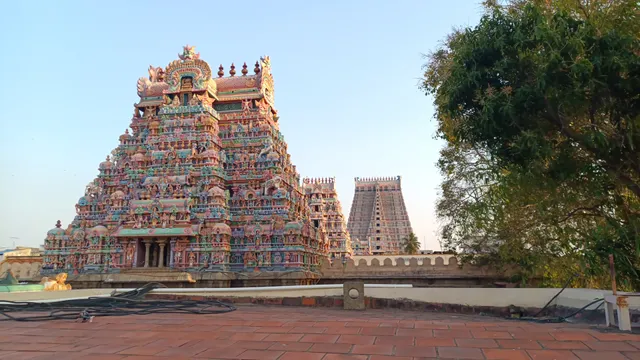
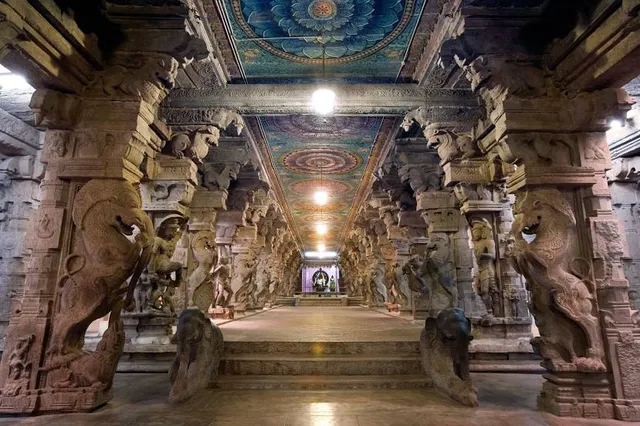
Sri Ranganathaswamy Temple "Om Namo Narayana" The magnificent and spiritually awakened place is the epicenter of Tiruchirapalli/Trichy. This is a UNESCO WORLD HERITAGE SITE! Trichy is easily reachable from Chennai by train and bus.
The Temple is situated on an island formed by the Cauvery River and it's tributary Kollidam. It is spread across 156 acre/63 hectares Complex. The temple is renowned for its Sapta Prakaram, 21 Gopurams, 50 sub shrines, 9 sacred pools and Vimana over the sanctum santorum. The Temples origin are dated back to Sangam Period ( 3rd Century BCE to 45 CE).
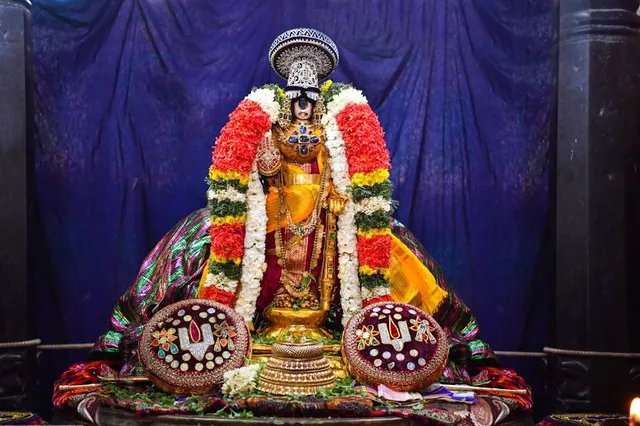
The temple at Srirangam is dedicated to Ranganatha (God Vishnu) and his consort Ranganayaki (Godess Lakshmi) This temple is the first of the 108 Divyadesams. Holds immense importance for the Sanatan especially the Vishnava Sects. The temple is also known as "Bhuloka Vaikuntam", or "Thiruvaranga Tirupati". This temple is also known as Swayam Vyakta kshetra, meaning where Bhagwan Vishnu, appeared himself. The idol of Sri Ranganatha, is made of stucco. Stucco is a combination of lime, mortar and stones bounded together by a special paste ( Thailam). Thailand is made of camphor, jaggery, honey and sandal).
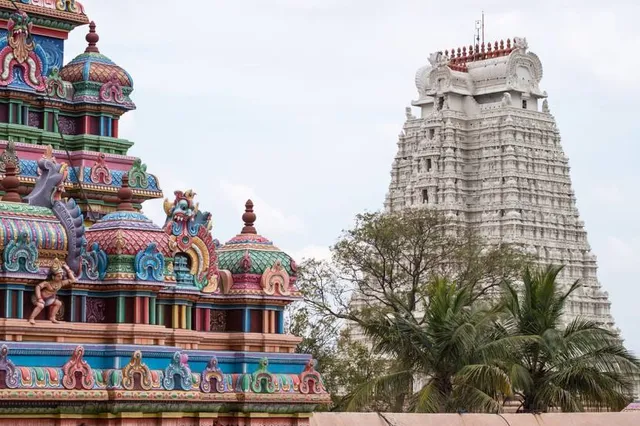
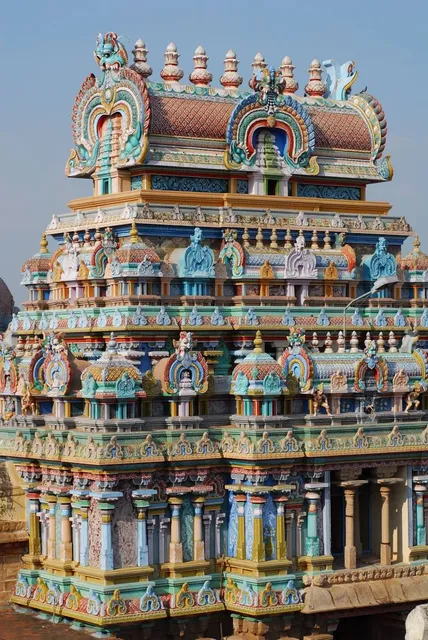
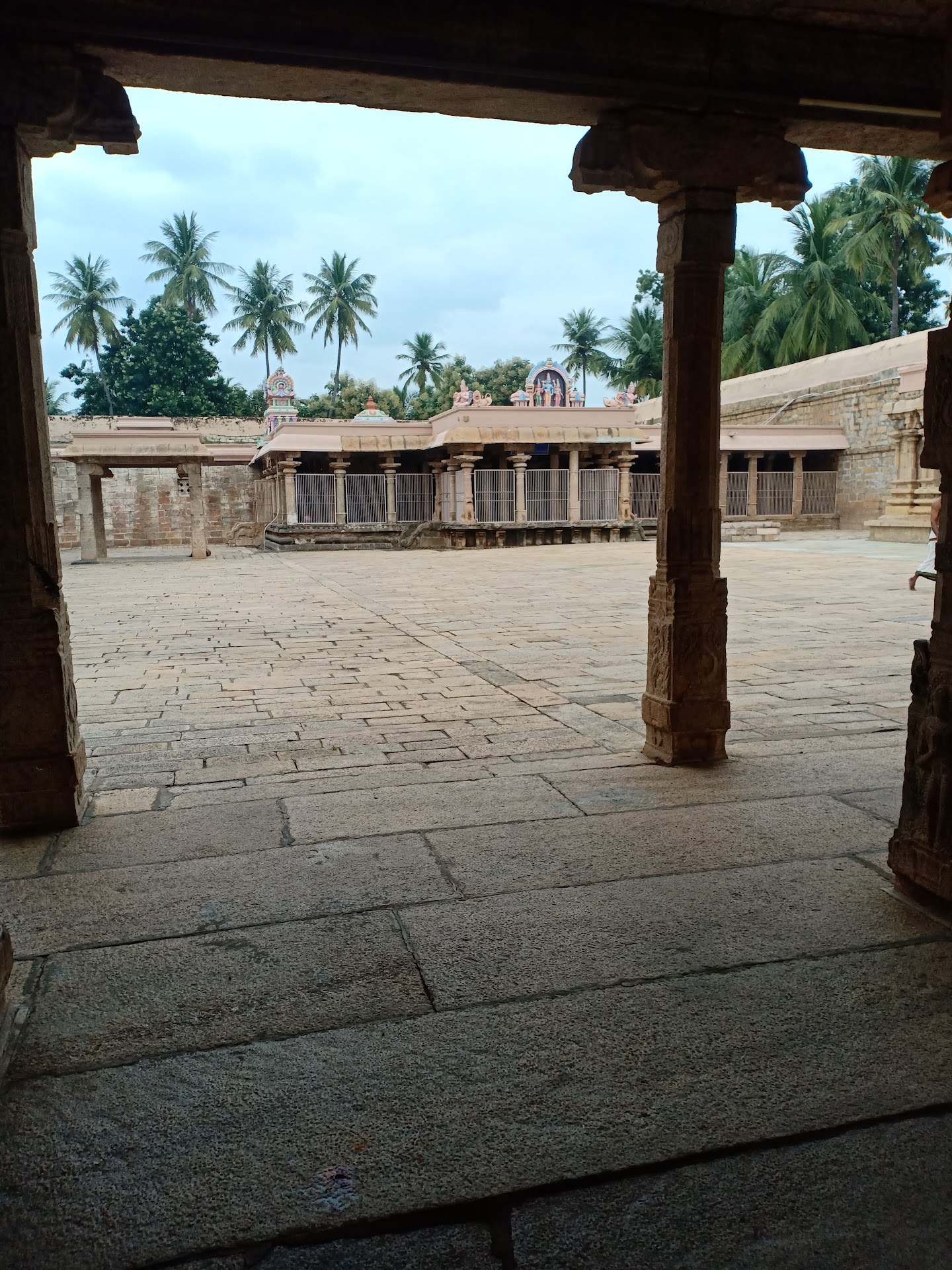
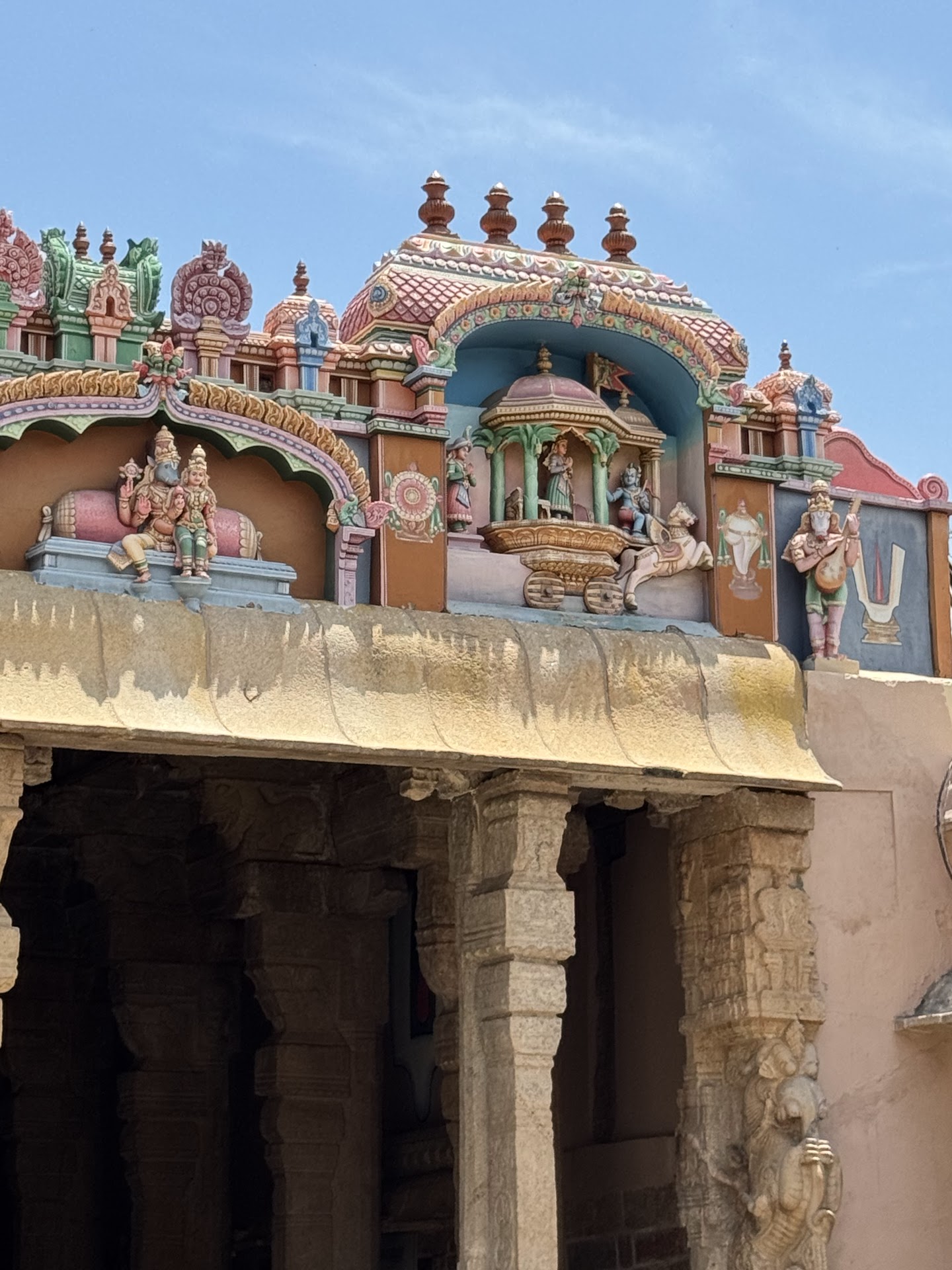
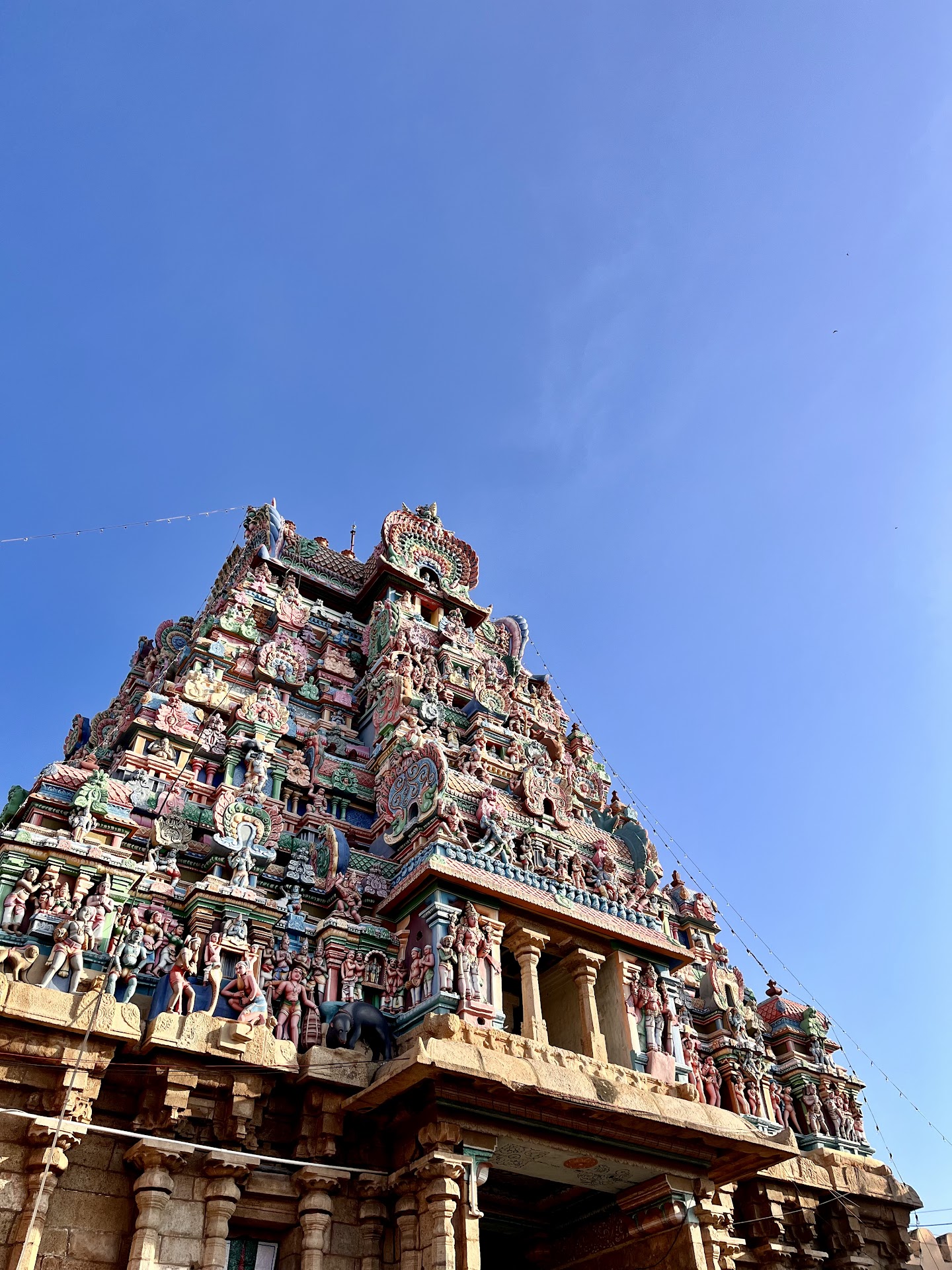
Srirangam is a unique Temple town. This is the largest functioning temple in the world. The temple is unique for its sapta prakaram, I.e seven concentric rectangular enclosures. The 7 prakaram resemble the seven elements making up the human body, in the centre of which dwells the soul. The first inner five concentric rectangular wall structures, comprise the temple, where as the outer two prakarma, are settlements. 5.There are 21 Gopurams adorning the complex, which bear an architectural significance. The South Raja Gopuram is 236 feet tall with 13 levels. The East Gopuram is white in colour. The white colour is dedicated to Vellai Ammal,a dancer, who threw a invading commander off balance from the Gopuram, as well sacrificed her own life in the act selflessly. East Gopuram has 9 tiers. Ranga Ranga Gopuram is located on the south side of the main temple. It has 7 tiers, and it accounts to 81 feet height. There is a view point from where all the 21 Gopuram of the temple complex can be seen. The walls of the temple are painted with exquisite paintings using herbal and vegetable dyes. The paintings and murals provide one with an enriching and spiritually elevated feeling. Vimana: 4 Kalash represent the 4 vedas, 5 kalasha the panchamahabhoota, 18 lotus leaves represent the puranas, 108 beads the Upanishads, and other carvings the 33 crore gods Legend. Sriranga Mahathmiyam, is one of the compilation of the temple mythology about its origins. According to it, Brahma was performing austerities during the Samudra Manthana (churning of cosmic ocean), and Srirangam Vimanam emerged as a result. It remained in Satyaloka for ages, was brought to Ayodhya by king Ikshvaku. After Rama, an avatar of Vishnu, had killed the evil demon Ravana, he gave it to King Vibhishana who wanted to be with Rama. When Vibhishana passed through Storangam en route to Sri Lanka where he had become the king, the Srirangam Vimanam would not move from the island. So, he gave it to a local king called Dharmavarma, if the king consecrated the Vimanam to face the south cardinal direction eternally, blessing him and Lanka. Hence, it is that the deity (in a reclining posture) faces South, his body aligned to the east–west axis. About the significance of Pushkarni, it is believed that Kashyapa Rishi had cursed Chandra, due to which Chandra had lost his radiance. Chanadra bathed in the Chandra Pushkarni at Srirangam, which led to him regaining his old radiance. Sri Ramanujar designed the administrative plans for this temple. The Temple received patronage and reverance from the Kings of numerous dynasties including the Cholas, Cheras, Pandiyas, Hoysalas, Vijaynagara empire, and Nayakas. The temple had to face destruction and plunder launched by Malik Kafur in 1311 and Ulugh Khan in 1323. The temple is a true reflection of antiquity, and...
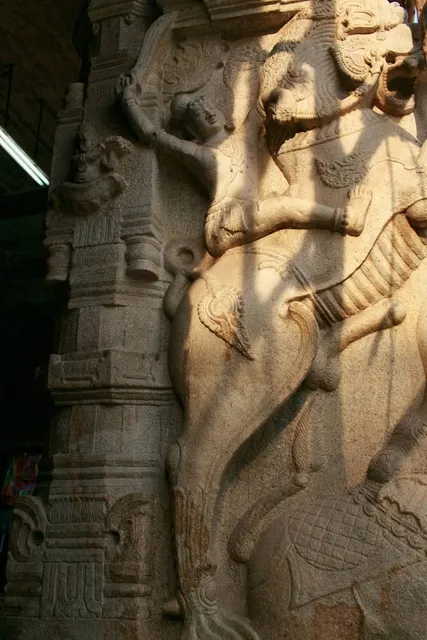
Read moreThe Sri Ranganathaswamy Temple in Srirangam, Tiruchirappalli, Tamil Nadu, is one of the most revered Hindu temples dedicated to Lord Vishnu as Ranganatha, the reclining form of the deity, with his consort Goddess Lakshmi as Ranganayaki. Located on an island formed by the Kaveri and Kollidam rivers, it is the largest functioning Hindu temple complex in the world, sprawling over 156 acres. Known as Thiruvarangam, it is the foremost of the 108 Divya Desams (holy Vishnu temples glorified by the Alvars) and one of the Pancha Ranga Kshetrams. Its history, steeped in legend, literature, and architectural grandeur, spans millennia. Mythological Origins: According to legend, the temple’s idol, Sri Ranganatha, a self-manifested (Swayambhu) deity, was originally worshipped by Lord Brahma in Satyaloka. It was gifted to King Ikshvaku of the Suryavansha dynasty and passed down to Lord Rama, who later gave it to Vibhishana, Ravana’s brother. While Vibhishana was carrying the idol to Lanka, it miraculously became fixed at Srirangam when he placed it on the banks of the Kaveri to rest. Despite his efforts, the idol remained immovable, and Vibhishana was consoled by the deity’s promise to face south towards Lanka. This divine origin is central to the temple’s sanctity, with the reclining Ranganatha idol symbolizing cosmic rest. Historical Development: The temple’s historical roots trace back to the Sangam period (3rd century BCE–4th century CE), with references in Tamil literature like Silappathikaram. The earliest structures date to the Chola dynasty (9th–10th centuries CE), who established Srirangam as a major Vaishnava center. The Alvars, Tamil poet-saints (6th–9th centuries), glorified the temple in their Nalayira Divya Prabandham, cementing its spiritual significance. The Cholas, particularly Dharmavarma Chola, are credited with early construction, though the temple was significantly expanded by later dynasties. During the Pandya (12th–13th centuries) and Vijayanagara (14th–16th centuries) periods, the temple saw major architectural additions, including its iconic seven concentric prakaras (enclosures) and 21 gopurams. The Rajagopuram, standing at 239.5 feet, was completed in 1987, making it one of the tallest temple towers in Asia. The Hoysalas and Nayakas also contributed, with the latter adding ornate mandapams like the Garuda Mandapam and the 1000-pillar hall. The temple’s architecture blends Dravidian grandeur with intricate carvings, frescoes, and sculptures depicting Vishnu’s avatars. Challenges and Resilience: The temple faced plunder during the Delhi Sultanate’s invasion (1311 CE) by Malik Kafur, who looted treasures and attempted to steal the main idol. Devotees hid the idol in Tirupati and later restored it. The temple endured further threats during the Vijayanagara period but was revitalized under their patronage. In the 17th century, Sri Ramanujacharya, the Vaishnava philosopher, organized temple administration and rituals, establishing the Vadakalai Iyengar tradition, which continues today. The temple also served as a center for learning, preserving Tamil and Sanskrit scriptures. Cultural and Religious Significance: As the Bhooloka Vaikuntam (Vishnu’s abode on Earth), Srirangam is a pilgrimage hub. It is one of the eight Swayam Vyakta Kshetras (self-manifested Vishnu shrines) and a key site for Srivaishnavism. The temple’s festivals, especially Vaikuntha Ekadasi (December–January), draw millions, with devotees passing through the Paramapada Vasal (Gateway to Heaven). Other major festivals include Adi Brahmotsavam, Chithirai Car Festival, and Jyestabisheka. The temple’s Araiyar Sevai, a unique tradition of singing Divya Prabandham with music and dance, is a UNESCO-recognized intangible heritage. Modern Context: Managed by the Tamil Nadu HR&CE Department, the temple remains a living monument, blending spirituality, art, and community. It houses sub-shrines for deities like Rama, Krishna, and Chakrathalvar, and features the Kili Mandapam and...
Read moreUpdate to my previous review:
Visited during 27th May 2022 again for vishwaroopam dharshan. Not a huge crowd we gone in at 5.45 but the security guard said door closed and with request they opened for . Once gone in we understood this is to create the mind of buying 100 rupee tickets for dharshan. Because after us there were nearly 100 people who came in with the same scenario of gate closure. So we want to ensure clear dharshan so opted for 100 rupee dharshan without option. We stood nearly 1 hour near the ticket counter as it closed for elephant entry which is understandable and taken . Post the exit of elephant,horse and cow we stood again for 30 mins for our entry . Entry passage was made crowded with an intention of the same. Security persons shouting at people to move without any space ,hope they are in other world where there is no covid it seems. No covid protocols followed. None of security or the poojaris inside the role is wearing masks . Some of the poojaris were even shouting people without any means. Finally we entered the praharam and there were 5 to 7 poojaris standing from the door to door to pull and push people . We havnet even see the deity because the praharam is crowded with poojaris whose main intention to push and pull people away. Tirupati is far better than in this aspect. These male poojaris don't have basic manners when female worshippers are entering they were pulling everyone out of the praharam and there were lot of shouts of these people talking people to move instead of slogan and chants.My mom nearly fell on the ground as these soncalled poojaris pulling everyone out . Management should educate these people not to touch female worshippers which is a basic manners when it comes to tradition. The cleanliness and the calm of the tple is beomg ruined by these kind of useless acts by people who think they were supreme which is not so. Everyone inside the temple is demanding money , not a great environment this time. Temple should be treated as temple and not a cinema theatre first show of thalaivar. Peope come for peace and not for rampage. A complete bad experience over the great experience compare to lats time.
Visited in November 2021. We went to the temple by morning 5.45 and took the way in 100 rupees dharshan. Which is not required as there were no huge crowd t that time . We waited for atleast 30 minutes near the mukya Mandapam with chants all over.
We heard jingling sound along with drum beat. There comes andal elephant . It was our luck to view the great scene at the temple.
The elephant enetered the mukya Mandapam slowly and it was waiting for the dharshan as well. As soon as the curtains removed the elephant bowed in front of the ranganatha Swamy , it's a pleasant scene to watch and worth a wait. Next came the cow and then a white horse.
This is called as the visearoopa dharshan ,the first dharshan in the morning. We were pretty lucky to have this dharshan. There were two elephants out of which one enetered the mukya mabdapam and the other waited outside.
After all three left the place it was our time for dharshan. Even though it's only 100 or few people still the security pushed people to rush. Hope it's their everyday duty. We had a pleasant dharshan.
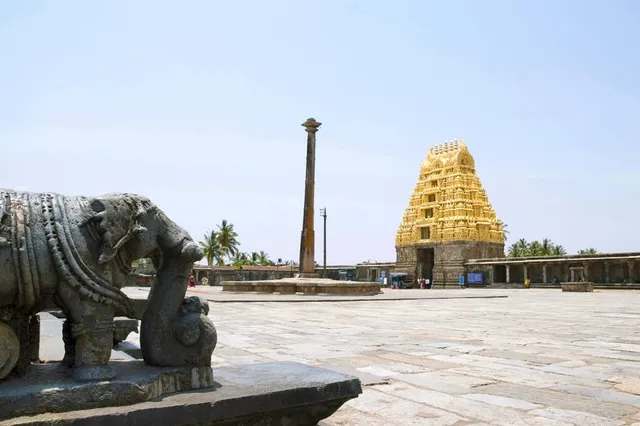
The temple all together is pretty huge and one can see the architecture brilliance all over the temple. Even these architecture brilliance is visible when you start enter the Srirangam .
The temple is a huge must to see place . One can easily spend 3 hours visiting the ranganatha seamy and thaayar. Battery operated vehicles available for the aged people which is a good option as the temple is huge.
We left the temple with a good taste of puliyogare and vada , wowiee to those eataries inside.
Only cons is the dharshan ticket prices , even though the rush is too low still the people insist you to take the route of paid dharshan. Barring this , the temple and the whole town is a wonderful place . Must to visit highly...
Read more