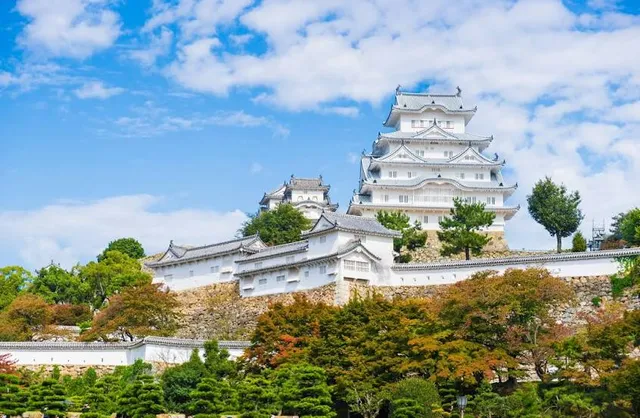
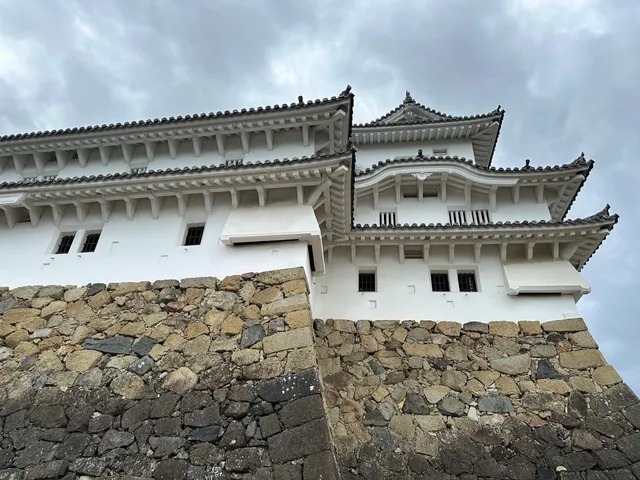
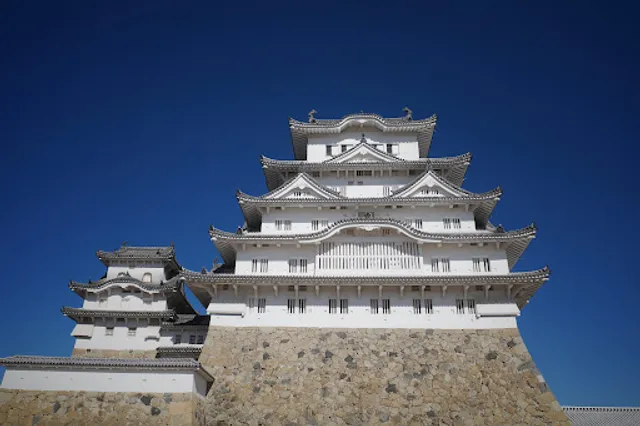
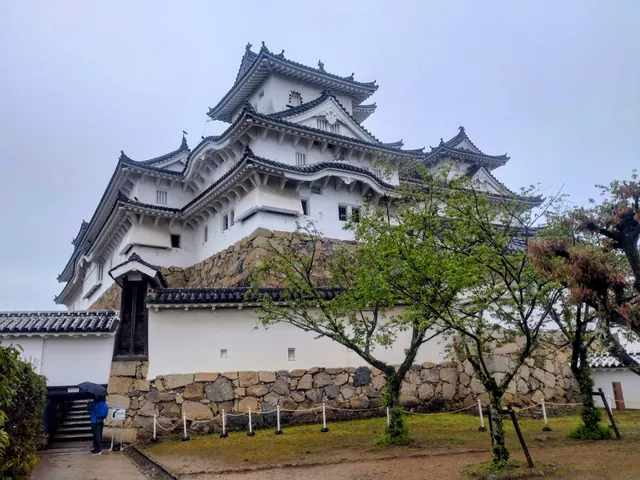
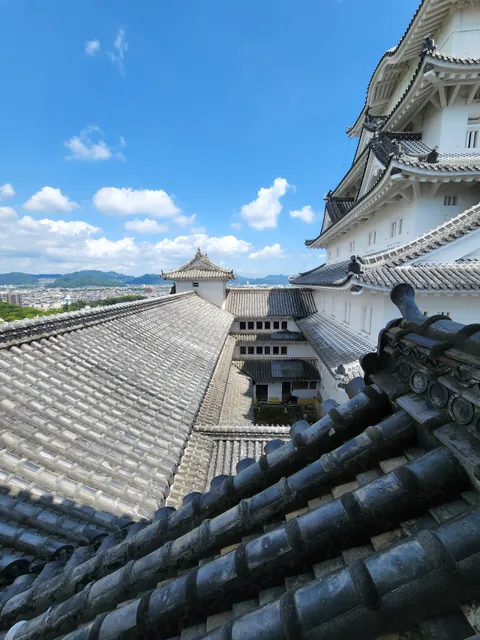
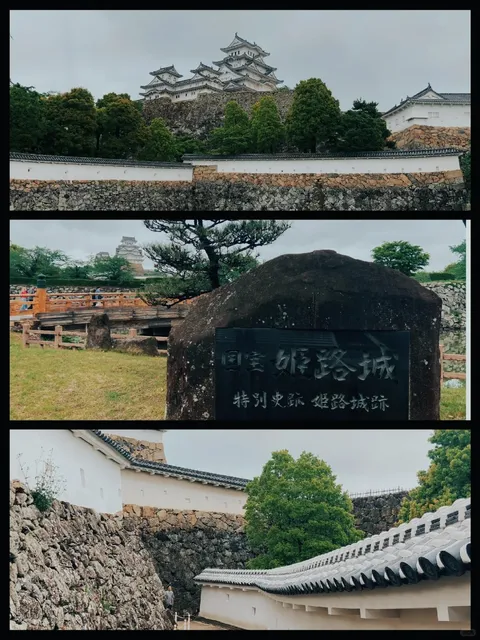
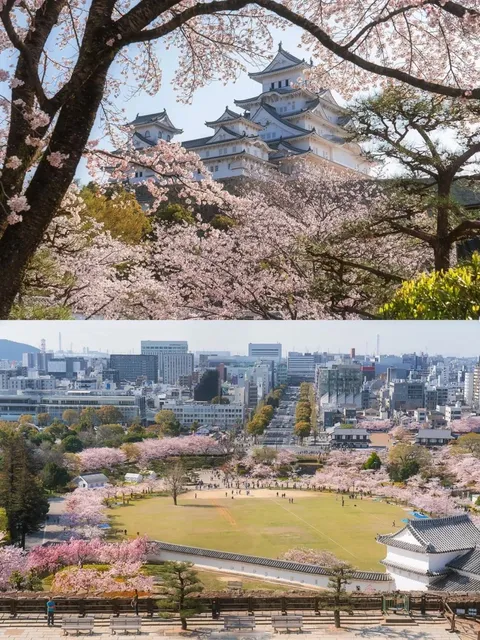
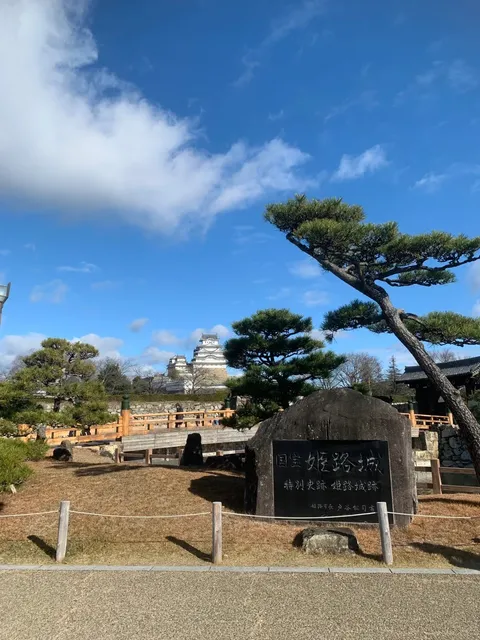
Himeji Castle, often referred to as "White Heron Castle" (Shirasagi-jo) due to its striking white exterior resembling a heron in flight, is widely regarded as Japan's most spectacular and best-preserved feudal castle. Located in Himeji, Hyogo Prefecture, it's a testament to Japanese castle architecture and a significant historical landmark. Here's a breakdown of its key aspects: History: Origins: The earliest fortifications on the site date back to 1333, with a fort built by Akamatsu Norimura. It was later rebuilt as Himeyama Castle in 1346. Major Remodelings: Toyotomi Hideyoshi significantly remodeled it in 1581, adding a three-story keep. Current Form: The castle complex we see today was largely completed between 1601 and 1609 by Ikeda Terumasa, who received the castle from Tokugawa Ieyasu. Terumasa's extensive rebuilding transformed it into a massive fortress. Remarkable Survival: Unlike many other Japanese castles that were destroyed by war, earthquakes, or fire, Himeji Castle has remained largely intact for nearly 700 years. It even survived the bombing of Himeji in World War II, reportedly because a bomb that landed on the grounds failed to detonate. It was never used in actual battle. Architecture and Features: "White Heron" Appearance: Its iconic white plaster walls are not just aesthetic; they also provide fire resistance and help with humidity control. Massive Complex: The castle is a vast complex of over 80 buildings, including a six-story main keep (dai-tenshu) and three smaller keeps connected by corridors. Defensive Masterpiece: Himeji Castle is renowned for its advanced defensive systems: Maze-like Paths: The winding paths, gates, and baileys are arranged in a spiral pattern designed to disorient and delay intruders, making it difficult to reach the central keep. Multiple Moats: It was protected by multiple moats, some of which encircled parts of the city. Loopholes (Sama): Over 1,000 loopholes (rectangular for arrows, round/square for firearms) allowed defenders to fire on attackers from safe positions. Stone Walls: The stone retaining walls, with their steep, outward-curving "ogi-no-kobai" (folding-fan slope) profile, were extremely difficult to climb. Drop Holes (Ishi-otoshi): Openings in the walls allowed defenders to drop stones or other objects on invaders. Concealed Spaces: The castle incorporated hidden areas for defenders. Craftsmanship: The main keep and other buildings are timber-frame structures, utilizing centuries-old joinery techniques. The plaster and ceramic roofing tiles were made from natural materials, showcasing remarkable craftsmanship. Shachi: Mythical fish-like creatures called Shachi adorn the roofs, believed to guard against fire. Cultural Significance and Tourism: National Treasure and UNESCO World Heritage Site: Himeji Castle was designated a National Treasure in 1931 and became one of Japan's first UNESCO World Heritage Sites in 1993, praised for its aesthetic perfection and as a prime example of wooden architecture. Filming Location: It gained international recognition as a filming location, notably in the 1967 James Bond film "You Only Live Twice," where it depicted a ninja training headquarters. Cherry Blossom Spot: The castle grounds, with over 1,000 cherry trees, are a highly popular spot for cherry blossom viewing in early April. Kokoen Garden: Adjacent to the castle is Kokoen, a Japanese garden opened in 1992, consisting of nine separate gardens designed in various Edo period styles, offering beautiful views with the castle as a backdrop. Himeji Castle stands as a magnificent symbol of Japan's rich history, architectural ingenuity, and enduring...
Read moreIt’s the most famous castle for a reason. It’s large, it’s gorgeous, and it is rich with history.
The train ride was rather straightforward, and once you exit the station you’ll be able to see the castle directly down the main road. It’s a 15 minute walk, but there are buses and taxi’s available.
We arrived as soon as able, which seems to have been key, as while leaving the line for entrance to the main keep went from a 00 minute wait to a 50+ hour wait. The time I arrived was around 8-9. I believe it was around 10-12 that line build up started.
Entering into the main gate, you can proceed straight forward to the keep or take a sharp left to the Third Bailey, Sannomaru.
The main keep has a lot of posted info regarding features found within, and history. But the guide-book from the entrance helps give a better picture of the history so I recommend being sure to grab one, it’s free.
The third bailey is a long segment along the castle wall containing many preserved rooms and structures. Its famous for being where Senhime spent the happier days of her fraught and tumultuous life, after her recapture from Osaka Castle (which I recommend visiting as well. The history of those two castles is very intwined). We walked through after leaving the keep, and it wasn’t busy, or I suppose the foot traffic was just more stable. While walking through the Intercom voice was informing visitors of the keep being crowded and encouraging patience while waiting to enter the top floor. There’s a lot more reading in this structure than the main keep. The story of Senime’s life is particularly impactful. Some of the info in the bailey probably would’ve made for good context for the keep (probably by design). So I’d recommend seeing this first, if you feel you have the time. If not the guide booklet does an adequate job till you get there.
Something to note about this castle, like most castles in Japan, is that they are excellent for cherry blossom viewing. However given Himeji’s popularity, I can only imagine how busy it becomes. I visited what must’ve been a day or 3 before they bloomed, so I was able to get some pictures of the early blooming trees without the crowd. But the whole castle with its many trees blooming? That’s gotta be magical.
Anyways in short. Highly recommend. It’s got it all. Visuals, size, historical intrigue, architecture, and it can even include a trip to the Koko-en garden...
Read moreWe drove to Himeji Castle on a Monday, and parked at Himeyama carpark, which is the closest carpark to the entrance of the castle (though a 10 min walk away from Kokoen Garden).
Ticketing: There was both manual and vending machine ticketing available. We used the machine, which had an English language selection option. We decided on a combination ticket (castle + kokoen garden) which cos JPY 1050/adult. If purchased separately, it is JPY 1000/adult for the castle and JPY 310/adult for the garden. Do note that the discounted combination ticket can only be purchased at the entrance to the castle.
Impressions: We did the full tour of the west bailey and main keep. Both were well maintained and airy, despite there not being any fans in the interior. The entire structure was well kept, and staff were stationed throughout the main keep to keep everyone moving and prevent congestion.
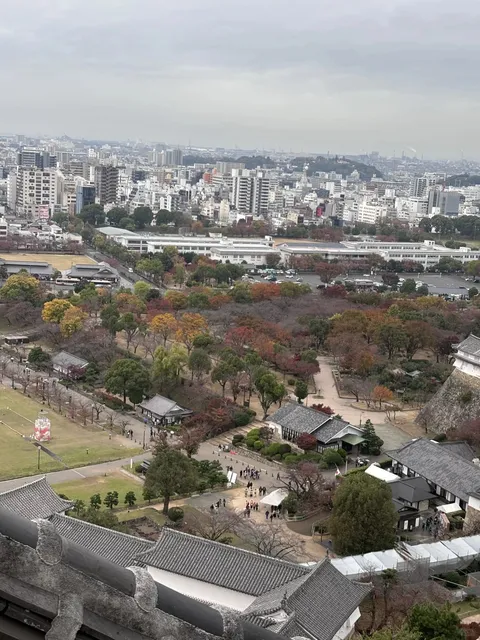
Main keep tour involves climbing several flights of very steep staircases to cover all six floor, with some staircases almost ladder-like. View was good and worth the climb though! Recommend wearing pants/leggings/shorts and a backpack or sling bag instead of a handbag. Those with young children who cannot walk/climb independently or who use a mobility aid (walking stick etc) may consider skipping the main keep and just walk around the exterior of the castle.
Duration: Overall it took us about 1.5 hours at a leisure pace to complete the tour. We saw at the information centre that there was also free English guided tours available to the first 10 visitors to register on site, with two tours per day. We missed the first, and decided not to wait for the second, which was at 1pm.
Other notes: You will be asked to remove your shoes and given plastic bags to store them when touring the interior, so don’t be surprised.
There are vending machines selling cold drinks at the entrance - do buy if thirsty as there are no others within the castle grounds! They encourage visitors to drink and stay hydrated so you can carry the bottle and...
Read more