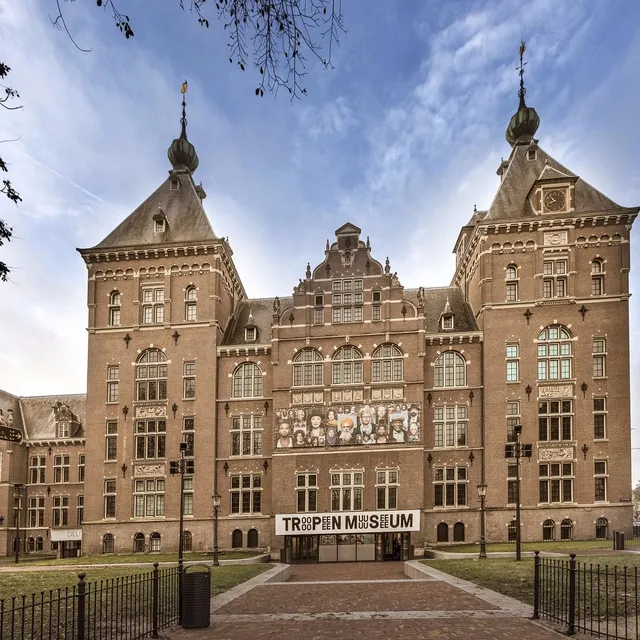
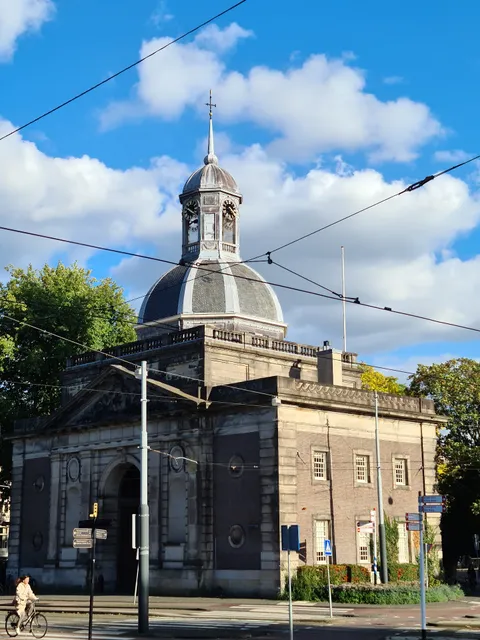
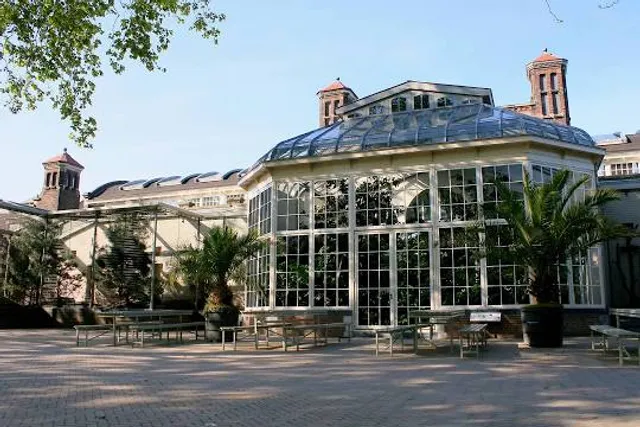
Today I visited the Wereldmuseum in Amsterdam. To say I was impressed would be an understatement.
I was absolutely struck by the fact that the poetry section begins with Rumi. (For me it felt slightly counterintuitive that he was placed to the left along the exhibition path — I think he would fit better on the right.) Still, this reference and gesture of respect honors the museum staff. I also believe the exhibition should make space for the popular traditions influenced by Rumi — for example Tohir and Zuhra or Layli and Majnun (although for me this connects more with Navoi).
Concerning the spice jars on the first floor, I have very serious objections. Fascinating — but incomprehensible. Please place modern spice samples next to the historical jars! As it stands, it is harder to see what is inside than it is to see stars through a magnifying glass. It would also be very valuable to note the exact biological species represented. “Cardamom,” “turmeric” — these everyday labels cover many different plants. The information is incomplete. Contextually readable, but not necessarily accurate. I might assume the specimen is the most common cardamom for that region, and be wrong. Perhaps the cardamom shown in the jar is the result of trade, not an indigenous plant at all.
As for the wadjan — the information given is deeply confusing. The stated purpose (slow simmering) corresponds to… nothing, really. And it is misleading. Yes, nowadays it is used for slow cooking (rendang or curries in contemporary borrowed recipes), but its historical context, its regional introduction, and even its geometry (a hyperbolic surface) point elsewhere. It was above all a multitool, introduced for quick frying. One only has to look at the most prestigious and expensive wadjans of the past — they were made of copper. Thanks to its high thermal conductivity, copper allowed for very rapid frying. And often, what the elite possess in a culinary tradition reflects the distilled pattern and desire of that tradition as a whole. I am not certain, but the information presented left me with very strong disagreement on several levels.
The exhibition “When the culture is yours?” also impressed me. It angered me — which is a good sign. My response: culture is the hallmark of our species. It belongs to all of us — human culture is mine, yours, everyone’s. I would definitely criticize the Eurocentric (Atlantic-centric) framing of this section. Imitation, inspiration, profit — all represented. But no mention of “imposition,” “exchange.” Why not show an Indonesian in a European suit with a P&G or JLL pin? Cultures and their interactions are diverse and astonishing. A museum — which should be showing that diversity — instead applies labels.
Perhaps I misunderstood — after all, I only had an hour and a half during a guided visit from VU. But this was the narrative I read. Maybe incorrectly. Still, it is not my job to search for the narrative — it is the museum’s job to impose a concept.
It’s not obvious to me how to write directly to the museum. I’ll just...
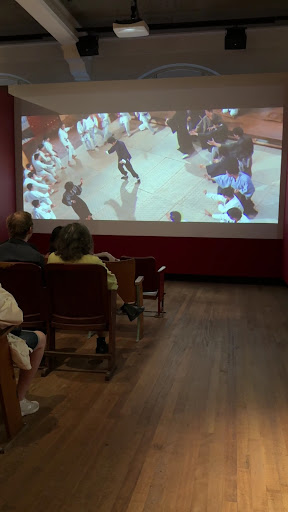
Read moreAn interesting visit to a museum that in searches I saw described variously as an 'Enthnographic Museum' and a 'History Museum'.. Both of which are true. The time I visited there was an exhibition of Martial Arts which was really well presented with interactive displays and videos and seemed to comprehensively touch on all (?) or the many forms. It was unexpected but was obliquely connected to Ethnography I guess. The museum felt comfortable and confident in its presentation and in its exhibits.. Something that I felt the principle topic of the museum of Dutch history and particularly Dutch colonialism did not, unsurprisingly, feel comfortable with. Clearly a controversial topic that should not be ignored or airbrushed over. Like many former colonists the Dutch like the British and others have a terrible history of exploitation, abuse and murder - that in the case of Britain was never taught at school (at least not in the 1970's when I was there) with the exception of the Abolition of Slavery Act but as for the details and the history - nada. Things have hopefully changed now and museums like the British Museum in London and the Pitt Rivers Museum in Oxford should take a lesson or ten from the Werelsmuseum here in Amsterdam. It's impossible to turn back time but it is possible to present the terrible injustices inflicted on populations for profit and exploitation so that young people and new generations can hopefully learn and prevent in the future. There are repatriation schemes for looted items and the museum describes and discusses some of those. l commend them for trying to handle the terrible legacy sensitively and with multi lingual narratives. It doesn't make what happened right but it brought home to me what is happening around the World now with the murder and destruction of counties and populations that this behaviour by human beings inflicted on fellow human beings seems to be something that is a part of the human condition - there has always been appalling behavior and unfortunately there will continue to be. Museums such as this, however, show clearly what went wrong and hopefully may prevent some occurrences in the future in...
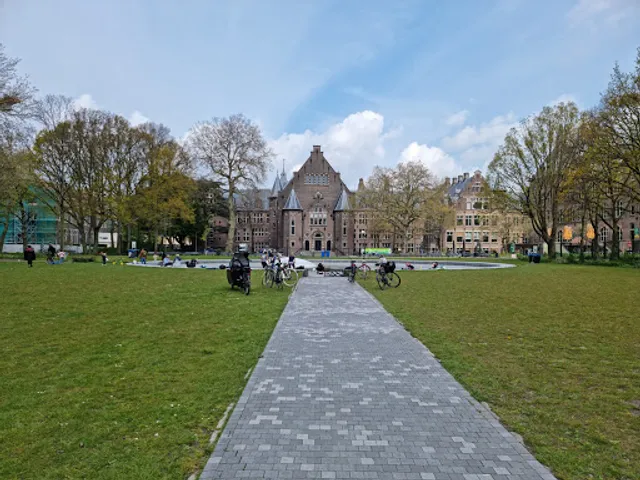
Read moreI have a museum card which allows free entry to a lot of museums including Tropen. Occasionally I go there with the kids, if we happen to get caught in the rain and we are at the nearby park. After 6 years of living in Amsteram, occasionally visiting the place, I have concluded that the permanent exhibits are stale. They might be interesting the first few times but then they become too dull to bother with. Personal opinion. They never change. Just collecting dust. Forever. There have been several temporary exhibits that are somewhat interesting but not really (in my opinion) worth mentioning. Some months ago remodelling began and is now complete. This includes a fence around the grass to prevent people from walking on it, heaven forbid. Bike parking is rearranged leaving only a few spots quite far away. I locked mine to the fence around the grass, close to the entrance. Take that new-imagined-anally-retentive manager! Same manager seems to be terrorizing the employees. The guard was literally following me and my three kids around. The ticket counter guy was passive-aggressive ala Sean Spicer, emphatically pushing a map on me even after I indicated that I did not need it. Sheesh! Ticket-person was adamant in not allowing me in with any baby stuff citing concern for the safety of their exhibits. Is my 5 month old going to throw her diaper/bottle/rice waffle at the dusty African musical instrument exhibit? Perhaps the droves of high school children constantly visiting the museum have triggered all the museum staff into some quais-military status? I hope some new management comes in one day. The museum has a fantastic location and has such great potential. I suppose we may wander in again one day if it really starts to pour and it is the closest dry spot - to once again annoy the staff with myself and my children. As for you dear tourist? I suggest you visit another museum. There are plenty of other really engaging places. P.S. The restaurant is expensive and...
Read more