The opera company was founded by King Gustav III and its first performance, Thetis and Phelée with Carl Stenborg and Elisabeth Olin, was given on January 18, 1773; this was the first native speaking opera performed in Sweden.
But the first opera house was not opened until 1782 and served for a century before being replaced at the end of the 19th century. Both houses are officially called the "Royal Opera", however the terms "The Gustavian Opera" and "The Oscarian Opera", or the "Old" and "New" Opera are used when distinction is needed.
The original Stockholm Opera House, the work of architect Carl Fredrik Adelcrantz was commissioned by King Gustav III, a strong adherent of the ideal of an enlightened absolutism and as such was a great patron of the arts. The Swedish Opera company had first been located in Bollhuset, but there was a need to separate the Opera from the theatre and give them separate buildings. Construction began in 1775 and the theatre was inaugurated on 30 September 1782 with a performance of the German composer Johann Gottlieb Naumann's Cora och Alonzo. It was also the place for public masquerade balls, events inspired from the famous opera-balls in Paris, which was open for everyone wearing a mask at a cheap cost and somewhat ill-reputed.
The Gustavian opera building in 1880
The building was very imposing with its centre Corinthian tetrastyle portico supporting four statues and topped by the royal crown. The four-tiered auditorium was oval in shape, had excellent acoustics and sight lines. The sumptuous foyer contained neoclassic medallions and pilasters.
It was in the foyer of the opera house where the king met his fate: during a masquerade on March 16, 1792, he was shot by Jacob Johan Anckarström, and died 7 days later. (In turn, this event inspired the operas Gustave III by Daniel Auber and Un ballo in maschera by Verdi.) Following the assassination, the opera house was closed until 1 November 1792, when it was opened again, which by some was considered shocking. The son of Gustav III, King Gustav IV Adolf of Sweden, did not like the Opera, possibly because of the murder of his father, and disliked the fact that the scene of his father's murder was used as a place of amusement and leisure, and when a frivolous play was performed for his queen Frederica of Baden in 1806, he decided to close it down. It remained closed until 1809, and when the king was deposed, it took until May 1812, before it was organised enough to be fully opened again.
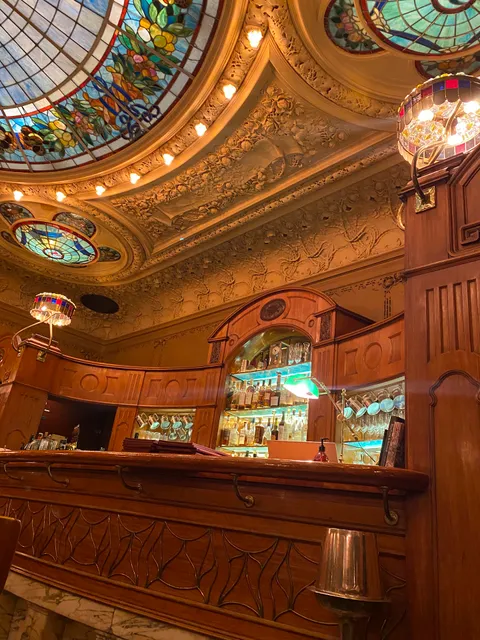
The Golden Hall (with a bust of Swedish singer Birgit Nilsson) at the Royal Swedish Opera.
The old opera was demolished in 1892 to give way to the construction of a new Opera drawn by Axel Johan Anderberg, which was finished seven years later and inaugurated by King Oscar II with a production of a Swedish opera (that tradition having been quite firmly established during the 19th century), Franz Berwald's Estrella de Soria.
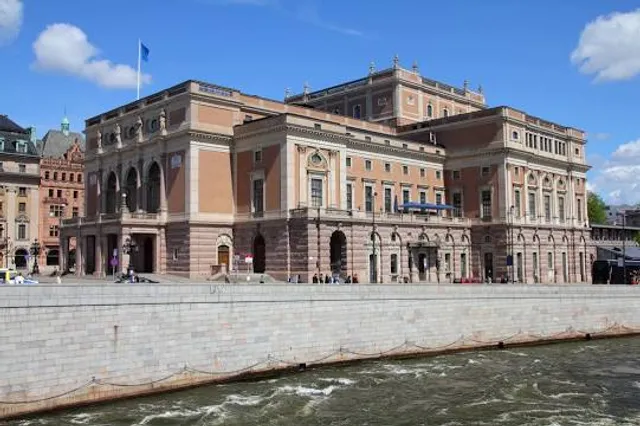
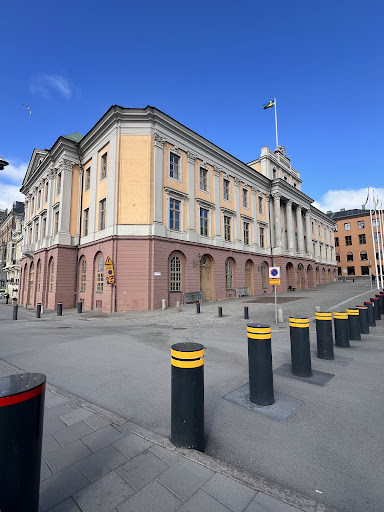
The new house had the letters Kungl. Teatern, literally "Royal Theatre" (which caused the later-founded Royal Dramatic Theatre to add the distinction "dramatic" to its name). The building is now simply called Operan ("The Opera"), written in golden letters above the middle arch on the front facade. It is a majestic neo-classical building with a magnificent gold foyer (Guldfoajén) and elegant marble grand staircase leading to a three-tiered auditorium somewhat smaller than the old theatre. It presently seats 1,200. Most productions are now sung in the original language (with Swedish subtitles), with only a few in Swedish.
The Royal Swedish Family of King Carl XVI Gustaf keeps the Royal Box reserved, located in the first tier in the auditorium above the...
Read moreVisiting the Royal Swedish Opera (Kungliga Operan) was one of the most memorable highlights of my stop in Stockholm while on a cruise. Even if you don’t catch a performance, the building alone is worth seeing—both outside and in. But if you do have time for a show or a guided tour, you’ll walk away with a deep appreciation for Sweden’s artistic and cultural richness.
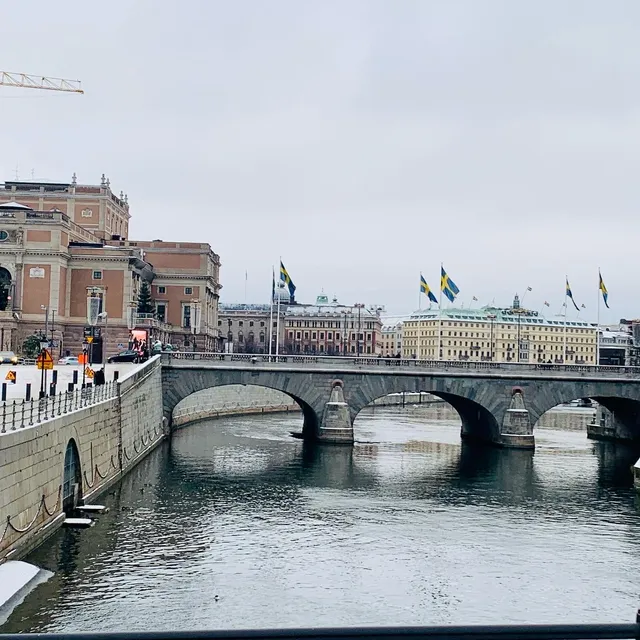
The Opera House is located right at Gustav Adolfs Torg, in the heart of the city, and is an architectural masterpiece. Its majestic neoclassical exterior gives way to a lavish interior filled with gold accents, red velvet seating, ornate chandeliers, and grand staircases. Everything about the atmosphere is elegant yet inviting.
I didn’t attend a full opera or ballet performance during my visit, but I did join a guided tour, which was absolutely worth it. It offered a glimpse into both the front-of-house beauty and the behind-the-scenes workings of this historic venue. Our guide was knowledgeable and passionate, sharing stories about the building’s history since its opening in 1898, as well as fun facts about Swedish royal connections to the arts.
If you’re planning a longer visit in Stockholm, I highly recommend checking their calendar. The Royal Swedish Opera hosts an incredible lineup of opera, ballet, and orchestral performances, and the acoustics are said to be world-class. Even for those who aren’t usually into opera, this is a cultural experience that’s truly special.
The opera house is also located near many other attractions, including the Royal Palace and Gamla Stan, so it’s easy to fit into a day of sightseeing.
Whether you’re an architecture lover, music enthusiast, or just a curious traveler, the Royal Swedish Opera is a must-visit. It beautifully blends tradition, history, and world-class performance under one...
Read moreWe had the most unpleasant experience here.
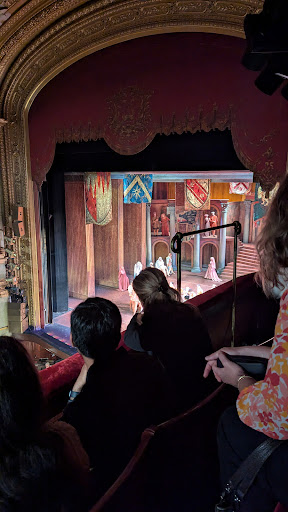
First part of the story seems fine: we bought seats that turned out to be too high. As it made me very anxious + gave me a vertigo, we decided to leave after app. 20 min of the show. However, on our way out we met a very nice man working in opera’s security. He said that he found us seats that are on the lower level — he’ll show us after the break.
Thus, we decided to stay. We waited for over AN HOUR (!!) as he promised to get back to us during the intermezzo and show us the new seats. We stuck to the same place so that he could find us. Guess what? He never did. We spent over 90 minutes in the opera, waiting to at least use our ticket and listen to my partner’s favorite opera, lured into thinking that we might actually get spots where chandelier is actually OVER you and not directly next to you. (Staying at the same level as the chandelier might seem enchanting in Sia’s song but not in real life, especially when you have a fear of heights.) NONETHELESS. We spent 90 minutes frozen, waiting for any kind of information! If not for the security guy, we could have just left the opera, spend our evening doing something equally nice. Instead, we stayed there, on the cold corridor (not joking here, my egzema showed up afterwards, really!) wasting a nice evening in Stockholm. And we’re only here for few days.
I am well aware that it’s not opera’s fault (though I’d be happier if they guy actually remembered that he promised us seats and told us to stay where we were), but I’m highly disappointed and I’d like to complain.
Last but not least: be aware of the 3rd balcony. The photos on opera’s page are inaccurate — in reality, it’s like in Tivoli or some kind of...
Read more