Natural disasters coincide with major events Rapprochement/détente/entente is defined as a peaceful settlement between (opposition or warring) parties. The French pronunciation of détente is similar to earthquake (地动) in the Fujian dialect.
A magnitude 7.7 earthquake hit at 1:47 am (TST/NST) on 21 Sept 1999. A magnitude 7.2 earthquake struck at 7:58 AM (TST/NST) on 3 April 2024, two days prior to the anniversary death of Chiang Kai-shek (5/4/1975). Over 57 5.0+ aftershocks were announced by the Central Weather Bureau (CWA) on the same day.
Strong typhoon 芙安 (FRAN: 197617): 7-9 Sept 1976, two days prior to the death of Mao Zedong/B52 (9 Sept/lunar 16 Aug) Strong typhoon 山陀兒/Julian (KRATHON: 202418): 1-5 Oct 2024, prior to the ROC Double Tenth Ceremony on 5 October and near the PRC National Day Strong Typhoon 康芮/Leon (KONG-REY: 202421): 25 Oct - 1 Nov 2024 during the anniversary of the ROC UN expulsion/Retrocession Day and Chiang Kai-shek’s birthday. Noël is Leon backwards and denotes Mao Zedong who was born on 26 December. Moderate typhoon 天兔 (USAGI: 202425): 14-16 Nov 2024 during the WBSC Premier 12 2024 semi-finals co-hosted by Japan, Mexico and Taiwan.
9 December Movement (129 运动) Israel poses the question of ‘What version of the [9] December story is the most accurate?’ rising from the revisionist claims of the Communist Party of China (CPC/CCP) having orchestrated the event (Israel 1965: 166). Japanese official Takahash ‘claimed that…anti-Japanese activities in China proper will hereafter be termed by the Japanese as communist’ (Office of Historian 1935: para. 1 item 3).‘Chiang Kai-shek's opinion [was] that [9] December “[]started as a patriotic movement, but…came to be utilised by the Communists to advance their neutralist tactics”’ (Israel 1965: 165). Non-communist origins and/or American Christian (Protestant) influences honoured the students (Israel 1965; Perry 2013; Snow 1966).
‘Half-truth’ distortions of the 9 December Movement (Israel 1965: 166-8): There is no evidence that the movement was inspired by the August 1 Proclamation… As Mao Tse-tung has admitted, the Party organisation in Peiping schools was hopelessly weak when the movement began. It could not and did not play a major role in the initial stage… Yenching and Tsinghua were undeniably foci of the movement in its initial stage. To prove that the CCP initiated the movement, one must demonstrate that student organisations at these universities were Party-controlled… References to [‘killed and wounded’] student demonstrators are grossly misleading...
Academia Sinica scholar Su Yun-feng (1998) further substantiates that Tsinghua CPC/CCP members Chiang Nan-xiang and others led the 9 Dec demonstration (246); the pro-communist students making the assault using grey cudgels/bats on 16 Dec were suppressed with water hose by the law enforcement officers at Peiping (252).
Sources: Carter, J. 2021. Power of symbolism... The China Project. https://thechinaproject.com/2021/07/14/power-of-symbolism-the-swim-that-changed-chinese-history/
Chairman Mao swims... n.d. Chinese Posters. https://chineseposters.net/themes/mao-swims
Convention on the prohibition of military... 1976. UNODA. https://disarmament.unoda.org/enmod/
Cultural Revolution.... 2018. SCMP. https://www.scmp.com/photos/china/2170061/cultural-revolution-through-lens-chinese-photographer?page=8
Israel, J. 1965. The 9th December Movement... The China Quarterly 23, 140–169. http://www.jstor.org/stable/651729
Perry, E. 2013. Managing student protest... Front. Hist. China 8(1). https://scholar.harvard.edu/files/elizabethperry/files/fhc_201301_perry.pdf
793.94/7506: Telegram... Office of the Historian....
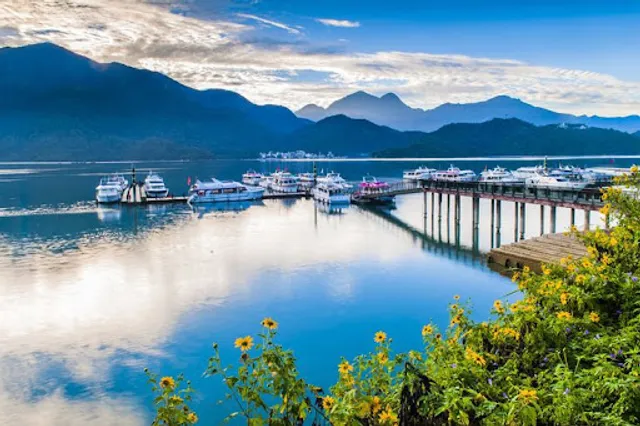
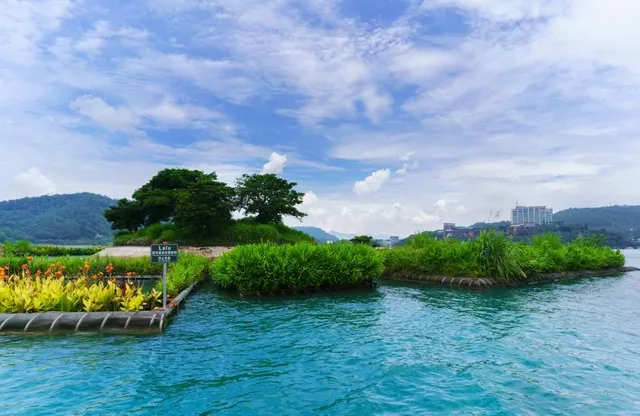
Read moreSun Moon Lake (Chinese: 日月潭) is a lake in Yuchi Township, Nantou County, Taiwan.
It is the largest naturally-occurring body of water in Taiwan. The area around the lake is home to the Thao tribe, one of aboriginal tribes of Taiwan.1]
Sun Moon Lake surrounds a tiny island called Lalu.[2] The east side of the lake resembles a sun while the west side resembles a moon, hence the name.[3]
Sun Moon Lake is located 748 m (2,454 ft) above sea level. It is 27 m (89 ft) deep and has a surface area of approximately 7.93 km2 (3.06 sq mi). The area surrounding the lake has many trails for hiking.[1]
While swimming in Sun Moon Lake is usually not permitted, there is an annual 3-km race called the Swimming Carnival of Sun Moon Lake held around the Mid-Autumn Festival each year.[4 The Sun Moon Lake Swimming Carnival was launched in 19836] and is listed among the Top 50 Open Water Swims in Asia and the Top 100 Open Water Swims of the World.[7] Everyone over 10 years old and with the ability to swim long distances can join, regardless of nationality.[e In recent years, the participants have numbered in the tens of thousands. Other festivities held at the same time include fireworks, laser shows, and concerts.
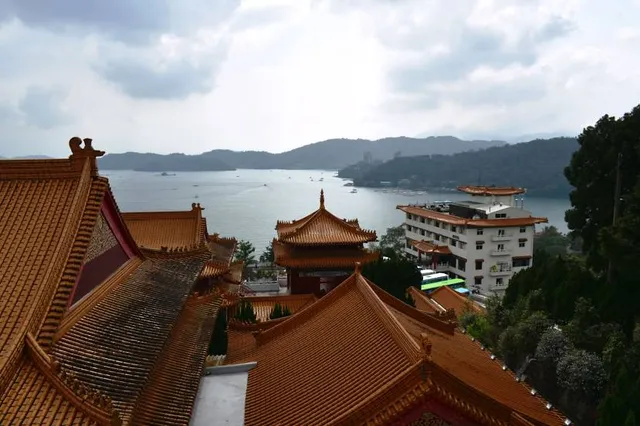
The lake and its surrounding countryside have been designated one of thirteen national scenic areas in Taiwan. Wen Wu Temple was built after rising water levels from building a dam forced several smaller temples to be removed.[9] Tzu-En Pagoda (慈恩塔; Cí'ēn Tǎ) was ordered constructed by late President Chiang Kai-shek in 1971 in memory of his mother.[10] Other temples of note include Jianjing Temple,[3] Syuentzang Temple[11 and Syuanguang Temple12.
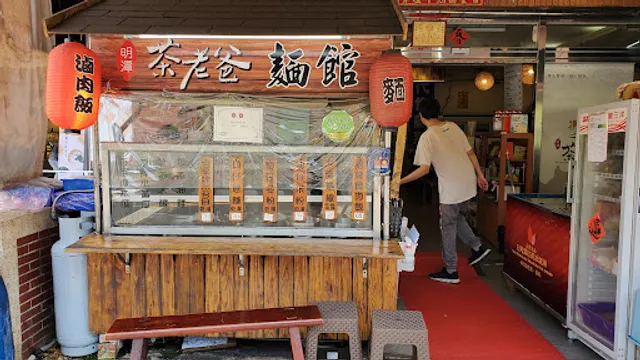
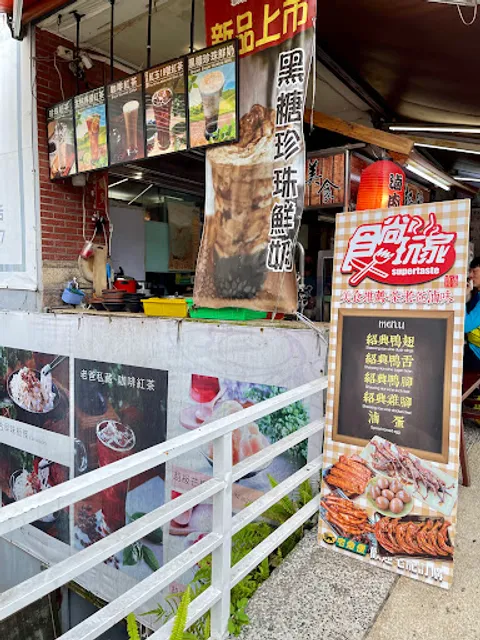
Must try tea flavour boiled egg at the mountain near to drop off...
Read moreNestled in the heart of Taiwan, Sun Moon Lake is a picturesque jewel that captivates visitors with its serene beauty and cultural richness. Surrounded by lush mountains, the lake's name originates from its unique shape, resembling the sun on one side and the moon on the other. This natural wonder offers a tranquil retreat, making it a sought-after destination for both locals and tourists.
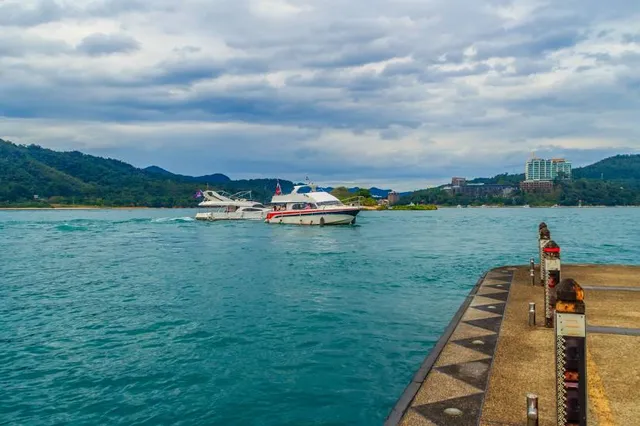
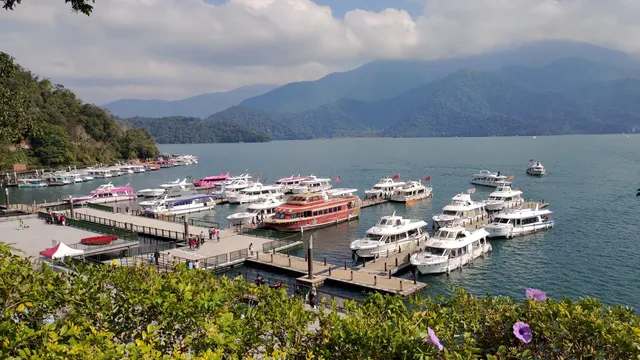
The lake's allure extends beyond its stunning scenery. Visitors can embark on leisurely boat cruises to absorb the panoramic views or cycle along the well-maintained paths that embrace the shoreline. The iconic Wenwu Temple, perched on the northern hills, adds a cultural dimension to the landscape, celebrating Confucianism, Taoism, and Buddhism. The temple's intricate architecture and symbolic significance make it a must-visit spot.
The surrounding areas boast vibrant indigenous cultures, and visitors can explore aboriginal villages, such as Ita Thao, to experience traditional music, crafts, and cuisine. The cable car ride to the Formosan Aboriginal Culture Village offers not only breathtaking views but also insights into Taiwan's diverse cultural heritage.
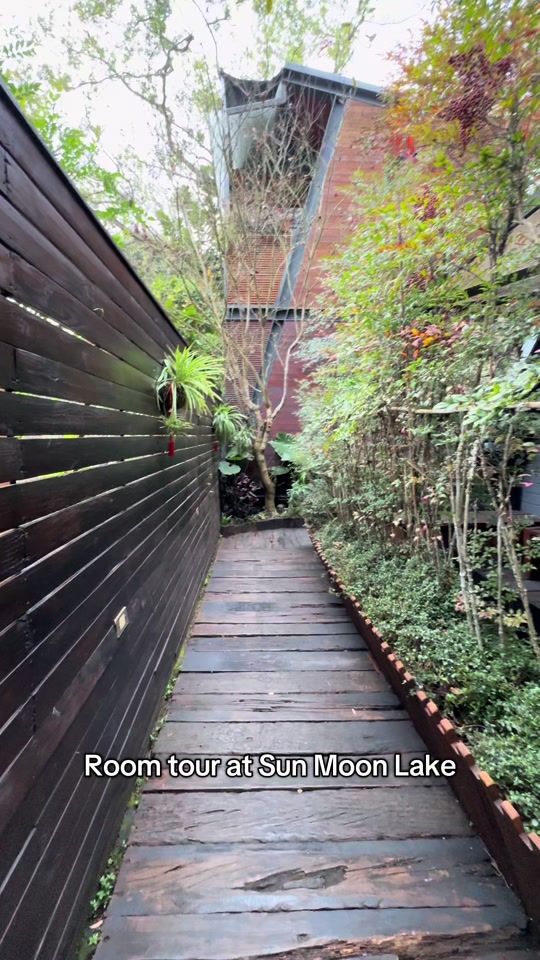
With a range of accommodations, from lakeside resorts to charming guesthouses, Sun Moon Lake accommodates various preferences. Whether seeking relaxation or adventure, this Taiwanese gem invites exploration, providing a harmonious blend of natural splendor and cultural depth that lingers in the hearts of those fortunate enough to experience its...
Read more