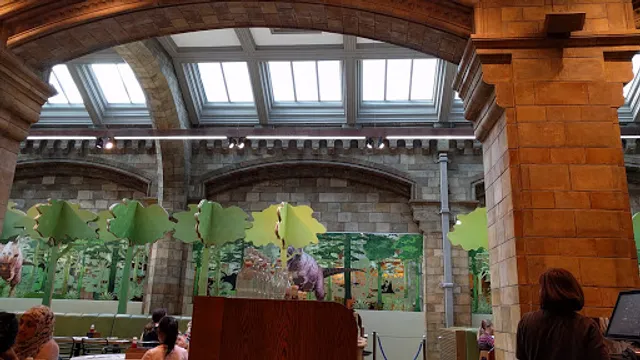
Have been to the museum quite a few times now in last 20 years. Our last visit was in July end. The collection is awesome. My favourite being birds, gemstones and dinosaurs . Butterflies garden wasn’t there this time around. It was too hot inside the museum. Air conditioning did not feel like doing its job. Food is always expensive but it used to be nicer. Suggest bringing a packed lunch or eat out after the visit. Place definitely need maintenance and good cleaning. They used to run shows for kids, specially during holidays that seem to have stopped. But if you are in London visiting, it’s worth visiting the museum at least once.
Did you know founder Richard Owen invented the word Dinosaur. He was a world-famous naturalist. He took three unusual fossils and realised they were all of a kind: Megalosauraus, Iguanodon and Hylaeosaurus. When put in charge of Britain’s natural history collection he decided they needed a new home outside the British Museum. He set out to purpose build the perfect building to house the wonders of the natural world.
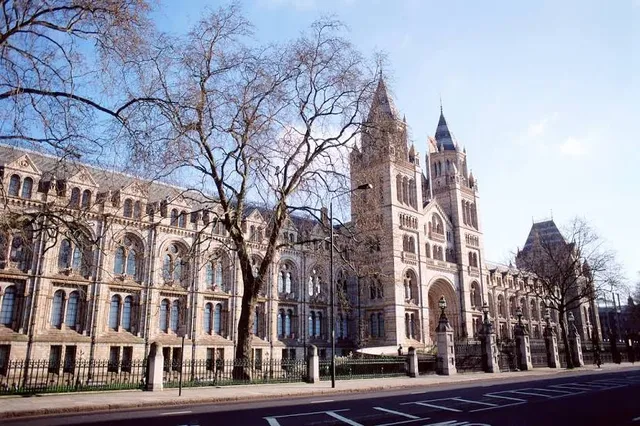
Eventually Alfred Waterhouse, a relatively unknown young architect from Liverpool was given the job and he set out plans for a ‘Cathedral to Nature’ as it would soon be nicknamed. Waterhouse used terracotta to decorate the building as it was quicker and cheaper to carve, and it would be less affected by Victorian London’s sooty, smoky atmosphere. Others were being stained black by the smog!
Under Owen’s guidance Waterhouse created a huge central space in the style of a cathedral, now named Hintze Hall. This space was deliberately big enough to house the biggest pieces in the collection, from diplodocuses to blue whales! Almost every surface in Hintze hall is adorned with scenes from the natural world. Monkeys climb the arches. Woodland critters cuddle the corner columns. The ceiling is decorated with real plants and their scientific names, from beautiful flowers to cocoa and tea.
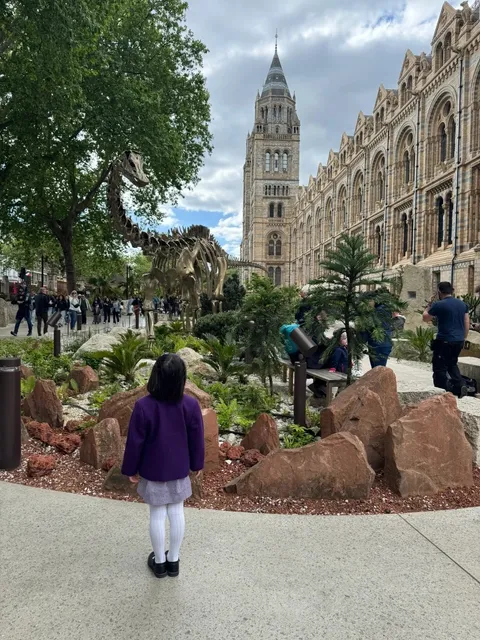
Even the outside of the building is decorated! Terracotta gargoyles loom off the façade. On the East wing, next to exhibition road and the V&A Museum you can see Pterodactyls and saber-toothed tigers perched outside windows and roaring from the rooftop. On the West wing nearer the museum’s wildlife garden you can instead see wolves, lions and kangaroos watching over the London streets.
It was by Owen’s decree the east wing is decorated entirely with extinct creatures, and the west entirely with living species. The museum was built as Darwin’s theory of evolution by natural selection was gaining prominence and revealing the connections extinct species have to our modern ones. Owen however disproved of Darwin’s removal of God as the true creator of our living species. He agreed with the science, he could see the evidence of species evolving but believed it all began with God. So he build a huge cathedral in between the living and the extinct wings to show gods role at the heart of the natural world.
There have been many changes to the environment of our world over the last 150 years. So there are now two animals on the wrong sides of the building. The passenger pigeon used to fly over North America in flocks of millions. But thanks to human expansion by 1914 there was just one left, called Martha in San Diego Zoo. Carved into the living side, it should now be with the pterodactyls and other extinct animals. The opposite is true of the coelacanth. A fish thought extinct for 66 million years until in 1938 a fisherman caught one off the coast of South Africa! This is known as a Lazarus Taxon: species that have risen from the dead.
The newest part of the building is the Darwin Centre. Comprising several buildings, the most interesting is the Cocoon containing the UK Diodiversity lab. It is also home to the Entomology department studying the museum’s bugs. 28 million specimens had to be carefully moved from the old building to the new. There is also the Zoology Spirit collection which has 22 million animal specimens preserved in jars of alcoholic spirit. The biggest is a 9m long...
Read moreNatural History Museum, London, UK 😀
The Natural History Museum is one of Britain's most striking examples of Romanesque architecture and has become one of London's most iconic landmarks.
Photo By: @ike_pineda [IG]
The Natural History Museum is situated in the heart of South Kensington, on Cromwell Road stands as a grand testament to the wonders of the natural world.
From the moment you approach its iconic Victorian facade, with its intricate terracotta detailing and imposing arches, there’s a palpable sense of stepping into a place where history, science, and beauty converge.
The building itself feels like a monument to curiosity, its architecture alone worth the visit, exuding an old-world charm that contrasts delightfully with the cutting-edge discoveries housed within.
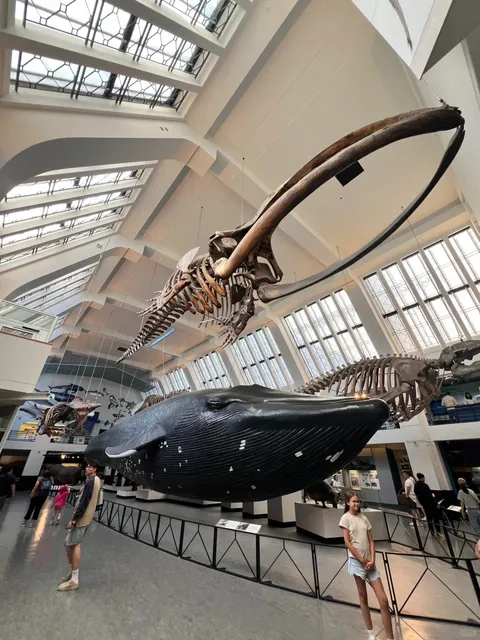
Stepping inside, the vastness of the central Hintze Hall greets you with an almost cathedral-like awe. The skeleton of Hope, the blue whale, suspended gracefully from the ceiling, is a breathtaking centerpiece that immediately captures the imagination.
It’s a striking reminder of nature’s scale and majesty, setting the tone for the exploration ahead. The hall buzzes with energy, families marveling, children pointing in wide-eyed wonder, and the soft hum of voices echoing off the high ceilings. The space feels alive, a perfect introduction to the museum’s mission of connecting people with the planet’s past and present.
Wandering through the galleries, the sheer breadth of the collection becomes apparent. The dinosaur exhibit, a perennial favorite, transports you back millions of years with its towering skeletons and lifelike animatronics.
The T. rex, with its menacing jaws and thunderous roar, never fails to thrill, while the intricate fossils of smaller creatures reveal the delicate details of prehistoric life. It’s a journey through time that feels both educational and exhilarating, striking a balance between scholarly depth and pure entertainment.
The mineral gallery, often overlooked, is a hidden gem in its own right. Rows of gleaming specimens, vibrant amethysts, shimmering opals, and chunks of raw meteorite, sparkle under carefully curated lighting. It’s a quieter space, inviting contemplation of Earth’s geological artistry. Each stone tells a story of pressure, time, and transformation, and the serene atmosphere here offers a refreshing pause amid the museum’s more bustling areas.
For those drawn to the intricacies of life, the Darwin Centre’s Cocoon is a marvel of modern design. Its sleek, organic structure houses countless specimens, and the chance to glimpse researchers at work behind glass panels adds a layer of authenticity.
The interactive displays weave together science and storytelling, making complex concepts accessible without ever feeling dumbed down. It’s a space that celebrates discovery, encouraging visitors to ask questions and dig deeper into the mysteries of evolution and biodiversity.
Beyond the exhibits, the museum’s atmosphere is enriched by its thoughtful layout and attention to detail. The signage is clear, guiding you seamlessly from one world to the next, yet there’s still a sense of freedom to wander and stumble upon surprises.
The staff, too, contribute to the experience, knowledgeable and approachable, they’re quick to answer questions or point you toward a must-see display. Even the gift shop, brimming with fossils, books, and quirky souvenirs, feels like an extension of the museum’s spirit rather than a mere commercial add-on.
Of course, no visit is without its minor imperfections. The crowds can swell, especially on weekends, turning popular galleries into a slow shuffle of eager visitors. Patience is sometimes required, particularly around the dinosaur and earthquake simulators, where lines form quickly. Yet even this speaks to the museum’s universal appeal, it is a place that draws people of all ages and backgrounds, united by a shared fascination with the natural world.
Overall, the Natural History Museum is more than a collection of artifacts, it is an...
Read moreThe Natural History Museum in London is a grand institution that offers an extraordinary journey through the history of our planet and the life it supports. Located in South Kensington, the museum is housed in a magnificent Romanesque-style building, often referred to as the “Cathedral of Nature.” Its architecture alone is worth a visit, with its intricate terracotta facade adorned with sculptures of animals and plants that reflect the museum’s naturalistic focus.
The museum is home to a vast and diverse collection that spans over 80 million items, covering botany, entomology, mineralogy, paleontology, and zoology. One of the museum’s most famous exhibits is the Hintze Hall—formerly dominated by “Dippy,” a replica of a Diplodocus skeleton, now replaced by the equally impressive blue whale skeleton named “Hope,” which serves as a breathtaking focal point as you enter.
The Dinosaur Gallery is arguably one of the most popular sections, especially for younger visitors. The life-sized animatronic T. rex is a major attraction, but the gallery also offers a wealth of information about various dinosaur species, their habitats, and their extinction. The exhibits are interactive, engaging, and educational, catering to a wide range of ages and interests.
The museum’s Earth Hall is another must-see, where you can explore the wonders of geology and meteorology. The display starts with an awe-inspiring escalator ride through a model of the Earth. The gallery covers the earth’s structure, tectonics, and the forces that shape our planet, offering interactive displays that make complex scientific concepts accessible and engaging.
The Treasures Gallery is a curated selection of some of the museum’s most significant items. Here you can find the first edition of Charles Darwin’s On the Origin of Species, the Archaeopteryx fossil (a key piece of evidence in the study of evolution), and a slice of the Imilac meteorite. This gallery provides a more intimate experience, allowing visitors to appreciate the historical and scientific significance of these items up close.
The museum is also renowned for its educational programs and events. It offers a variety of workshops, lectures, and activities for both children and adults. “Dino Snores” is a particularly popular sleepover event that allows children to spend the night in the museum, exploring exhibits after hours. For adults, the “Lates” events offer an opportunity to enjoy the museum in a more relaxed, evening setting, often accompanied by talks, music, and drinks.
The visitor experience at the Natural History Museum is generally outstanding, though it can get quite crowded, especially during school holidays and weekends. The museum offers free entry, which makes it highly accessible, though donations are encouraged. The layout is generally intuitive, but due to the sheer size of the museum, it is advisable to plan your visit in advance or consider multiple visits to fully appreciate everything on display.
The staff are knowledgeable and helpful, adding to the overall positive experience. The museum also offers a variety of amenities, including cafes, gift shops, and a dedicated area for families, making it a convenient and comfortable destination for a full day out.
In conclusion, the Natural History Museum in London is a world-class institution that offers an enriching and awe-inspiring experience for visitors of all ages. Whether you’re fascinated by dinosaurs, intrigued by the natural world, or simply looking for a day of educational entertainment, the museum delivers on all fronts. Its combination of historic grandeur, extensive collections, and innovative exhibits make it not just a museum, but a cultural landmark that is an essential part of any...
Read more