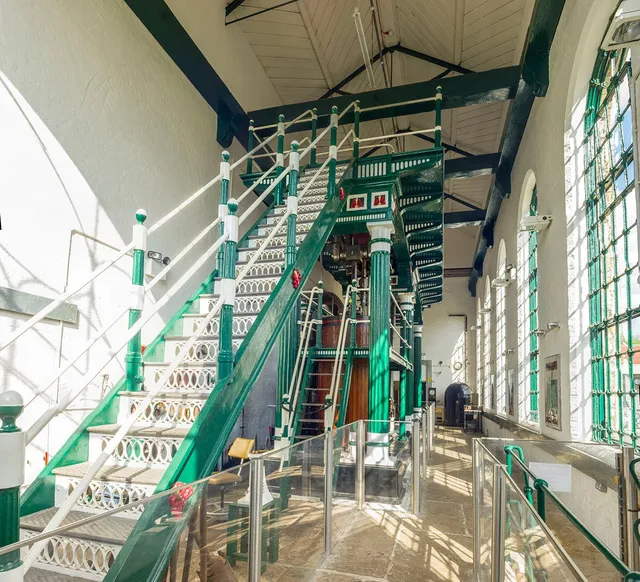
It was a far better place, when it was entirely taken care of by Thames Water, but now the London Wildlife Trust (LWT) is involved, it has become too bureaucratically run and driven, it’s now operated as a business, (albeit a free to enter location). Adding a cafe; a bookshop etc, and letting out the old boiler house rooms for parties, etc, is what makes this ‘money driven’. All the extra footfall on site is very sad indeed. The more visitors they get, the more boxes get ticked and the more money is made. They have lost sight of the most important thing: the wildlife itself. The place has always been open to the public. One simply paid a £1 at the gate, and walked in. It was called Walthamstow Reservoirs before LWT. Now, five years later, it’s called Walthamstow Wetlands. LWT’s website tells us, “The opening of Walthamstow Wetlands has only been possible due to a partnership between Thames Water, landowner, London Borough of Waltham Forest, grant holder, and London Wildlife Trust, the conservation delivery partner.” It has always been open to the public. I have visited the Walthamstow Reservoirs for over 30 years, paying my £1 entrance fee. The site, owing to it’s copious water, has ALWAYS been a recognised wildlife haven.
MY DEEP CONCERN With thousands upon thousands of extra visitors walking around annually, (with bicycles; children screaming, and worse, splashing in the water, (disturbing the natural, delicate balance of aquatic and other wildlife), this place is now a shadow of its former glory, in terms of species numbers. Once visitors started arriving in droves, the wildlife started moving out. According to one reliable source, (an employee, who I’ll keep anonymous), 50% or more wildlife has left, since the Wetlands inauguration with LWT 5 years ago. This is intensely sad. One of the very first things LWT did when they came onboard, was to rip out existing wildflower habitat, (a favourite for pollinators), that had been established for decades - I speak of all the pollinator-loving Rosebay Willowherb. Swathes of this plant provided a vast habitat for honey bees, solitary bees, butterflies, etc. They thrived. This desecration of established habitat had nothing to do with NATURE CONSERVATION. A true environmentalist doesn’t destroy a thriving, healthy habitat, and replace it with another!, What was done, was nothing less than habitat mutilation. The Rosebay Willowherb was replaced with Gorse, presumably to encourage nesting birds, which brings in cash from bird aficionados.The Gorse runs next to pedestrian areas, which are often noisy and always well trodden. In my opinion, it’s too close to people. Birds require seclusion when nesting and minimal disturbance. LWT’s actions have upset the natural balance of this place, which was once home to vast numbers of water fowl; birds in general and huge numbers of thriving pollinators. Yes, LWT has created new areas, but at the expense of destroying much of the old ones. Wildlife which was free to roam here for 150 years, (the reservoirs were build from the 1850s), are now scared off by endless disturbance by people. A more conservation-savvy...
Read moreLovely place divided into 2 sections, separated by a main road with zebra crossing. One main concrete path on each section but it's not circular so you go up and back the same way. There are other offshoot pathways but these are rough and unpaved so not wheelchair friendly (unless you have all terrain type I guess) and some upper level trails accessible by steps. From the main path on the car park side you have the Engine House tearoom and gift shop (both wheelchair accessible) and go past a stretch of water that has a lot of wild flora at the edge so you may not see that much wildlife from low level except for insects and the odd crow or wood pigeon. The trail is shared by people walking, running, cycling and using wheelchairs and pushchairs so you do need to be a bit alert to your surroundings but we found runners and cyclists went round us rather than us having to move for them. My friend went up to the top level to look in a hide up there and said there was a bit more to see from that area but not a lot. The trail ends at the Coppermill, which wasn't open on our visit but I believe you can go up the tower when it is open. Annoyingly I had to Google info on the building, and some of the birds, as very little signage throughout the area. The second part across the road has a main concrete walkway that takes you past a reservoir where we saw a lot more birds. Again there is an unpaved track we couldn't take and you need to come back the way you came. Architecturally there are some interesting round buildings up a hill but no info on them at ground level (couldn't get up to see if any up close). There is one board there showing pictures and names of some of the birds you are likely to see but we had already googled "red headed duck" to work out we were seeing pochards as the board was near the end of the trail. We saw several different water birds and a few of the geese came within a couple of metres of us but you do need to respect that it's their home and move away if they feel threatened.
A nice couple of hours in nature, seeing some birds closer than you might usually, accessible for at least the main areas and really restful and relaxing. Binoculars would be useful as most of the birds are a bit of a distance away so that phone camera zoom doesn't do them justice. We did see a nature photographer with very long lens taking photos and several people fishing, which you need permit for.
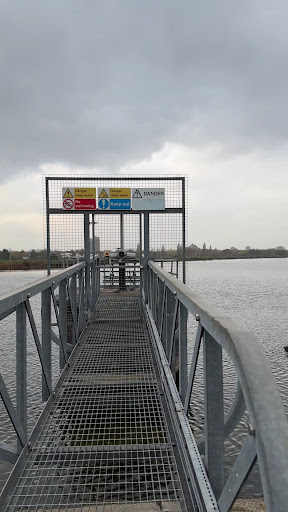
Minor cons - no info board on copper mill and only 1 on second site near the end of the trail with pictures and names of birds so you can identify them. Yes everyone likely to have a phone but hard to get a good photo to reverse search and if you don't know what the bird is, it's hard to look it up. The unpaved tracks I think took you a bit closer to where the birds are but not accessible to all. The metal walkway past car park (not suitable for wheelchairs except disabled parking is close to concrete path at the end) to street felt uncomfortable and unpleasant to me in a wheelchair with the bounce...
Read moreA lovely addition to the area....
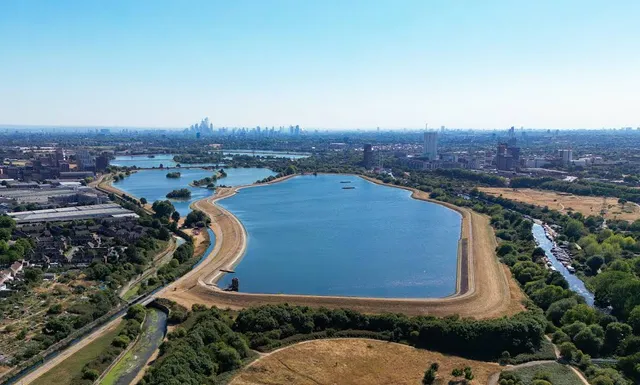
The Wetlands are an area around a set of water reservoirs in between Tottenham and Walthamstow. The place has been a nature reserve for a long time, and it has actually been possible to get in there for years, but up until recently you had to pay. What they've done is to open it up officially, add a car park, a café, a small gift shop, and some toilets, abolish the entry charge so you can just wander in, and publicise it a bit.
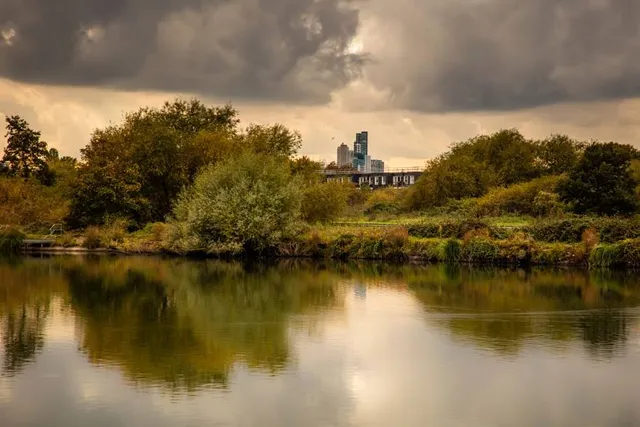
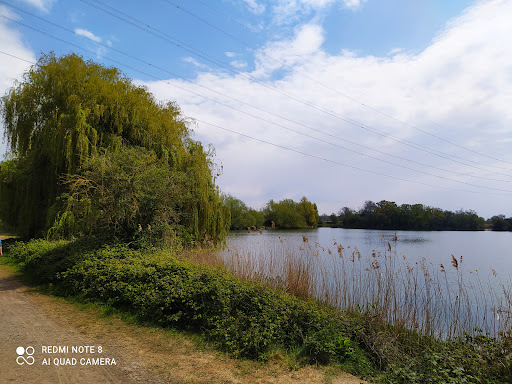
Parts of it are very pretty. You can't kid yourself that you're actually in the country, but there's a certain curious grandeur to having a semi-wild green space with views across the urban areas around it.
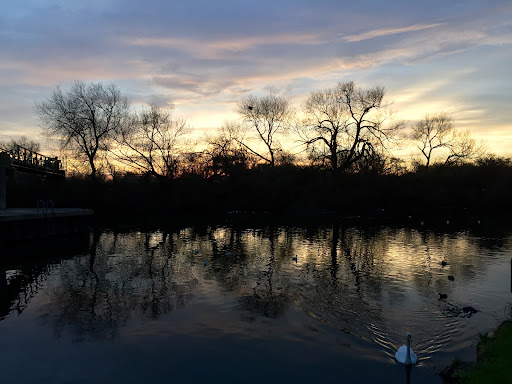
You'll see a lot of birds there - especially coots and a couple of species of duck, but there are also herons, cormorants, swans, and lots of others.
While the reservoirs themselves are huge, the areas you can walk through are fairly narrow "corridors" around the edges, and there aren't all that many places you could stop for a picnic, although there are a few. The main path through the middle is flat concrete; some of the others are gravel, or bare earth, which can get muddy if it's wet.
Other than in the café, there isn't really anywhere to sit down - no benches - so if you have limited mobility, that might be a problem. No dogs allowed, with the possible exception of seeing/hearing dogs.
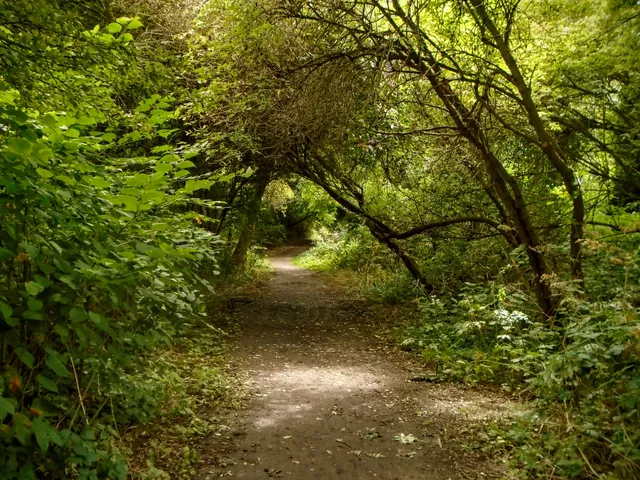
They clearly don't do much to maintain the area, so a lot of the green spaces are filled with brambles (which are trimmed back to clear the paths); a lot of it looks more like urban "waste ground" than like proper countryside, and it certainly doesn't look like a park or garden.
But overall it's a lovely place to go for a walk.
Be aware that from October to March it's only open from 9.30 till 4.00. (9.30-5.00 April...
Read more