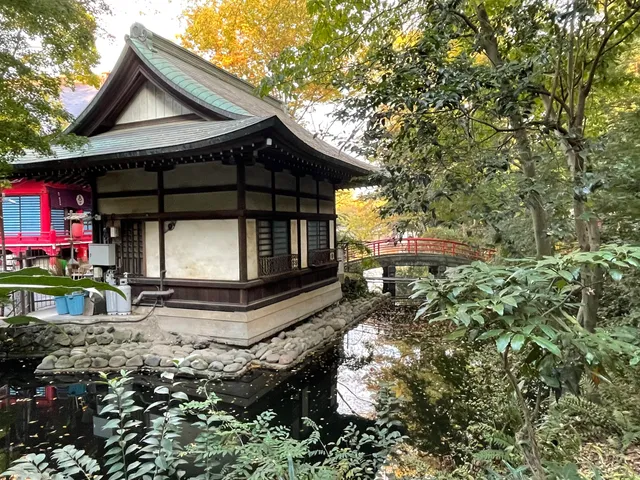
Inokashira Benzaiten is located in Inokashira Park, Tokyo Japan. Benzaiten is Hindu equivalent Maa Saraswati Shrine
The substantial sums of Hinduism that Buddhism carried along on its historic spread across Asia is not always appreciated. one of the earlier schools in Japan, such as Shingon, Kegon and Tendai, had largely Hindu pantheons. In addition, the Mahayana scriptures are in Sanskrit, unlike the earlier Theravadin canon, which is in Pali, and numerous Sanskrit inscriptions can therefore be seen in Japanese temples, and sometimes on rocks in the mountains. Japanese folk religion is a rich mélange, but a number of Hindu Gods play an important role. For example, of the seven Gods of good fortune whose temples people visit at New Year, three are Hindu: Daikoku (Mahakali), Bishamon (Vaishravana) and Benten, Benzaiten or, most formally, Bensaitensama (Sarasvati). A popular temple at Futako Tamagawa, Tokyo, displays Ganesha far more prominently than the Buddha.
Sarasvati is one of the first Deities recorded in Hinduism, being mentioned numerous times in the Rig Veda, as the sacred river on the banks of which the Veda was inspired, and as the Goddess who is “inciter of all pleasant songs, inspirer of all gracious thought” and “best mother, best of rivers, best of Goddesses.” Sarasvati is now usually seen as the shakti of Brahma, and the patron Goddess of the arts, learning and music. She is usually shown playing a vina, and sometimes with four arms.
In Japan, Benten is usually shown, rather similarly, as a beautiful woman dressed in the robes of a Chinese aristocrat, playing a biwa (a kind of lute) and wearing a jewelled crown. As such, She is instantly recognizable from thousands of television and magazine advertisements, and is perhaps the most well-known Japanese Deity. More specifically religious pictures often show Her with multiple arms. She is the Goddess of music, cultured learning and the entertainment-related arts, and also of rivers and water. Most of Benten’s temples and shrines are on islands, in rivers and streams, ponds and lakes, or near the sea.
Benten has from ancient times been known as Uka-no-Kami in Japan and as the Dragon God in China. She is worshiped as the water Goddess, who is the womb of all things in the universe, and of all reproduction and development. She is the Goddess of happiness and good fortune who blesses business and productivity, controls the fertile harvests of the five cereals and their manifold increase, and brings all things to birth. She is also known as Myoonten (fine music Deity), Bionten (beautiful music deity) and Gigeiten (fine arts Deity), and is widely revered as the Goddess who enables the striving for excellence in arts, crafts, technology, music, literature and religion. It all sounds very much like Saraswati.
The musical instrument veena is symbolic to show that the string in the instrument needs the right tension. If too tight, it will snap, if too loose then no music can come out of it. The right control, a delicate balance is the reason why Saraswati is associated with knowledge and learning. Saraswati and Benzaiten is the goddess of everything that flows: water, time, words, speech, eloquence, music and by extension, knowledge.
Japan’s three most important Benten jinja are Enoshima, Itsukushima and Chikubushima.
In general, you may think of a figure holding a biwa, but the principal image of Inokashira Benzaiten is a seated statue with eight arms, each holding a sword, a bow and arrow, and a spear who always protects us with mighty power and merciful heart.
When visiting the shrine, do not clap your hands, but quietly put your hands together, chant a mantra, and make a wish in your heart. This is called the “three secrets of body, speech, and mind,” and allows us to communicate...
Read moreTucked quietly into the trees like it’s hiding from emails, this shrine is the serene soul of Inokashira Park. We showed up on a Monday morning and had the whole place to ourselves—just us, the breeze, and the soft sound of water lapping against moss-covered stones. It felt like the world hit pause.
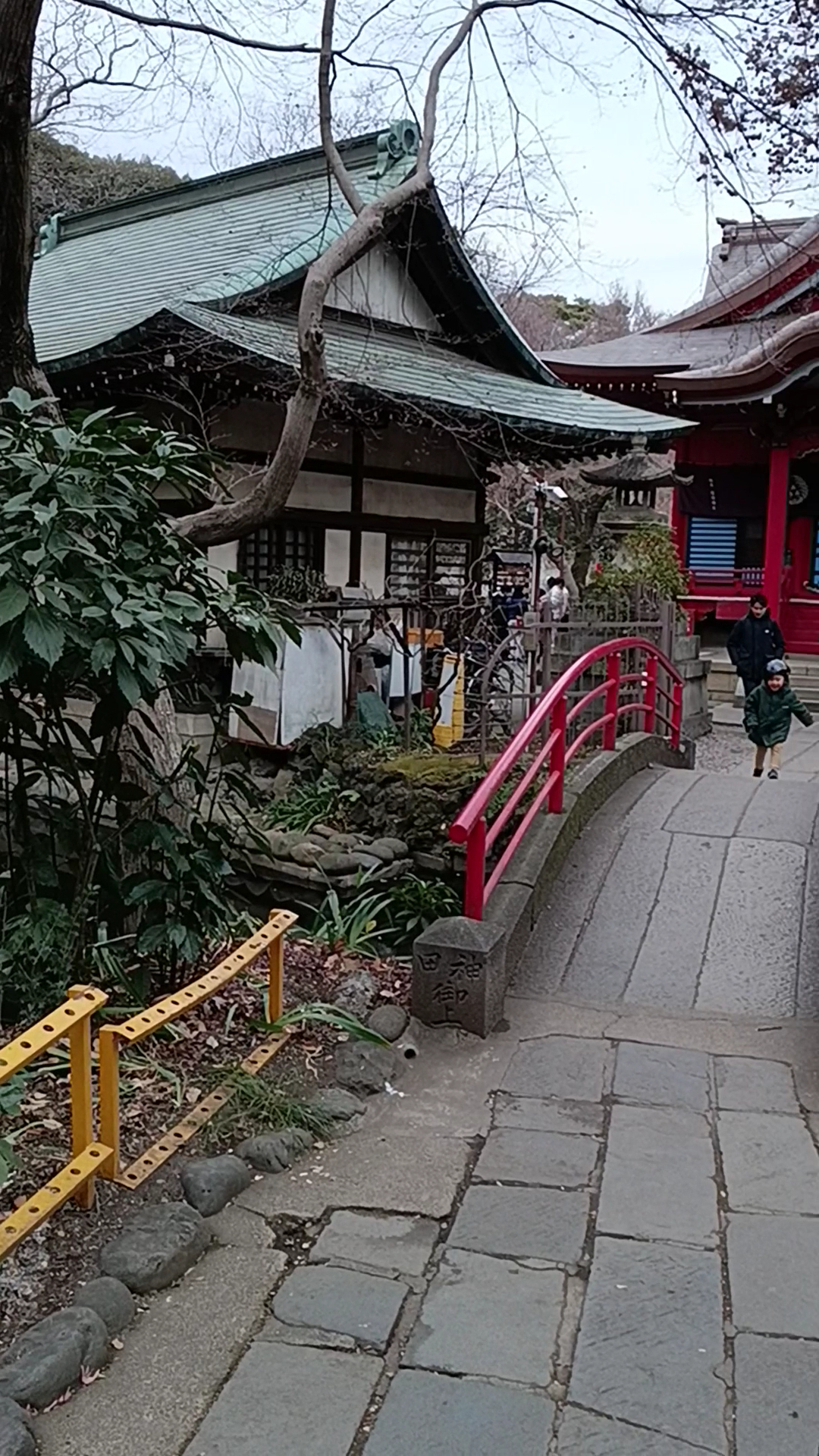
We’re not religious. At all. But this little Shinto-Buddhist hybrid shrine didn’t ask for belief—it just offered peace. And some pretty remarkable views. You approach it over a red arched bridge, cross into a shaded glade, and suddenly it’s like you’re in a Studio Ghibli film… but without the talking raccoons or emotional breakdowns.
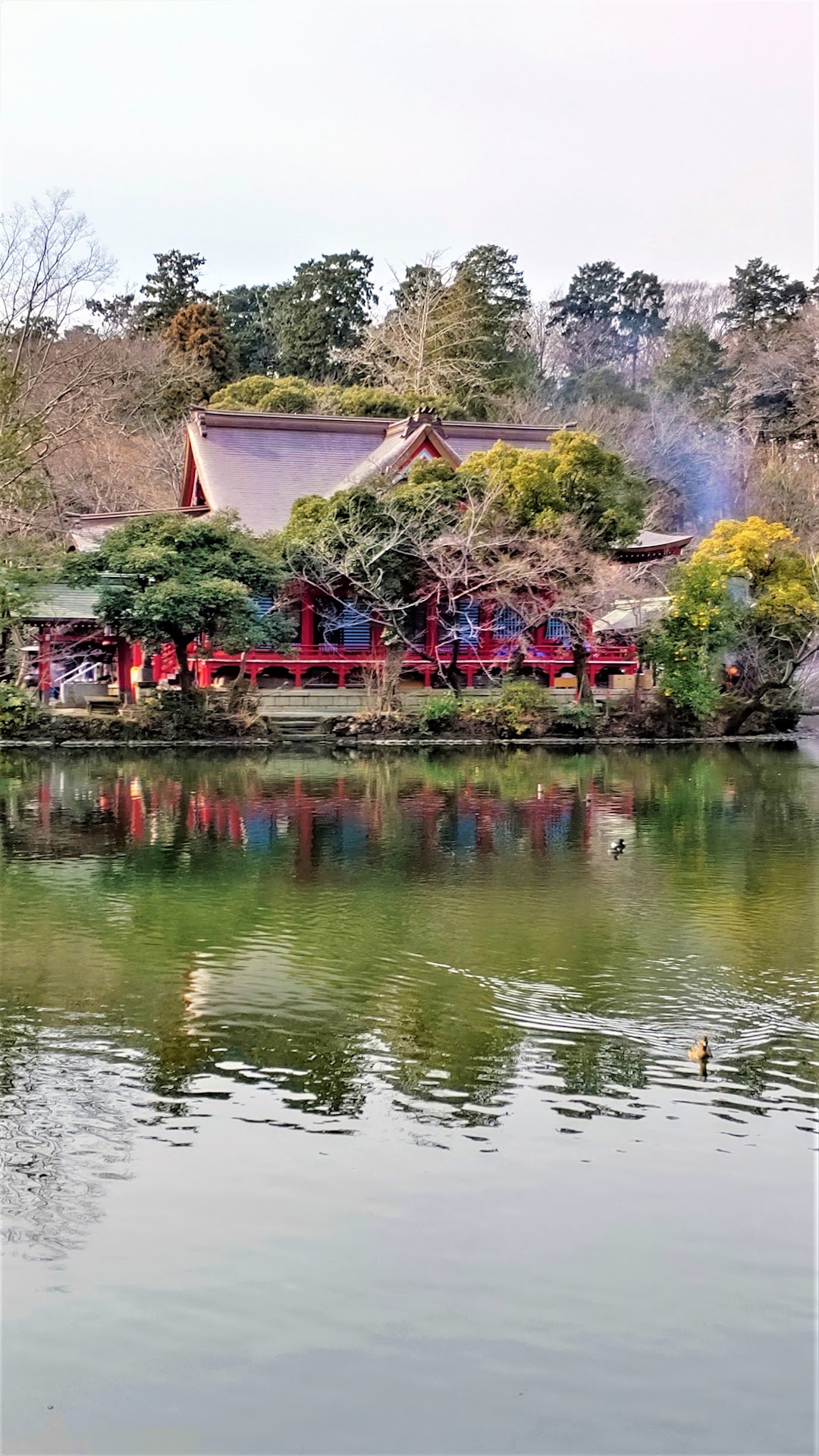
The main shrine is a riot of red and blue, standing vivid against the surrounding greenery. It’s dedicated to Benzaiten, goddess of everything from music to wisdom to… financial luck. So basically a divine Swiss Army knife. She’s housed here in serious style, and flanked by stone foxes, mossy basins, and guardian statues in bright red bibs who honestly dress better than we do.
The pond that surrounds the shrine gives it a floating-island vibe. Everything reflects. Everything slows down. Even the water seems to move politely.
Notable highlight: the mossy purification fountain near the pond. It looked like something you’d unlock in a video game right before learning the meaning of life.
This isn’t a checklist shrine. It’s not crowded, commercial, or trying to trend on TikTok. It’s just… beautiful. Quiet. Unbothered. If you’re lucky enough to find it empty like we did, linger. Take a breath. Be grateful Tokyo has places like this hiding in...
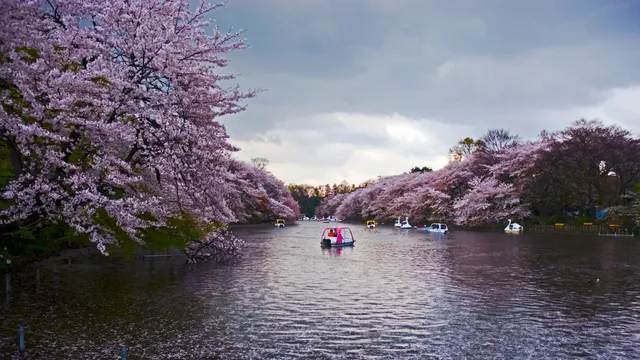
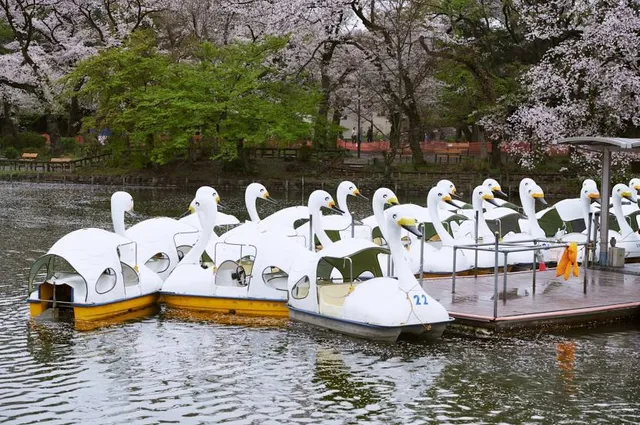
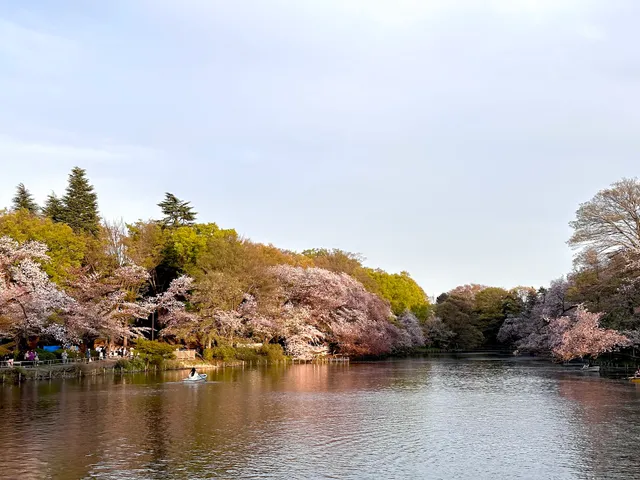
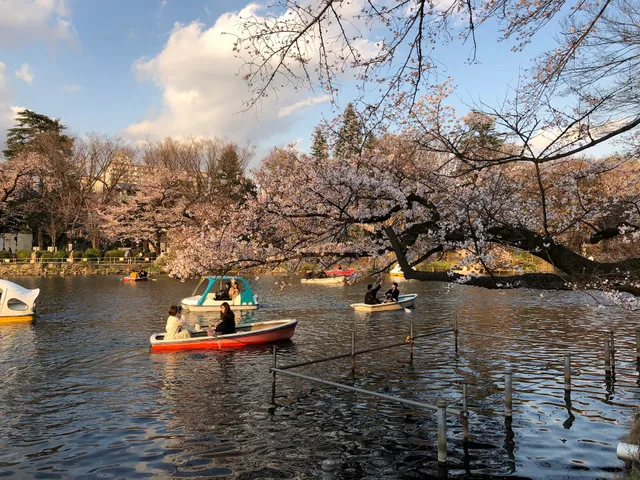
Read moreFirst of all, I must correct the above description. Inokashira Benzaiten is not a Buddhist temple. It is a Shinto shrine. Buddhism and Shintoism are two different religions. There is, however, a Buddhist temple on the low hill in front of the shrine. You'll find a stairway right there, but you will no longer be in Inokashira Park. This little red shine is my favorite in all of Tokyo. It is dedicated to the goddess Benzaiten, the only female of the seven lucky gods (Shichifukujin). She is associated with luck and wisdom. She has several alter egos but is best known for a snake. Legend also says she can be very jealous of couples and will, on occasion, flip their rowboats. I've actually seen this happen. Anyway, her shine is really beautiful and picturesque. Great shots can be taken from any angle. The shrine is situated on its own little island at the northwest corner of Inokashira Park pond. There is an arched short bridge leading to the shrine's entrance. The building is not big, easy to walk around. First, wash your hands with the provided cups, then step up to the incense burner to get some holy smoke on you. Next, step up to the front of the shrine, toss a coin in the box, and make a prayer to the Shinto gods. Walking around the shine, you'll see various stone statues (one of Benzaten as a snake), and a stone dragon fountain to wash your dirty money and bring it luck. Inokashira Park is one of the most beautiful in Tokyo, especially at cherry blossom time. While walking around the pond, you are sure to find the shrine. Put a visit here top...
Read more