HTML SitemapExplore
logo
Find Things to DoFind The Best Restaurants

House of European History — Attraction in Brussels

Name
House of European History
Description
The House of European History is a history museum and cultural institution in Brussels, Belgium, focusing on the recent history of Europe. It is an initiative by the European Parliament, and was proposed in 2007 by the Parliament's then-president, Hans-Gert Pöttering; it opened on 6 May 2017.
Nearby attractions
Leopold Park
1040 Brussels, Belgium
Parlamentarium
Pl. du Luxembourg 100, 1050 Bruxelles, Belgium
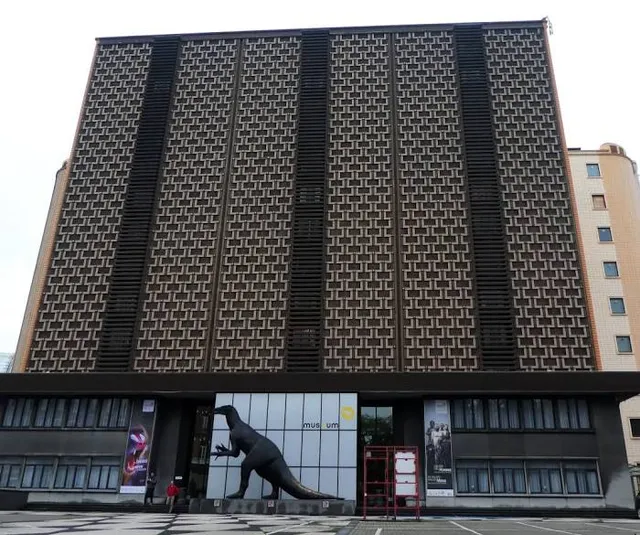
Museum of Natural Sciences
Rue Vautier 29, 1000 Bruxelles, Belgium
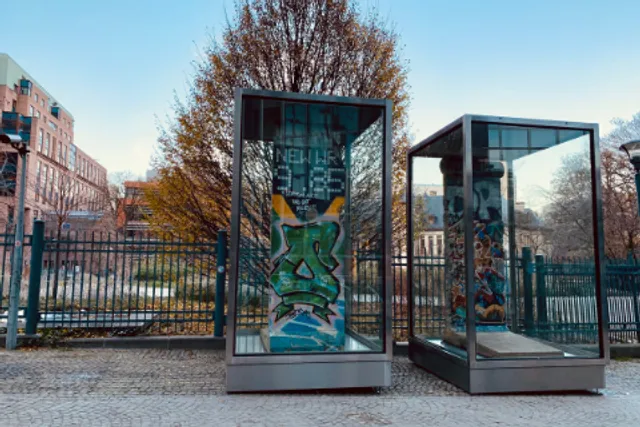
Berlin Wall
Rue Wiertz 60, 1047 Bruxelles, Belgium
Chapel for Europe
Rue Van Maerlant 22/24, 1040 Bruxelles, Belgium
Luxembourg Square
Pl. du Luxembourg 7, 1050 Ixelles, Belgium
Wiertz Museum
Rue Vautier 62, 1050 Ixelles, Belgium
Jardin de la Vallée de Maelbeek
Rue de la Loi, 1040 Bruxelles, Belgium
Parc du Cinquantenaire
1000 Brussels, Belgium
Brussels Grand Mosque & Islamic Cultural Centre of Belgium
Parc du Cinquantenaire 14, 1000 Bruxelles, Belgium
Nearby restaurants
Kokuban Place Jean Rey
Rue Belliard 180, 1040 Bruxelles, Belgium
Grand Central
Rue Belliard 190, 1040 Bruxelles, Belgium
Stick that Meat
Rue Belliard 164, 1040 Bruxelles, Belgium
Caffeine - Specialty Coffee & Delicatessen
Rue Van Maerlant 13, 1040 Bruxelles, Belgium
Hawaiian Poké Bowl
Rue de TrĂšves 68, 1000 Bruxelles, Belgium
Poule & Poulette Etterbeek (Place Jourdan)
Pl. Jourdan 70, 1040 Etterbeek, Belgium
Positano
Rue De Pascale 20, 1040 Bruxelles, Belgium
Takumi Jourdan
Pl. Jourdan 67, 1040 Etterbeek, Belgium
Brasserie Signature
Pl. Jourdan 52/54/52-54, 1040 Etterbeek, Belgium
Ristorante Pizzeria Ichnusa e Brutium
Rue Belliard 181, 1040 Etterbeek, Belgium
Related posts
🇧đŸ‡Ș | Europe’s “Peeing” Capital? It’s Brussels!
Keywords
House of European History tourism.House of European History hotels.House of European History bed and breakfast. flights to House of European History.House of European History attractions.House of European History restaurants.House of European History travel.House of European History travel guide.House of European History travel blog.House of European History pictures.House of European History photos.House of European History travel tips.House of European History maps.House of European History things to do.
House of European History things to do, attractions, restaurants, events info and trip planning
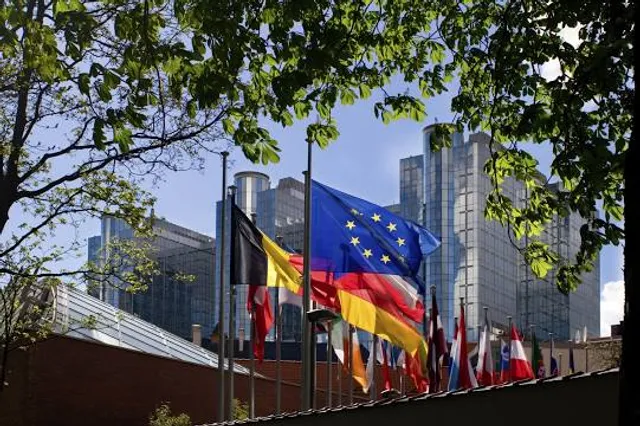
House of European History
BelgiumBrussels-CapitalBrusselsHouse of European History

Basic Info

House of European History

Rue Belliard 135, 1040 Bruxelles, Belgium
4.5(2.3K)
Open 24 hours
Save
spot

Ratings & Description

Info

The House of European History is a history museum and cultural institution in Brussels, Belgium, focusing on the recent history of Europe. It is an initiative by the European Parliament, and was proposed in 2007 by the Parliament's then-president, Hans-Gert Pöttering; it opened on 6 May 2017.

Cultural
Accessibility
attractions: Leopold Park, Parlamentarium, Museum of Natural Sciences, Berlin Wall, Chapel for Europe, Luxembourg Square, Wiertz Museum, Jardin de la Vallée de Maelbeek, Parc du Cinquantenaire, Brussels Grand Mosque & Islamic Cultural Centre of Belgium, restaurants: Kokuban Place Jean Rey, Grand Central, Stick that Meat, Caffeine - Specialty Coffee & Delicatessen, Hawaiian Poké Bowl, Poule & Poulette Etterbeek (Place Jourdan), Positano, Takumi Jourdan, Brasserie Signature, Ristorante Pizzeria Ichnusa e Brutium
logoLearn more insights from Wanderboat AI.
Website
historia.europa.eu

Plan your stay

hotel
Pet-friendly Hotels in Brussels
Find a cozy hotel nearby and make it a full experience.
hotel
Affordable Hotels in Brussels
Find a cozy hotel nearby and make it a full experience.
hotel
The Coolest Hotels You Haven't Heard Of (Yet)
Find a cozy hotel nearby and make it a full experience.
hotel
Trending Stays Worth the Hype in Brussels
Find a cozy hotel nearby and make it a full experience.

Reviews

Nearby attractions of House of European History

Leopold Park

Parlamentarium

Museum of Natural Sciences

Berlin Wall

Chapel for Europe

Luxembourg Square

Wiertz Museum

Jardin de la Vallée de Maelbeek

Parc du Cinquantenaire

Brussels Grand Mosque & Islamic Cultural Centre of Belgium

Leopold Park

Leopold Park

4.5

(2.7K)

Open 24 hours
Click for details
Parlamentarium

Parlamentarium

4.5

(3.1K)

Closed
Click for details
Museum of Natural Sciences

Museum of Natural Sciences

4.5

(5.7K)

Closed
Click for details
Berlin Wall

Berlin Wall

4.4

(78)

Open 24 hours
Click for details

Things to do nearby

Brussels food tour: Chocolate & Belgian Classics
Fri, Dec 5 ‱ 11:00 AM
1000, Brussels, Belgium
View details
Les Derniers Jours de Pompéi : Lexposition Immersive
Fri, Dec 5 ‱ 10:00 AM
Pl. de Belgique 1, Bruxelles, 1020
View details
Jules Verne 200 : Le Voyage immersif
Fri, Dec 5 ‱ 10:00 AM
Rue du Marché Aux Herbes 116, 1000
View details

Nearby restaurants of House of European History

Kokuban Place Jean Rey

Grand Central

Stick that Meat

Caffeine - Specialty Coffee & Delicatessen

Hawaiian Poké Bowl

Poule & Poulette Etterbeek (Place Jourdan)

Positano

Takumi Jourdan

Brasserie Signature

Ristorante Pizzeria Ichnusa e Brutium

Kokuban Place Jean Rey

Kokuban Place Jean Rey

4.2

(473)

Click for details
Grand Central

Grand Central

4.0

(1.3K)

$$

Click for details
Stick that Meat

Stick that Meat

4.4

(340)

Click for details
Caffeine - Specialty Coffee & Delicatessen

Caffeine - Specialty Coffee & Delicatessen

4.4

(167)

$

Click for details
Get the Appoverlay
Get the AppOne tap to find yournext favorite spots!
Wanderboat LogoWanderboat

Your everyday Al companion for getaway ideas

CompanyAbout Us
InformationAI Trip PlannerSitemap
SocialXInstagramTiktokLinkedin
LegalTerms of ServicePrivacy Policy

Get the app

© 2025 Wanderboat. All rights reserved.
logo

Reviews of House of European History

4.5
(2,338)
avatar
2.0
3y

Uh, where to even begin with this experience. The good thing is that the admission is free, and the building is beautiful, as is the surrounding park. I visited in the morning, and there were very few people. I have social anxiety, and I would say I'm okay most of the time, but this was not a pleasant experience for me at all. First of all, I found it quite hard to understand where is the entrance. There were no signs that would show you where to go. In front of one of the doors were people from the staff, and I found that a bit odd. It took me a while to realise they weren't on their smoking break but guarding the entrance. When you get inside, you have to go through a security check which is okay, but this check was almost as if you were at the airport, which I don't get. What are you trying to guard in the museum? The museum is not the European ParliamentđŸ˜¶ Again the security check had no easily visible guides on what to do and where to put things. I usually need clear/easy to understand instructions to not get all nervous, and at that point, my anxiety was full-on working, and I was so uncomfortable. Then the security guard came, and he was pretty rude. He didn't speak English. He decided to not talk to me at all. He just gestured with his hands!? And I would assume that if you work at the House of European History, you should have the education to speak English and be polite. As I was leaving the security check, he mumbled something and sounded very rude. Like, what is this behaviour? We are in a museum, not on a punk gig. I finally went in, and one of the ladies working here started talking to me and showing me where to put my coat etc. Don't get me wrong, she was super friendly and nice, but I found it strange as well because it was something I wasn't prepared for when visiting a museum. I donĆ„ want to talk to people if I don't have to, just put some signs on the walls, so I know where to go. To the actual exhibition... The idea was there, but the execution was not that great. The whole exhibition has five stories, and if you want to listen to/read everything, you definitely won't spend just 90 min inside as they claim on their site. You got a tablet with all the labels and descriptions and an audioguide. I'm young, and it was quite hard to manage the tablet. I cannot imagine my parents being able to use it, which is a shame. The labels and descriptions are only available on the tablet. They are not showcased next to the exhibit, which is quite exhausting because sometimes I want to have a quick glance at what the thing is and instead, I have to try to find it in the tablet guide. The tablet guide is also GPS operated, so you can only browse the story you are in, and I completely don't get this feature. It is a six-story building you will not get lost 😂 So why do we have this GPS feature? The GPS is also not very quick, so you have to wait for it to update itself so you can browse the exhibition on the next story. Overall, the idea was there, but the execution was not as good as I expected. The technology was a bit unnecessary and overwhelming for me. I would say the place is trying to look super representative, which I get, but at the same time, it should be tourist-friendly, and that just wasn't the case. I would say it's worth visiting if you are bored in Brussels and you donĆ„ have to pay for admission; otherwise, skip this and take a walk in the...

   Read more
avatar
3.0
19w

We came close to missing the House of European History as the indications pointing to this museum were not very clear.

Fortunately, a most helpful parking attendant gave us some directions and we found it after some meandering in the European Union (EU) Parliament grounds.

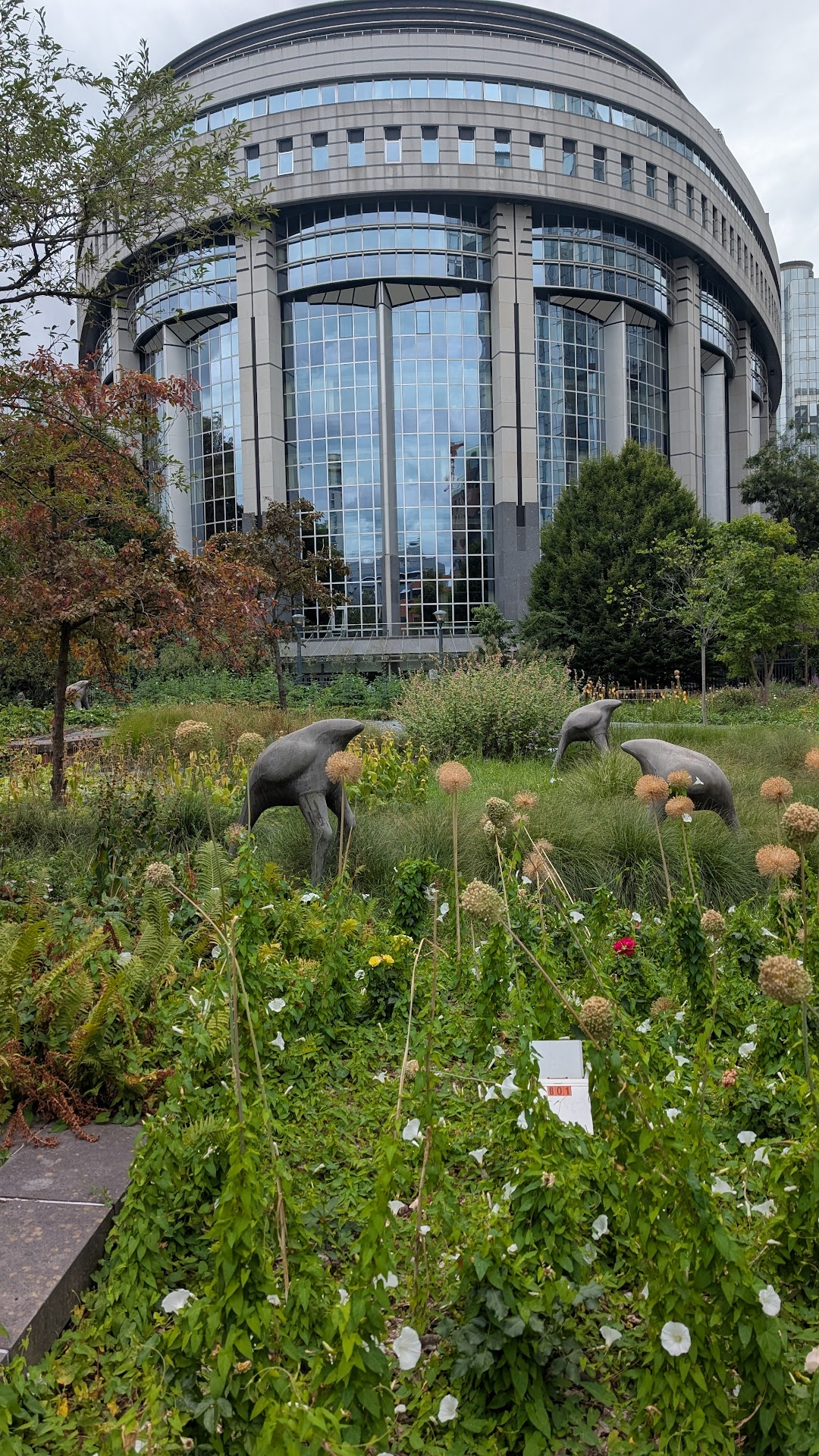
While walking through the aforementioned EU Parliament grounds, we noticed a garden populated with ostrige sculptures leaning forward with their heads buried in the ground.

That was a surprise. What government organization would want to represent themselves with such symbols?

After some detours, we eventually found the House of European History. It is a large museum, with 6 floors. The artifacts within focused on the history and development of European culture.

The idea, organization and content of this museum were all interesting.

The effort and expense that has gone into the creation of this museum is obvious.

The grand central stairwell is impressive. The intricate ribbon abstract sculpture in the center of that wide stairwell looks like it took some effort to produce (read expensive).

The exhibits show evidence of research and effort to showcase each section in a unique way.

The less good part is that most of the information in each artefact is delivered via an audio-tablet-guide with a beautiful, most likely very expensive interface, which was - at least for me - insanely frustrating and un-intuitive.

I kept going back to the introduction page. Clicking on the point in the museum where I was in the museum map did not lead to any related content. In the end, I simply abandoned the idea of making any sense of it. I stopped using it.

This is truly a missed opportunity, as the content that I did manage to hear was insightful.

The museum is free to visit, which is nice, I did not regret this visit, if only for the opportunity to take a picture of those ostrige sculptures.

Hopefully, a version 2.0 of their audio-tablet-based guide will improve the...

   Read more
avatar
1.0
31w

Pros: free. Then again, so is sitting in the park outside and enjoying the sunset, and I strongly suggest you do that instead.

Cons: You get handed a tablet as a guide in lieu of text displays, and the concept doesn't really work here, they would do much better to just have physical text in the main Belgian and European languages.

Some of the staff are nice (the ones explaining the concept at the entrance), but the ones in the exhibition area are very snappy with anyone who momentarily touches the glass cases around the exhibits.

The place is, obviously, an obsequiously pro-EU vanity project and it shows in the narrative they push. E.g. loftily blaming overseas colonialism for WW1 rather than having the guts to point the finger at individual European states (might be a bit awkward given who controls the European purse strings), drastically exaggerating the extent of urbanisation and the development of socialism so that you walk away with the impression that the average working-class European in 1914 was a firebrand socialist working in a factory rather than a pretty reactionary nationalist peasant in the countryside who looked on large government schemes (like the EU, for instance...) with scepticism. Add in a bit more Britain-bashing, like claiming that the Irish independence movement was about fighting for democracy rather than plain nationalism (which is particularly funny given men and women got the right to vote in national elections in Ireland in 1918 under British rule, earlier than in the majority of present-day EU member states including Belgium), US-bashing (bizarrely claiming that the EU was some kind of third way during the cold war??), and a kid-friendly interactive explanation of the EU's organs that no child would actually be able to grasp, and you have the essence of...

   Read more
Page 1 of 7
Previous
Next

Posts

🇧đŸ‡Ș | Europe’s “Peeing” Capital? It’s Brussels!
Johanna SchulzJohanna Schulz
🇧đŸ‡Ș | Europe’s “Peeing” Capital? It’s Brussels!
Thibault DambrineThibault Dambrine
We came close to missing the House of European History as the indications pointing to this museum were not very clear. Fortunately, a most helpful parking attendant gave us some directions and we found it after some meandering in the European Union (EU) Parliament grounds. While walking through the aforementioned EU Parliament grounds, we noticed a garden populated with ostrige sculptures leaning forward with their heads buried in the ground. That was a surprise. What government organization would want to represent themselves with such symbols? After some detours, we eventually found the House of European History. It is a large museum, with 6 floors. The artifacts within focused on the history and development of European culture. The idea, organization and content of this museum were all interesting. The effort and expense that has gone into the creation of this museum is obvious. The grand central stairwell is impressive. The intricate ribbon abstract sculpture in the center of that wide stairwell looks like it took some effort to produce (read expensive). The exhibits show evidence of research and effort to showcase each section in a unique way. The less good part is that most of the information in each artefact is delivered via an audio-tablet-guide with a beautiful, most likely very expensive interface, which was - at least for me - insanely frustrating and un-intuitive. I kept going back to the introduction page. Clicking on the point in the museum where I was in the museum map did not lead to any related content. In the end, I simply abandoned the idea of making any sense of it. I stopped using it. This is truly a missed opportunity, as the content that I did manage to hear was insightful. The museum is free to visit, which is nice, I did not regret this visit, if only for the opportunity to take a picture of those ostrige sculptures. Hopefully, a version 2.0 of their audio-tablet-based guide will improve the visitor experience.
Oxalis ToursOxalis Tours
Located in a very impressive 1930s Art Déco building, designed by the Michel Polak (father of Atomium architects André et Jean Polak) and financed originally by George Eastman, who founded Kodak. Hence the name "Institut Dentaire George Eastman". The museum is divided into a permanent and a temporary collection. The current (Jan 2022) temporary collection is a fascinating study of the history of forgery and falsification. The permanent exhibition, which starts on the second floor, is arranged so that you move chronologically through the ages starting with the theme "Shaping Europe" and finishing up on the sixth floor "Europe Now". A tablet and a pair of headphones are provided to guide you through this part of the museum. These are indispensable because none of the exhibits in the permanent collection are labelled. The tablet is meant to provide you with information relevant to where you are currently within the exhibition. However, it does not always detect your location correctly. Sometimes it gives up altogether and displays a sort of start page. In addition, the tablet interface is not at all intuitive, so you risk spending more time fiddling with stuff on the screen than you do actually looking at the exhibits. Also, on the fifth floor one or two of the displays concerning "Milestones of European Integration" are now out of date. And no mention of an important event in recent European history: Brexit. Nevertheless, this is a worthy attempt at representing an extremely complicated and wide-ranging subject, admission is free and the staff on duty are very helpful, so 4 stars anyway for all of that. But they really need to work on simplifying that tablet guide or replacing it altogether with something which is more reliable and easier to use.
See more posts
See more posts
hotel
Find your stay

Pet-friendly Hotels in Brussels

Find a cozy hotel nearby and make it a full experience.

🇧đŸ‡Ș | Europe’s “Peeing” Capital? It’s Brussels!
Johanna Schulz

Johanna Schulz

hotel
Find your stay

Affordable Hotels in Brussels

Find a cozy hotel nearby and make it a full experience.

Get the Appoverlay
Get the AppOne tap to find yournext favorite spots!
We came close to missing the House of European History as the indications pointing to this museum were not very clear. Fortunately, a most helpful parking attendant gave us some directions and we found it after some meandering in the European Union (EU) Parliament grounds. While walking through the aforementioned EU Parliament grounds, we noticed a garden populated with ostrige sculptures leaning forward with their heads buried in the ground. That was a surprise. What government organization would want to represent themselves with such symbols? After some detours, we eventually found the House of European History. It is a large museum, with 6 floors. The artifacts within focused on the history and development of European culture. The idea, organization and content of this museum were all interesting. The effort and expense that has gone into the creation of this museum is obvious. The grand central stairwell is impressive. The intricate ribbon abstract sculpture in the center of that wide stairwell looks like it took some effort to produce (read expensive). The exhibits show evidence of research and effort to showcase each section in a unique way. The less good part is that most of the information in each artefact is delivered via an audio-tablet-guide with a beautiful, most likely very expensive interface, which was - at least for me - insanely frustrating and un-intuitive. I kept going back to the introduction page. Clicking on the point in the museum where I was in the museum map did not lead to any related content. In the end, I simply abandoned the idea of making any sense of it. I stopped using it. This is truly a missed opportunity, as the content that I did manage to hear was insightful. The museum is free to visit, which is nice, I did not regret this visit, if only for the opportunity to take a picture of those ostrige sculptures. Hopefully, a version 2.0 of their audio-tablet-based guide will improve the visitor experience.
Thibault Dambrine

Thibault Dambrine

hotel
Find your stay

The Coolest Hotels You Haven't Heard Of (Yet)

Find a cozy hotel nearby and make it a full experience.

hotel
Find your stay

Trending Stays Worth the Hype in Brussels

Find a cozy hotel nearby and make it a full experience.

Located in a very impressive 1930s Art Déco building, designed by the Michel Polak (father of Atomium architects André et Jean Polak) and financed originally by George Eastman, who founded Kodak. Hence the name "Institut Dentaire George Eastman". The museum is divided into a permanent and a temporary collection. The current (Jan 2022) temporary collection is a fascinating study of the history of forgery and falsification. The permanent exhibition, which starts on the second floor, is arranged so that you move chronologically through the ages starting with the theme "Shaping Europe" and finishing up on the sixth floor "Europe Now". A tablet and a pair of headphones are provided to guide you through this part of the museum. These are indispensable because none of the exhibits in the permanent collection are labelled. The tablet is meant to provide you with information relevant to where you are currently within the exhibition. However, it does not always detect your location correctly. Sometimes it gives up altogether and displays a sort of start page. In addition, the tablet interface is not at all intuitive, so you risk spending more time fiddling with stuff on the screen than you do actually looking at the exhibits. Also, on the fifth floor one or two of the displays concerning "Milestones of European Integration" are now out of date. And no mention of an important event in recent European history: Brexit. Nevertheless, this is a worthy attempt at representing an extremely complicated and wide-ranging subject, admission is free and the staff on duty are very helpful, so 4 stars anyway for all of that. But they really need to work on simplifying that tablet guide or replacing it altogether with something which is more reliable and easier to use.
Oxalis Tours

Oxalis Tours

See more posts
See more posts